



997.2 Engine Reliability

Rennlist Member

Joined: Mar 2014
Posts: 832
Likes: 183
From: Long Beach, CA

Because the dyno behavior is different for 2 and 4 wheel drive cars. Because the transmission losses are different from car to car. Because the simple fact of varying the tension with which the car is hold steady on the dyno leads to different dyno results and so on...

Rennlist Member
Joined: Oct 2014
Posts: 6,216
Likes: 1,971
When worried about a specific motor, ideally you would have readings for that motor at intervals of every 10K miles or something like that. There are a lot of variables to pin down when comparing two different cars. Especially when one car had been modded and was different to begin with.
The best you can do is look at manufacturer's WBHP when new and look at the delta. The other car is a red herring.
The best you can do is look at manufacturer's WBHP when new and look at the delta. The other car is a red herring.

Three Wheelin'
Joined: Jul 2014
Posts: 1,258
Likes: 188
Because the dyno behavior is different for 2 and 4 wheel drive cars. Because the transmission losses are different from car to car. Because the simple fact of varying the tension with which the car is hold steady on the dyno leads to different dyno results and so on...
There are factors that will impact dyno readings but doubtful between the .1 and .2 variants of C4 Porsches... are they going to be material. Anything that understates power in a dyno reading should affect both cars approximately the same.
I think the outcome (which, again, is what we might expect given the same starting figures) does much to prove the relevancy of the test. Drivetrain losses will not be dramatically different here. Engine cooling / engine management might have an effect (dyno testing vs. live testing on a road) but again, I imagine would impact both similarly.
Three Wheelin'
Joined: Jul 2014
Posts: 1,258
Likes: 188
When worried about a specific motor, ideally you would have readings for that motor at intervals of every 10K miles or something like that. There are a lot of variables to pin down when comparing two different cars. Especially when one car had been modded and was different to begin with.
The best you can do is look at manufacturer's WBHP when new and look at the delta. The other car is a red herring.
The best you can do is look at manufacturer's WBHP when new and look at the delta. The other car is a red herring.
Unfortunately, unless you test yourself, looking at the mfr numbers won't help you. Porsche AFAIK (but backed by examples of independent tests) tends to understate the BHP figures for their cars. Plus, manufacturing variance will result in slightly different outputs between engines, so there is little benefit for determining power loss by looking at the mfr figures.
I agree that comparing against the other car doesn't do a lot for showing horsepower loss, but it does say something... that relative to a newer motor, on a car that should have a certain amount greater HP when new, this car with more miles on it is showing similar power applied through to the wheels. Given the very similar layouts of the cars, and (from what I have seen) similar drivetrain losses, and that both are C4 variants, it suggests that A) the 997.2 car had more power originally than stated, B) the 997.2 car has maintained its power output over the miles or C) the 997.1 car, with fewer miles, has lost more power vs. its stated power, or its mods have hurts its power output.
The most likely answer is that the information shows that B is correct... and as far as info goes (assuming corroborated roughly by performance) this seems the most plausible outcome. It's harder to tell down to the HP through timing 0-60 runs given driver or measurement error, so this seems like a decent data point to me and much, much better than "seat of pants" measurement...

Racer
Joined: May 2010
Posts: 287
Likes: 0

Let me put it this way, if you had dyno tested your car when it had 10k miles and recorded all the relevant test conditions and you were able to perfectly reproduce it today, which you are not, then the same dyno test of your car at 90k miles or so could only give you a measure of the engine reliability as long as the gearbox, transmission shafts, differentials, drive shafts and all the gears in between were as good as they were at 10k miles... let alone when compared to a different car.
Rennlist Member
Joined: Oct 2014
Posts: 6,216
Likes: 1,971
No such thing as "WBHP". It is either brake horsepower (BHP) or wheel horsepower (WHP) or just the general term "HP".
Unfortunately, unless you test yourself, looking at the mfr numbers won't help you. Porsche AFAIK (but backed by examples of independent tests) tends to understate the BHP figures for their cars. Plus, manufacturing variance will result in slightly different outputs between engines, so there is little benefit for determining power loss by looking at the mfr figures.
I agree that comparing against the other car doesn't do a lot for showing horsepower loss, but it does say something... that relative to a newer motor, on a car that should have a certain amount greater HP when new, this car with more miles on it is showing similar power applied through to the wheels. Given the very similar layouts of the cars, and (from what I have seen) similar drivetrain losses, and that both are C4 variants, it suggests that A) the 997.2 car had more power originally than stated, B) the 997.2 car has maintained its power output over the miles or C) the 997.1 car, with fewer miles, has lost more power vs. its stated power, or its mods have hurts its power output.
The most likely answer is that the information shows that B is correct... and as far as info goes (assuming corroborated roughly by performance) this seems the most plausible outcome. It's harder to tell down to the HP through timing 0-60 runs given driver or measurement error, so this seems like a decent data point to me and much, much better than "seat of pants" measurement...
Nicely written.
Rennlist Stories
The Best Porsche Posts for Porsche Enthusiasts

Stunning Porsche 356A Super GT Speedster Auction Fails to Meet Reserve
Verdad Gallardo
Every Era of 911 Owner Explained in One Sentence
Verdad Gallardo
Thinking of Buying a Porsche? Do These 10 Things First
Joe Kucinski
Pixar Pals Turned Into 1-of-1 Porsches!
Michael S. Palmer
Theon Goes Full Carbon Fiber With Stunning New Build
Verdad Gallardo
Genius Porsche-Themed Gifts That'll Make Any Dad or Grad Smile
Joe Kucinski
10 Used Porsches Are Selling for Way Too Cheap
Joe Kucinski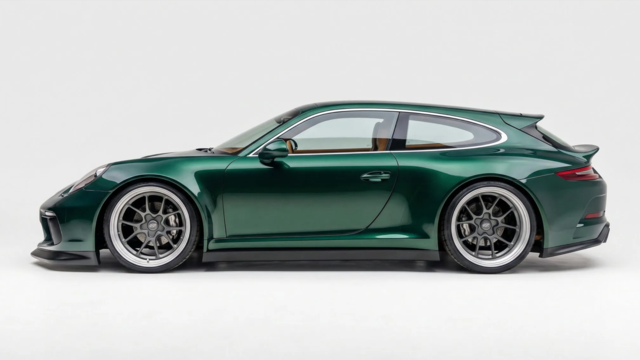
Tuner Is Converting Porsche 911s Into Shooting Brakes
Verdad Gallardo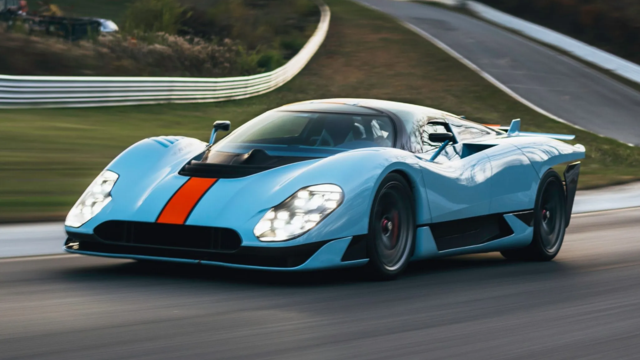
This Coachbuilt Creation Is A Modern Take on the Legendary Porsche 917
Verdad Gallardo
Nordschleife Master

Joined: Mar 2004
Posts: 8,392
Likes: 449
From: Southwest
...
In the case of Porsche failures we have very little data to make any kind of a judgement. And I don't believe any of us (anyone, period?) is in a position to know failure rates or how to convert this to a rough term like reliability. We have trouble even knowing how many cars are in operation. And a lot of these cars get very little use. How many annual miles do Porsches in total see? How are they driven? How are they maintained?...
In the case of Porsche failures we have very little data to make any kind of a judgement. And I don't believe any of us (anyone, period?) is in a position to know failure rates or how to convert this to a rough term like reliability. We have trouble even knowing how many cars are in operation. And a lot of these cars get very little use. How many annual miles do Porsches in total see? How are they driven? How are they maintained?...
Rennlist Member
Joined: Mar 2014
Posts: 832
Likes: 183
From: Long Beach, CA

Racer
Joined: May 2010
Posts: 287
Likes: 0

Any signs of smoke upon startup, loud ticking or rev hesitation with any of the rides?
Nordschleife Master
Joined: Mar 2004
Posts: 8,392
Likes: 449
From: Southwest
Rennlist Member
Joined: Oct 2014
Posts: 6,216
Likes: 1,971
Three Wheelin'
Joined: Jul 2014
Posts: 1,258
Likes: 188
I agree. Only PAG knows its engine reliability stats. Internet forums blow out of proportion engine failures and that is misinterpreted. Bad too because it is not based on statistically significant data. I think that is affecting M96/M97 engined cars' values. The current effort to badmouth the 9A1 engine is telling and worrisome, when actual owner experience has been stellar, in spite of bad news sympathetic Internet broadcasting channels.
I do think that the IMS issue was and remains a real problem, at least for early 997.1 cars -- the failure rate was statistically significant and at least mildly brand-damaging.