When you click on links to various merchants on this site and make a purchase, this can result in this site earning a commission. Affiliate programs and affiliations include, but are not limited to, the eBay Partner Network.
__________________
Does it have the "Do It Yourself" manual transmission, or the superior "Fully Equipped by Porsche" Automatic Transmission? George Layton March 2014
928 Owners are ".....a secret sect of quietly assured Porsche pragmatists who in near anonymity appreciate the prodigious, easy going prowess of the 928."
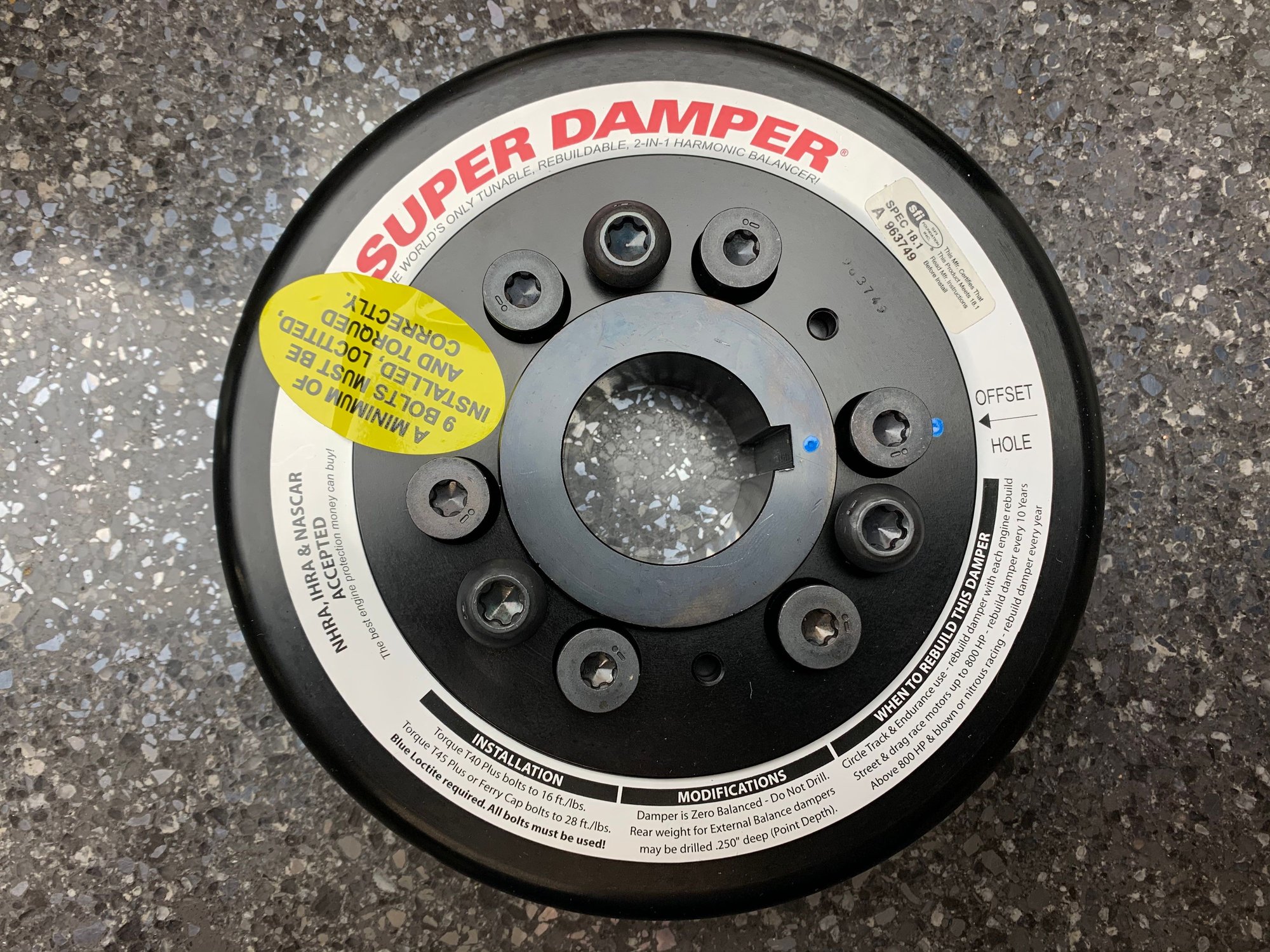
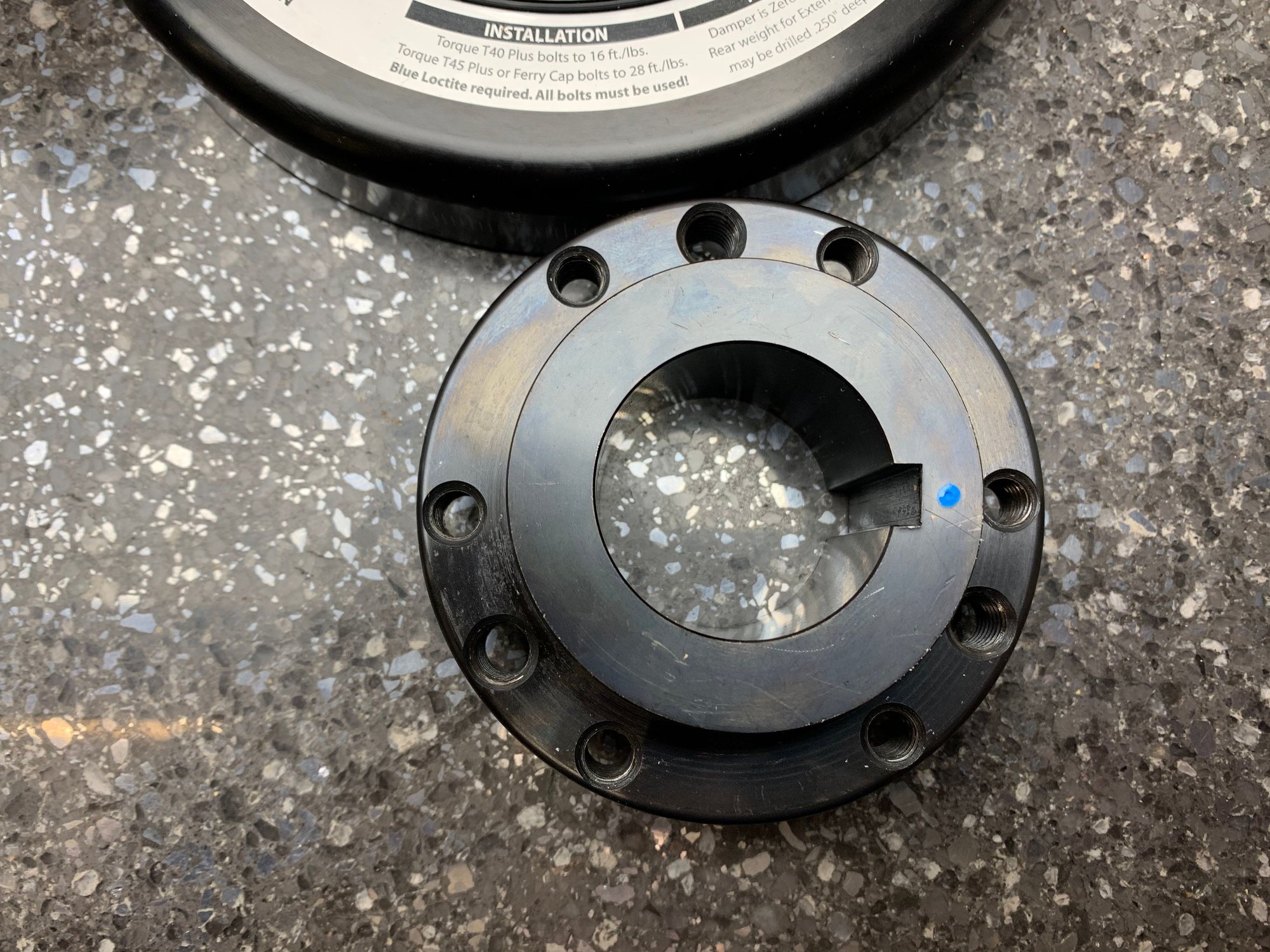
Didn't Speedtoys have an issue when he went to remove the SD? Something about rounded allen bolt heads.
Yes, we've learned some brutal lessons....
We changed all the hardware to torx.
We found out to not install the damper hardware until the adapter on the crankshaft has completely cooled. [The adapter needs to be heated to install...it is an interference (*Note) fit.]
*Note: People that know way more about harmonics and how to absorb them that I do (mechanical engineers who specialize in harmonics/frequencies), claim (adamantly) that to properly absorb crankshaft harmonics, the damper/damper adapter must be a press fit onto the crankshaft. You tell them that Porsche did not do this, on the 928 model, and they are utterly dismayed. While I understand that Porsche did this so that the timing belt would be easier to change, the harmonic engineers claim that the Porsche damper was inadequate, to start with.
Thank you Greg found the values (I'll read the fine print next time first, I guess) . You said to oil them slightly which is fine with me. Any objections to use some anti seize instead?
I've never tried anti-seize, so I have no feedback, for you.
So can the hub itself stay on the crank when servicing the TB (definitely install a new crank pulley if that is the case when doing the initial install)
Or does it need to come off along with the damper itself to do the TB job properly?
*Note: People that know way more about harmonics and how to absorb them that I do (mechanical engineers who specialize in harmonics/frequencies), claim (adamantly) that to properly absorb crankshaft harmonics, the damper/damper adapter must be a press fit onto the crankshaft. You tell them that Porsche did not do this, on the 928 model, and they are utterly dismayed. While I understand that Porsche did this so that the timing belt would be easier to change, the harmonic engineers claim that the Porsche damper was inadequate, to start with.
Theoretically, vibrations are defined by the material they are created in, so to speak. In other words they will not transfer 100% from one part to another until the two parts are one and only (!). In practice of course, "enough" of the destructive vibrations may be transmitted from a cankshaft to a vibration damper if the system is sized accordingly.
Engineers probably thought that removing the front damper and using a dual mass flywheel would get them closer to an ideal 100% transfer rate between the crank and the dampening media.
BMW have been using vibration dampers since the 1930s.
If one reads the small print there is an interesting comment there- "for street use rebuild every 10 years- for 800 bhp or blown race motors rebuild every year" - that most of us are bumbling along on 25[+] year old dampers puts things into perspective somewhat.
I must say I was surprised when I did my first timing belt job how easy the damper came off- a sliding fit as it were. There again it is a bolted in sandwich so one presumes Porsche knew what they were doing whatever limitations it had. Presumably the GB hub design is relatively easy to pull off using the threaded holes if and when the seal has to be serviced.










 George Layton March 2014

 ) . You said to oil them slightly which is fine with me. Any objections to use some anti seize instead?



 Well, must be the age