


New Corvette...

Race Director
Joined: Nov 2009
Posts: 10,594
Likes: 8
From: THE Republic

hear that as well. better sump, oils squirters, better coolant flow around head (a la Nascar). Based on everything have seen/read Im only concerned about the brakes on the track and the rear visibility.

Rennlist Member

Joined: Feb 2013
Posts: 1,137
Likes: 254
From: DFW
Race Director
Joined: Nov 2009
Posts: 10,594
Likes: 8
From: THE Republic
heres the Edmunds article:
The Purveyor of Powerslides vs. the Prince of Precision
Published: 09/09/2013 - by Josh Jacquot, Senior Editor
Comparison Test 2013 Porsche 911 Specs and Performance 2014 Chevrolet Corvette Specs and Performance The slide, when it finally comes, is a long, predictable and quietly controlled thing.
And in the 911 it's handled with a smidge of countersteer and an equal measure of patience. Certainly Porsche has polished this car's dynamics well beyond what its design merits. But at the end, when the chips are down, stability control is off and you're up against the icy, unforgiving hand of physics, the 911 is still a 911. And it's going to behave like one.
Respecting physics is one of the necessary truths of driving fast cars fast. You'll learn that respect in this Porsche. Yet today's 911 lets its driver delicately dance with physics like few cars made. That the 911 remains composed — stoic, even — during a 150-foot slide at more than 90 mph isn't surprising. What is surprising is that we still love it. Because even when physics plan the way, it's the driver who directs the 911's path.
The fundamental question of this comparison, then, is can the 2014 Chevy Corvette measure up to the Porsche's greatness?
The Primary Target
We've already hailed the thorough competence of the 2014 Corvette Stingray and in the last two weeks it has razed two far more costly and powerful pieces of hardware — the Nissan GT-R and the SRT Viper — in our comparison tests. Chevy makes no secret that Porsche's 911 is the Corvette's primary target, in dynamics, refinement and comfort. So hard-fixed is that goal that a 911 Carrera S equipped with a PDK transmission was the only benchmark car purchased by the C7 team during development.
And that just happens to be the exact configuration of the car you see here. Though this example is thoroughly marinated in Porsche's options bin, it is the car Corvette engineers put in the GM crosshairs. Equipped with $47,000 in add-ons (including the $8,520 carbon-ceramic brakes and $4,050 Porsche Dynamic Chassis Control and Porsche Active Suspension Management), the 911 is, ahem, considerably costlier than the 'Vette. The $4,080 seven-speed PDK auto-manual transmission pushes the price to $144,350.
The seven-speed Stingray, though not inexpensive by any standard, is within reach of upper-class mortals. Our test car — outfitted with the $2,800 Z51 package (electronic limited-slip differential, dry-sump lubrication, 19- and 20-inch wheels, lower gear ratios), $8,005 3LT package and $1,195 dual-mode exhaust — totaled $69,375.
Let the games begin.
The Defining Differences
If there's one character trait that most profoundly distinguishes the Stingray from the 911 it's this: torque. And it is here that the big, deep lungs of American displacement score the first hit.
The 'Vette's 140 pound-feet advantage, which arrives 1,000 rpm earlier than the Porsche's torque peak, leaves the 911 driver seeing stars and stripes at every corner exit. The numbers tell the story nicely. Corvette: 465 lb-ft at 4,600 rpm; 911: 325 lb-ft at 5,600 rpm. So it goes without saying that if you're a purveyor of powerslides, the Stingray is your car.
What's more, the Corvette's 144 additional cubic inches continue the haymaking well into the rev range where it enjoys a 60 peak horsepower advantage. Its 6.2-liter V8 cranks out 460 ponies to the 3.8-liter 911 flat-6's 400.
But don't even think of writing off the 911. Its recipe for greatness might be more subtle, but it's not lost on anyone who gives it time. There's a coherence to driving the 911 that's only present in a car sharpened by decades of commitment to purpose. And that's what you get here: the promise that no matter how hard you drive it, someone has driven a 911 harder.
In fact, the 911 defined itself in this test as much by what it didn't do as by what it did. Among those feats were the ability to tolerate triple-digit heat without wavering, endure repeated launches without faltering and remain utterly composed throughout it all. The Corvette, partly because it was a preproduction car and partly because it cost half as much, simply lacked the same quiet confidence.
That's Not All
Despite its torque deficit, the 911 still managed to beat the 'Vette in acceleration testing. Its PDK transmission is merciless when it comes to doing important things, like shifting and launching — quickly. It helped produce a 0.3-second advantage in the quarter-mile (12.1 seconds at 114.9 mph vs. 12.4 seconds at 113.7 mph). Sixty miles per hour also arrived 0.3 second sooner in the Porsche, which hit the milestone in 4.0 seconds (3.8 with a 1-foot rollout as on a drag strip). The 'Vette needed 4.3 and 4.1 seconds, respectively.
The 911's launch control is unbeatable, and it's the reason Porsche prefers we test cars equipped with PDK transmissions. Even in the real world it's easy to access and use, so there are few downsides. Our test-driver beat the Stingray's launch control fairly easily but still couldn't match the 138-pound-lighter 911.
Full disclosure: The first C7 we tested in Michigan in June was quicker than this 911 in the quarter-mile, but we're not in Michigan anymore. Truth is, the realities of lower-octane fuel (91 vs. 93) and less grip played a role. But those factors were the same for both cars, which were tested on the same day at the same location.
Handling tests, however, favored the Stingray. Its 73.5-mph slalom pass is 2.8 mph better than the 911 could muster. It also eked out a victory over the Porsche on the skid pad, producing 1.05g to the 911's 1.04g. Finally, without the help of carbon-ceramic rotors, the Stingray stopped shorter from 60 mph (99 feet vs. 101 feet).
Track
But it's here, on the track, that the Stingray shows its real merit. Motivated by what is fundamentally a truck engine, it finds speed in places the 911 doesn't. Largely, it's the Stingray's ability to explode away from an apex that earns it the advantage. Performance Traction Management is deadly effective in making the laps both fast and easy. Turning it off, though it will more deeply engage the 'Vette's driver, ups stress without a proportional increase in driving reward.
If you want to hoon the 'Vette then, by all means, turn it off, but if you want to go quickly set it to Race Mode, warm the tires and stand on it. So potent are the Stingray's technologies here that they embarrass the Porsche in identical proportion to what happened at the drag strip. Think about the irony in that.
Steering feel and response, next to torque, are the Stingray's biggest allies. There's a confidence in the C7's steering beyond that of most every other sports car made today. Its front end sticks with intractable persistence. For evidence of this you need to look no farther than its front tires, which wear faster than its rears during hard driving.
The 911, for its part, remains an amazing car to drive hard. Its light but direct steering makes no concessions when driven at speed. Its brakes are so utterly capable that we began to think they're actually worth the cost of a nice sport bike. Its balance, communication and honesty at the limit are remarkable. And when it slides — and it will slide — there's both comfort and reward in bringing it back. It's not going to bite you, but there's no denying its fundamentals at the limit.
In the end, it's 1 second slower around the 1.6-mile Streets of Willows Springs road course.
Porsche 911 Carrera S: 1:25.6
Corvette Stingray Coupe: 1:24.6
Details Matter
But we don't spend every day at the track or the mountains. The 911, in daily use, comes to life in both observation and expression. It's here that Porsche's resources of refinement exceed Chevy's by an order of magnitude. It's here that the little things take over. Look at the 911. Really look at it. Appreciate its subtle purposefulness. Appreciate a shape honed on the mill of necessity. Now look at the Stingray's details, its ducts, vents and its facets.
They might be functional, but when measured by the yardstick of the equally effective 911, they're also gratuitous.
Now get inside the 911. Touch it. Operate its controls. Drive it down the street and notice what you don't hear. Talk to your passenger. Listen to him. Do the same in the 'Vette. Appreciate the 911 with both your senses and your heart. Measure the difference not in numbers but in nuance.
The Daily Grind
Chevy moved mountains in improving the Corvette's interior, but there's still a vast gap between these cars in quality. Everything you touch in the 911 is laser-micrometer precise and right-now responsive. The differences matter. In the 911 you move and it moves with you. In the Stingray you punch the touchscreen twice and wait. You step cleanly into the 911. You descend into, over and around the Corvette. And on a hot day, the 911 smells like leather. The Corvette smells like chemicals.
Ride comfort is a wash. Chevy's magnetorheological dampers are magic and they make the Stingray's ride every bit as refined as the 911's. But you'll compete for your passenger's attention with the Corvette's tire and road noise.
If the 911 utterly dominates the Corvette anywhere, it's here, in the ever-important words between the numbers.
What Our Hearts Say
So we're stuck. Stuck with a decision no enthusiast can fairly make. Picking the 'Vette is the obvious choice since it's supported by ample empirical data. At the end of the day, we can't deny that the home team nailed at least one of its primary targets. Making the Corvette as quick and rewarding as a 911 is a big task, and it's been fully accomplished. The Corvette, when driven hard, is as good as the 911, maybe better. There, we said it.
That it costs, in this case, less than half as much is pure gravy.
But then there's the undeniable reality that the 911 is the better car. Whether we're taking our kids to school or adding subtle countersteer to correct that big slide, we'd rather have the Porsche. It's the car that wins our hearts so it's the car that wins this test.
The manufacturer provided Edmunds this vehicle for the purposes of evaluation.
The Purveyor of Powerslides vs. the Prince of Precision
Published: 09/09/2013 - by Josh Jacquot, Senior Editor
Comparison Test 2013 Porsche 911 Specs and Performance 2014 Chevrolet Corvette Specs and Performance The slide, when it finally comes, is a long, predictable and quietly controlled thing.
And in the 911 it's handled with a smidge of countersteer and an equal measure of patience. Certainly Porsche has polished this car's dynamics well beyond what its design merits. But at the end, when the chips are down, stability control is off and you're up against the icy, unforgiving hand of physics, the 911 is still a 911. And it's going to behave like one.
Respecting physics is one of the necessary truths of driving fast cars fast. You'll learn that respect in this Porsche. Yet today's 911 lets its driver delicately dance with physics like few cars made. That the 911 remains composed — stoic, even — during a 150-foot slide at more than 90 mph isn't surprising. What is surprising is that we still love it. Because even when physics plan the way, it's the driver who directs the 911's path.
The fundamental question of this comparison, then, is can the 2014 Chevy Corvette measure up to the Porsche's greatness?
The Primary Target
We've already hailed the thorough competence of the 2014 Corvette Stingray and in the last two weeks it has razed two far more costly and powerful pieces of hardware — the Nissan GT-R and the SRT Viper — in our comparison tests. Chevy makes no secret that Porsche's 911 is the Corvette's primary target, in dynamics, refinement and comfort. So hard-fixed is that goal that a 911 Carrera S equipped with a PDK transmission was the only benchmark car purchased by the C7 team during development.
And that just happens to be the exact configuration of the car you see here. Though this example is thoroughly marinated in Porsche's options bin, it is the car Corvette engineers put in the GM crosshairs. Equipped with $47,000 in add-ons (including the $8,520 carbon-ceramic brakes and $4,050 Porsche Dynamic Chassis Control and Porsche Active Suspension Management), the 911 is, ahem, considerably costlier than the 'Vette. The $4,080 seven-speed PDK auto-manual transmission pushes the price to $144,350.
The seven-speed Stingray, though not inexpensive by any standard, is within reach of upper-class mortals. Our test car — outfitted with the $2,800 Z51 package (electronic limited-slip differential, dry-sump lubrication, 19- and 20-inch wheels, lower gear ratios), $8,005 3LT package and $1,195 dual-mode exhaust — totaled $69,375.
Let the games begin.
The Defining Differences
If there's one character trait that most profoundly distinguishes the Stingray from the 911 it's this: torque. And it is here that the big, deep lungs of American displacement score the first hit.
The 'Vette's 140 pound-feet advantage, which arrives 1,000 rpm earlier than the Porsche's torque peak, leaves the 911 driver seeing stars and stripes at every corner exit. The numbers tell the story nicely. Corvette: 465 lb-ft at 4,600 rpm; 911: 325 lb-ft at 5,600 rpm. So it goes without saying that if you're a purveyor of powerslides, the Stingray is your car.
What's more, the Corvette's 144 additional cubic inches continue the haymaking well into the rev range where it enjoys a 60 peak horsepower advantage. Its 6.2-liter V8 cranks out 460 ponies to the 3.8-liter 911 flat-6's 400.
But don't even think of writing off the 911. Its recipe for greatness might be more subtle, but it's not lost on anyone who gives it time. There's a coherence to driving the 911 that's only present in a car sharpened by decades of commitment to purpose. And that's what you get here: the promise that no matter how hard you drive it, someone has driven a 911 harder.
In fact, the 911 defined itself in this test as much by what it didn't do as by what it did. Among those feats were the ability to tolerate triple-digit heat without wavering, endure repeated launches without faltering and remain utterly composed throughout it all. The Corvette, partly because it was a preproduction car and partly because it cost half as much, simply lacked the same quiet confidence.
That's Not All
Despite its torque deficit, the 911 still managed to beat the 'Vette in acceleration testing. Its PDK transmission is merciless when it comes to doing important things, like shifting and launching — quickly. It helped produce a 0.3-second advantage in the quarter-mile (12.1 seconds at 114.9 mph vs. 12.4 seconds at 113.7 mph). Sixty miles per hour also arrived 0.3 second sooner in the Porsche, which hit the milestone in 4.0 seconds (3.8 with a 1-foot rollout as on a drag strip). The 'Vette needed 4.3 and 4.1 seconds, respectively.
The 911's launch control is unbeatable, and it's the reason Porsche prefers we test cars equipped with PDK transmissions. Even in the real world it's easy to access and use, so there are few downsides. Our test-driver beat the Stingray's launch control fairly easily but still couldn't match the 138-pound-lighter 911.
Full disclosure: The first C7 we tested in Michigan in June was quicker than this 911 in the quarter-mile, but we're not in Michigan anymore. Truth is, the realities of lower-octane fuel (91 vs. 93) and less grip played a role. But those factors were the same for both cars, which were tested on the same day at the same location.
Handling tests, however, favored the Stingray. Its 73.5-mph slalom pass is 2.8 mph better than the 911 could muster. It also eked out a victory over the Porsche on the skid pad, producing 1.05g to the 911's 1.04g. Finally, without the help of carbon-ceramic rotors, the Stingray stopped shorter from 60 mph (99 feet vs. 101 feet).
Track
But it's here, on the track, that the Stingray shows its real merit. Motivated by what is fundamentally a truck engine, it finds speed in places the 911 doesn't. Largely, it's the Stingray's ability to explode away from an apex that earns it the advantage. Performance Traction Management is deadly effective in making the laps both fast and easy. Turning it off, though it will more deeply engage the 'Vette's driver, ups stress without a proportional increase in driving reward.
If you want to hoon the 'Vette then, by all means, turn it off, but if you want to go quickly set it to Race Mode, warm the tires and stand on it. So potent are the Stingray's technologies here that they embarrass the Porsche in identical proportion to what happened at the drag strip. Think about the irony in that.
Steering feel and response, next to torque, are the Stingray's biggest allies. There's a confidence in the C7's steering beyond that of most every other sports car made today. Its front end sticks with intractable persistence. For evidence of this you need to look no farther than its front tires, which wear faster than its rears during hard driving.
The 911, for its part, remains an amazing car to drive hard. Its light but direct steering makes no concessions when driven at speed. Its brakes are so utterly capable that we began to think they're actually worth the cost of a nice sport bike. Its balance, communication and honesty at the limit are remarkable. And when it slides — and it will slide — there's both comfort and reward in bringing it back. It's not going to bite you, but there's no denying its fundamentals at the limit.
In the end, it's 1 second slower around the 1.6-mile Streets of Willows Springs road course.
Porsche 911 Carrera S: 1:25.6
Corvette Stingray Coupe: 1:24.6
Details Matter
But we don't spend every day at the track or the mountains. The 911, in daily use, comes to life in both observation and expression. It's here that Porsche's resources of refinement exceed Chevy's by an order of magnitude. It's here that the little things take over. Look at the 911. Really look at it. Appreciate its subtle purposefulness. Appreciate a shape honed on the mill of necessity. Now look at the Stingray's details, its ducts, vents and its facets.
They might be functional, but when measured by the yardstick of the equally effective 911, they're also gratuitous.
Now get inside the 911. Touch it. Operate its controls. Drive it down the street and notice what you don't hear. Talk to your passenger. Listen to him. Do the same in the 'Vette. Appreciate the 911 with both your senses and your heart. Measure the difference not in numbers but in nuance.
The Daily Grind
Chevy moved mountains in improving the Corvette's interior, but there's still a vast gap between these cars in quality. Everything you touch in the 911 is laser-micrometer precise and right-now responsive. The differences matter. In the 911 you move and it moves with you. In the Stingray you punch the touchscreen twice and wait. You step cleanly into the 911. You descend into, over and around the Corvette. And on a hot day, the 911 smells like leather. The Corvette smells like chemicals.
Ride comfort is a wash. Chevy's magnetorheological dampers are magic and they make the Stingray's ride every bit as refined as the 911's. But you'll compete for your passenger's attention with the Corvette's tire and road noise.
If the 911 utterly dominates the Corvette anywhere, it's here, in the ever-important words between the numbers.
What Our Hearts Say
So we're stuck. Stuck with a decision no enthusiast can fairly make. Picking the 'Vette is the obvious choice since it's supported by ample empirical data. At the end of the day, we can't deny that the home team nailed at least one of its primary targets. Making the Corvette as quick and rewarding as a 911 is a big task, and it's been fully accomplished. The Corvette, when driven hard, is as good as the 911, maybe better. There, we said it.
That it costs, in this case, less than half as much is pure gravy.
But then there's the undeniable reality that the 911 is the better car. Whether we're taking our kids to school or adding subtle countersteer to correct that big slide, we'd rather have the Porsche. It's the car that wins our hearts so it's the car that wins this test.
The manufacturer provided Edmunds this vehicle for the purposes of evaluation.
Race Director
Joined: Nov 2009
Posts: 10,594
Likes: 8
From: THE Republic
someone who sat in the new C7 said the interior is closer to a 997. This article seems to echo the same thought.
Still I'm thinking this C7 for $60something will be a great track car.
A full sec faster at willow.
Still I'm thinking this C7 for $60something will be a great track car.
A full sec faster at willow.
Rennlist Member
Joined: Feb 2013
Posts: 1,137
Likes: 254
From: DFW
It's really amazing the C7 is so close to the 991 S for less than half the money. You could have two loaded C7 cars for a loaded 991 S. That is pretty incredible.
That said, I don't think anyone in their right mind will say the C7 is the better overall car than a 991 S. The Porsche is the better overall car, but it costs twice as much.
Seems like a nice ticket for P-car guys is to get a C7 for track work and then get a nice Boxster S for cruising around town. That combo will be cheaper than a loaded 991 S.
That said, I don't think anyone in their right mind will say the C7 is the better overall car than a 991 S. The Porsche is the better overall car, but it costs twice as much.
Seems like a nice ticket for P-car guys is to get a C7 for track work and then get a nice Boxster S for cruising around town. That combo will be cheaper than a loaded 991 S.
Race Director
Joined: Nov 2009
Posts: 10,594
Likes: 8
From: THE Republic
dont forget the truck leaf spring in the rear.
having said that, that truck engine beats the OHC 4 valves, CCB, PDK equipped 991s around the track.
And BTW P and Lambo for that matter used to make tractors.
And while we're at it the current line up of bmws are $hit.
having said that, that truck engine beats the OHC 4 valves, CCB, PDK equipped 991s around the track.
And BTW P and Lambo for that matter used to make tractors.
And while we're at it the current line up of bmws are $hit.
Last edited by kosmo; Sep 11, 2013 at 02:06 PM.
Rennlist Stories
The Best Porsche Posts for Porsche Enthusiasts
Talos Takes Your 991 Porsche 911 GT3 to the Next Level for a Cool $1.13 Million
Verdad Gallardo
9 Vehicles Porsche Helped Engineer that Aren't Porsches
Verdad Gallardo
9 Features and Characteristics That Only Porsche People Understand
Verdad Gallardo
I've Written 500 Rennlist Articles: Here's How Porsche Has Changed Along the Way
Joe Kucinski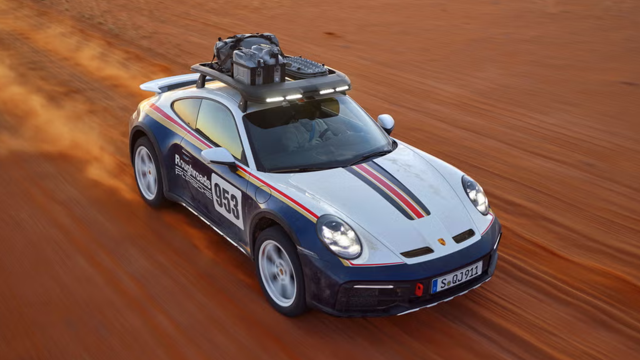
10 Most Unnecessary Porsches Ever Built (And Why We Love Them)
Verdad Gallardo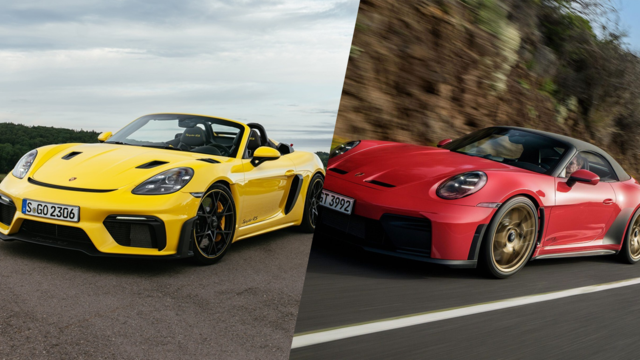
Porsche 911 GT3 S/C vs 718 Spyder RS: 10 Categories, One Winner
Joe Kucinski
This Builder Is Turning Heads With Its Slantnose 911 Creation
Verdad Gallardo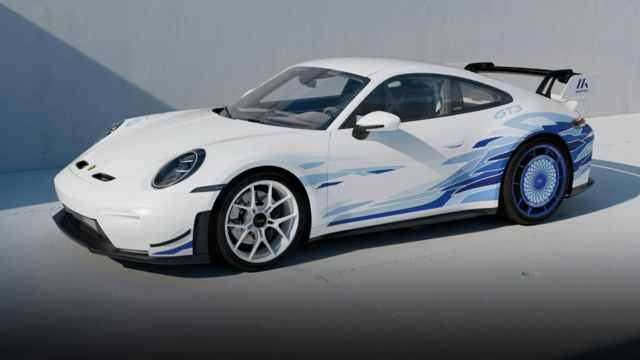
Porsche 911 GT3 Artisan Edition Pays Homage to Japanese Culture
Verdad Gallardo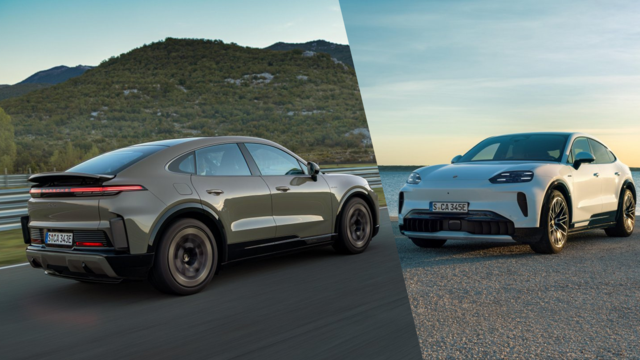
Porsche Reveals Coupe Variant of the Electric Cayenne With a Fresh Look
Verdad Gallardo
Intermediate
Joined: Aug 2013
Posts: 25
Likes: 0
Don't forget that truck engine had a very impressive power to weight ratio. It's also very compact. Few engines could beet the older LS7 in terms of power to weight or in terms of compact size vs power over 400hp much less 505. The new motor seems equally impressive and this is just the base model.
Intermediate
Joined: Aug 2013
Posts: 25
Likes: 0

Three Wheelin'
Joined: May 2012
Posts: 1,571
Likes: 9
Edmunds article is the first I have seen that doesn't appear biased and makes complete sense. No reteric or nationalism.
Lets see how the 991RS and the track orinated C7 (Z0 model) compare, think they will be close to.
Jay
Lets see how the 991RS and the track orinated C7 (Z0 model) compare, think they will be close to.
Jay
Nordschleife Master
Joined: Apr 2009
Posts: 5,718
Likes: 13
From: The Arctic Cold
thing is the c7 is a great car "for the money"..
if it was equal priced to a 991, would be a much tougher decision...
i dont expect the C7 to be better than my 997's or 991's.. but i think it will be a damn good deal for the price paid.
if it was equal priced to a 991, would be a much tougher decision...
i dont expect the C7 to be better than my 997's or 991's.. but i think it will be a damn good deal for the price paid.

Race Director

Joined: Mar 2006
Posts: 15,362
Likes: 199
From: Tampa
Quickag, yeah your student is getting around the track very well. Does the auto Vette tranny rev match on down shifts? Almost sounds like it does and I didn't see the down shift upsetting the car.
Hey guys...Chevy has been successfully racing "truck" engines for a long time
Hey guys...Chevy has been successfully racing "truck" engines for a long time
Three Wheelin'
Joined: May 2012
Posts: 1,571
Likes: 9
Exact same reason Porsche is going the way of PDK. Most people don't want to shift for themselves. While I prefer a manual for track work (unless it's a bomb proof very well sorted dual clutch and I REALLY care about lap times), here is a vid of a local guy running an automatic C6 Vette. He gets around the track pretty good, especially considering he's been doing DE events for well less than 2 years. He's picking it up very quickly. Anyway, you can see his tuned/cammed C6 automatic runs pretty good.
Eagle's Canyon Raceway, September 7,2013 Advanced/Instructor Group Session 4 - YouTube
Eagle's Canyon Raceway, September 7,2013 Advanced/Instructor Group Session 4 - YouTube

Racer
Joined: Nov 2012
Posts: 475
Likes: 5
Auto tranny vs PDK = fail, though.
Last edited by 917k; Sep 15, 2013 at 06:59 PM.