



Transmission problems...beware
RL Community Team
Rennlist Member
Rennlist Member

Joined: Oct 2007
Posts: 28,545
Likes: 8,351
From: Clemson, SC

Rennlist Member

Joined: Aug 2012
Posts: 8,124
Likes: 2,636
From: Pac NW

Fact is, I have yet to hear of anyone needing to replace those clutches. So whatever they're doing, it seems to be OK.
I'm skeptical that slipping them at idle will generate a ton of heat, but could be persuaded by data. Admittedly, I also don't see why it 's necessary to slip the clutches constantly in order to achieve smooth takeoffs, unless it's important to keep the discs warm for whatever reason.
I'm skeptical that slipping them at idle will generate a ton of heat, but could be persuaded by data. Admittedly, I also don't see why it 's necessary to slip the clutches constantly in order to achieve smooth takeoffs, unless it's important to keep the discs warm for whatever reason.
Last edited by Larson E. Rapp; Aug 31, 2023 at 06:17 PM.
Three Wheelin'

Joined: Jul 2004
Posts: 1,462
Likes: 175
From: Ex NY, now Palm Beach
But NO,the AxxxxxS want to give us EV's NO NO NO NO EV FOR ME

Rennlist Member

Joined: Jul 2019
Posts: 1,589
Likes: 414
I was monitoring the real-time clutch pressures, during some stop-and-go driving. I did not monitor the fluid temp, but I think the temperatures will start climbing if you are stuck in traffic, spending long periods in D, without the car not moving.
No, the engineers are not idiots, but making the dual-clutch smooth (by keeping the clutch slightly engaged, and slipping) before the driver releases the brake and starts accelerating is a goal of the transmission control software, to prevent customer complaints of "clunky" or "jerky" transmission behavior, as most people are used-to the smoother operation (and low speed creep behavior) of conventional automatic transmissions. The clutches are durable enough for some calculated average lifetime of clutch slip during stop-and-go traffic usage, but knowing how this transmission works allows us to shift to N, during long periods of stand-stills, to hopefully extend the life of the transmission.
Clutch slipping is the only thing that raises fluid temperatures. Changing gears doesn't create significant friction to increase the fluid temperature.
No, the engineers are not idiots, but making the dual-clutch smooth (by keeping the clutch slightly engaged, and slipping) before the driver releases the brake and starts accelerating is a goal of the transmission control software, to prevent customer complaints of "clunky" or "jerky" transmission behavior, as most people are used-to the smoother operation (and low speed creep behavior) of conventional automatic transmissions. The clutches are durable enough for some calculated average lifetime of clutch slip during stop-and-go traffic usage, but knowing how this transmission works allows us to shift to N, during long periods of stand-stills, to hopefully extend the life of the transmission.
Clutch slipping is the only thing that raises fluid temperatures. Changing gears doesn't create significant friction to increase the fluid temperature.
Also, if you are right, maybe the first reason I have heard to re-engage that annoying "Start-Stop" function wicj shuts down the drive train while stationary.
Last edited by DHL; Aug 31, 2023 at 09:12 PM.
Rennlist Member
Joined: Nov 2019
Posts: 7,483
Likes: 3,101
From: linker Fahrbahn
Fact is, I have yet to hear of anyone needing to replace those clutches. So whatever they're doing, it seems to be OK.
I'm skeptical that slipping them at idle will generate a ton of heat, but could be persuaded by data. Admittedly, I also don't see why it 's necessary to slip the clutches constantly in order to achieve smooth takeoffs, unless it's important to keep the discs warm for whatever reason.
I'm skeptical that slipping them at idle will generate a ton of heat, but could be persuaded by data. Admittedly, I also don't see why it 's necessary to slip the clutches constantly in order to achieve smooth takeoffs, unless it's important to keep the discs warm for whatever reason.
Friction interfaces (transmission clutch plates) have static and dynamic (sliding) friction coefficients. The static coeff is higher than the dynamic coeff. This means higher shear force (torque) is needed to overcome clutch plates which are not already slipping. Once slipping, the torque transmitted decreases. This discontinuity between static and dynamic coeffs is the reason to implement near-continuous slipping. Smoother performance.
Otherwise a stick-slip effect would occur delivering undesirable drivability.
Rennlist Member
Joined: Nov 2019
Posts: 7,483
Likes: 3,101
From: linker Fahrbahn
So why the suggestion to use sport mode full time if the clutch slippage also occurs in that mode? Is it because sport mode lowers coolant temps (slightly)? BTW I am a new owner of a 2022 GTS and this post has me concerned. Luckily I purchased the extended Porsche warranty for up to 10 years and am now glad I did.
Also, if you are right, maybe the first reason I have heard to re-engage that annoying "Start-Stop" function wicj shuts down the drive train while stationary.
Also, if you are right, maybe the first reason I have heard to re-engage that annoying "Start-Stop" function wicj shuts down the drive train while stationary.
Less clutch slip = longer clutch life = possibly less comfortable gear change. Sport mode = less clutch slip = longer clutch life.
Last edited by chassis; Aug 31, 2023 at 09:59 PM.
Rennlist Stories
The Best Porsche Posts for Porsche Enthusiasts
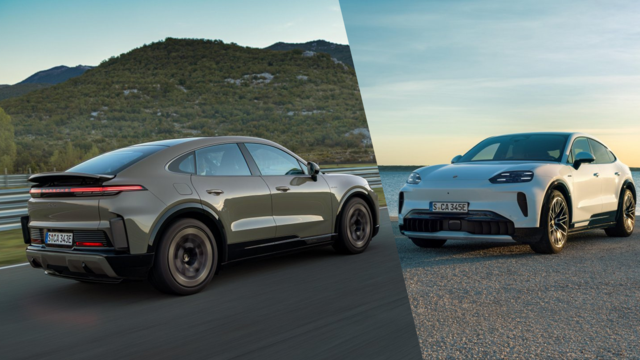
Porsche Reveals Coupe Variant of the Electric Cayenne With a Fresh Look
Verdad Gallardo
10 Porsche Colors That Have More Personality Than Most People
Verdad Gallardo
Guntherwerks' Final Speedster Creation Is the Ultimate Porsche Restomod
Verdad Gallardo
10 Reasons I Hate Going to the Porsche Dealership (& the 1 Reason I Stay)
Joe Kucinski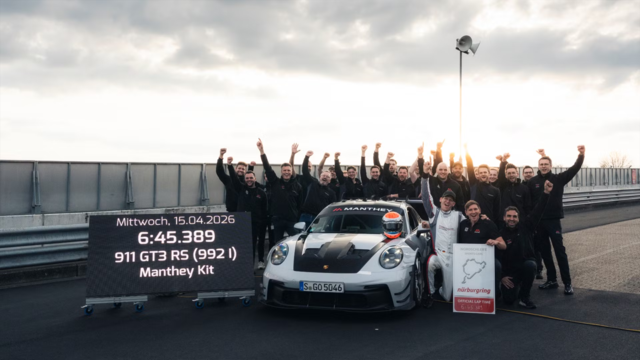
Porsche Shakes Up The Nürburgring Lap Record Table Once Again
Verdad Gallardo
6 Ways the Porsche 911 GT3 S/C Redefines Performance
Joe Kucinski
10 Wildest Homologation Specials Porsche Ever Sold
Verdad Gallardo
Super Rare RUF BTR III Comes Out of Hibernation, Looking For a New Home
Verdad Gallardo
10 Porsche Opinions That Can Start a Fight
Joe Kucinski
Rennlist Member
Joined: Aug 2012
Posts: 8,124
Likes: 2,636
From: Pac NW
Experience driving a stick shift. I don't have to slip the clutch while I'm waiting at a red light, so why does the PDK need to?
It is known that the PDK maintains calibrated "bite point" measurements for clutch engagement, which is more than I do. It knows how to engage the clutch in first gear quickly and smoothly.
It is known that the PDK maintains calibrated "bite point" measurements for clutch engagement, which is more than I do. It knows how to engage the clutch in first gear quickly and smoothly.
Burning Brakes
Joined: Apr 2019
Posts: 852
Likes: 332
From: Dunnellon, Florida
Sport mode uses faster gear changes, which means less clutch slippage per gear change. Consider the 3-speed Chrysler Torqueflite and Ford C-4 transmissions, which took an eternity to shift gears. Time between gears is proportional to clutch slip. More time between gears = more clutch slip = more comfortable gear change.
Less clutch slip = longer clutch life = possibly less comfortable gear change. Sport mode = less clutch slip = longer clutch life.
Less clutch slip = longer clutch life = possibly less comfortable gear change. Sport mode = less clutch slip = longer clutch life.
Rennlist Member
Joined: Jul 2019
Posts: 1,589
Likes: 414
Sport mode uses faster gear changes, which means less clutch slippage per gear change. Consider the 3-speed Chrysler Torqueflite and Ford C-4 transmissions, which took an eternity to shift gears. Time between gears is proportional to clutch slip. More time between gears = more clutch slip = more comfortable gear change.
Less clutch slip = longer clutch life = possibly less comfortable gear change. Sport mode = less clutch slip = longer clutch life.
Less clutch slip = longer clutch life = possibly less comfortable gear change. Sport mode = less clutch slip = longer clutch life.
And I agree regarding drivability. I had an X3 M40i that literally slammed gear changes in Sport+ mode to such an extent it unsettled the chassis and sounded like explosions at every gear change. Quite uncomfortable to drive and one of the reasons I have a Macan GTS instead.
Rennlist Member
Joined: Nov 2019
Posts: 7,483
Likes: 3,101
From: linker Fahrbahn
Rennlist Member
Joined: Nov 2019
Posts: 7,483
Likes: 3,101
From: linker Fahrbahn
Experience driving a stick shift. I don't have to slip the clutch while I'm waiting at a red light, so why does the PDK need to?
It is known that the PDK maintains calibrated "bite point" measurements for clutch engagement, which is more than I do. It knows how to engage the clutch in first gear quickly and smoothly.
It is known that the PDK maintains calibrated "bite point" measurements for clutch engagement, which is more than I do. It knows how to engage the clutch in first gear quickly and smoothly.
PDK is in "pre-launch" while waiting at a light slightly slipping its wet clutch plates, for smooth launch.
Rennlist Member
Joined: Nov 2019
Posts: 7,483
Likes: 3,101
From: linker Fahrbahn
Yes, but I thought the point was heat generation, the majority of it being produced by slippage at idle, not during normal high RPM gear changes (since these occur over a much shorter time period).
And I agree regarding drivability. I had an X3 M40i that literally slammed gear changes in Sport+ mode to such an extent it unsettled the chassis and sounded like explosions at every gear change. Quite uncomfortable to drive and one of the reasons I have a Macan GTS instead.
And I agree regarding drivability. I had an X3 M40i that literally slammed gear changes in Sport+ mode to such an extent it unsettled the chassis and sounded like explosions at every gear change. Quite uncomfortable to drive and one of the reasons I have a Macan GTS instead.
Rennlist Member
Joined: Jul 2019
Posts: 1,589
Likes: 414
Just trying to determine if I should be driving continuously in sport mode or not. If the shift frequency is not a major factor, only time at idle, then it should not matter and either mode produces the same amount of heat.