Did they explain reasoning behind avoiding the low temp thermostat?
Not his Indy, but this is what my Indy (Austin TX) advised when I asked for a quote to replace water pump and LTT:
"I would advise against a lower temperature version for street use. The lower temperature version could trigger a cooling system fault code because the engine would take longer to warm up and would no longer operate at the temperature which the software in the computer is looking for. It could also trigger catalyst efficiency fault codes depending on the driving conditions."
Not his Indy, but this is what my Indy (Austin TX) advised when I asked for a quote to replace water pump and LLT:
"I would advise against a lower temperature version for street use. The lower temperature version could trigger a cooling system fault code because the engine would take longer to warm up and would no longer operate at the temperature which the software in the computer is looking for. It could also trigger catalyst efficiency fault codes depending on the driving conditions."
Mind sharing who your Indy is? I installed it myself last year and have about 2,300 miles on it with no faults. Not that my experience is the end all, be all.
Not his Indy, but this is what my Indy (Austin TX) advised when I asked for a quote to replace water pump and LLT:
"I would advise against a lower temperature version for street use. The lower temperature version could trigger a cooling system fault code because the engine would take longer to warm up and would no longer operate at the temperature which the software in the computer is looking for. It could also trigger catalyst efficiency fault codes depending on the driving conditions."
Have 80k combined miles of my own ownership on 2 997.1s with LTTs installed a s not a single one of those codes.
There's no good reason not to do this and plenty of good reasons to do it, but you guys can do what you think is best vs what Jake and Charles have proven is best.
I DM'd Jake directly on Facebook and asked his opinion of whether I should put a LTT in my 997.1, and his answer was 1 word - 'absolutely'.
I will have it done, regardless of my Indy's opinion. I just wanted to add that dialog to see what others opinions might be.
Now I just need to decide whether to let them do it or find someone else.
To follow up on this thread I did replace the water pump + 160 degree thermostat. In addition I also had other stuff replaced:
Clutch
IMS replaced with LNE IMS solution (old bearing looked great)
New IMS seal
New RMS
New OEM shift cables
Oil changed for DT40
This morning I installed new motor mounts. All thats left to do is drive it a lot. Oh and probably do plugs and coils at some point - I’m not looking forward to that job.
To follow up on this thread I did replace the water pump + 160 degree thermostat. In addition I also had other stuff replaced:
Clutch
IMS replaced with LNE IMS solution (old bearing looked great)
New IMS seal
New RMS
New OEM shift cables
Oil changed for DT40
This morning I installed new motor mounts. All thats left to do is drive it a lot. Oh and probably do plugs and coils at some point - I’m not looking forward to that job.
$7k with tax. But now I’ve pretty much covered all of the maintenance items (I did the AOS, hoses, engine mounts, alternator and battery myself). I will do plugs and brakes at a later date.
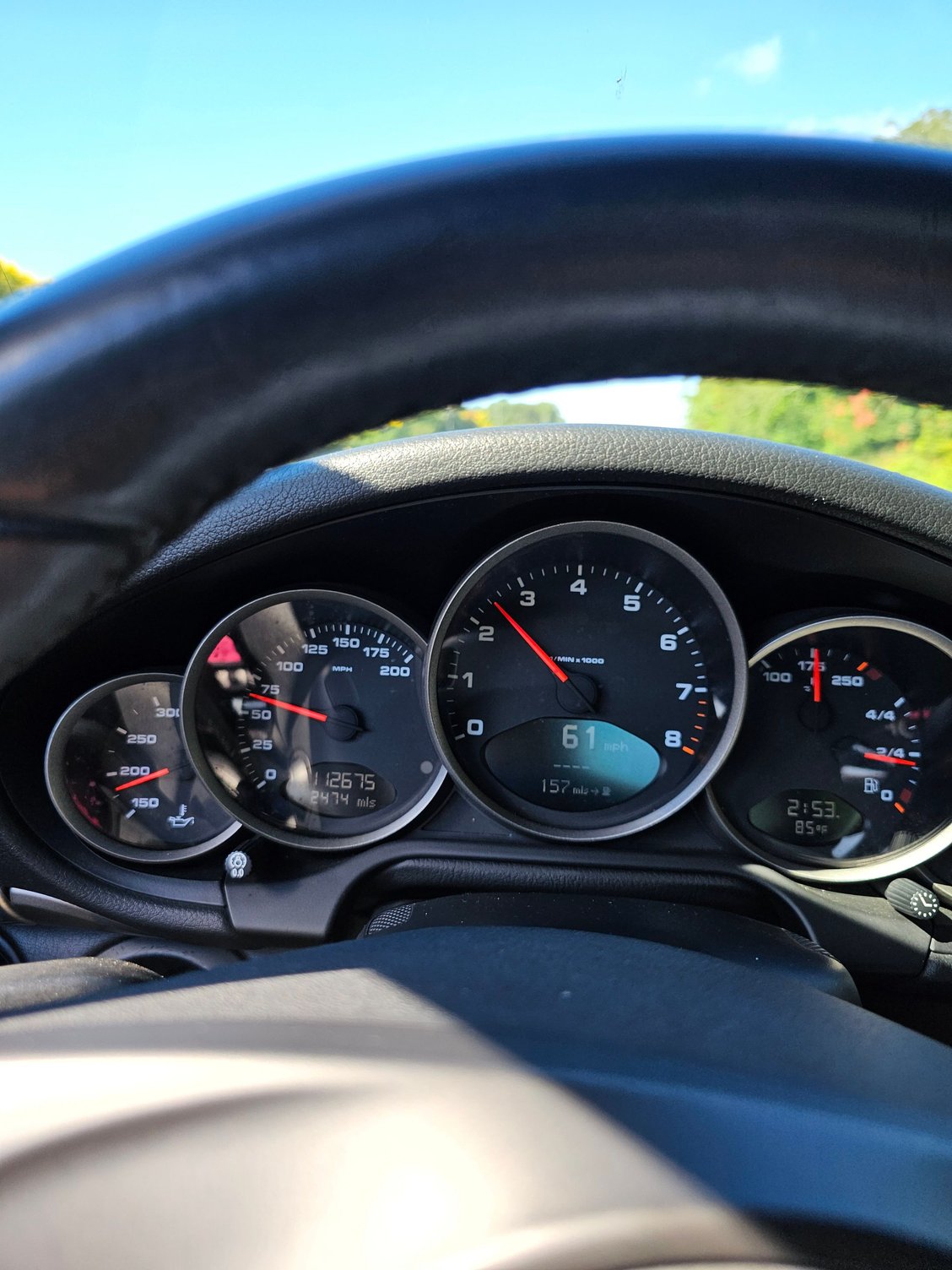
I just had my LTT installed with a New waterpump and I can see the difference immediately. I do also have the 3rd radiator installed, as it gets very hot here in Central Florida.
The car never passed 200 after doing a bunch of highway pulls and aggressive acceleration. I'm running LiquiMoly 5w-40 High Tech Lechtlauf
and just regular driving casually in and around town, it sat around 175 the whole time. I know the factory gauge isn't the most accurate but it's running much cooler than before.
Slideshow: For a company obsessed with engineering precision, Porsche has occasionally named its cars in ways that left even loyal enthusiasts scratching their heads.
Slideshow: Pogea Racing's latest Porsche 964 project blends carbon-fiber construction, modern chassis upgrades, and up to 500 horsepower while keeping the air-cooled 911 experience firmly analog.
Slideshow: Talos Vehicles has transformed the Porsche 911 GT3 RS into a carbon-bodied, race-inspired machine that costs well over $1 million before the donor car is even included.
Slideshow: Long before engineering consulting became trendy, Porsche was quietly helping other automakers build everything from supercars to economy hatchbacks.
Slideshow: Some brands build cars. Porsche builds traditions, obsessions, and a few habits that stopped making sense decades ago but somehow became part of the charm.