When you click on links to various merchants on this site and make a purchase, this can result in this site earning a commission. Affiliate programs and affiliations include, but are not limited to, the eBay Partner Network.
Was it a custom tune or off the shelf? Who did it? Softronic says they get similar gains, it’s one of those things I’ve thought about doing, but other people say they don’t increase hp/torque. I’ve had great luck with aftermarket tunes on former cars (bmw, audi, vw). Thanks in advance for anything you can share.
Was it a custom tune or off the shelf? Who did it? Softronic says they get similar gains, it’s one of those things I’ve thought about doing, but other people say they don’t increase hp/torque. I’ve had great luck with aftermarket tunes on former cars (bmw, audi, vw). Thanks in advance for anything you can share.
Here us my input.
I paid up and bought a perfect 2003 996 Aero.
I invested nearly $20k on top of paying the long dollar for a car.
(Read my signature for mods)
If you do all your own wrenching, that softens the blow.
I track 3-5 days a year and an occasional autocross.
Do some maintenance and tweaking on suspension, it should be all updated oem or aftermarket.
Brakes freshened and new fluid, good fluid, done regularly.
Engine maintenance all that has been mentioned.
Up grades, they get pricey.
The return is very little.
My dyno is 298 at rear wheels.
But my horsepower and torque are a large wide powerband.
Make the car safe and reliable, that will cost you $10k.
Go out and drive it for while, spend money on track time
The exhaust and ECU tune were done at the same time, with dyno before and after. Peak power and torque increased between 5 and 10%. Power is moved up the rev band a bit and comes on almost like a turbo at about 4K. Yea, it was worth it to me.
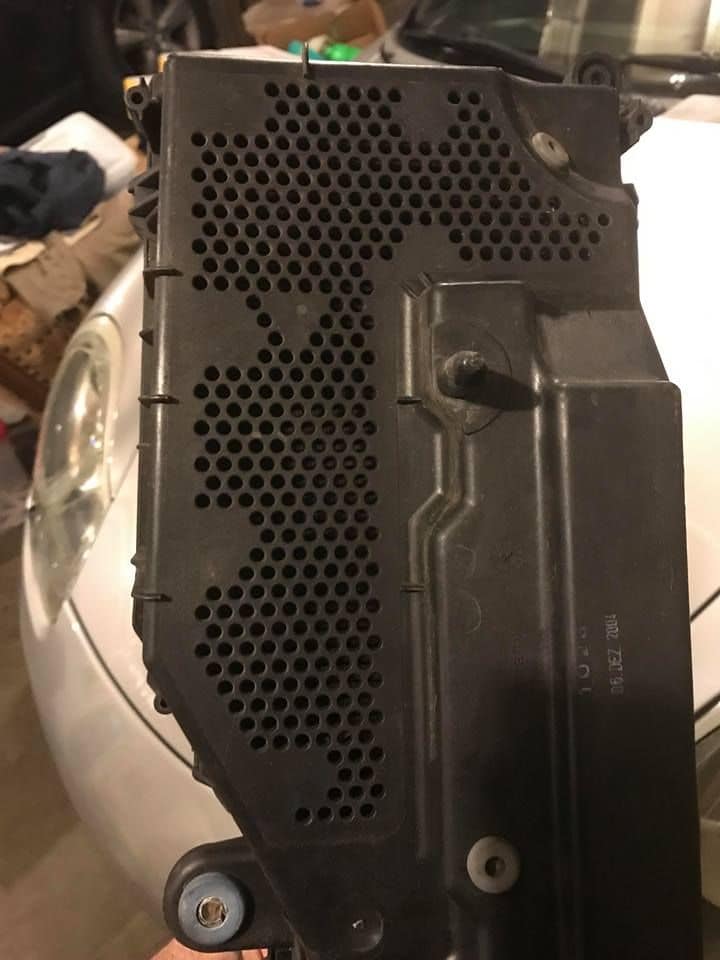
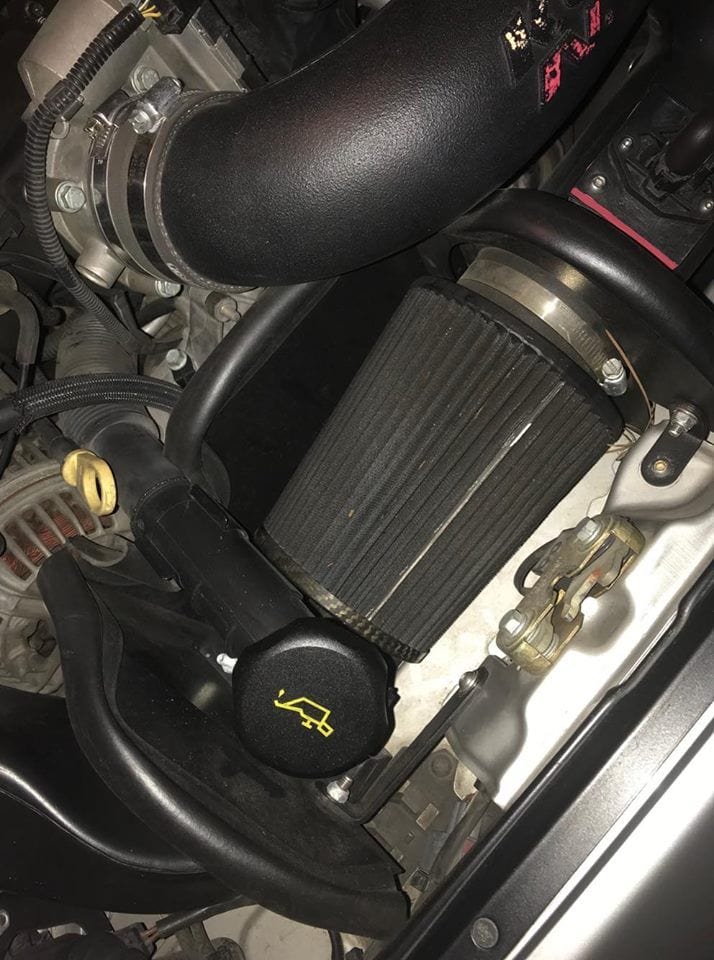
I get how cool air is better obviously, just how an air box full of holes draws less hot air than an intake that is blocked off from the engine and still fed by the same snorkel. bottom of the factory box, full of holes still fed by the snorkel, completely blocked from engine, filthy though it may be
either way, enough people seem anti K&N that its worth considering getting rid of, I just want to understand why I'm doing it and not just bc a bunch of people say so, you know?
Everyone keeps going on about these holes in the bottom of the air box but these holes are there for air to flow out of not into!!
Air flows into the air box through the snorkel using a ram air effect , the volume of air entering the bottom of the air box is a higher volume than is needed to feed into the engine, without these holes the air wouldn't flow smoothly through the bottom of the air box and would be turbulent and less efficient , the idea is a constant flow of cool air is passing down the snorkel into the bottom of the air box then out through the holes in the bottom , the throttle body only sucks what is needed by the engine out of that flow and up through the air filter into the top of the air box and into the throttle body, without the holes the air would flow down the snorkel into the bottom of the air box then become trapped , become turbulent and heat up !!
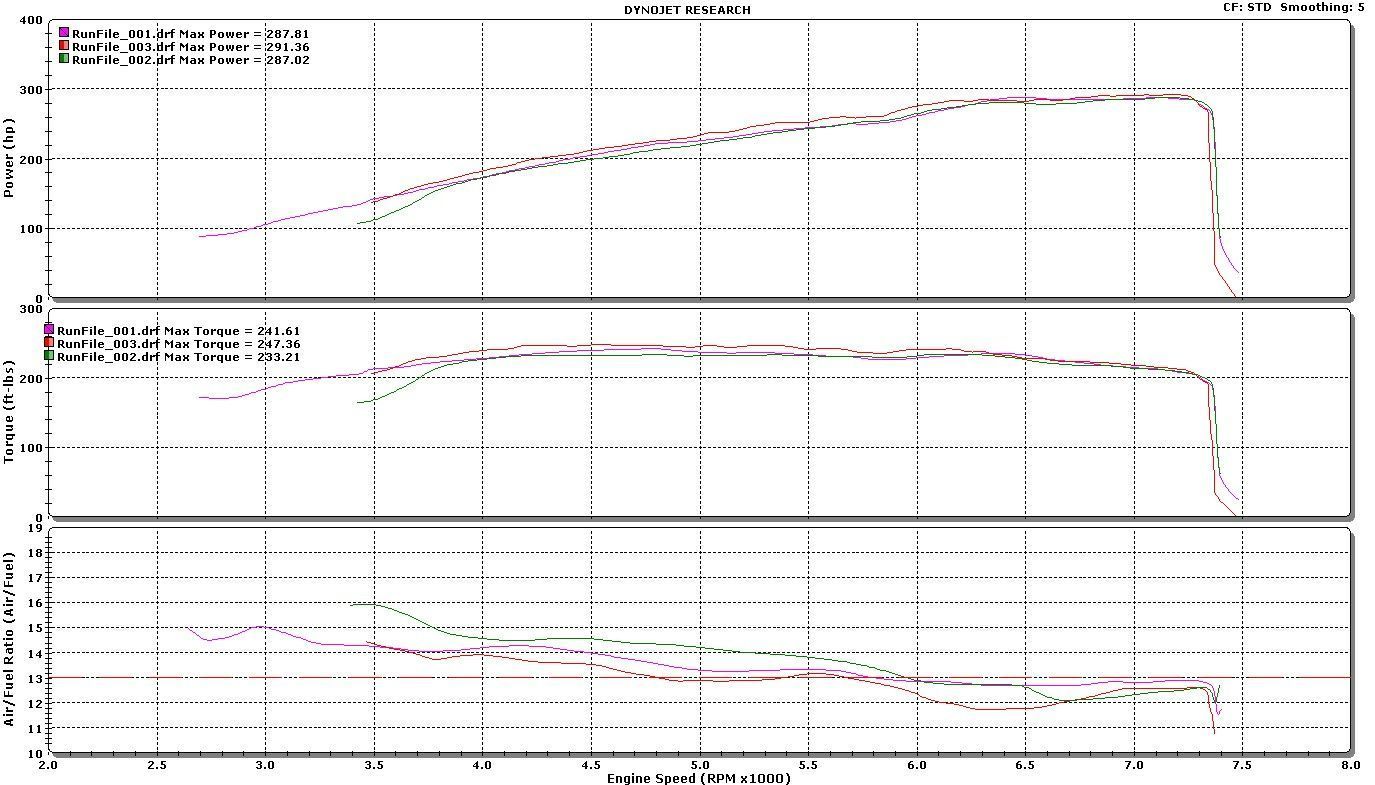
Here is a dyno sheet and video of a 3.6L with plenty of modifications
This build was designed and built to get as much torque as possible and for the longest band, you can see how long the torque band is.
Ask Jake how many engines he has seen with a lightweight flywheel and a busted crankshaft. Dual mass flywheel takes up the crank vibrations. I do not think a lightweight flywheel will gain you anything unless you balance the entire crank assembly and even then..... Just my 0.02 cents.....
Ask Jake how many engines he has seen with a lightweight flywheel and a busted crankshaft. Dual mass flywheel takes up the crank vibrations. I do not think a lightweight flywheel will gain you anything unless you balance the entire crank assembly and even then..... Just my 0.02 cents.....
I have a LWFW, I purchased a balanced set from Patrick Motorsports, one of the only places I had found that offered a lightweight flywheel that had a pressure plate centifically balanced to flywheel.
I know this does not mean the same as a crankshaft balancing procedure that would include all rotating parts that are attached directly or indirectly to crank.
But it does aid in reducing the unbalanced spinning mass.
I know from the "old days" in drag racing, the heavy steel flywheels would increase measured "dyno" and actual torque, leaving the line at high rpms in a heavy car required the heavy fly wheel.
Direct contrast to LWFW that speed up revs, drastically, but the loss of applied torque would be very obvious.
Are there any engineers or engine builders here that know what the torque loss is when a LWFW is utilized in a build?
I can say from my experience , my rear tires are 12.5" of tread contact each.
Before LWFW, when the 5000 RPM launch control was installed via Evoms Stage VI tune, the car would ignite the rear tires. After the LWFW, the engine bogs and drops from 5000 rpm to less than 2500 rpm.
But......, the acceleration coming out of a turn, hitting the apex at the bottom of power band, the LWFW is awesome. It is a huge advantage in autocross.
This contradictory comments on applied torque to the rear wheels has confused me since I installed it.
I would like to see the graph too. Were the before and after runs done on the same day, same dyno?
Yes, same day and same dyno.
As I mentioned, there were two mods that day - the ECU tune and exhaust.
I posted the dyno charts already, must be about 2 years ago but I'll see if I can dig them out again.
I have a LWFW, I purchased a balanced set from Patrick Motorsports, one of the only places I had found that offered a lightweight flywheel that had a pressure plate centifically balanced to flywheel.
I know this does not mean the same as a crankshaft balancing procedure that would include all rotating parts that are attached directly or indirectly to crank.
But it does aid in reducing the unbalanced spinning mass.
I know from the "old days" in drag racing, the heavy steel flywheels would increase measured "dyno" and actual torque, leaving the line at high rpms in a heavy car required the heavy fly wheel.
Direct contrast to LWFW that speed up revs, drastically, but the loss of applied torque would be very obvious.
Are there any engineers or engine builders here that know what the torque loss is when a LWFW is utilized in a build?
I can say from my experience , my rear tires are 12.5" of tread contact each.
Before LWFW, when the 5000 RPM launch control was installed via Evoms Stage VI tune, the car would ignite the rear tires. After the LWFW, the engine bogs and drops from 5000 rpm to less than 2500 rpm.
But......, the acceleration coming out of a turn, hitting the apex at the bottom of power band, the LWFW is awesome. It is a huge advantage in autocross.
This contradictory comments on applied torque to the rear wheels has confused me since I installed it.
Any thoughts?
-David
It can be a bit confusing, I'll try to explain, NOTE : I may confuse you even worse !! lol
Dyno's actually measure torque (twisting force), horsepower is mathematically derived from torque. Torque, times engine speed, divided by 5,252 equals horsepower.
If you are wondering where the 5,252 comes from, it is just the number used in the equation for HP and Torque in ft/lbs, if calculating in Watts and Newton meters a different calculating number is used.
If you notice on all dyno graphs torque and horsepower cross at 5,252, this is not a coincidence, it is part of the equation.
Changing the flywheels weight does not change the torque or horsepower of the engine, it changes the "inertia" of the rotating mass which is not measured by a dyno. A heavy flywheel can store more energy (inertia) and feel like more torque, hence the better launch of a heavy flywheel (up to 60lbs) in a Drag Car, or the tire roasting of a heavy flywheel in a street car, but what you are feeling is "false torque", it is actually inertia, stored energy in the flywheel.
Last edited by Porschetech3; Feb 9, 2019 at 04:00 AM.