



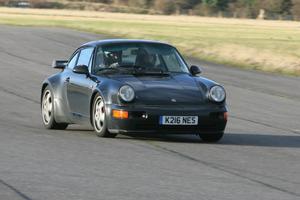
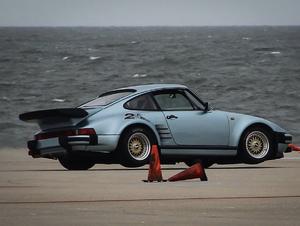

Shift lights installation
Thread Starter
Addict
Rennlist Member
Rennlist Member

Joined: Apr 2002
Posts: 2,426
Likes: 0
From: Apex, NC

no i wasn't saying that - if i remeber corretly i used #4 for the calibration factor i just started the calibration from 1K rpms then moved the light trigger range up from there.
mine is within 50 rpms of being exact at 1K RPM's - also the lights have some "lag" in them when you are dropping off the throttle they will stay on below the RPM limit i think the resolution they state in the manual is +/- 50 RPMS
mine is within 50 rpms of being exact at 1K RPM's - also the lights have some "lag" in them when you are dropping off the throttle they will stay on below the RPM limit i think the resolution they state in the manual is +/- 50 RPMS
Thread Starter
Addict
Rennlist Member
Rennlist Member
Joined: Apr 2002
Posts: 2,426
Likes: 0
From: Apex, NC
you can keep your eyes on the road - important when you are at the track or in an autox - if you can stretch a gear a little bit in some situations you can skip a gear change which takes time.

3rd Gear
Joined: Jul 2007
Posts: 3
Likes: 0

In general, cars use the setting 0.5, 1, 2 or 4. Settings like 1.5, 2.5 and 3 are used by 3 or 5 cylinder engines, typically motorbikes. This calibration is related to the number of sparks the engine makes per revolution. If you connected directly to an ignition driver output, you would get 1 spark every 2 rotations (or 0.5 sparks per revolution). If it was a wasted spark ignition system, it would be 1. If it is a tacho signal, it is typically 1, 2 or 4, representing every spark that occurs (or an even multiple of).
The difference between using 0.5, 1, 2 or 4 is quite a lot. It is often the accuracy of the tacho guages that are way off. I've measured some that have been out more than 1,200rpm! The analog gauges are also quite slow. The Shift-I has been aggressively tweaked to respond VERY FAST to track RPM, but measures every single pulse to make sure it doesn't trigger from a bit of electrical noise, won't flicker and is accurate. It might seem it comes on a little early compared to the tacho, however it is really the mechanical tacho that lags the engines RPM... particularly with performance engines

If you see lag when going off in throttle, that is intentional! It's a big benefit too! For example, if you had a light that come on at 5,500rpm. If it went off at 5,499rpm, then it would flicker. A shift light that flickers is useless, because it should only do something like that when you hitting the shift point. So we programmed it to have hysteresis. This means that the light will turn on at 5,500rpm, but has to drop a certain amount before it turns off. This effect is usually not noticed by most. By default, it has to drop either 350rpm or 25% of the RPM towards the next lowest light, whichever is smallest. However this setting, like most, is configurable! See page 15. You can reduce it down to 12.5%, 6.25% or even turn it off.
A lot of engineering went into this device to make it both the best and the most usable you can get. Which is why it's a pleasure to provide support for.
Hope you guys don't mind me dropping in


RL Community Team
Rennlist Member
Rennlist Member
Joined: Oct 2003
Posts: 7,885
Likes: 881
Hi Tony, thanks for chiming in! I think I've got it set up right using calibration factor of 4 - it's just a matter of getting comfortable knowing it's working correctly. I won't know for sure until a couple weeks away when I'll be racing the car - I'll be at redline most of the time so I'll have plenty of time to make sure it's set up! The car is just too loud and too fast to test it on the streets!!! 
Rennlist Stories
The Best Porsche Posts for Porsche Enthusiasts

2026 Porsche 911 Club Coupe is Spectacular, And Everything Wrong with the Porsche Market
Joe Kucinski
Talos Takes Your 991 Porsche 911 GT3 to the Next Level for a Cool $1.13 Million
Verdad Gallardo
9 Vehicles Porsche Helped Engineer that Aren't Porsches
Verdad Gallardo
9 Features and Characteristics That Only Porsche People Understand
Verdad Gallardo
I've Written 500 Rennlist Articles: Here's How Porsche Has Changed Along the Way
Joe Kucinski
10 Most Unnecessary Porsches Ever Built (And Why We Love Them)
Verdad Gallardo
Porsche 911 GT3 S/C vs 718 Spyder RS: 10 Categories, One Winner
Joe Kucinski
This Builder Is Turning Heads With Its Slantnose 911 Creation
Verdad Gallardo
Porsche 911 GT3 Artisan Edition Pays Homage to Japanese Culture
Verdad Gallardo
Super Moderator
Needs More Cowbell
Lifetime Rennlist
Member
Needs More Cowbell
Lifetime Rennlist
Member
Joined: Mar 2002
Posts: 29,323
Likes: 17
Thanks.
After looking at some pics on their website, I went with Blue/Red, as it seemed a little easier for me to see....I have trouble with Red/Green.
I suppose it doesn't matter.....once they start flashing at me, I'm sure I'll figure out what they're trying to tell me.
After looking at some pics on their website, I went with Blue/Red, as it seemed a little easier for me to see....I have trouble with Red/Green.
I suppose it doesn't matter.....once they start flashing at me, I'm sure I'll figure out what they're trying to tell me.

Agent Orange
Rennlist Member
Rennlist Member

Joined: Jun 2006
Posts: 16,253
Likes: 754
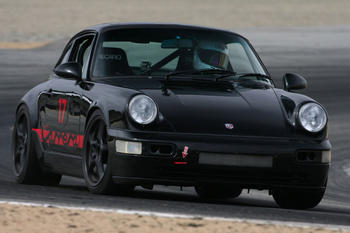
Guys, I hate to bring this thread back from the dead, but I have a question about mounting the Shift-I on the dashboard. I have race seats in my car and my seating position is quite low. I can't see the area of the dashboard where Rob mounted his lights because the tip of my steering wheel is in the way. So my other options are:
A) Steering wheel column in front of the tach - right now I have twisted my tach so the redline is at the 12 o'clock position. If I installed the lights on the steering column I'll have to twist the tach back to the stock position. My other concern is whether the lights will be visible there, because they're not exactly in my line of sight. If they are bright enough I'm sure I'll be able to see them but it sort of defeats the purpose.
B) Top of the winshield - I think that will work well, but I haven't tested it with my helmet on to see if it's in my line of sight. I don't have sun visors in my car and there is a big 5" banner across the top of the windshield which will keep sun glare away from the lights.
Below are a couple of pics of my interior. Any suggestions? Thanks!
A) Steering wheel column in front of the tach - right now I have twisted my tach so the redline is at the 12 o'clock position. If I installed the lights on the steering column I'll have to twist the tach back to the stock position. My other concern is whether the lights will be visible there, because they're not exactly in my line of sight. If they are bright enough I'm sure I'll be able to see them but it sort of defeats the purpose.
B) Top of the winshield - I think that will work well, but I haven't tested it with my helmet on to see if it's in my line of sight. I don't have sun visors in my car and there is a big 5" banner across the top of the windshield which will keep sun glare away from the lights.
Below are a couple of pics of my interior. Any suggestions? Thanks!
Super Duper Moderator
Lifetime Rennlist
Member
Lifetime Rennlist
Member
Joined: Nov 2004
Posts: 7,773
Likes: 21
From: YQU
I put mine in position A (on the top of the steering column in front of the tach) but have a rotated tach already too - why do you need to rotate it back?
Even though they are lower, they are bright enough to see in your peripheral vision.
I can post a picture when I get home later today if you'd like.
Marc
Even though they are lower, they are bright enough to see in your peripheral vision.
I can post a picture when I get home later today if you'd like.
Marc
Agent Orange
Rennlist Member
Rennlist Member
Joined: Jun 2006
Posts: 16,253
Likes: 754
Thanks Marc! I will need to rotate the tach back because of my LWF - I need to see when the needle starts to go too low and ready to stall so I can blip the throttle. If you can post a photo that would be great. Thanks again!
Rennlist Member
Joined: Jul 2003
Posts: 1,964
Likes: 71
From: Peachtree City, Ga
I installed mine on the top of the dash in front of the steering wheel -
I had the same problem that you do in that I could not see the lights when I was in my seat - So I made a aluminum bracket that raised the lights up about 1 1/2 inch to make it visible over the steering wheel. I made the bracket out of aluminum sheet metal and used the double sided adhesive tape to hold in place ( lights come with same ) and I just stuck the light on top of the bracket - Been there for 9 months now - no issues - I prefer this position as it is my line of sight of the road when I am autocrossing and do not have to look down at the tach to see the RPM now -
Gus
I had the same problem that you do in that I could not see the lights when I was in my seat - So I made a aluminum bracket that raised the lights up about 1 1/2 inch to make it visible over the steering wheel. I made the bracket out of aluminum sheet metal and used the double sided adhesive tape to hold in place ( lights come with same ) and I just stuck the light on top of the bracket - Been there for 9 months now - no issues - I prefer this position as it is my line of sight of the road when I am autocrossing and do not have to look down at the tach to see the RPM now -
Gus
Three Wheelin'
Joined: Apr 2004
Posts: 1,433
Likes: 1
From: bloomington, IN
I actually have mine on top of my dash like rob, but I have my valentine 1 display in front of the tach, and can see it just fine, so you should be able to see the Shift-I. I think it would be more of a peripheral view at that point, but all you are actually looking for is the flash of the led's, so you should be able to see that.