




2/6 Rod bearing fix?

Archive Gatekeeper
Rennlist Member
Rennlist Member

Joined: Sep 2002
Posts: 18,813
Likes: 4,012
From: Irvine, CA

Matt-
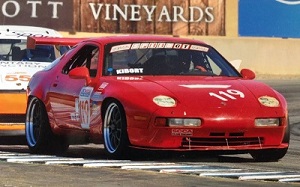
As part of your 928 History 101, here are a couple of threads on the later history of the Holbert car. Not sure where it's currently at in its restoration.
On-track incident:
https://rennlist.com/forums/928-foru...-by-civic.html
Ed (OBehave) takes on the resto project:
https://rennlist.com/forums/928-foru...ouncement.html
Dwayne's excellent adventure:
https://rennlist.com/forums/928-foru...me-update.html
https://rennlist.com/forums/928-foru...wayne-too.html
https://rennlist.com/forums/928-foru...hlight=Holbert
As part of your 928 History 101, here are a couple of threads on the later history of the Holbert car. Not sure where it's currently at in its restoration.
On-track incident:
https://rennlist.com/forums/928-foru...-by-civic.html
Ed (OBehave) takes on the resto project:
https://rennlist.com/forums/928-foru...ouncement.html
Dwayne's excellent adventure:
https://rennlist.com/forums/928-foru...me-update.html
https://rennlist.com/forums/928-foru...wayne-too.html
https://rennlist.com/forums/928-foru...hlight=Holbert

Rennlist Member
Joined: Dec 2001
Posts: 25,186
Likes: 105
Okay understood. I am doing some heads for the rat motor we discussed. Cleaning them up but am pulling all the freeze plugs for the oil galleys. I can thread the best position and stick an appropriate sender on there.
Btw- do you use the bracket for the air pump for the scavenge unit?
Btw- do you use the bracket for the air pump for the scavenge unit?
Sort of. Obviously going to need the thread the cylinder head. And the stock sender has huge threads, so a different VDO sender is required.
This is just one thing that makes Kibort's theory that the failures are totally about oil and oil temperature so silly.
Anderson, before he went to a dry sump system, would bring his car back into the pits, at Willow, with the lifters clattering like crazy. The only way that is possible is if the pick-up ran out of oil and sucked air. I don't care what oil you use...if the pick-up gets uncovered, the engine is going to fail......and they did.
The stock oil pressure sender has a tiny, tiny restriction in it. This restriction is there to "dampen" the sender, which is great for the person driving down to the 7/11 store who doesn't want to see flickering needles....but not so good for a race car.
This is just one thing that makes Kibort's theory that the failures are totally about oil and oil temperature so silly.
Anderson, before he went to a dry sump system, would bring his car back into the pits, at Willow, with the lifters clattering like crazy. The only way that is possible is if the pick-up ran out of oil and sucked air. I don't care what oil you use...if the pick-up gets uncovered, the engine is going to fail......and they did.
The stock oil pressure sender has a tiny, tiny restriction in it. This restriction is there to "dampen" the sender, which is great for the person driving down to the 7/11 store who doesn't want to see flickering needles....but not so good for a race car.
Rennlist Member
Joined: Feb 2003
Posts: 29,828
Likes: 218
From: saratoga, ca
Sort of. Obviously going to need the thread the cylinder head. And the stock sender has huge threads, so a different VDO sender is required.
This is just one thing that makes Kibort's theory that the failures are totally about oil and oil temperature so silly.
Anderson, before he went to a dry sump system, would bring his car back into the pits, at Willow, with the lifters clattering like crazy. The only way that is possible is if the pick-up ran out of oil and sucked air. I don't care what oil you use...if the pick-up gets uncovered, the engine is going to fail......and they did.
The stock oil pressure sender has a tiny, tiny restriction in it. This restriction is there to "dampen" the sender, which is great for the person driving down to the 7/11 store who doesn't want to see flickering needles....but not so good for a race car.
This is just one thing that makes Kibort's theory that the failures are totally about oil and oil temperature so silly.
Anderson, before he went to a dry sump system, would bring his car back into the pits, at Willow, with the lifters clattering like crazy. The only way that is possible is if the pick-up ran out of oil and sucked air. I don't care what oil you use...if the pick-up gets uncovered, the engine is going to fail......and they did.
The stock oil pressure sender has a tiny, tiny restriction in it. This restriction is there to "dampen" the sender, which is great for the person driving down to the 7/11 store who doesn't want to see flickering needles....but not so good for a race car.
Thank you for the same mantra, Mark.
Three points:
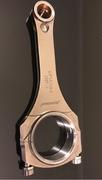
Parts inside race engines can and do break.....regardless of who makes those parts and how much they cost. Formula One, Indy Car, Nascar teams transport many millions of dollars worth of replacement parts around with them, because of this reason. We know why that rod broke. You have no clue, so any speculation or comment by you is just beyond worthless.
Everyone here knows that your experiences with the 928 engine are unique. I'm looking for solutions that the other hundreds of 928 performance oriented owners can use.
In all the time you have posted here, I have never seen you concede one solitary point. You have theories and no amount of evidence or fact will ever dissuade you from these theories. That makes any discussion or counterpoint a complete waste of time.
Three points:
Parts inside race engines can and do break.....regardless of who makes those parts and how much they cost. Formula One, Indy Car, Nascar teams transport many millions of dollars worth of replacement parts around with them, because of this reason. We know why that rod broke. You have no clue, so any speculation or comment by you is just beyond worthless.
Everyone here knows that your experiences with the 928 engine are unique. I'm looking for solutions that the other hundreds of 928 performance oriented owners can use.
In all the time you have posted here, I have never seen you concede one solitary point. You have theories and no amount of evidence or fact will ever dissuade you from these theories. That makes any discussion or counterpoint a complete waste of time.
you keep on discounting my driving (which really isn't part of this discussion) and ill keep on bringing up your designs. the rod broke because it was WRONG, its that simple. you had a great design and it changed and that was the weak link. remember, your previous designs lasted for many years and thousands of laps. this one broke. its fine. its what you do. sometimes if you try and keep improving, you pass the point to which you find the ideal design.
Now, the obvious. . .............Really, comparing our engines and failures to that of Formula 1?? 18,000rpm? parts approaching supersonic speeds??? we are talking less than 100hp/liter engines. we have seen engines last for many years with no faliures, WHY?? because they are over built and that's why it makes the 928 engine a great one for racing My motor has been PUNISHED for years now and I don't expect it too fail anytime soon. sure, things break. its what "things" do. but baring defective designs, assembly errors, and bad luck, over built engines should run for a very very long time.
Now you want me to concede? I have theories , we all do. No facts?? really? all I post is fact, it is you that is posting theory. my results and times are fact, your analysis is theory. I don't think you know the difference.
Here is fact: 1:36-37 for 5 years and 160 hours on two engines with no failures on DOTs to slicks. Mobil 1 gave us oil pressure warning light vs amsoil and redline where the light never came on again.
Here is your theory: " you drive different", "you are slow", "your tracks Gs are different than our tracks Gs", "oil doesn't matter", etc etc.
my theories: warm up procedure. reduce needless RPM at apex of turns
mobil 1 lost viscosity at 250F oil temps (based on observation),
engine failures due to unknown engines with apparent problems from start. (oil sludge, rust, found in engine or engine run on sump missing several quarts)
Now , instead of figuring out why im wrong, why don't you anaylize what I do to find out what and why what I do works.

we all have our theorys, unless you can prove them wrong, why bash them? Why are your theories any more right or wrong than anyone elses?
as long as there is some facts bases on observations and statistics/data, Ill listen .
You still haven't given us any fact or information of why Willow springs would produce any different forces than any other track we race at. The only think I see is the sustained "killer turn " is a right hand turn.
Rennlist Member
Joined: Feb 2003
Posts: 29,828
Likes: 218
From: saratoga, ca
It was one of the best experiences of my life. It was so sad to see it get taken by someone that really shouldn't have been out there on the track. I hope it can be rebuilt someday!
Addict
Rennlist Member
Rennlist Member
Joined: Jun 2002
Posts: 3,322
Likes: 32
There is a posting on the 944 list about changing the #2 rod bearings in their engines for racing use. Is this applicable to a 928?
https://rennlist.com/forums/924-931-...l#post11169746
No affiliation, just curious...

Tom
89 S4 Auto
https://rennlist.com/forums/924-931-...l#post11169746
No affiliation, just curious...
Tom
89 S4 Auto
Tom I would say it would, in general, be a step in the right direction. There is little downside as long as it is implemented competently. Obviously other factors can't be ignored e.g oil quality/suitability etc but race engines always have harder bearings than street engines.
Greg

Thread Starter
Instructor
Joined: Jan 2005
Posts: 136
Likes: 11
From: Westchester, NY
Don't apologize to me, I learned a lot from the dialogue.
Tom
Tom
I feel a bit sorry for the opening poster here, this is actually what the thread is about, do the harder bearing help the problem. Not does solve it for some but does it help in racing applications?
Tom I would say it would, in general, be a step in the right direction. There is little downside as long as it is implemented competently. Obviously other factors can't be ignored e.g oil quality/suitability etc but race engines always have harder bearings than street engines.
Greg
Tom I would say it would, in general, be a step in the right direction. There is little downside as long as it is implemented competently. Obviously other factors can't be ignored e.g oil quality/suitability etc but race engines always have harder bearings than street engines.
Greg
Rennlist Stories
The Best Porsche Posts for Porsche Enthusiasts
9 Features and Characteristics That Only Porsche People Understand
Verdad Gallardo
I've Written 500 Rennlist Articles: Here's How Porsche Has Changed Along the Way
Joe Kucinski
10 Most Unnecessary Porsches Ever Built (And Why We Love Them)
Verdad Gallardo
Porsche 911 GT3 S/C vs 718 Spyder RS: 10 Categories, One Winner
Joe Kucinski
This Builder Is Turning Heads With Its Slantnose 911 Creation
Verdad Gallardo
Porsche 911 GT3 Artisan Edition Pays Homage to Japanese Culture
Verdad Gallardo
Porsche Reveals Coupe Variant of the Electric Cayenne With a Fresh Look
Verdad Gallardo
10 Porsche Colors That Have More Personality Than Most People
Verdad Gallardo
Guntherwerks' Final Speedster Creation Is the Ultimate Porsche Restomod
Verdad Gallardo
Rennlist Member
Joined: Dec 2001
Posts: 25,186
Likes: 105


Shameful Thread Killer
Rennlist Member
Rennlist Member
Joined: Aug 2004
Posts: 19,886
Likes: 151
From: Rep of Texas, N NM, Rockies, SoCal
Sadly no one, including and maybe especially me knows the absolute answer to this complex engineering tribology problem. I'm of the opinion, with very little facts at hand to attribute it to a collection of factors mentioned, including aeration of the lubricating fluid, combined with occasional unporting of the oil pickup, combined with a poor delivery path to the 2/6 bearing journal, combined with a few other things we don't know and can't know unless we observe it closely.
I did what I did to relieve the issues I found when I was in there. I could have done more at the crank journal point, and maybe I should have, but I know for certain I will never go on the track again with a 928, despite the success of those who make a serious hobby of it.
If someone is going to the track with a 928, they need to be prepared for this specific failure mode, and do what good engineering practices they can to minimize the known factors, or suspects that come up. For all I can tell, it's a weird phugoid harmonic of the crank at 5893-5965RPM that causes the problem, and we're all out in left field with our 'solutions'.
What's more, there's a big difference between detecting a potential fault(like low pressure) and mitigating actions to prevent or minimize the issue. Frex: "hey look, every time I turn hard right at high revs, the pressure goes to zero". Is different than "hey look, the pressure goes to zero, I'm coasting in to the pits now at low rev". And if the detector is not detecting the issue for us to mitigate, who do we blame? The driver of course! All crashes are pilot error don't ya know, even if the wing falls off - it's still the nut behind the yoke.
All I can say is you gotta pay to play. If you drive a 928 engine at high speed eventually it's gonna happen. Money in the bank is the only solution, or pay the engineers to do the tribology work and get a root cause($$$$$$$).
I did what I did to relieve the issues I found when I was in there. I could have done more at the crank journal point, and maybe I should have, but I know for certain I will never go on the track again with a 928, despite the success of those who make a serious hobby of it.
If someone is going to the track with a 928, they need to be prepared for this specific failure mode, and do what good engineering practices they can to minimize the known factors, or suspects that come up. For all I can tell, it's a weird phugoid harmonic of the crank at 5893-5965RPM that causes the problem, and we're all out in left field with our 'solutions'.
What's more, there's a big difference between detecting a potential fault(like low pressure) and mitigating actions to prevent or minimize the issue. Frex: "hey look, every time I turn hard right at high revs, the pressure goes to zero". Is different than "hey look, the pressure goes to zero, I'm coasting in to the pits now at low rev". And if the detector is not detecting the issue for us to mitigate, who do we blame? The driver of course! All crashes are pilot error don't ya know, even if the wing falls off - it's still the nut behind the yoke.
All I can say is you gotta pay to play. If you drive a 928 engine at high speed eventually it's gonna happen. Money in the bank is the only solution, or pay the engineers to do the tribology work and get a root cause($$$$$$$).

Former Vendor
Joined: Feb 2005
Posts: 15,228
Likes: 2,530
From: Anaheim
I agree, to a point, but the low oil pressure as measured by the guage can detect drops, and sustained drops of oil pressure. and so, what about Joe fan? his car was running near the same times and didn't ever have lifter issues? Yes, if that sump is uncovered, I agree. BUT, don't think it gets uncovered if you have the oil filled to the full mark.
Interesting. Now neither Mark or I don't know how to check the oil level on a 928 engine. Amazing that I can find my way to work each day, without one of your unproven theories helping me along.
Same deserves the same. what point do you want me to concede? that Ive been running the car through the same Gs as you EVER saw when you were part of marks racing program. should I restate times again?
you keep on discounting my driving (which really isn't part of this discussion) and ill keep on bringing up your designs. the rod broke because it was WRONG, its that simple. you had a great design and it changed and that was the weak link. remember, your previous designs lasted for many years and thousands of laps. this one broke. its fine. its what you do. sometimes if you try and keep improving, you pass the point to which you find the ideal design.
Like I said, you have absolutely no clue what happened or why. I have not changed my rod design. I did try Carrillo's "A" beam rods and found them inadequate for use in a 928 "race engine".
You have the exact same design rods in your engine as Mark had in his, BTW.
Now, the obvious. . .............Really, comparing our engines and failures to that of Formula 1?? 18,000rpm? parts approaching supersonic speeds??? we are talking less than 100hp/liter engines. we have seen engines last for many years with no faliures, WHY?? because they are over built and that's why it makes the 928 engine a great one for racing My motor has been PUNISHED for years now and I don't expect it too fail anytime soon. sure, things break. its what "things" do. but baring defective designs, assembly errors, and bad luck, over built engines should run for a very very long time.
Get real. I'm not comparing our engines to Formula One engines....just making the point that all forms of racing have engine failures......every single weekend. The very best of pieces can and do fail. Every weekend in every form of racing. It's life.
Now you want me to concede? I have theories , we all do. No facts?? really? all I post is fact, it is you that is posting theory. my results and times are fact, your analysis is theory. I don't think you know the difference.
Here is fact: 1:36-37 for 5 years and 160 hours on two engines with no failures on DOTs to slicks. Mobil 1 gave us oil pressure warning light vs amsoil and redline where the light never came on again.
Here is your theory: " you drive different", "you are slow", "your tracks Gs are different than our tracks Gs", "oil doesn't matter", etc etc.
my theories: warm up procedure. reduce needless RPM at apex of turns
mobil 1 lost viscosity at 250F oil temps (based on observation),
engine failures due to unknown engines with apparent problems from start. (oil sludge, rust, found in engine or engine run on sump missing several quarts)
Now , instead of figuring out why im wrong, why don't you anaylize what I do to find out what and why what I do works.
we all have our theorys, unless you can prove them wrong, why bash them? Why are your theories any more right or wrong than anyone elses?
as long as there is some facts bases on observations and statistics/data, Ill listen .
You still haven't given us any fact or information of why Willow springs would produce any different forces than any other track we race at. The only think I see is the sustained "killer turn " is a right hand turn.
I've invited you to come down and let Mark Anderson drive your car at Willow Springs with your theories only. You declined. I suggested that you send an engine down for Rob to install into his car and then allow Mark Anderson to drive it....with only your theories protecting it. You declined.
Frankly theories are great fun...but if one is unwilling to test those theories, they just become bull****..
I've conceded that you have a unique experience with your car, driving it in the manner that you do...whatever that manner happens to be. Everyone else that has a 928 engine on the track blows them up. Maybe we could send everyone to "Mark Kibort's Grandma Drives a 928 Around the Track Class", but getting anybody to attend is going to be really tough. BTW.....The people that do not desire to attend are the ones that I'm trying to help.
Interesting. Now neither Mark or I don't know how to check the oil level on a 928 engine. Amazing that I can find my way to work each day, without one of your unproven theories helping me along.
Same deserves the same. what point do you want me to concede? that Ive been running the car through the same Gs as you EVER saw when you were part of marks racing program. should I restate times again?
you keep on discounting my driving (which really isn't part of this discussion) and ill keep on bringing up your designs. the rod broke because it was WRONG, its that simple. you had a great design and it changed and that was the weak link. remember, your previous designs lasted for many years and thousands of laps. this one broke. its fine. its what you do. sometimes if you try and keep improving, you pass the point to which you find the ideal design.
Like I said, you have absolutely no clue what happened or why. I have not changed my rod design. I did try Carrillo's "A" beam rods and found them inadequate for use in a 928 "race engine".
You have the exact same design rods in your engine as Mark had in his, BTW.
Now, the obvious. . .............Really, comparing our engines and failures to that of Formula 1?? 18,000rpm? parts approaching supersonic speeds??? we are talking less than 100hp/liter engines. we have seen engines last for many years with no faliures, WHY?? because they are over built and that's why it makes the 928 engine a great one for racing My motor has been PUNISHED for years now and I don't expect it too fail anytime soon. sure, things break. its what "things" do. but baring defective designs, assembly errors, and bad luck, over built engines should run for a very very long time.
Get real. I'm not comparing our engines to Formula One engines....just making the point that all forms of racing have engine failures......every single weekend. The very best of pieces can and do fail. Every weekend in every form of racing. It's life.
Now you want me to concede? I have theories , we all do. No facts?? really? all I post is fact, it is you that is posting theory. my results and times are fact, your analysis is theory. I don't think you know the difference.
Here is fact: 1:36-37 for 5 years and 160 hours on two engines with no failures on DOTs to slicks. Mobil 1 gave us oil pressure warning light vs amsoil and redline where the light never came on again.
Here is your theory: " you drive different", "you are slow", "your tracks Gs are different than our tracks Gs", "oil doesn't matter", etc etc.
my theories: warm up procedure. reduce needless RPM at apex of turns
mobil 1 lost viscosity at 250F oil temps (based on observation),
engine failures due to unknown engines with apparent problems from start. (oil sludge, rust, found in engine or engine run on sump missing several quarts)
Now , instead of figuring out why im wrong, why don't you anaylize what I do to find out what and why what I do works.
we all have our theorys, unless you can prove them wrong, why bash them? Why are your theories any more right or wrong than anyone elses?
as long as there is some facts bases on observations and statistics/data, Ill listen .
You still haven't given us any fact or information of why Willow springs would produce any different forces than any other track we race at. The only think I see is the sustained "killer turn " is a right hand turn.
I've invited you to come down and let Mark Anderson drive your car at Willow Springs with your theories only. You declined. I suggested that you send an engine down for Rob to install into his car and then allow Mark Anderson to drive it....with only your theories protecting it. You declined.
Frankly theories are great fun...but if one is unwilling to test those theories, they just become bull****..
I've conceded that you have a unique experience with your car, driving it in the manner that you do...whatever that manner happens to be. Everyone else that has a 928 engine on the track blows them up. Maybe we could send everyone to "Mark Kibort's Grandma Drives a 928 Around the Track Class", but getting anybody to attend is going to be really tough. BTW.....The people that do not desire to attend are the ones that I'm trying to help.
Rennlist Member
Joined: Dec 2001
Posts: 25,186
Likes: 105
RE formula 1 - Next weekend is the start of the season. Word is we will see fireworks. As in Fire-and engine WORKS coming out the side of 200,000 dollar blocks. Should be fun.
Everything mechanical breaks. Eventually. People work very hard to mitigate that fact. Reduce it. It cannot be removed completely and if anyone says so they are fundamentally misunderstanding.... a bunch of stuff.
Everything mechanical breaks. Eventually. People work very hard to mitigate that fact. Reduce it. It cannot be removed completely and if anyone says so they are fundamentally misunderstanding.... a bunch of stuff.
