When you click on links to various merchants on this site and make a purchase, this can result in this site earning a commission. Affiliate programs and affiliations include, but are not limited to, the eBay Partner Network.
You're doing more that that, unfortunately. You're stating your opinion that electrics are the better driver's tool as fact. The problem with that is that someone like Groundhog might actually believe you. Until he jumps into your two wheel drive Model 3, that is, and finds it terrible from his perspective: comically under-sprung and under-damped to the point that the chassis contacts over bumps, lacking in precision, grip and high speed acceleration with poorly calibrated stability control you can't turn off and brakes that smoke within a mile of serious pushing. He doesn't necessarily know that your comparison point is a base model Porsche that's over a decade old and that your idea of "spirited" driving is decelerating at no more than .2 Gs so that you don't need to use the brake pedal. From his point of comparison, modern high end GT cars and track/ road-race competition level driving your car's likely to be one of the worst he's driven is some time in virtually every way.
By stating your opinion as fact you're unwittingly one of those guys damaging the credibility of all Tesla and EV owners. That in turn gives hope to someone like HF1 here...
I've always been saying those are my opinions. What others want to drive is their business. I just don't agree with some of those that's all.
This whole series started with this @ADias's post. Isolation and heavy handling, golf-cart, disconnected, lounge experience.... There are so many things wrong there I just have to respond.
Originally Posted by ADias
My experience driving EVs is one of isolation and heavy handling - always reminds me of a golf-cart.
But... my comment above was referring to the typical Tesla owner, who in large numbers aspire for a disconnected, self-driving, lounge experience.
It may take a while but every circus eventually leaves town.
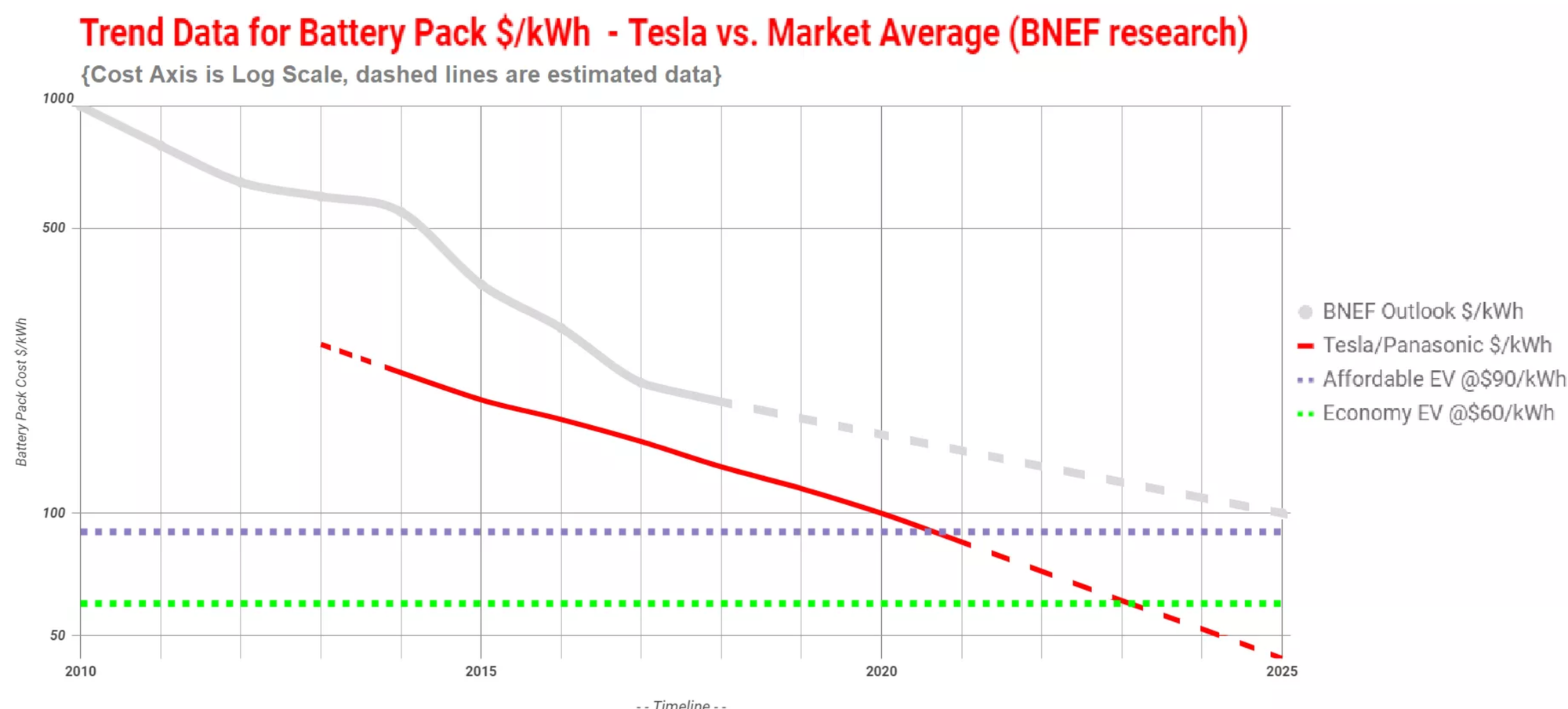
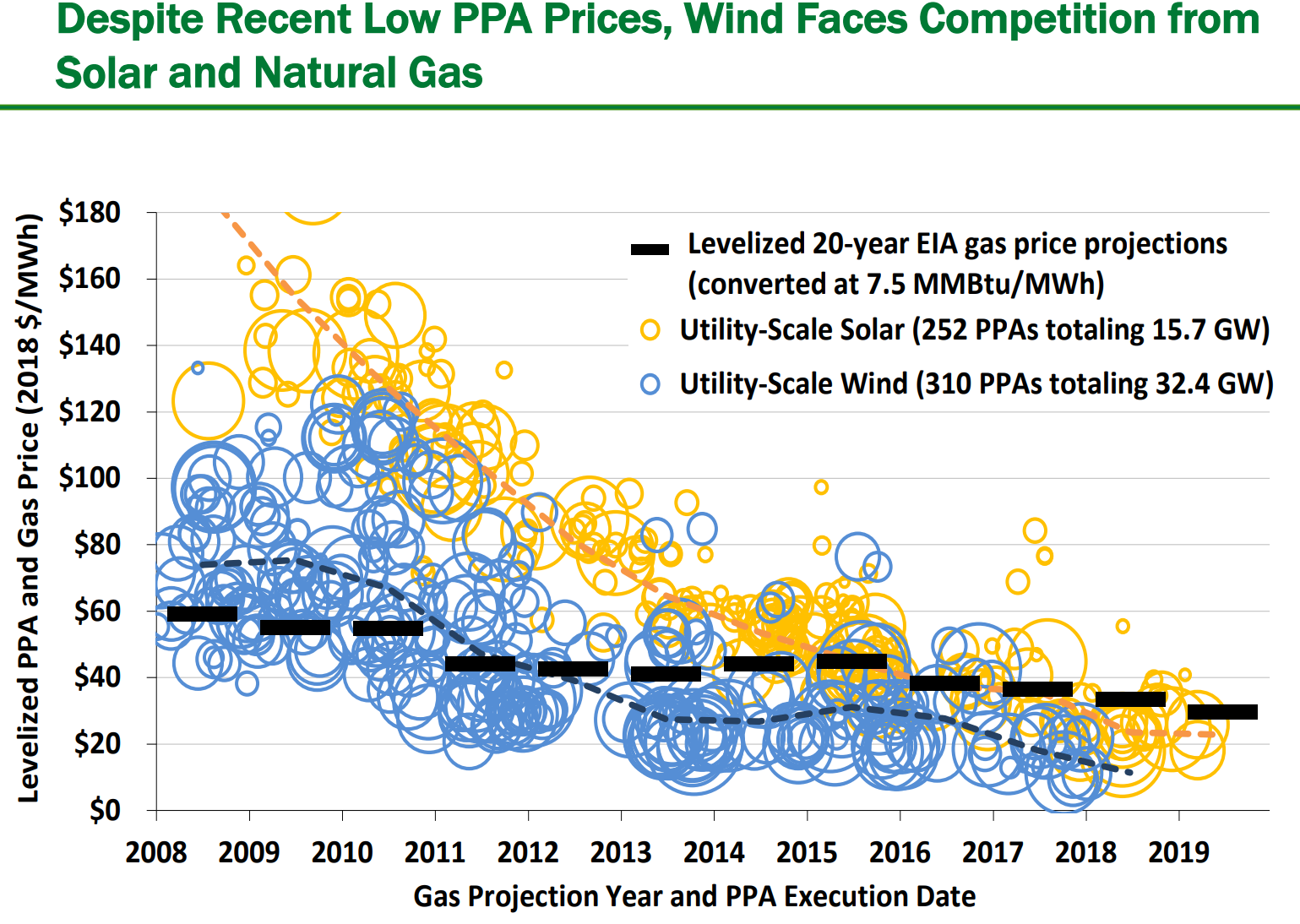
Forest through the trees. "EVs are here to stay" in two charts:
Not only are EV battery costs are coming down exponentially (and without batteries they are cheaper than ICE cars), but the cost of their "fuel" is coming down exponentially too. If that continues that's game, set and match, and all serious projections suggest it will. Which is why Mercedes stopped ICE engine development, etc. The writing is on the wall.
The car market is far from free. Without the globally coordinated govt circus of ("How dare you!") panic-spreading and (anti-CO2) laws, regulation, and subsidies, EV's would lose 95% of the appeal they enjoy today. This fear-mongering makes restrictive "CO2" regulations, subsidies, and heavy batteries (which cost and pollute to produce and dispose of) much more palatable. It may take a while but every circus eventually leaves town.
Without the globally coordinated ... laws, regulation, and subsidies, EV's would lose 95% of the appeal they enjoy today.
That's quite probably true, or at least it would be if you put it into the past tense. But what have these subsidies and regulation brought us? They've spawned energy generators that are often already cheaper than the fossil fuel fired plants they are displacing and getting exponentially cheaper. They have helped create a new type of car that's already far cheaper to run and soon will be cheaper to make. Energy is nearly 10 percent of global GDP while transportation is nearly equal in size. Over the last decade subsidies have accelerated technologies that are already making both of these sectors more efficient, and in the end this increased efficiency will help all of us economically.
As always making sausage is messy, and you'll find many examples of money wasted and jobs going elsewhere. If you step back, however, this is exactly how incentives are supposed to work. Completely independent of any CO2 argument...
This BEV vs ICE argument seems to center around early adopters vs traditionalists.
My wife was an early adopter when she bought a 2008 Tesla Roadster. She let me drive it from time to time.
The first thing I noticed (~2009) was that from rest at a MidWestern suburban stop light the Tesla would suck the headlights out of any other car that had license plates attached. Wowee what acceleration.
Since I was sitting on some of the battery weight, its slalom performance was quite respectable. It cornered pretty well and was actually lots of fun for hairing around under 40-50 mph.
Once Interstate speeds were involved, things got more pedestrian. The 5-liter Mustangs that were laughably slow from a stop light began to be a bigger problem with which to compete for holes in freeway traffic. After 80-90 mph, the Roadster began to remind me of 1.5 liter sports cars of yesteryear.
Verdict? Tesla Roadster was great suburban fun but was not ready for prime time at higher speeds. And, its range on a single charge was too sketchy to venture very far from home. One could only charge up in one's garage or many hours at a KOA in those days.
I was very entertained but wasn't convinced to go all in on BEV at that point.
Then my wife added a Tesla Model S P85 to the garage in 2012. By that time, I was driving a Panamera Turbo. We would take it or the Model S from time to time and it was interesting to compare the two.
The Panamera handled better and its seats were more adjustable for comfort. From rest, they were in the same acceleration class. Only above the freeway speed limit did the Panamera begin to show its mettle. The Model S was a huge upgrade to the Roadster experience, but it wasn't up to the level of the Panamera, irrespective of other arguments. The Panamera was NOT my wife's favorite because it sometimes had a small stumble when accelerating from rest, making it occasionally scary to jump into a traffic hole at a cross street. She swore off driving the Panamera. The Tesla always took off the millisecond it was required.
My wife now has another Model S, a 2018 P100D. It has better steering, better brake feel, longer range and nicer seats than the 2012. I would be very tempted to buy one for daily driving if not for the announcement of the Taycan. The P100D is a pretty good car. Its minor dynamics inferiority to a Panamera is balanced by the strong appeal of not visiting gas stations ever again. People don't realize how nice charging up in one's garage can be until one has become accustomed.
My wife also has a BMW Z8 that she likes very much (And a concours-ready 3.0 CSi). The only automatic transmission car she ever bought was when our kids were learning to drive. Then, the kids were given a manual transmission car to drive to school. She's done laps at Mid-Ohio. So, gear shifting is not a foreign concept to her. She loves not getting gas anymore. And she loves the acceleration margin over most other cars in traffic.
This is just a little sample of background to counter the impression that Tesla (or BEV in general) drivers are insensitive to "driver's car" qualities. I've owned and tracked 911 Turbos, 911RS/IROC, 997 GT3RS, 991 GT3RS, a Carrera GT, a 991 GT2RS and a 918. In the past, my wife and I have owned grey-market Alpina BMWs, a Hardy & Beck BMW 323i, etc. And we both really like Tesla level BEVs.
The Taycan Turbo I have on order will replace my 2018 Panamera Turbos S E-Hybrid. As far as I can tell, I'm sure to be very happy.
That's quite probably true, or at least it would be if you put it into the past tense. But what have these subsidies and regulation brought us? They've spawned energy generators that are often already cheaper than the fossil fuel fired plants they are displacing and getting exponentially cheaper. They have helped create a new type of car that's already far cheaper to run and soon will be cheaper to make. Energy is nearly 10 percent of global GDP while transportation is nearly equal in size. Over the last decade subsidies have accelerated technologies that are already making both of these sectors more efficient, and in the end this increased efficiency will help all of us economically.
As always making sausage is messy, and you'll find many examples of money wasted and jobs going elsewhere. If you step back, however, this is exactly how incentives are supposed to work. Completely independent of any CO2 argument...
And what of the ICE technology advancements that must have been forgone over the last couple of decades due to this forced and massive reallocation of capital and resources towards this newfangled global govt "CO2 sausage"?
Some 1850 wisdom. The whole article is an excellent read...
"In the department of economy, an act, a habit, an institution, a law, gives birth not only to an effect, but to a series of effects. Of these effects, the first only is immediate; it manifests itself simultaneously with its cause — it is seen. The others unfold in succession — they are not seen: it is well for us, if they are foreseen. Between a good and a bad economist this constitutes the whole difference — the one takes account of the visible effect; the other takes account both of the effects which are seen, and also of those which it is necessary to foresee. Now this difference is enormous, for it almost always happens that when the immediate consequence is favourable, the ultimate consequences are fatal, and the converse. Hence it follows that the bad economist pursues a small present good, which will be followed by a great evil to come, while the true economist pursues a great good to come, — at the risk of a small present evil."
This BEV vs ICE argument seems to center around early adopters vs traditionalists.
Bravo. I'd also like to add traditionalists by definition are always biased and likely less informed. They tend to just shut off to any new ideas. Early adopters could be biased too but not necessarily so.
Originally Posted by W8MM
The Panamera was NOT my wife's favorite because it sometimes had a small stumble when accelerating from rest, making it occasionally scary to jump into a traffic hole at a cross street. She swore off driving the Panamera. The Tesla always took off the millisecond it was required.
Even more so is when you see an opening in the next fast moving lane you want to merge into. That's the greatest advantage of the instantaneous acceleration without the need to shift gears. Many didn't seem to understand that when I say it is way better than needing to shift gears regardless of how good you (or your car) is able to do that. BTW if anyone did not get it, it looks most did not, that's also what I meant you can "place" the car anywhere you want to (at moment's notice).
I'd also like to add traditionalists by definition are always biased and likely less informed.
You can't be serious.
Originally Posted by RonF
Even more so is when you see an opening in the next fast moving lane you want to merge into. That's the greatest advantage of the instantaneous acceleration without the need to shift gears.
And I would opine that if you need that level of instantaneous acceleration to get into the space you simply shouldn't attempt the move.
And what of the ICE technology advancements that must have been forgone over the last couple of decades due to this forced and massive reallocation of capital and resources towards this newfangled global govt "CO2 sausage"?
...but the cost of their "fuel" is coming down exponentially too. If that continues that's game, set and match, and all serious projections suggest it will.
For the foreseeable future, wind, solar, and hydro sources of energy are not capable of supporting an "all-electric vehicle" United States.
And what of the ICE technology advancements that must have been forgone over the last couple of decades?
But that's the point: we actually know that outcome. ICE, as an established technology, has been the continued beneficiary of massive industry investment. It has seen incremental advances, and we know that adding additional resource could have brought those improvements forwards in time. None of those, however, have or ever could begin to approach the improvements we have and will see in solar, batteries and EVs. PV energy and batteries are 1/10th the cost of a decade ago; no subsidy or incentive will make oil sustainably below $10 a barrel again. Nor can there be any technology that can make a heat engine 330% efficient. As mature technologies ICE and fossil fuels are already near their theoretical and practical potential, while as immature technologies EVs, PV and other renewable are still no where close to theirs. Just one reason investment in those areas makes sense- far better long term potential and bang for the buck.
For the foreseeable future, wind, solar, and hydro sources of energy are not capable of supporting an "all-electric vehicle" United States.
There are more ways to generate electricity than the three you name. Coal is disappearing no matter what happens in WDC. It is losing economically to fracked nat gas and renewables. Nuke is still very much a part of the mix. But in some cases is also losing from an economic point of view. You must also take into account that most EV charging is done at night - when power demand on the grid is relatively low. Time of use (TOU) pricing helps encourage optimal charging timing.