


Driving in slow traffic

Thread Starter
3rd Gear
Joined: Jun 2022
Posts: 3
Likes: 0
 Driving in slow traffic
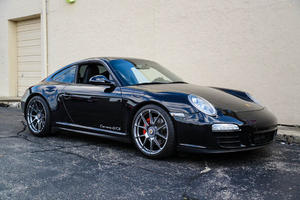
Hi, I'm new to this forum, and also new to the Porsche family  ... I bought my first Porsche (hooray a month ago. A used 997.2 Targa 4S PDK with the GTS manifold (408Hp engine), it is also my first drive with an automatic transmission. I had some background in racing so, I can't say I'm new to driving, but I AM new to automatic transmission (I do not live in the US...) and although I think I can properly handle the car dynamics while moving fast, that PDK thing still scares me (mechanically speaking) when moving slow... too slow, at least. So... To business. The car creeps (as expected) when in "D" and not braking. Does this means that, when I press the brake the clutch is under constant stress? Should I put it on Neutral then? (I've read somewhere this not good since it disables the oil pump). And what if it's a car jam? Basically I ask some clues for when to change to "N" and when to let it on "D", actually, how to properly drive this car... slowly
Note: I further found this (read below), on another forum (but concerning another car maker), which makes sense, that is: One should always minimize the drive modes changing. If you can validate or expand the answer, I'd be thankful:
"...when the transmission shifts into drive the forward and low clutches are applied which locks the input and output sections of the geartrain together. This causes some wear to the clutch plate teeth and by shifting into neutral and back to drive when stopped, you are multiplying the wear rate of the transmission."
Thanks in advance
... I bought my first Porsche (hooray a month ago. A used 997.2 Targa 4S PDK with the GTS manifold (408Hp engine), it is also my first drive with an automatic transmission. I had some background in racing so, I can't say I'm new to driving, but I AM new to automatic transmission (I do not live in the US...) and although I think I can properly handle the car dynamics while moving fast, that PDK thing still scares me (mechanically speaking) when moving slow... too slow, at least. So... To business. The car creeps (as expected) when in "D" and not braking. Does this means that, when I press the brake the clutch is under constant stress? Should I put it on Neutral then? (I've read somewhere this not good since it disables the oil pump). And what if it's a car jam? Basically I ask some clues for when to change to "N" and when to let it on "D", actually, how to properly drive this car... slowly Note: I further found this (read below), on another forum (but concerning another car maker), which makes sense, that is: One should always minimize the drive modes changing. If you can validate or expand the answer, I'd be thankful:
"...when the transmission shifts into drive the forward and low clutches are applied which locks the input and output sections of the geartrain together. This causes some wear to the clutch plate teeth and by shifting into neutral and back to drive when stopped, you are multiplying the wear rate of the transmission."
Thanks in advance
Last edited by Joao_Branco; Jun 13, 2022 at 06:54 AM.
Three Wheelin'

Joined: Jul 2007
Posts: 1,649
Likes: 96
From: NJ
With dual clutch transmissions, the slow creep is achieved by slipping the clutch ( multi-plate wet clutch pack in the PDK). This is normal and not a problem in most cases but if stuck in a traffic jam it is best not to creep at 2-5mph. It is better to fully stop the car ( in D) and move forward from time to time just like one would do with a normal manual transmission. Wet clutches can absorb more heat than dry clutches but in a traffic jam ( for miles) the clutch can get hot. A warning may appear in the instrument cluster in that case. I know this is the case with VW dual clutch transmissions. If you are fully stopped, the clutches are not engaged or slipping. When in D and your foot is removed from the brake pedal, the clutch begins to slip to create the creep. I am not sure at what speed the clutch is fully engaged when creeping ( 10 mph?).
Thread Starter
3rd Gear
Joined: Jun 2022
Posts: 3
Likes: 0
Thanks for your reply. The insight on the clutch actually disengaging fully when fully stopped and slipping only when creeping was very useful in understanding on how the system works. With that I think I can now manage my (slow) driving options much better. Thanks a lot.
Rennlist Member
Joined: Aug 2006
Posts: 9,213
Likes: 1,907
From: Chicago, IL
Try driving like a truck driver, or even get behind one. They often try to idle in a specific gear targeting the average speed of traffic. So instead of cars that accelerate to 10-15 and then stop, the average speed might be 5mph, and idling in fist might be close to perfect. It’s really not that much different than a manual trans, which is what I have.
Three Wheelin'
Joined: Jul 2007
Posts: 1,649
Likes: 96
From: NJ
With a manual trans, 1st gear with the clutch engaged ( I mean off the pedal) there is no clutch slippage. With a PDK or DSG, if in first gear and letting the car creep at idle speed, I believe the clutches are still slipping so 10 mph would be safer. Again, I do not know at what speed the clutches stop slipping but my guess is that it is in the range of 7-10 mph. With my Alltrack with DSG, if I go in reverse when the engine is cold, I do not need to press the gas pedal and the clutches are slipping all the way up my driveway as I back up. When driving and starting out from a dead stop, my car shifts to second so early that I cannot tell at what speed the clutches stop slipping in first. If I do not come to a full stop the car will accelerate in second gear an let the clutches slip for about one second. When in a traffic jam I tend to put the trans in first and cruise at 10 mph ( if I can). I have never had my DSG clutches overheat.
Rennlist Member

Joined: Oct 2014
Posts: 6,165
Likes: 1,930
2010 C4S PDK with 147K miles ...
The PDK pretty much takes care of itself. There is no real need to over think this. I switch to manual and maintain first gear in traffic, but I don't really think that's necessary.
The one place you can "burn" the clutches is if you slowly back up a steep grade. I've never had a problem in forward gears.
When you first start the car after sitting overnight it may take a bit of time for the oil to pump through the transmission. You will experience more clutch slippage until you drive 100 feet (30 meters) or so.
The 9A1 motors have incredible range. Lugging these motors is not a problem. Stay below 3K rpm until the oil gets to temperature (or at least until the oil temp gauge before has moved a bit).
Beyond that, just enjoy the drive!!!
The PDK pretty much takes care of itself. There is no real need to over think this. I switch to manual and maintain first gear in traffic, but I don't really think that's necessary.
The one place you can "burn" the clutches is if you slowly back up a steep grade. I've never had a problem in forward gears.
When you first start the car after sitting overnight it may take a bit of time for the oil to pump through the transmission. You will experience more clutch slippage until you drive 100 feet (30 meters) or so.
The 9A1 motors have incredible range. Lugging these motors is not a problem. Stay below 3K rpm until the oil gets to temperature (or at least until the oil temp gauge before has moved a bit).
Beyond that, just enjoy the drive!!!
Trending Topics
Rennlist Member
Joined: Aug 2006
Posts: 9,213
Likes: 1,907
From: Chicago, IL
Originally Posted by Fahrer;[url=tel:18194997
18194997[/url]]With a manual trans, 1st gear with the clutch engaged ( I mean off the pedal) there is no clutch slippage. With a PDK or DSG, if in first gear and letting the car creep at idle speed, I believe the clutches are still slipping so 10 mph would be safer. Again, I do not know at what speed the clutches stop slipping but my guess is that it is in the range of 7-10 mph. With my Alltrack with DSG, if I go in reverse when the engine is cold, I do not need to press the gas pedal and the clutches are slipping all the way up my driveway as I back up. When driving and starting out from a dead stop, my car shifts to second so early that I cannot tell at what speed the clutches stop slipping in first. If I do not come to a full stop the car will accelerate in second gear an let the clutches slip for about one second. When in a traffic jam I tend to put the trans in first and cruise at 10 mph ( if I can). I have never had my DSG clutches overheat.
Rennlist Stories
The Best Porsche Posts for Porsche Enthusiasts
9 Features and Characteristics That Only Porsche People Understand
Verdad Gallardo
I've Written 500 Rennlist Articles: Here's How Porsche Has Changed Along the Way
Joe Kucinski
10 Most Unnecessary Porsches Ever Built (And Why We Love Them)
Verdad Gallardo
Porsche 911 GT3 S/C vs 718 Spyder RS: 10 Categories, One Winner
Joe Kucinski
This Builder Is Turning Heads With Its Slantnose 911 Creation
Verdad Gallardo
Porsche 911 GT3 Artisan Edition Pays Homage to Japanese Culture
Verdad Gallardo
Porsche Reveals Coupe Variant of the Electric Cayenne With a Fresh Look
Verdad Gallardo
10 Porsche Colors That Have More Personality Than Most People
Verdad Gallardo
Guntherwerks' Final Speedster Creation Is the Ultimate Porsche Restomod
Verdad Gallardo
Race Director
Joined: Feb 2008
Posts: 13,188
Likes: 3,277
Try driving like a truck driver, or even get behind one. They often try to idle in a specific gear targeting the average speed of traffic. So instead of cars that accelerate to 10-15 and then stop, the average speed might be 5mph, and idling in fist might be close to perfect. It’s really not that much different than a manual trans, which is what I have.
Thread Starter
3rd Gear
Joined: Jun 2022
Posts: 3
Likes: 0
Yeah. Good advice on RPM, I already do that, even start the engine and let it warm up a bit, while still parked at the garage, before driving. Since it is not my daily drive I can afford the time for it .
.
RL Community Team
Rennlist Member
Rennlist Member
Joined: Oct 2007
Posts: 28,601
Likes: 8,393
From: Clemson, SC
Try driving like a truck driver, or even get behind one. They often try to idle in a specific gear targeting the average speed of traffic. So instead of cars that accelerate to 10-15 and then stop, the average speed might be 5mph, and idling in fist might be close to perfect. It’s really not that much different than a manual trans, which is what I have.

Last edited by Petza914; Jun 14, 2022 at 10:40 AM.
Rennlist Member
Joined: Aug 2006
Posts: 9,213
Likes: 1,907
From: Chicago, IL
I don't think this method works here as there's a big difference between a manual transmission in a set gear with the clutch pedal fully released and the engine idle speed creeping the vehicle vs what happens at creeping speeds in a PDK tranmsission. Creeping along at 2-3 mph in a PDK would be like using a manual trans with the clutch pedal half way out the entire time - that has to be the worst scenario for PDK clutch wear and I think it's smarter to put the PDK into manual mode, allow the gap to get bigger, pull up though the gap, then stop again. We know that what kills PDK transmissions from a fault code perspective is high temperatures and the sensors freaking out (especially in the Macan PDK), so sitting in traffic, slipping the clutches is about as bad a scrnario as you can create. That's where an older torque converter automatic like the Tiptronic really shines, but also the only place
Also, isn’t the PDK a wet clutch? If that’s the case, I don’t think the 1-2HP that is required to creep a 3200lb car to 2-3mph) will generate much heat in the clutch system that the fluid cannot remove immediately?
Last edited by Mike Murphy; Jun 14, 2022 at 11:26 AM.
Rennlist Member

Joined: Sep 2018
Posts: 568
Likes: 215
From: Sierra Foothills
Wayne has it right. Don't overthink it. I have been sitting in the line at my local In n Out for 45 minutes in drive and only taking my foot off the brake to inch forward. When you foot is on the brake, the clutch disengages. When you take your foot off the brake the clutch partly engages to get the car moving. Any gas and it will quickly fully engage. You can feel this when you drive. The wet clutches in these cars are pretty bulletproof for normal duty. I wouldn't worry. Manual mode will not change the way the car clutches work either but can prevent shifting if you want full engagement and the speed of traffic allows for it. I have done this when possible on a backed up freeway.
Nordschleife Master

Joined: Mar 2004
Posts: 8,391
Likes: 449
From: Southwest
With dual clutch transmissions, the slow creep is achieved by slipping the clutch ( multi-plate wet clutch pack in the PDK). This is normal and not a problem in most cases but if stuck in a traffic jam it is best not to creep at 2-5mph. It is better to fully stop the car ( in D) and move forward from time to time just like one would do with a normal manual transmission. Wet clutches can absorb more heat than dry clutches but in a traffic jam ( for miles) the clutch can get hot. A warning may appear in the instrument cluster in that case. I know this is the case with VW dual clutch transmissions. If you are fully stopped, the clutches are not engaged or slipping. When in D and your foot is removed from the brake pedal, the clutch begins to slip to create the creep. I am not sure at what speed the clutch is fully engaged when creeping ( 10 mph?).
In traffic I prefer to drive in M (manual) mode and shift manually this sequential gearbox. This is a fantastic transmission. Take your time to learn it and you will reap rewards. It's not your dad's automatic.,
Last edited by ADias; Jun 17, 2022 at 02:40 AM.