When you click on links to various merchants on this site and make a purchase, this can result in this site earning a commission. Affiliate programs and affiliations include, but are not limited to, the eBay Partner Network.
No. Just as with Driven's oils, the Millers does not carry the A40 approval.
Not to go down the oil rabbit hole, but to be an A40 approved oil you have to use the approved additive package in a prescribed amount in an approved base stock. That's why there is little difference between A40 oils, at least when it comes to what additives are in the oil. There are upper and lower limits for the additives and viscosity (for a given weight), so that's all manufacturers have to play with when it comes to formulating their A40 approved oil. It would be too expensive to pay for the required testing to meet the standard if a company like Driven or Millers wanted to seek out approval for their formulations as they do not fit the recipe approved by Porsche.
No. Just as with Driven's oils, the Millers does not carry the A40 approval.
Not to go down the oil rabbit hole, but to be an A40 approved oil you have to use the approved additive package in a prescribed amount in an approved base stock. That's why there is little difference between A40 oils, at least when it comes to what additives are in the oil. There are upper and lower limits for the additives and viscosity (for a given weight), so that's all manufacturers have to play with when it comes to formulating their A40 approved oil. It would be too expensive to pay for the required testing to meet the standard if a company like Driven or Millers wanted to seek out approval for their formulations as they do not fit the recipe approved by Porsche.
What is your opinion about boron nitride-ceratec?
Isnt ceramic anti wear additives the best but most expensive?
What is your opinion about boron nitride-ceratec?
Isnt ceramic anti wear additives the best but most expensive?
If you are running say the Millers or Driven oil, an additive is not needed. The common denominator between these oil are their high moly content. Certainly adding LM Ceratec or LM MoS2 additives will improve an oil that has little or no moly (like A40 oils), but not necessary for Millers or Driven oils. Although LM says their additive are miscible with all oils, I personally believe that if you use these additives it's best to also run a LM oil to ensure 100% compatibility.
The safest strategy is starting with a "good" oil that is already compositionally where you need to be rather than from somewhere else and trying to add Cera Tec or other additives to get there. There are many high quality oils; I personally am a fan of Driven oils based on testing it in a number of different engines and at $10/quart the price is right. A more viscous oil will provide better protection but you also want an oil that doesn't shear out of grade before your OCI (oil can shear either temporarily or permanently).
For any engine I own I always look at the approved oils list just to see what the approved viscosities are (not brands). Then I choose the highest viscosity oil you can run choosing an additive package based on if the engine is turbocharged direct injected. The Driven oils get you were you need to be in either direction (and I'm sure there are others as well but I don't have experience testing them to know which ones).
The safest strategy is starting with a "good" oil that is already compositionally where you need to be rather than from somewhere else and trying to add Cera Tec or other additives to get there. There are many high quality oils; I personally am a fan of Driven oils based on testing it in a number of different engines and at $10/quart the price is right. A more viscous oil will provide better protection but you also want an oil that doesn't shear out of grade before your OCI (oil can shear either temporarily or permanently).
For any engine I own I always look at the approved oils list just to see what the approved viscosities are (not brands). Then I choose the highest viscosity oil you can run choosing an additive package based on if the engine is turbocharged direct injected. The Driven oils get you were you need to be in either direction (and I'm sure there are others as well but I don't have experience testing them to know which ones).
Interested that neither racing oil brands use boron nitride for anti wear protection..
Driven DI40 does contain Boron. Boron and Moly are the primary friction reducers. The ZDDP also plays a role here as it is used to create protective tribofilms. Some people say the Zinc will kill your cats but this is nonsense, the Zinc in this product is no higher than many of the other oils on the approved oils list.
Driven DI40 does contain Boron. Boron and Moly are the primary friction reducers. The ZDDP also plays a role here as it is used to create protective tribofilms. Some people say the Zinc will kill your cats but this is nonsense, the Zinc in this product is no higher than many of the other oils on the approved oils list.
Boron is not same as boron nitride.boron nitride is solid antiwear lubricant
Micro ceramic solid lubricant suspension based on hexagonal boron nitride (BN) in selected base oils. The laminar graphite-similar structure reduces friction and wear and prevents direct metal-to-metal contact. The < 0.5 µm particle size guarantees optimum filter flow properties and protects against depositing of solid lubricant particles. Miscible with all commercially available motor oils and motor vehicle gear oils.
The Millers oils are great. When I was testing oils years ago they performed just as well as the Driven oils. I've never run their 10w50 in an M96 engine, but I have run the 5w40 in several engines over the years and it held its viscosity well and UOAs produced low wear levels.
Good to know, Charles. Thanks. The Motul Xcess 8100 5W-40 I was using previously was beginning to sheer out of grade just slightly according to my UOA's, even though the wear metals remained low. That coupled with my oil temps that would sometimes creep up to 240-250 on hot days, along with Hartec's recommendation to move to a 10W-50 based on my mileage (over 50k miles at the time, now 61k miles), is what prompted me to go to a 10W-50. I added a 3rd radiator around the same time I switched to the Millers 10W-50, which has helped keep my temps down (I haven't seen oil temps exceed 225 since I added the 3rd radiator). I'd probably be OK with the 5W-40, but as long as my UOA's are good and I don't increase my winter driving (I only start and drive my car when it is above 45-50 degrees at a minimum), I'll probably stick with the 10W-50.
Originally Posted by silver_tt
Driven DI40 does contain Boron. Boron and Moly are the primary friction reducers. The ZDDP also plays a role here as it is used to create protective tribofilms. Some people say the Zinc will kill your cats but this is nonsense, the Zinc in this product is no higher than many of the other oils on the approved oils list.
Thanks for posting this. Just to confirm, is this a virgin sample?
For anyone who is interested, here is the virgin sample of the Millers CFS 10W-50 NT+ I had tested. It is important to note that this particular oil from Millers uses a triple ester base stock, which is why it was flagged high for its oxidation value. It's really just the baseline I have now for future UOA's on where that value should be as long as I'm using the Millers.
As @silver_tt pointed out, higher levels of anti-wear additives being blamed for premature cat or O2 sensor failures are overblown. New cats aren't cheap, but neither is an engine rebuild, so I'll stick with an oil with a higher anti-wear package even if it is not A40 approved. I have over 6k miles running the Millers with no issues so far. I'll post the results of my latest UOA when I get it for anyone who is interested.
Boron is not same as boron nitride.boron nitride is solid antiwear lubricant
Micro ceramic solid lubricant suspension based on hexagonal boron nitride (BN) in selected base oils. The laminar graphite-similar structure reduces friction and wear and prevents direct metal-to-metal contact. The < 0.5 µm particle size guarantees optimum filter flow properties and protects against depositing of solid lubricant particles. Miscible with all commercially available motor oils and motor vehicle gear oils.
We have problem with metal to metal contact
The high chemical inertness of some solid lubricants (MoS2, graphite, h-BN, PTFE, etc.) makes it very difficult to disperse them homogeneously in the carrier oils. Here's more information: https://www.osti.gov/servlets/purl/1097780
Originally Posted by G.I.G.
Thanks for posting this. Just to confirm, is this a virgin sample?
The high chemical inertness of some solid lubricants (MoS2, graphite, h-BN, PTFE, etc.) makes it very difficult to disperse them homogeneously in the carrier oils. Here's more information: https://www.osti.gov/servlets/purl/1097780
.
Yes this is true.Ceratec and MoS2 after few days of staying separate from oil and fall at bottom of oil pan,because they are heavier than oil.
here is my test few years ago:
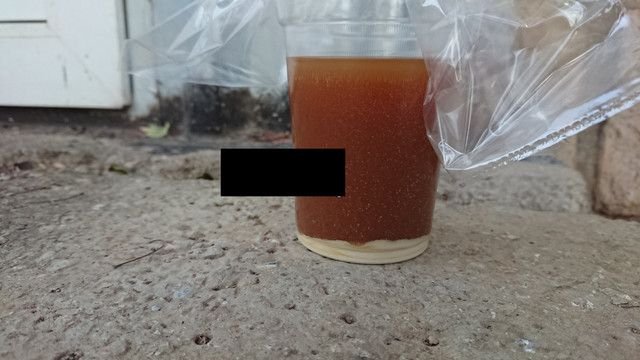
this is how it looks when you mixed new oil LM 0W-40 + 6% ceratec,
new oil + ceratec after few days of staying calm,ceratec fall at bottom
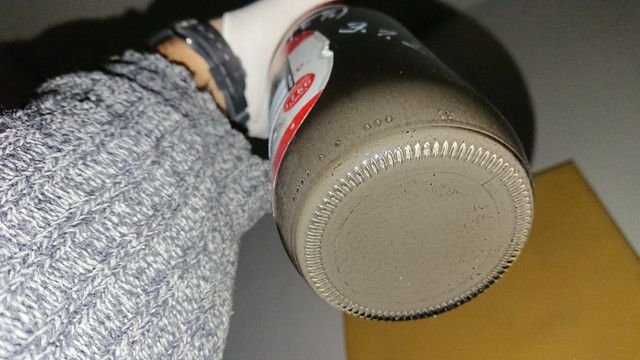
used oil + ceratec after 5000km,staying calm few days,ceratec separate and fall at bottom
Yes this is true.Ceratec and MoS2 after few days of staying separate from oil and fall at bottom of oil pan,because they are heavier than oil.
Ceratec or MoS2 are solid lubricants. AFAIC their most important benefit is to coat metal surfaces and offer lubricity during cold starts. Whatever bulk mass of either Ceratec or MoS2 deposited at the crankcases's bottom will be quickly mixed up within a few seconds of an engine start, to further recoat metal surfaces.
Yes this is true.Ceratec and MoS2 after few days of staying separate from oil and fall at bottom of oil pan,because they are heavier than oil.
here is my test few years ago:
this is how it looks when you mixed new oil LM 0W-40 + 6% ceratec,
new oil + ceratec after few days of staying calm,ceratec fall at bottom
used oil + ceratec after 5000km,staying calm few days,ceratec separate and fall at bottom
This is very interesting and great that you did your 9wn experiment and analysis. It's why I choose to use an oil (Driven) that has the desired amounts of Moly, Zinc, and Phosphorous in it, rather than using a lesser oil and trying to add it separately where it doesn't really become a part of it even if suspended in solution.
Ceratec or MoS2 are solid lubricants. AFAIC their most important benefit is to coat metal surfaces and offer lubricity during cold starts. Whatever bulk mass of either Ceratec or MoS2 deposited at the crankcases's bottom will be quickly mixed up within a few seconds of an engine start, to further recoat metal surfaces.
This.
And for those who worry, this is evidence that adding this will not chemically adjust the oil itself.
In fact, settling is fairly fast. If you add the MoS2 to a jug of oil to premeasure what you are adding to the motor you will find the darker MoS2 exits the jug last since it settles to the bottom of the jug almost immediately.
I don't see a reason to not like Ceratec for settling. The amount of suction and flow of oil through these engines is amazing... huge flow. Anything like that will get sucked up and mixed almost instantly. IMO.
I can't find anything definitive on our oil pumps, but assume 1 quart per second of flow.... roughly. That is what you call circulation.
Peace
Bruce in Philly (now Atlanta)
Last edited by Bruce In Philly; Oct 19, 2021 at 05:06 PM.
9 Vehicles Porsche Helped Engineer that Aren't Porsches
Slideshow: Long before engineering consulting became trendy, Porsche was quietly helping other automakers build everything from supercars to economy hatchbacks.
9 Features and Characteristics That Only Porsche People Understand
Slideshow: Some brands build cars. Porsche builds traditions, obsessions, and a few habits that stopped making sense decades ago but somehow became part of the charm.
This Builder Is Turning Heads With Its Slantnose 911 Creation
Slideshow: A small Polish tuner has reimagined the Porsche 911 Slantnose for the modern era, blending 1980s nostalgia with widebody tuning culture and serious performance upgrades.
Porsche 911 GT3 Artisan Edition Pays Homage to Japanese Culture
Slideshow: Porsche has created a Japan-only 911 GT3 Artisan Edition that blends track-ready hardware with design cues inspired by traditional Japanese craftsmanship.
Porsche Reveals Coupe Variant of the Electric Cayenne With a Fresh Look
Slideshow: Porsche's latest electric Cayenne Coupe blends dramatic styling with supercar acceleration, turning the brand's midsize SUV into a 1,139-horsepower flagship.