




Question on Balancing Wheels

Thread Starter
Rennlist Member


Joined: Jan 2016
Posts: 6,178
Likes: 3,490
From: New Orleans, LA (NOLA)
 Question on Balancing Wheels
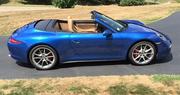
Do our cars need to have a high speed balance done on their wheels or can it be balanced at a lower speed and still be good at a higher speed? I get up to over 130 mph a couple of times a month or so. I currently have a vibration issue with one of my rear wheels and I need to get it balanced. Do I have to take it to a Porsche dealership to do the balancing if I intend to operate the car at high speed? I really want to take it to a local Indy but don't know if they have the equipment to do it for high performance cars. I really don't know if all the Indy's equipment in my area is capable of doing a balance for high speed cars.
Three Wheelin'

Joined: Jan 2007
Posts: 1,797
Likes: 358
From: Central Massachusetts
I always ensure the installer has the Hunter machine to do a road force balance. You can call and enquire. Also, Tirerack has an online directory for installers and it identifies those that do road force balancing.

Rennlist Member

Joined: Oct 2002
Posts: 5,237
Likes: 6,291
From: Fairfax County, Virginia
In my experience, you have an issue that is not going to be solved by tire balancing. I'm not aware of any tire balancer that is set up to run the wheel up at high speeds, but it may exist. For years and years, race teams used bubble balancers with great results,so its probably something more than a balance issue.
Most likely you have a wheel that is heavy in a spot or a minor tire defect that is causing that - and no balancer can offset that. And of course, these are not gremlins that are easy to chase as it requires a second set of tires and wheels to do a process of elimination. That's a lot to ask of a Porsche buddy you might have, but ultimately you would pull a known set of stable tires and wheels and swap them onto your car (and vice versa) then go see what happens. If you car is stable on the borrowed set, then you know its tires and wheels, and from there you pull and replace one at a time until you find the culprit. Sometimes a control arm bushing can be ***** and cause high speed vibrations as well, I've had that occur before. That's why you have to find out if all four tires and wheels are solid, first.
Cast wheels have heavy spots in the wheel, caused as the molten metal is forming up and cooling. Billet forged wheels don't have that issue, they are as close to perfect in runout and balance as humanly possible because they are machined, not hot metal poured. which is one reason I run HRE's on my cars. I have a good friend who is a VP in the Tire Business and we put the HRE's on one of his shops machines and he tells me it's the most perfect wheel he has ever come across in four decades in the tire business. Plus, I only buy Michelins because they have the least heavy spots in the tires of all the brands I have tried. Result is smooth and stable at all speeds and almost no weights on the wheels.
I once bought a set of Chinese made wheels long ago, because they looked cool and were not expensive. They were so heavy in spots we never could balance them up despite repeated attempts. After about three months, I sold them and went back to HRE's on the car. Problem solved.
If you don't want to get into swapping wheels, I'd start by replacing tires on your existing wheels. Expensive, but likely will give you the results you want.
Most likely you have a wheel that is heavy in a spot or a minor tire defect that is causing that - and no balancer can offset that. And of course, these are not gremlins that are easy to chase as it requires a second set of tires and wheels to do a process of elimination. That's a lot to ask of a Porsche buddy you might have, but ultimately you would pull a known set of stable tires and wheels and swap them onto your car (and vice versa) then go see what happens. If you car is stable on the borrowed set, then you know its tires and wheels, and from there you pull and replace one at a time until you find the culprit. Sometimes a control arm bushing can be ***** and cause high speed vibrations as well, I've had that occur before. That's why you have to find out if all four tires and wheels are solid, first.
Cast wheels have heavy spots in the wheel, caused as the molten metal is forming up and cooling. Billet forged wheels don't have that issue, they are as close to perfect in runout and balance as humanly possible because they are machined, not hot metal poured. which is one reason I run HRE's on my cars. I have a good friend who is a VP in the Tire Business and we put the HRE's on one of his shops machines and he tells me it's the most perfect wheel he has ever come across in four decades in the tire business. Plus, I only buy Michelins because they have the least heavy spots in the tires of all the brands I have tried. Result is smooth and stable at all speeds and almost no weights on the wheels.
I once bought a set of Chinese made wheels long ago, because they looked cool and were not expensive. They were so heavy in spots we never could balance them up despite repeated attempts. After about three months, I sold them and went back to HRE's on the car. Problem solved.
If you don't want to get into swapping wheels, I'd start by replacing tires on your existing wheels. Expensive, but likely will give you the results you want.
Thread Starter
Rennlist Member
Joined: Jan 2016
Posts: 6,178
Likes: 3,490
From: New Orleans, LA (NOLA)
Most likely you have a wheel that is heavy in a spot or a minor tire defect that is causing that - and no balancer can offset that. And of course, these are not gremlins that are easy to chase as it requires a second set of tires and wheels to do a process of elimination. That's a lot to ask of a Porsche buddy you might have, but ultimately you would pull a known set of stable tires and wheels and swap them onto your car (and vice versa) then go see what happens. If you car is stable on the borrowed set, then you know its tires and wheels, and from there you pull and replace one at a time until you find the culprit. Sometimes a control arm bushing can be ***** and cause high speed vibrations as well, I've had that occur before. That's why you have to find out if all four tires and wheels are solid, first.
.
I was inspecting my wheels this weekend for maybe a missing balance weight but everything looked normal. I noticed the plug though as I inspected the tires which got me thinking that maybe that is having an impact now that the tires are much more worn than when it was installed.
...and yes, I know I probably shouldn't be going >130mph with a plug in my tire.


Rennlist Member
Joined: Jun 2010
Posts: 2,131
Likes: 252
From: Boca Raton, FL
Find a tire installer with a Hunter Roadforce (GSP9700 or Road Force Elite). They measure rim run out and road force that assists the installer determine how to rotate the tire on the wheel to minimize rim run out and road force and it makes a world of difference. As a caveat, the installer needs to know how to use the machine. I have had an installer show me on a road force balancing machine that the tire is balanced; however, that is because he wasn’t familiar with one thing or another and the wheel was not, in fact, balanced. I took it to another shop and they balanced it.
Rennlist Member
Joined: Oct 2002
Posts: 5,237
Likes: 6,291
From: Fairfax County, Virginia
This is what I was thinking too. I have a plug on my right rear wheel that has been there since about 6k miles. I'm now at 21k miles on the rear and almost to the wear bar (I'm actually surprised that these PZEROs) have lasted that long. I have a new set of tires that I am installing this week which is why I am asking about high speed balancing.
I was inspecting my wheels this weekend for maybe a missing balance weight but everything looked normal. I noticed the plug though as I inspected the tires which got me thinking that maybe that is having an impact now that the tires are much more worn than when it was installed.
...and yes, I know I probably shouldn't be going >130mph with a plug in my tire.
I was inspecting my wheels this weekend for maybe a missing balance weight but everything looked normal. I noticed the plug though as I inspected the tires which got me thinking that maybe that is having an impact now that the tires are much more worn than when it was installed.
...and yes, I know I probably shouldn't be going >130mph with a plug in my tire.
I don't plug tires on my Porsche because of that total loss of speed ratings when you do. It's not speculative, if you talk to any of the car tire engineers or call their Customer Service people they will tell you the same thing. I will put a plug in a tire on my truck that goes to Home Depot and rarely goes over 50 mph, but never on my performance cars. Even if the tire is just a couple hundred miles on it and picks up a nail, I replace it. A blowout at 130 mph is likely to be fatal to you. It's not worth your life to save $ 650 on two new rear tires. Please be careful.
Trending Topics

Rennlist Member
Joined: Oct 2014
Posts: 948
Likes: 241
From: Houston
Rennlist Stories
The Best Porsche Posts for Porsche Enthusiasts
Porsche Reveals Coupe Variant of the Electric Cayenne With a Fresh Look
Verdad Gallardo
10 Porsche Colors That Have More Personality Than Most People
Verdad Gallardo
Guntherwerks' Final Speedster Creation Is the Ultimate Porsche Restomod
Verdad Gallardo
10 Reasons I Hate Going to the Porsche Dealership (& the 1 Reason I Stay)
Joe Kucinski
Porsche Shakes Up The Nürburgring Lap Record Table Once Again
Verdad Gallardo
6 Ways the Porsche 911 GT3 S/C Redefines Performance
Joe Kucinski
10 Wildest Homologation Specials Porsche Ever Sold
Verdad Gallardo
Super Rare RUF BTR III Comes Out of Hibernation, Looking For a New Home
Verdad Gallardo
10 Porsche Opinions That Can Start a Fight
Joe Kucinski
Thread Starter
Rennlist Member
Joined: Jan 2016
Posts: 6,178
Likes: 3,490
From: New Orleans, LA (NOLA)
Subshooter: Man - you're breaking my heart. We have a lot of opinions on this list (and no one likes a lecture, I get that), but PLEASE do not do 130 mph on a plugged tire - ever. When you plug a tire, it immediately loses its speed rating. Speed Ratings are done based on heat in the tire and blowout factor. So when a tire is say speed rated to 130 mph, that means can safely drive the tire to 130 mph if it has no repairs, it won't overheat and blow out. But if you do 150 mph on a 130 mph rated tire, you stand a chance of a catastrophic blowout. Two men died in a Camaro in the Silver State Classic in 2011 when their tires blew exceeding the speed rating. https://www.foxnews.com/us/driver-na...ter-tire-blows
I don't plug tires on my Porsche because of that total loss of speed ratings when you do. It's not speculative, if you talk to any of the car tire engineers or call their Customer Service people they will tell you the same thing. I will put a plug in a tire on my truck that goes to Home Depot and rarely goes over 50 mph, but never on my performance cars. Even if the tire is just a couple hundred miles on it and picks up a nail, I replace it. A blowout at 130 mph is likely to be fatal to you. It's not worth your life to save $ 650 on two new rear tires. Please be careful.
I don't plug tires on my Porsche because of that total loss of speed ratings when you do. It's not speculative, if you talk to any of the car tire engineers or call their Customer Service people they will tell you the same thing. I will put a plug in a tire on my truck that goes to Home Depot and rarely goes over 50 mph, but never on my performance cars. Even if the tire is just a couple hundred miles on it and picks up a nail, I replace it. A blowout at 130 mph is likely to be fatal to you. It's not worth your life to save $ 650 on two new rear tires. Please be careful.
I didn't consider your advice lecturing. I appreciate the feedback and didn't consider the speed rating change.
