



Widebody conversion question
Thread Starter
Burning Brakes

Joined: Apr 2011
Posts: 841
Likes: 0
From: Perthshire, Scotland
 Widebody conversion question
Could somebody help me with what is involved in regards what you need to alter on the suspension if you convert to a widebody , is it a case of re-positioning the front struts on the top mounts ? do you need to change the rear trailing arms ?
any advice appreciated
Gaz
any advice appreciated
Gaz
Rennlist Member

Joined: Jan 2007
Posts: 2,388
Likes: 17
From: Vancouver Island, BC , Canada
On the front you have the choice of just adding spacers to position the wheels, or you can change the strut location top and bottom to its wider stance, but that also involves changing the brake lines, sway bar and steering rods to the turbo version.
For the rear, the most common solution is the use of spacers, which also gives you way more room to play with rear wheel width, than if you changed to turbo arms.

For the rear, the most common solution is the use of spacers, which also gives you way more room to play with rear wheel width, than if you changed to turbo arms.
Drifting
Joined: Aug 2010
Posts: 2,274
Likes: 3
All the turbo suspension and brakes for and rear
Repositioning the front mounts is only half the job, you need to do the lower part too.
Some componets just go into another location on the chassis.
Rennlist Member
Joined: Oct 2008
Posts: 225
Likes: 3
From: Surrey, UK.
Yep... what he (crg53) said 
I'd stick with the standard trailing arms. If you were to consider swapping to turbo trailing arms; they are very expensive even second hand, I think you also need turbo discs, calipers and anti-roll bars and this set up would limit the width of the wheels at the rear (as crg53 mentioned).
Why not invest in a new set of much wider wheels with a lower ET (offset). The wider the wheels and the lower the ET you get, the less spacer width you'll need.
I'd stick with the standard trailing arms. If you were to consider swapping to turbo trailing arms; they are very expensive even second hand, I think you also need turbo discs, calipers and anti-roll bars and this set up would limit the width of the wheels at the rear (as crg53 mentioned).
Why not invest in a new set of much wider wheels with a lower ET (offset). The wider the wheels and the lower the ET you get, the less spacer width you'll need.
Drifting
Joined: Aug 2010
Posts: 2,274
Likes: 3
Yep... what he (crg53) said
I'd stick with the standard trailing arms. If you were to consider swapping to turbo trailing arms; they are very expensive even second hand, I think you also need turbo discs, calipers and anti-roll bars and this set up would limit the width of the wheels at the rear (as crg53 mentioned).
Why not invest in a new set of much wider wheels with a lower ET (offset). The wider the wheels and the lower the ET you get, the less spacer width you'll need.
I'd stick with the standard trailing arms. If you were to consider swapping to turbo trailing arms; they are very expensive even second hand, I think you also need turbo discs, calipers and anti-roll bars and this set up would limit the width of the wheels at the rear (as crg53 mentioned).
Why not invest in a new set of much wider wheels with a lower ET (offset). The wider the wheels and the lower the ET you get, the less spacer width you'll need.

Drifting
Joined: Mar 2010
Posts: 2,655
Likes: 8
From: London UK
It would in my mind make more financial sense to sell and by one already transformed - in fact there is one currently for sale on Pistonheads. Although its in my mind over valued but probably still cheaper than doing the conversion. The person you should speak to about the conversion is Jim Howley.
Drifting
Joined: Aug 2010
Posts: 2,274
Likes: 3
Most of the converted ones are worth less than a unmolested NB, and most people don't do it correctly.
A M491 was like a 17K option on the 3.2 Carrera. It's not cheap to do a proper conversion and if, it's not done proper you pretty much have a death grip on it becuase no one in there right mind would want it.
So yeah, I agree you are better off with one that's already been molested than to f up another one.
Its about 30K to do one right.
A M491 was like a 17K option on the 3.2 Carrera. It's not cheap to do a proper conversion and if, it's not done proper you pretty much have a death grip on it becuase no one in there right mind would want it.
So yeah, I agree you are better off with one that's already been molested than to f up another one.
Its about 30K to do one right.
Trending Topics
Thread Starter
Burning Brakes
Joined: Apr 2011
Posts: 841
Likes: 0
From: Perthshire, Scotland
Thanks for the replies guys just to clarify a bit more the intention is to strip the car down over the winter for a respray and sort out some rust issues which will probably require a new rear quarter and the usual bits round the windscreen so I am contemplating a backdate RSR project so in response to your replies a custom set of wheels/spacers would get round the suspension issues.
Rennlist Stories
The Best Porsche Posts for Porsche Enthusiasts
Talos Takes Your 991 Porsche 911 GT3 to the Next Level for a Cool $1.13 Million
Verdad Gallardo
9 Vehicles Porsche Helped Engineer that Aren't Porsches
Verdad Gallardo
9 Features and Characteristics That Only Porsche People Understand
Verdad Gallardo
I've Written 500 Rennlist Articles: Here's How Porsche Has Changed Along the Way
Joe Kucinski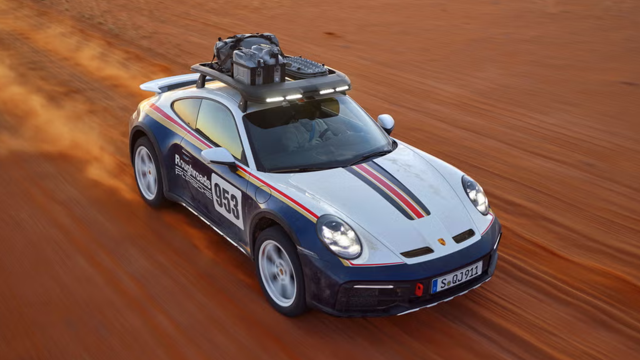
10 Most Unnecessary Porsches Ever Built (And Why We Love Them)
Verdad Gallardo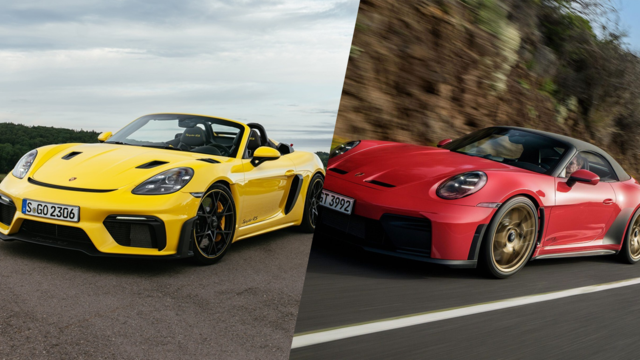
Porsche 911 GT3 S/C vs 718 Spyder RS: 10 Categories, One Winner
Joe Kucinski
This Builder Is Turning Heads With Its Slantnose 911 Creation
Verdad Gallardo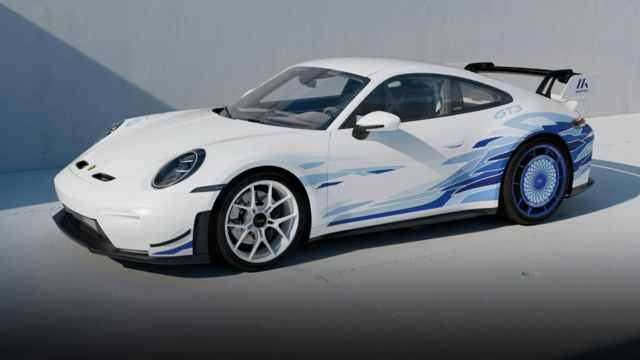
Porsche 911 GT3 Artisan Edition Pays Homage to Japanese Culture
Verdad Gallardo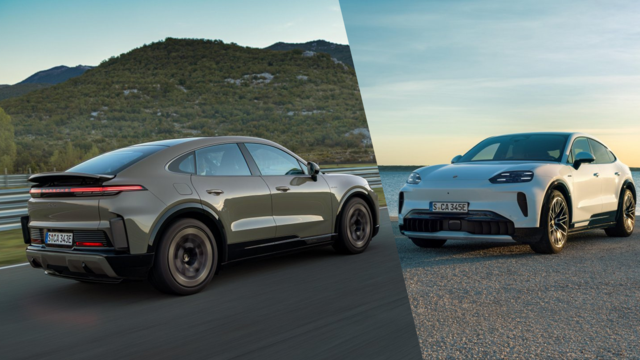
Porsche Reveals Coupe Variant of the Electric Cayenne With a Fresh Look
Verdad Gallardo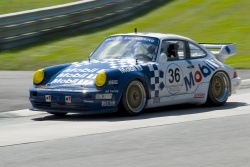
Nordschleife Master

Joined: Dec 2001
Posts: 8,305
Likes: 16
From: Kingston, NY
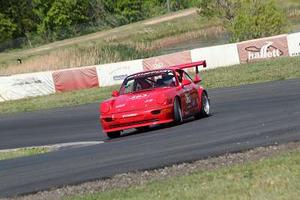
Check out the sticky titled Racecar Project. In that you will find the detailed direction on what you need to perform the conversion correctly to RS 3.8 or RSR 3.8 specifications. The short of it is that all of the performance cars from Porsche (I don't consider a Turbo a performance car) were built using the narrow body suspension components. In the front, the most difficult part will be to find a proper sway bar for the car since last I looked, the RS 3.8 front Sway bar is no longer available. A 993 RSR front bar will also work. In the rear, the narrow body suspension allows the use of 12" wide wheels for added traction. The turbo suspension will not allow as wide a wheel (maybe 10")
Nordschleife Master
Joined: Feb 2011
Posts: 5,297
Likes: 6
From: Deep Downtown Carrier, OK
Check out the sticky titled Racecar Project. In that you will find the detailed direction on what you need to perform the conversion correctly to RS 3.8 or RSR 3.8 specifications. The short of it is that all of the performance cars from Porsche (I don't consider a Turbo a performance car) were built using the narrow body suspension components. In the front, the most difficult part will be to find a proper sway bar for the car since last I looked, the RS 3.8 front Sway bar is no longer available. A 993 RSR front bar will also work. In the rear, the narrow body suspension allows the use of 12" wide wheels for added traction. The turbo suspension will not allow as wide a wheel (maybe 10")
