


Intake Manifold Stack question

Burning Brakes

Joined: Jan 2012
Posts: 782
Likes: 16
From: Cheshire UK

I'm going down this route after finding one stack cracked. The cost difference is crazy £50 each for the 964 and £15 for the 993!!
I don't agree with the comments on the internal size difference causing a performance issue as the stack diameter is smaller than the inlet port diameter with both 964 and 993 stacks. The rubber connectors are also the same for both.
I don't agree with the comments on the internal size difference causing a performance issue as the stack diameter is smaller than the inlet port diameter with both 964 and 993 stacks. The rubber connectors are also the same for both.

Drifting

Joined: Aug 2002
Posts: 2,215
Likes: 72
From: Stockholm, Sweden
Is the position for the injector the same? I think I've heard that the 993 injectors are positioned a little higher up on the stack, or something like that, compared to the 964 version. Is this this correct? If so, does it matter? Or are they identical?
Burning Brakes
Joined: Jan 2012
Posts: 782
Likes: 16
From: Cheshire UK
The injector position is the same but the fuel rail mounting is slightly longer. I will see if they need shortening a few mm when the new parts arrive.
One thing that did become apparent while doing this was how badly degraded the rubber connectors were after so many years of heat, oil and fuel. The were all swollen so that the middle rib was not seated against the stack and I would presume not fully seated on the other side against the manifold.
One thing that did become apparent while doing this was how badly degraded the rubber connectors were after so many years of heat, oil and fuel. The were all swollen so that the middle rib was not seated against the stack and I would presume not fully seated on the other side against the manifold.

Nordschleife Master
Joined: Jul 2007
Posts: 5,613
Likes: 52
From: DFW, TX
It has been working on my car for a couple of years.
Regarding the injector and fuel rail positioning I did not notice a difference however I wasn't explicitly looking for it. Perhaps it is slightly different however I experienced no complications from anything mounting related during reassembly.
Just thinking through what ras62 said "fuel rail mounting points are longer" than that has to mean the fuel injectors mount equally higher in the the 993 manifolds since (a) the 964 and 993 share the same size injectors and (b) through my own experience I encountered no fitment issues (i.e. I did not have to "shorten the fuel rail mounting points a few mn").
Regarding the injector and fuel rail positioning I did not notice a difference however I wasn't explicitly looking for it. Perhaps it is slightly different however I experienced no complications from anything mounting related during reassembly.
Just thinking through what ras62 said "fuel rail mounting points are longer" than that has to mean the fuel injectors mount equally higher in the the 993 manifolds since (a) the 964 and 993 share the same size injectors and (b) through my own experience I encountered no fitment issues (i.e. I did not have to "shorten the fuel rail mounting points a few mn").
Last edited by Vandit; Feb 27, 2016 at 10:49 AM.
Nordschleife Master
Joined: Jul 2007
Posts: 5,613
Likes: 52
From: DFW, TX
I just found some pictures on an old camera of the 964 and 993 stacks side-by-side. If you look closely, you can see that the mounting point for the fuel rail is slightly longer than the 964 piece and you can also see that the injector boss at the bottom also sits slightly more proud of the base of the manifold.
So I guess that answers that question. The fuel injector protrudes less into the intake tract on the 993 pieces than it does on the 964 pieces.
I'll try to upload those pictures sometime this weekend.
So I guess that answers that question. The fuel injector protrudes less into the intake tract on the 993 pieces than it does on the 964 pieces.
I'll try to upload those pictures sometime this weekend.
Nordschleife Master
Joined: Jul 2007
Posts: 5,613
Likes: 52
From: DFW, TX
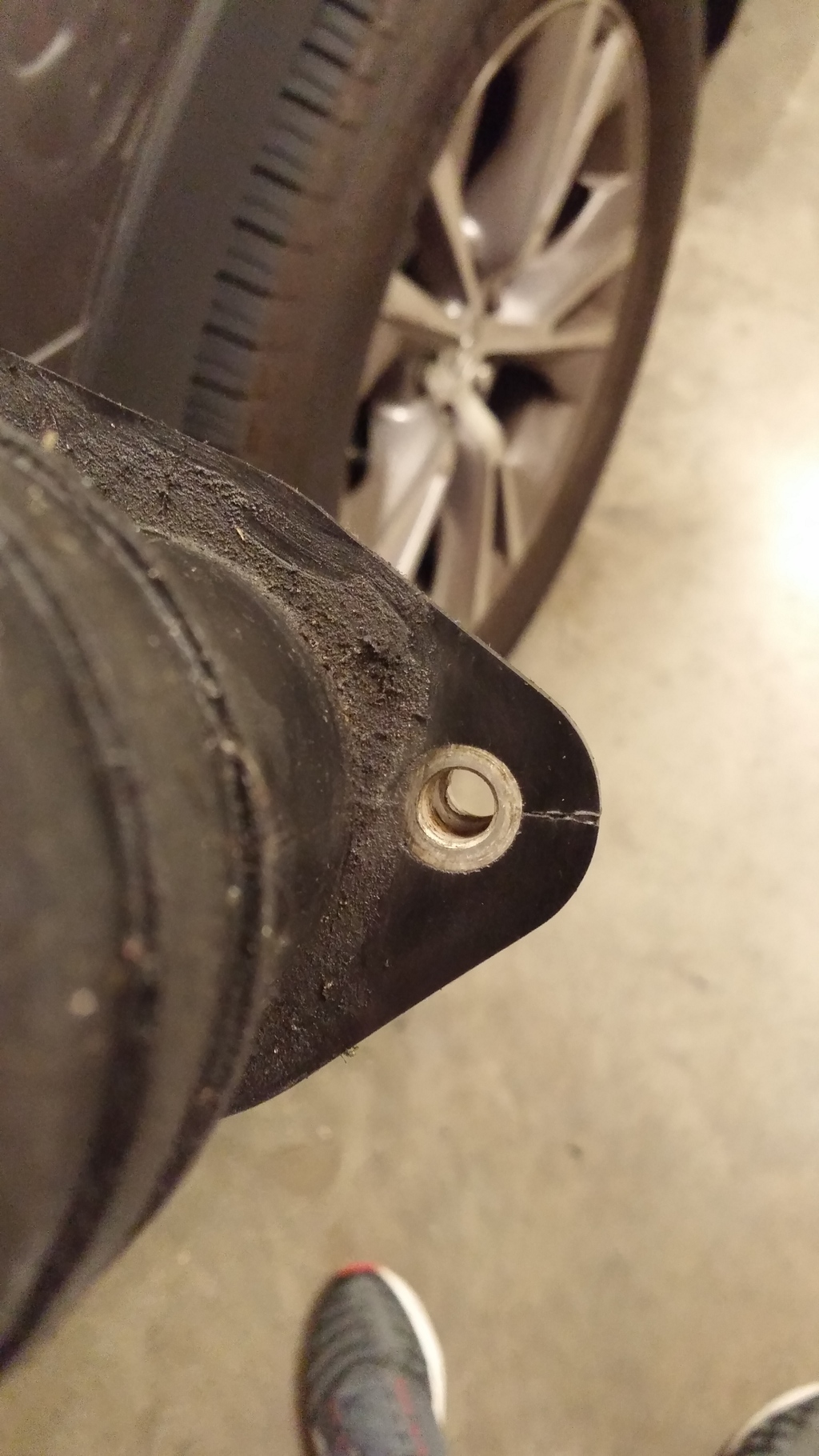
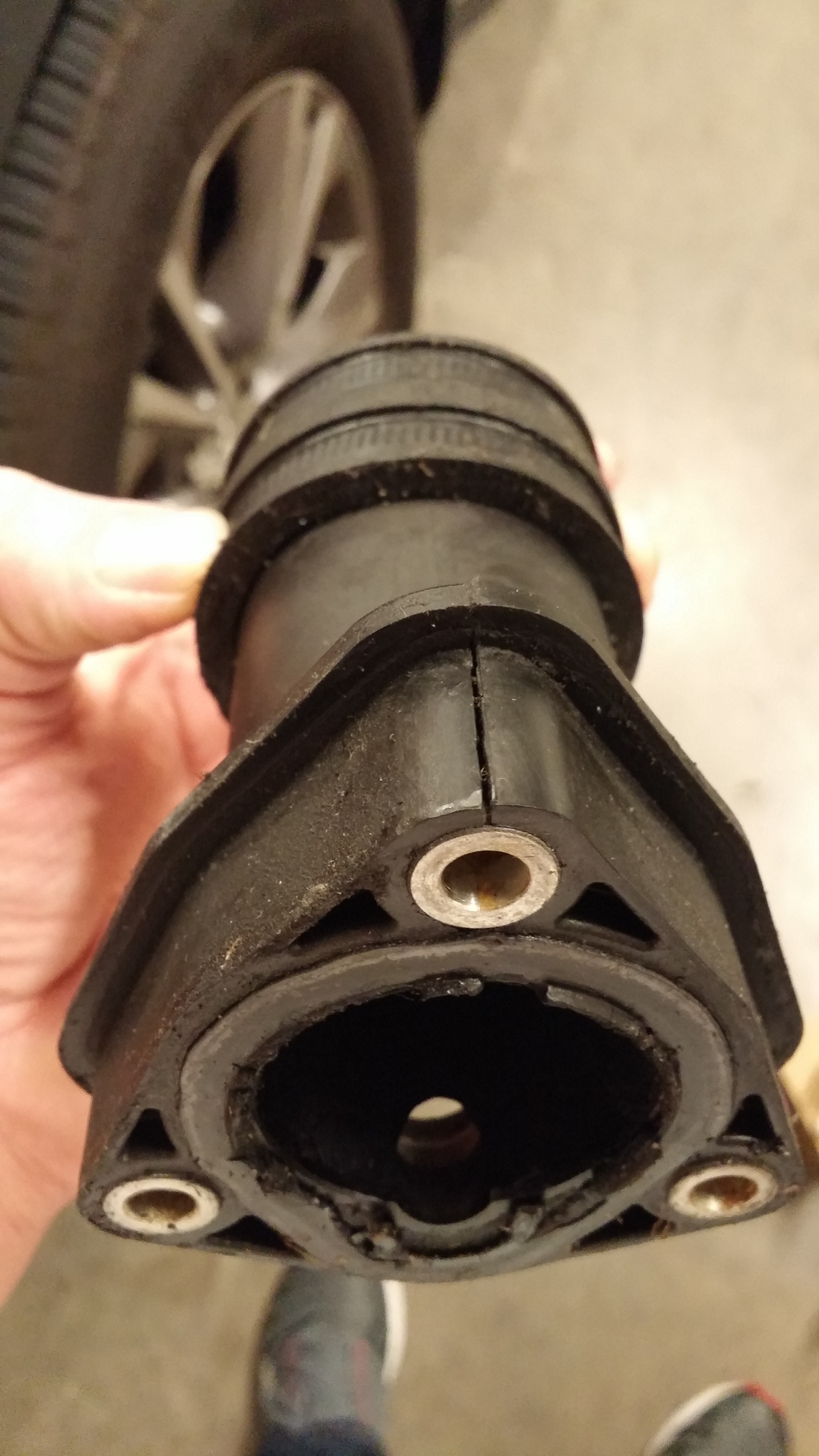
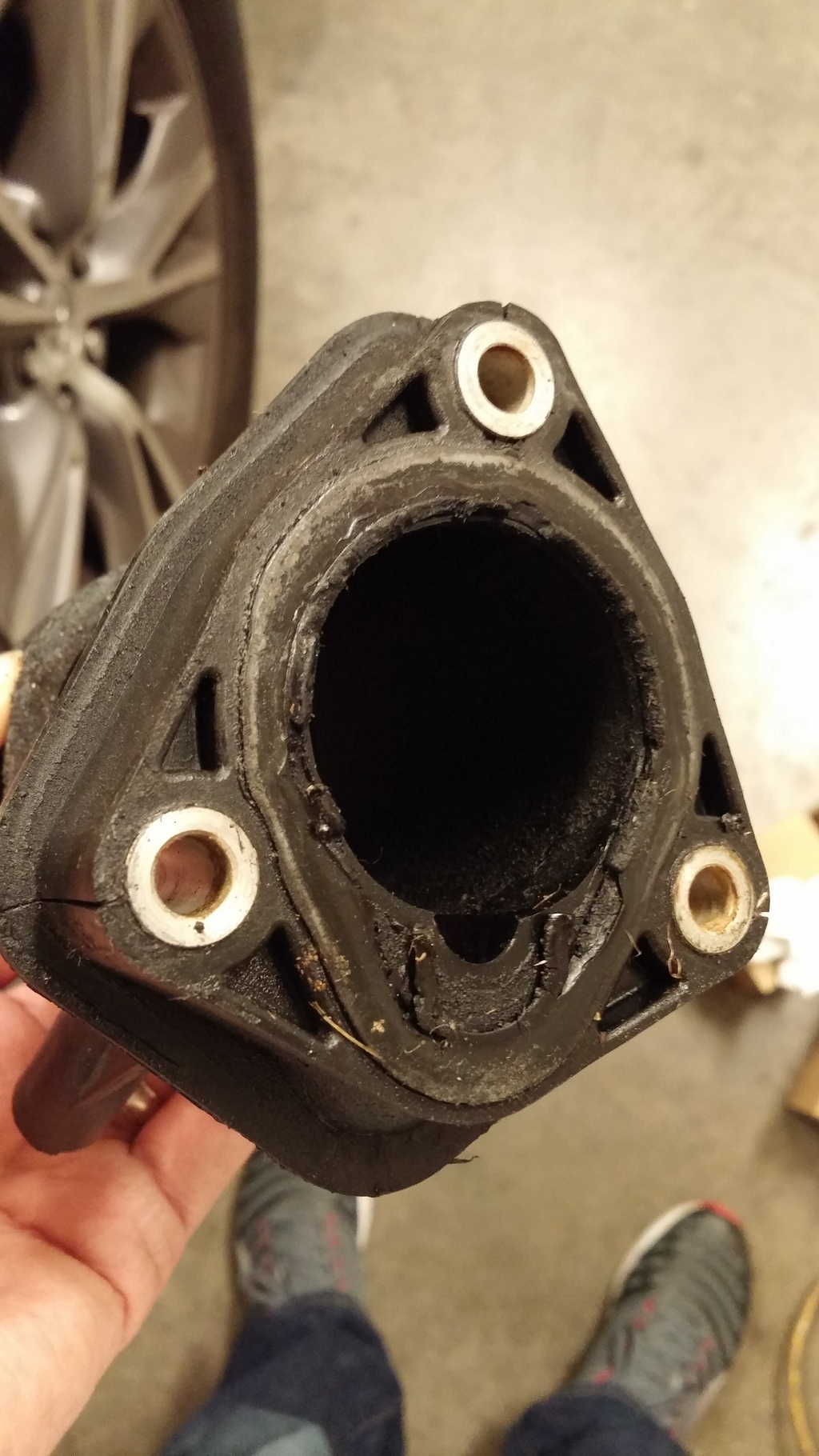
Here are some pics of my old and busted 964 manifolds. All six of my manifolds were in this condition.
20160214_221354_zpsolawwjtn.jpg
Slight cracks visible from the top side.
20160214_221403_zps81jr4tmp.jpg
Big cracks hiding in the bottom. Basically all 18 mounting points were like this.
20160214_221417_zpsvrmkwlca.jpg
Base gasket totally shot and falling apart. This can't possibly provide a good seal.
I'm still unsure if the cracked mounting points = trashed manifold. It looks like the metal sleeves are bonded to the manifold so I don't know if the cracks affect the pieces integrity and ability to seal. I went ahead and replaced all of them with the 993 pieces and new gaskets. I kept all the cracked 964 pieces on the shelf in the garage.
20160214_221354_zpsolawwjtn.jpg
Slight cracks visible from the top side.
20160214_221403_zps81jr4tmp.jpg
Big cracks hiding in the bottom. Basically all 18 mounting points were like this.
20160214_221417_zpsvrmkwlca.jpg
Base gasket totally shot and falling apart. This can't possibly provide a good seal.
I'm still unsure if the cracked mounting points = trashed manifold. It looks like the metal sleeves are bonded to the manifold so I don't know if the cracks affect the pieces integrity and ability to seal. I went ahead and replaced all of them with the 993 pieces and new gaskets. I kept all the cracked 964 pieces on the shelf in the garage.
Burning Brakes
Joined: Jan 2012
Posts: 782
Likes: 16
From: Cheshire UK
IIRC the injector sits in the same place in the housing but the 993 fuel rail connectors are slightly longer. Not a problem as the 964 rail is still long enough for the upper O ring to seal. The only difference will be a few mm gap between the bottom of the fuel rail nozzle and the clip on the injector where before the clip clicked onto the fuel rail nozzle. Shouldn't be an issue as the inlets are under vacuum but if unsure I will shorten the housing to 964 height.
Last edited by ras62; Feb 27, 2016 at 12:15 PM.
Rennlist Stories
The Best Porsche Posts for Porsche Enthusiasts
9 Features and Characteristics That Only Porsche People Understand
Verdad Gallardo
I've Written 500 Rennlist Articles: Here's How Porsche Has Changed Along the Way
Joe Kucinski
10 Most Unnecessary Porsches Ever Built (And Why We Love Them)
Verdad Gallardo
Porsche 911 GT3 S/C vs 718 Spyder RS: 10 Categories, One Winner
Joe Kucinski
This Builder Is Turning Heads With Its Slantnose 911 Creation
Verdad Gallardo
Porsche 911 GT3 Artisan Edition Pays Homage to Japanese Culture
Verdad Gallardo
Porsche Reveals Coupe Variant of the Electric Cayenne With a Fresh Look
Verdad Gallardo
10 Porsche Colors That Have More Personality Than Most People
Verdad Gallardo
Guntherwerks' Final Speedster Creation Is the Ultimate Porsche Restomod
Verdad Gallardo
Three Wheelin'
Joined: Feb 2003
Posts: 1,782
Likes: 109
From: Cambridge/Boston, MA
Rethinking my original post on this. The cracks around the mounting inserts wouldn't let any air leak directly into the ports. But, if the steel inserts aren't anchored to the plastic, then the two could slip and cause the plastic sealing surface and gasket to not sit flat and leak. I'll put poking around with a stethoscope on my to-do list.
Additionally, Pelican has terrible prices on Porsche factory parts. $90 vs $58 currently through Sonnen. For the price, when will someone start making these out of alloy?
Additionally, Pelican has terrible prices on Porsche factory parts. $90 vs $58 currently through Sonnen. For the price, when will someone start making these out of alloy?



Racer
Joined: Mar 2014
Posts: 290
Likes: 9
From: Bucks, UK
They all seem to crack like this at the mounts, doesn't affect the seal once you have a new rubber in there (the new ones are green) just clean them up and change the seals, including the top and lower injector o-rings, and bolt them back up.
The new seals will take up and tiny distortion just fine.
The new seals will take up and tiny distortion just fine.
Drifting
Joined: Aug 2002
Posts: 2,215
Likes: 72
From: Stockholm, Sweden
Ok, so the learning is that the 993 stacks is the way to go. Same function, less money.
I've also heard from engine builders I know that the stacks shrink of age. So the diameter can be up to 2 mm smaller than a new part. So this could be a reason to replace them, not just the cracks around the mounting points. One workshop removes some material inside the stacks and press in a steel lining to make keep the original diameter.
I've also heard from engine builders I know that the stacks shrink of age. So the diameter can be up to 2 mm smaller than a new part. So this could be a reason to replace them, not just the cracks around the mounting points. One workshop removes some material inside the stacks and press in a steel lining to make keep the original diameter.
Racer
Joined: Nov 2010
Posts: 481
Likes: 2
From: Bucks. UK
They all seem to crack like this at the mounts, doesn't affect the seal once you have a new rubber in there (the new ones are green) just clean them up and change the seals, including the top and lower injector o-rings, and bolt them back up.
The new seals will take up and tiny distortion just fine.
The new seals will take up and tiny distortion just fine.
Burning Brakes
Joined: Jan 2012
Posts: 782
Likes: 16
From: Cheshire UK
These cracks will just get worse until the insert becomes suspect, see the pictures earlier, those inserts should be flush with the plastic not protruding. However just as bigger issue are the seals top and bottom and also the bottom lip of the stack which simply disintegrates again as per the pics posted earlier. BTW the lower seals can be green or black depending on Reinz or Elring supply.
Burning Brakes
Joined: Jan 2012
Posts: 782
Likes: 16
From: Cheshire UK
I installed the 993 stacks today so a quick summary.
Stack inlet diameter is 39.5mm for both 964 and 993, hence the use of the same rubber connectors. Stack outlet diameter are 39.5mm for 964 and 42.5mm for 993. Port size on the 964 is 41.5mm but there is a chamfer edge to the port so the result is an almost perfect alignment.
Molding of body are similar but not identical. Both the injector and the fuel rail mount are about 4mm higher on the 993. This seems to have been done to move the tip of the injector away from the airflow in the stack.
It's amazing the detail Porsche went through to extract a little more performance from the engine, although given the inlet size of these stacks I seriously doubt there is any performance benefit between different types of inlet i.e alloy v plastic.
Stack inlet diameter is 39.5mm for both 964 and 993, hence the use of the same rubber connectors. Stack outlet diameter are 39.5mm for 964 and 42.5mm for 993. Port size on the 964 is 41.5mm but there is a chamfer edge to the port so the result is an almost perfect alignment.
Molding of body are similar but not identical. Both the injector and the fuel rail mount are about 4mm higher on the 993. This seems to have been done to move the tip of the injector away from the airflow in the stack.
It's amazing the detail Porsche went through to extract a little more performance from the engine, although given the inlet size of these stacks I seriously doubt there is any performance benefit between different types of inlet i.e alloy v plastic.