


PKT warning light?


Rennlist Member

Joined: Dec 2001
Posts: 25,186
Likes: 105

Wow. You really brought a lot to the discussion.
As long as misinformation is being posted, I will post it for what it is. If you don't like it, post data. Otherwise, well....
I suggest you keep your personal insults off the thread. It makes you a lesser person. And doesn't really change how I operate. So , not sure what your intention is, but I surmise it is not having the effect you want.
Its interesting how several people have you on ignore. Why do you think that is?

Captain Obvious
Super User
Super User
Joined: Aug 2003
Posts: 22,846
Likes: 348
From: Cambridge, Ontario, Canada
The only lesser person/people here are you two -tweedle dee and tweedle dumber who choose (very carefully I may add) to specifically **** on CERTAIN and particular threads posted by certain people. Personal insults usually get brought out when the amount of pure manure, i.e., passive aggressive asshat posts you two shovel in starts to rise.
Its interesting how several people have you on ignore. Why do you think that is?
Its interesting how several people have you on ignore. Why do you think that is?
Vegas, Baby!
Rennlist Member
Rennlist Member


Joined: May 2009
Posts: 11,555
Likes: 395
From: far away
Bingo. Its not a warning light of the PKT I want.
What I want is an alarm for a failure of the water pump pulley - the symptom of which is often belt damage or loss of tension. (e.g. pulley comes off, bearing seizes, impeller eats aluminium and belt slips etc.)
The worn sprockets, bushings etc. I don't care about, as I replaced all the worn ones with brand new, and have more new ones on the shelf for use when they're next worn. The fix for a problem relating to worn sprockets is um.. replace the damn wear items
Is there room to rig up some kind of hall-effect sensor for the water pump pulley on the center belt cover? Maybe mounting a pair of small neodymium magnets on the pump pulley?
What I want is an alarm for a failure of the water pump pulley - the symptom of which is often belt damage or loss of tension. (e.g. pulley comes off, bearing seizes, impeller eats aluminium and belt slips etc.)
The worn sprockets, bushings etc. I don't care about, as I replaced all the worn ones with brand new, and have more new ones on the shelf for use when they're next worn. The fix for a problem relating to worn sprockets is um.. replace the damn wear items
Is there room to rig up some kind of hall-effect sensor for the water pump pulley on the center belt cover? Maybe mounting a pair of small neodymium magnets on the pump pulley?
Rennlist Member
Joined: Dec 2001
Posts: 25,186
Likes: 105
You may have me confused with kibort, your personal hero.

Thread Starter
Inventor
Rennlist Member
Rennlist Member
Joined: Sep 2002
Posts: 10,212
Likes: 465

Now, if the tension-truthers would work on a water-pump-warning instead of fondling their Bellevilles, maybe we'd have something.

Electron Wrangler
Lifetime Rennlist
Member
Lifetime Rennlist
Member
Joined: Mar 2002
Posts: 13,657
Likes: 616
From: Phoenix AZ

Lets stay on topic here - if you don't have/don't want/don't like a Porkensioner you have more than made your point. For those that have or do - seems like there are some real options emerging here.
Ken previously you noted the horizontal belt movement after the water pump at high rpm - are there other areas that clearly have more belt movement (flap) as the tensioner settles? how bad is it during the initial cold running scenario? (much worse than warm like the stock case? or mitigated?)
For the post water pump high rpm scenario does the belt ever contact the TB cover where the window section is?
Have you done any testing of the warning circuit to see how short of a ground break it will detect?
Alan
Thread Starter
Inventor
Rennlist Member
Rennlist Member
Joined: Sep 2002
Posts: 10,212
Likes: 465
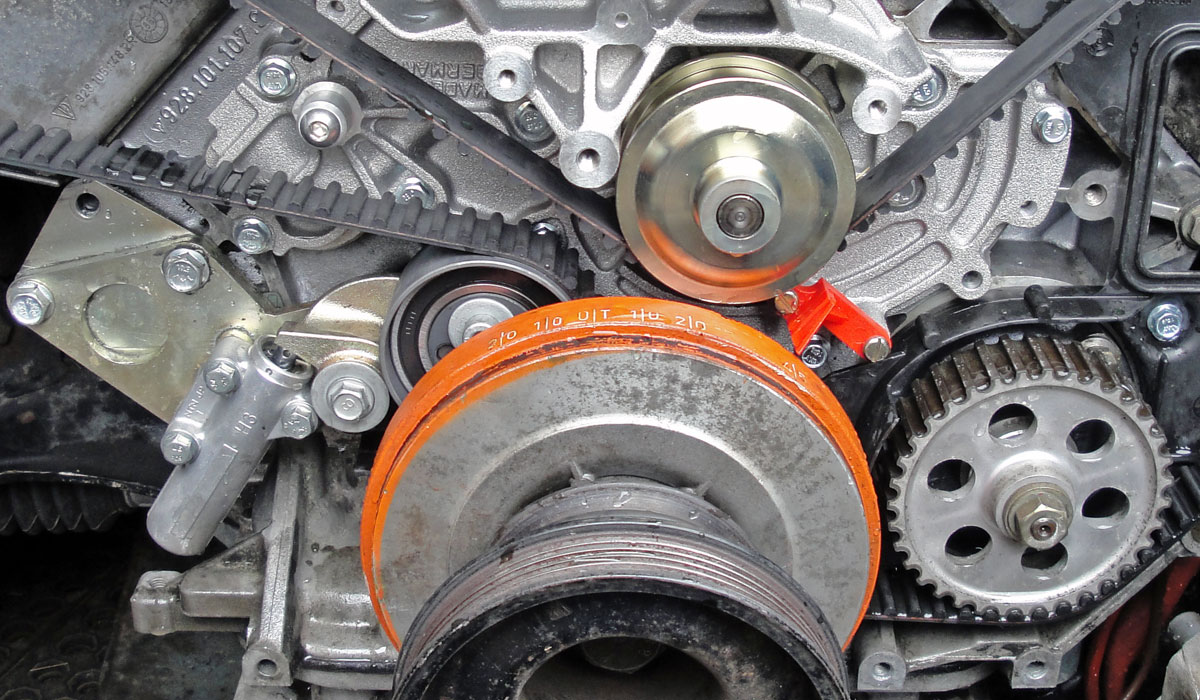
The mid section between the tensioner pulley and the 1-4 gear will show the most movement.
Higher rpms with a cold engine will the show the most movement with the stock tensioner here.
With a PKT, the belt in this area will always be flat, hot or cold, if it is working properly.
Can't say how short of a break the Central Warning box requires. Could it might be resistance based?
Higher rpms with a cold engine will the show the most movement with the stock tensioner here.
With a PKT, the belt in this area will always be flat, hot or cold, if it is working properly.
Can't say how short of a break the Central Warning box requires. Could it might be resistance based?
Captain Obvious
Super User
Super User
Joined: Aug 2003
Posts: 22,846
Likes: 348
From: Cambridge, Ontario, Canada
Nordschleife Master
Joined: Apr 2003
Posts: 9,601
Likes: 39
From: Abbotsford B.C.
What about a thin nylon, cap which sits overtop of the tensioner pin. Then adhere a metal contact to the top side, and attach the wire to it.
I still think it would be better to have a waterpump warning system over the tensioner as there are more failed waterpumps taking out the belt than anything else.....
I still think it would be better to have a waterpump warning system over the tensioner as there are more failed waterpumps taking out the belt than anything else.....
Thread Starter
Inventor
Rennlist Member
Rennlist Member
Joined: Sep 2002
Posts: 10,212
Likes: 465
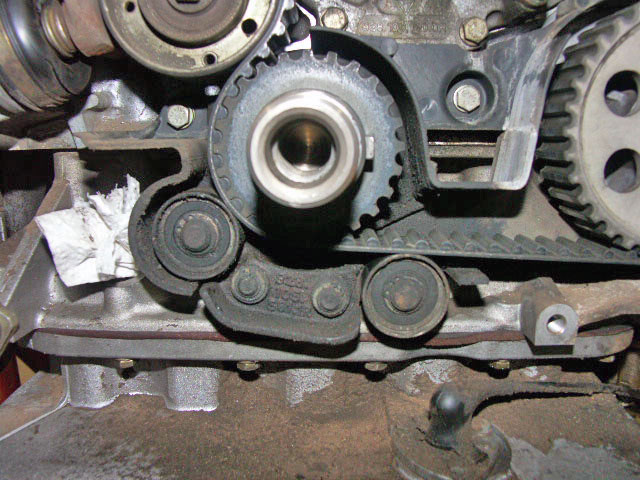
RE. belt wrap sensor - forgot about that flat empty area under the tensioner pulley - with a mounting bolt even.
It's right where the minimum wrap area is on the crank gear.
Still wouldn't tell you if the water pump pulley was falling off, though.
It's right where the minimum wrap area is on the crank gear.
Still wouldn't tell you if the water pump pulley was falling off, though.


Chronic Tool Dropper
Lifetime Rennlist
Member
Lifetime Rennlist
Member
Joined: Oct 2001
Posts: 20,506
Likes: 564
From: Bend, Oregon
Creeps me out thinking of that pulley fallling off. (!!)
Put a brake pad wear sensor on the cover, wired in series with the belt position switch by the crank pulley. If the pulley moves out, it eats ths sensor wire and sets the warning. Use a loop of thin copper wire to detect the belt walking forward on the pulleys due to pump shaft misalignment, if you have that concern.
Put a brake pad wear sensor on the cover, wired in series with the belt position switch by the crank pulley. If the pulley moves out, it eats ths sensor wire and sets the warning. Use a loop of thin copper wire to detect the belt walking forward on the pulleys due to pump shaft misalignment, if you have that concern.
Rennlist Member
Joined: Jul 2006
Posts: 5,421
Likes: 627
From: Bloomfield, MI
My old Lexus had a speed sensor on the A/C compressor, that compared compressor rpm to crank rpm. If that value went out of spec, indicating possible seizure, the compressor clutch would disengage. I think something similar could be done with magnetic paint or optical sensing to compare WP speed to crank speed. An electronic circuit could then trigger a light.
Just an idea, based on other auto application.
Dave
Just an idea, based on other auto application.
Dave
Like others have said, given the TB tension is now dynamic, belt failures (other than incorrect tension) are WP related.
Could we use the RPM signal and "compare" it to the rotation of the WP?
I would think some slip would be acceptable, however if it slows down for some % of time or stops spinning even intermittently then "!"