





Alignment Question

Thread Starter
Instructor
Joined: Jan 2009
Posts: 100
Likes: 0
From: Granger, TX
 Alignment Question
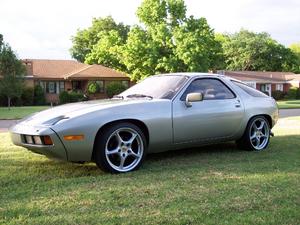
Below is a printout from an alignment on my 86.5. I notice that some of the measurements are out of the specified range. The person doing the alignment said everything was adjusted as close as possible. All of the components on the car are fine. Could this be due to the ride height being too low? Thanks

Chronic Tool Dropper
Lifetime Rennlist
Member
Lifetime Rennlist
Member
Joined: Oct 2001
Posts: 20,506
Likes: 564
From: Bend, Oregon
Yes.
The rear camber adjustment ha some limits that are hord to reach when the car has sagged. Plus the rubber bushings in that top link in tha rear get tired with age. The efect is compounded when there are spacers and/or low offset rear wheels installed. That extends the 'leverage' that the rear wheels exert on the suspension. The good news is that many modern tire designs actually like a little bit of extra camber.
Maintaining corrrect ride height brings some advantages to tire life and ride quality, and help keep the alignmnet setting consistent over a larger range of suspension travel. Most folks think that factory height makes the car look like like it's way too high, mostly because they are so used to seeing them sagged. There's a compromise in there someplace. Did you measure your ride height?
The rear camber adjustment ha some limits that are hord to reach when the car has sagged. Plus the rubber bushings in that top link in tha rear get tired with age. The efect is compounded when there are spacers and/or low offset rear wheels installed. That extends the 'leverage' that the rear wheels exert on the suspension. The good news is that many modern tire designs actually like a little bit of extra camber.
Maintaining corrrect ride height brings some advantages to tire life and ride quality, and help keep the alignmnet setting consistent over a larger range of suspension travel. Most folks think that factory height makes the car look like like it's way too high, mostly because they are so used to seeing them sagged. There's a compromise in there someplace. Did you measure your ride height?
Thread Starter
Instructor
Joined: Jan 2009
Posts: 100
Likes: 0
From: Granger, TX
dr bob: measuring from the floor through the center cap to the bottom of the fender mine reads 26.5" front and 24" rear. Many years of settling.
Giovanni: The car was driven on ramps and adjusted.
thanks
Giovanni: The car was driven on ramps and adjusted.
thanks

Rennlist Member
Joined: Jan 2008
Posts: 4,077
Likes: 331
From: Friday Harbor, WA
The front-end numbers look OK, and 0.9 deg negative camber is fine.
The caster is also above spec, typically the caster can't be adjusted down the 4-deg spec and winds up at 4.5-5 deg. That's a non-issue, what matters is that left and right caster be matched. I think the 0.3-deg difference is within spec (just), they could have done better but if the car tracks straight on level pavement without tending to pull left or right then it is close enough.
I would ask them about the rear camber though, personally I would like to see it closer to the front camber. I'm wondering if they adjusted the rear at all, the before/after numbers didn't change (except for measurement error).
Cheers,

Rennlist Member

Joined: Jul 2002
Posts: 3,269
Likes: 5
From: Deep in the Heart of Texas!
I've seen rear camber discussed here several times ... most 928s now have neg rear camber beyond the spec but posters say this doesn't have any harmful effects to handling or tire wear.
Looks like front camber and caster are close to equal from side to side, could be some bushing wear involved there too.
Looks like front camber and caster are close to equal from side to side, could be some bushing wear involved there too.
Trending Topics
Under the Lift
Lifetime Rennlist
Member
Lifetime Rennlist
Member
Joined: Mar 2002
Posts: 18,648
Likes: 52
From: Buckeye, AZ
What I like to see in an alignment for a street car is:
1. Front toe dead center of the range at 0.25 degrees total. There is absolutely no reason this cannot be done. No biggie, but he could have gotten it closer to the center of the spec range.
2. Front caster equal both sides. It's common that caster cannot be brought down into the spec range, as Jim Corenman mentioned. Porsche changed the spec to 4 +1 degrees in 91 retroactive to 86. This is fine for street cars and open road racing, improving straight-line stability. So, what I would like to have seen is both sides the same, set to the side that had the highest final value, just as Jim said too. So, if 4.7 was the lowest he could get the right side, the left side should have been adjusted back up to 4.7. He got them within the spec for side-to-side difference, but he could have gotten them equal. They should be set unequal only if you are trying to correct a pull.
3. Rear toe equal both sides. This is more critical than equal front to side-to-side. The front wheels are "self-centering" (but still the front toe should be set equal side-to-side). The rears are fixed. Unequal rear toe can cause a pull. I don't understand why the toe went up on the rear left side. He made the rear toe more unequal than it was originally and there should have been plenty of range in the toe adjustment.
Yes, low ride height makes camber more negative. Less negative camber is better for street stability.
1. Front toe dead center of the range at 0.25 degrees total. There is absolutely no reason this cannot be done. No biggie, but he could have gotten it closer to the center of the spec range.
2. Front caster equal both sides. It's common that caster cannot be brought down into the spec range, as Jim Corenman mentioned. Porsche changed the spec to 4 +1 degrees in 91 retroactive to 86. This is fine for street cars and open road racing, improving straight-line stability. So, what I would like to have seen is both sides the same, set to the side that had the highest final value, just as Jim said too. So, if 4.7 was the lowest he could get the right side, the left side should have been adjusted back up to 4.7. He got them within the spec for side-to-side difference, but he could have gotten them equal. They should be set unequal only if you are trying to correct a pull.
3. Rear toe equal both sides. This is more critical than equal front to side-to-side. The front wheels are "self-centering" (but still the front toe should be set equal side-to-side). The rears are fixed. Unequal rear toe can cause a pull. I don't understand why the toe went up on the rear left side. He made the rear toe more unequal than it was originally and there should have been plenty of range in the toe adjustment.
Yes, low ride height makes camber more negative. Less negative camber is better for street stability.
Rennlist Stories
The Best Porsche Posts for Porsche Enthusiasts

Porsche Reveals Coupe Variant of the Electric Cayenne With a Fresh Look
Verdad Gallardo
10 Porsche Colors That Have More Personality Than Most People
Verdad Gallardo
Guntherwerks' Final Speedster Creation Is the Ultimate Porsche Restomod
Verdad Gallardo
10 Reasons I Hate Going to the Porsche Dealership (& the 1 Reason I Stay)
Joe Kucinski
Porsche Shakes Up The Nürburgring Lap Record Table Once Again
Verdad Gallardo
6 Ways the Porsche 911 GT3 S/C Redefines Performance
Joe Kucinski
10 Wildest Homologation Specials Porsche Ever Sold
Verdad Gallardo
Super Rare RUF BTR III Comes Out of Hibernation, Looking For a New Home
Verdad Gallardo
10 Porsche Opinions That Can Start a Fight
Joe Kucinski
Chronic Tool Dropper
Lifetime Rennlist
Member
Lifetime Rennlist
Member
Joined: Oct 2001
Posts: 20,506
Likes: 564
From: Bend, Oregon
There are several resources for height adjustment instructions. I think the UK group had a pretty good instruction.
Unfortunately, ride height adjusting needs to be done -before- alignment, as does tire pressure. If you make any adjustments, be sure to go drive around for a while, like 50 miles, then verify your height adjustments before going back to the alignment rack.
When you do go back, share Bill's comments with the tech. No need to have the side-to-side differences. It takes a little more patience to get it perfect. I will share that getting the car 'just perfect' is pretty satisfying in the ride and handling area. Pays big dividends in tire wear too.
Chronic Tool Dropper
Lifetime Rennlist
Member
Lifetime Rennlist
Member
Joined: Oct 2001
Posts: 20,506
Likes: 564
From: Bend, Oregon

Three Wheelin'
Joined: Jan 2007
Posts: 1,466
Likes: 0
From: not where you think I am
compare your original numbers with your modified numbers.
look at your side to side numbers, particularly the rear.
Bob's pointing out that the front camber numbers will give you the illusion that the car is traveling straight, when it is actually traveling like a crab with rear toe number not being the same side to side.
Bill's concerns are more detailed.
Same numbers (toe) side to side, preferable both front and rear in my book.
possibly some issue with rear suspension parts as the car has been crashed in both rear quarters......?
--Russ
look at your side to side numbers, particularly the rear.
Bob's pointing out that the front camber numbers will give you the illusion that the car is traveling straight, when it is actually traveling like a crab with rear toe number not being the same side to side.
Bill's concerns are more detailed.
Same numbers (toe) side to side, preferable both front and rear in my book.
possibly some issue with rear suspension parts as the car has been crashed in both rear quarters......?
--Russ
Thread Starter
Instructor
Joined: Jan 2009
Posts: 100
Likes: 0
From: Granger, TX
Sounds like bringing the ride height up would be the way to go. To bring it up to factory spec I calculated it needs to be raised 27mm. Based on the BOGE threads, that would translate to 9 turns in front and 27 in back since the front is raised 3 mm per turn and the rear 1 mm per turn. Is this correct? Also, where can I get one of the shock adjustment tools?