When you click on links to various merchants on this site and make a purchase, this can result in this site earning a commission. Affiliate programs and affiliations include, but are not limited to, the eBay Partner Network.
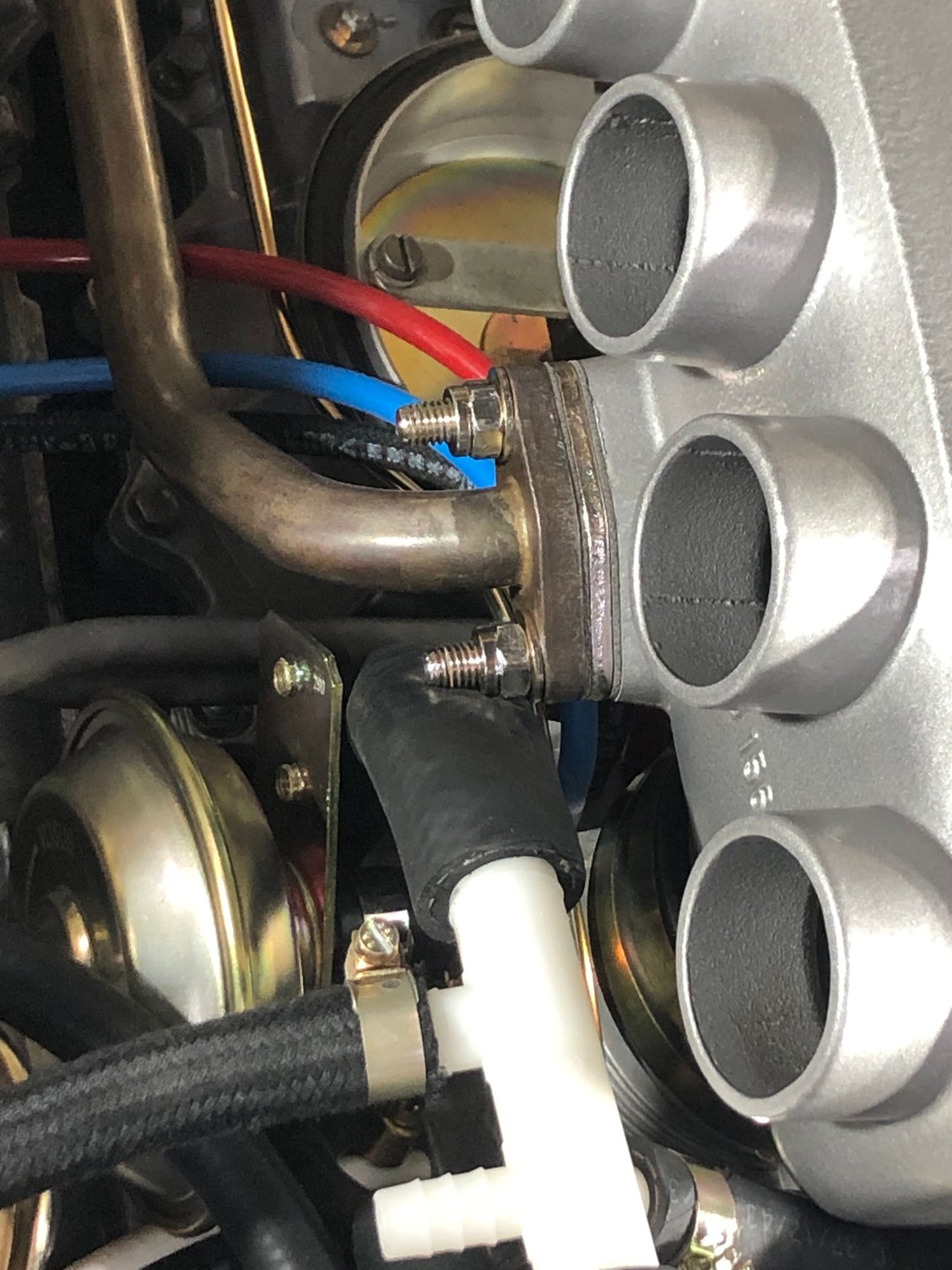
I’ve researched the best way to install the the spider “body” and “legs” on my ‘79 and have come to determination there is no clear “best” way. I do have another question in regards to the install. To ensure there is no intake leaks at the base of the legs, I wanted to put a bit drei bond between the head and the “leg” base. I just want to make sure any scratches that may be there do not cause any issues and thought the gasket sealant may do the trick. Thoughts??
The spider has thick paper gaskets from the factory. Are you going to use these or a sealant instead?
If you use the sealant, plan on removing the legs 1 by 1 with a sledgehammer after it cures.
Most of us use the factory gaskets as they were good for 30+ years and they are inexpensive.
I personally install the center section of the spider on the throttle body "U" and then mount the legs.
It is significantly easier to do all the hoses under the intake and the throttle body clamps this way than trying to attach it all in 1 shot, put together.
The stock paper gaskets work fine without any sealant, event under boost (17psi on mine).
For various reasons I've had to remove just the plenum on a few cars without removing the legs. The only real tricky part is the clamps on the TB, but a long skinny flat-head driver makes easy work of this.
The rubber couplers can be slid far enough on the legs to allow the plenum to be installed, secured, then pull the couplers onto the plenum and tighten those clamps.
I used a belt sander to shave down the plenum tubes enough to let them slide in and out from between the installed runners. Seemed like the easiest path to installation for me. The flat belt allowed me to get all 4 pretty consistent as opposed to a flap wheel and hitting each one individually.
The spider has thick paper gaskets from the factory. Are you going to use these or a sealant instead?
If you use the sealant, plan on removing the legs 1 by 1 with a sledgehammer after it cures.
Most of us use the factory gaskets as they were good for 30+ years and they are inexpensive.
I personally install the center section of the spider on the throttle body "U" and then mount the legs.
It is significantly easier to do all the hoses under the intake and the throttle body clamps this way than trying to attach it all in 1 shot, put together.
i was envisioning a thin layer of drei bond, a new gasket and then bolt down?? I just to make sure there isn’t any issues with leaks. I didn’t know how well the gasket material conforms to the metal.
Couplers slid back on the leg tops, mount spider body then legs and slide the gaskets over. I used new OEM gaskets from Roger for the leg bases. I also replaced the lower mounting fasteners with stainless socket cap versions as the ball end Allen is easier to angle into those spots for securing them.
I too installed mine dry, and never had any air leaks. I wouldn't use drie bond there either. As to spider install, I did it Hacker's way, but Blake's works too.
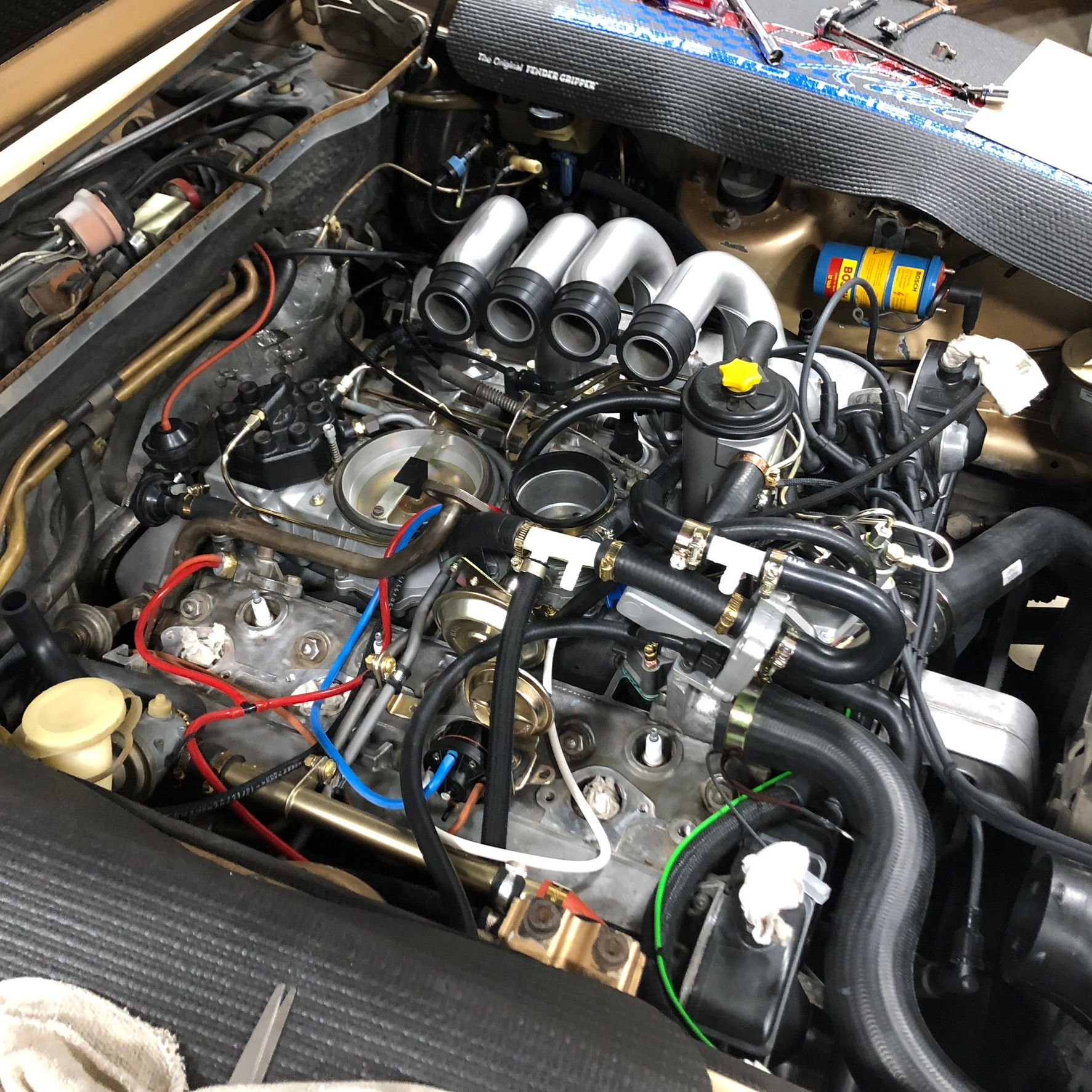
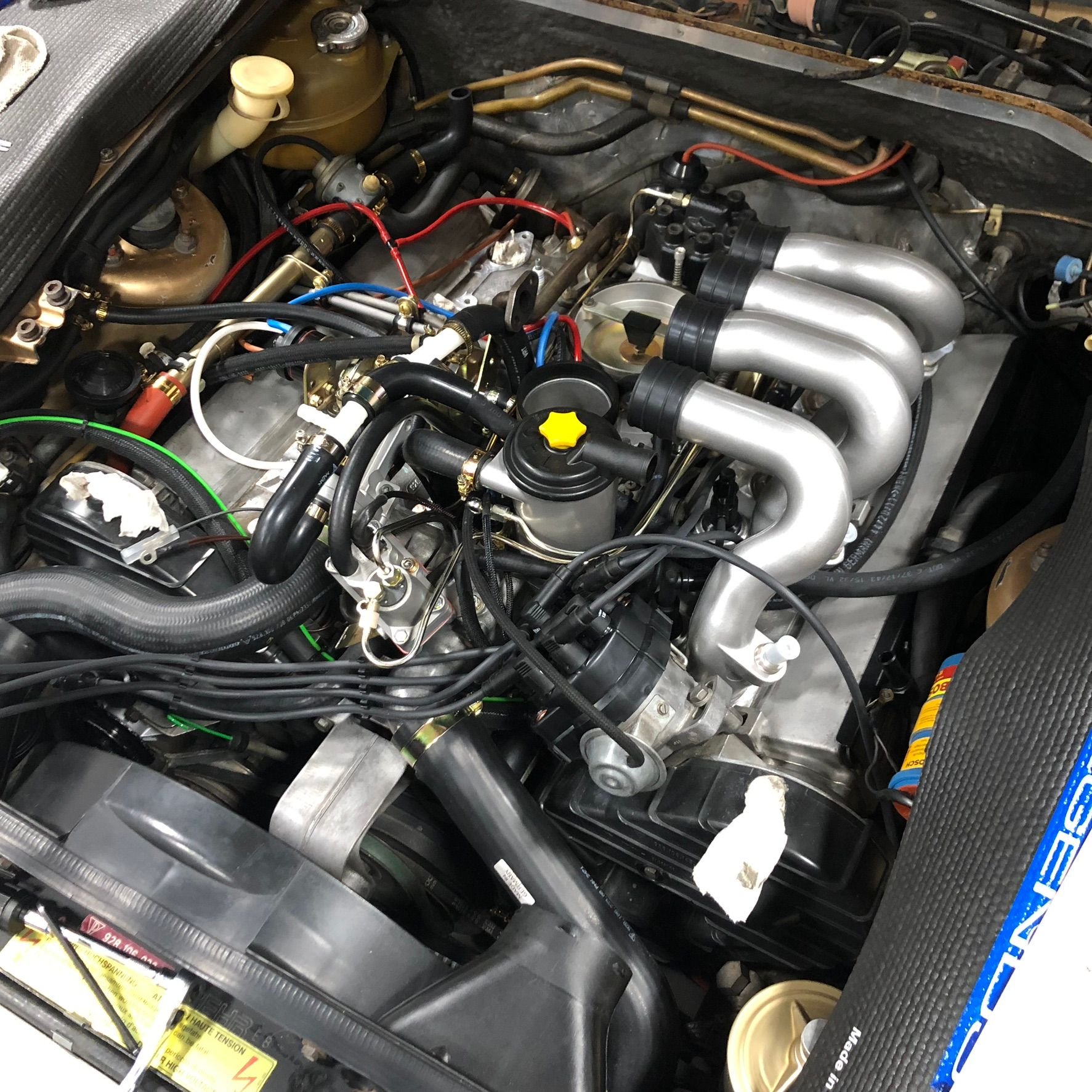
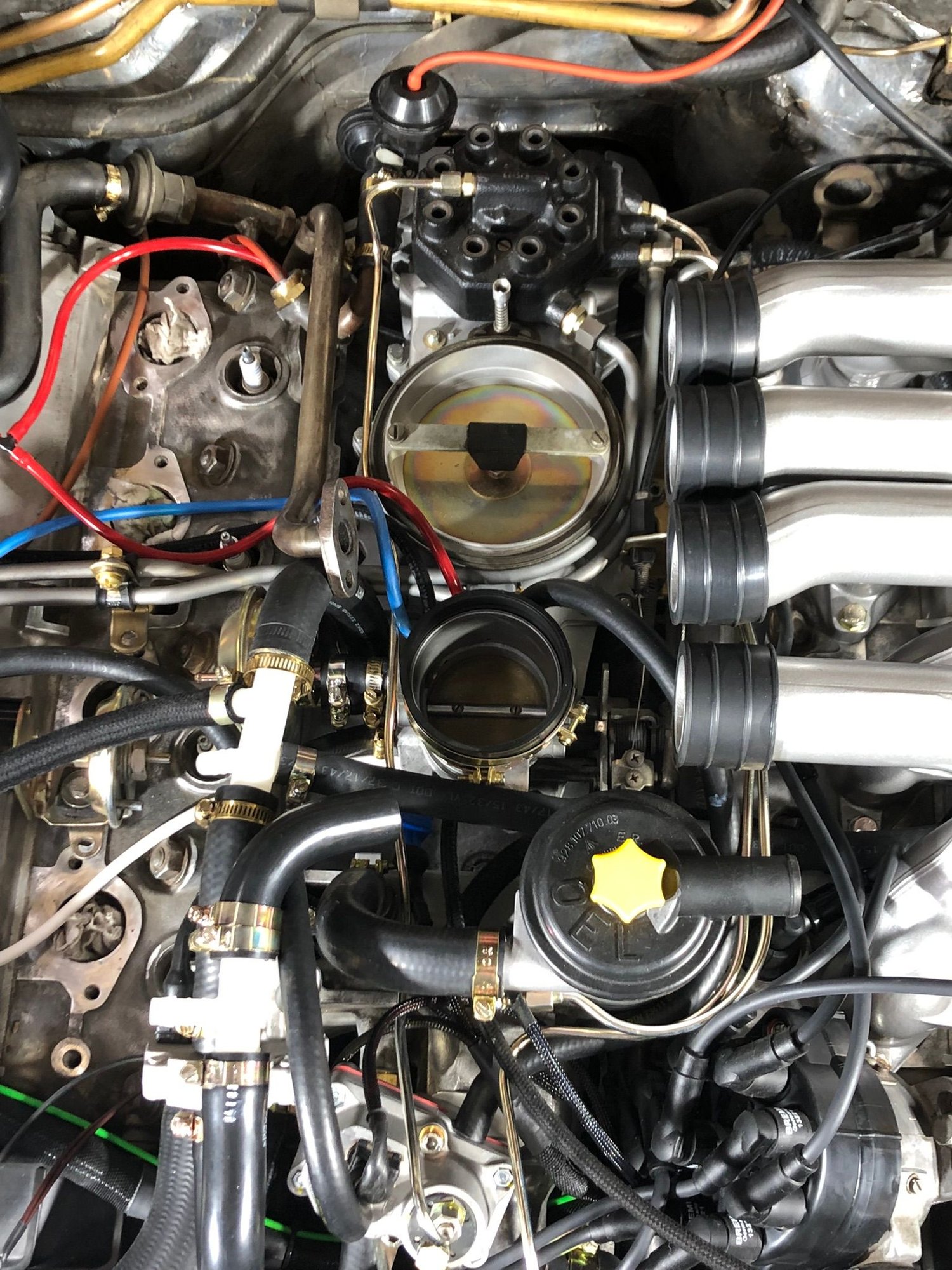
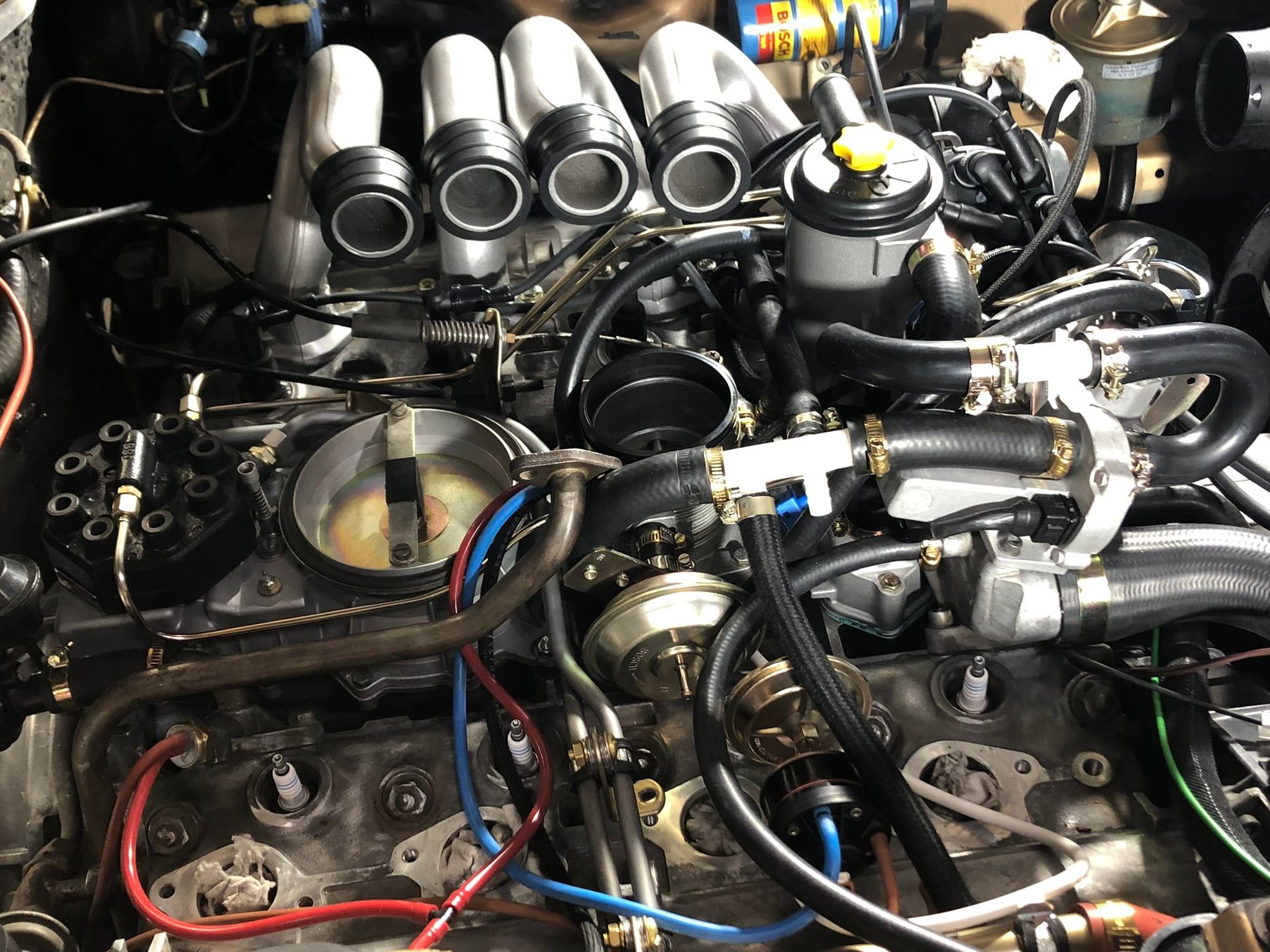
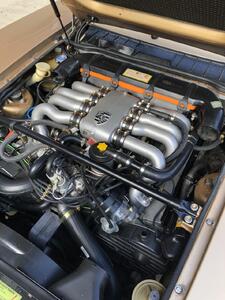
I was able to dedicate some more time to the shark. It is coming together slowly. I have to wait for some hose, so I’m in a holding pattern. The new plug wires were a pain to get them to the point where they felt secure. Please take a look below and see if you see anything that is not correct, as well as, any advice on potential problem areas I’m not thinking of/familiar with. I have to set up the CIS, as this was redone at Flowtech. I have their directions, which are understandable but should I do that now or after I have everything together? If nothing else, I’ll have a pretty paperweight. Lol
oh, also, should I address anything else at this stage of the game?
The stock gaskets have a glue made into them, which is why they are so darn hard to remove and why they are completely different on the two sides of the gasket. Note that the "glue side" can vary from "gasket run" to "gasket run". Sometimes, when stock manifolds are removed, 3 gaskets on each side will be stuck to the heads and 1 gasket on each side will be stuck to the manifolds. Sometimes the opposite occurs....3 stuck to manifolds and 1 stuck to head, on each side.
if you put anything on them, the glue will be defeated and they can/will slip and split. (A very quick lesson, if you've ever tried any type of sealant on 951 gaskets.)
Just make sure the intake runners are flat, which is not a huge problem on the pre-1985 US models and the pre-1987 Euro models (aluminum runners), but a huge issue on the '85/'86 US models (magnesium runners.)
14 to 16 ftlbs. works best on the stock gaskets...no more!
Center plenum always installed first...leave the clamps on the boot from the throttle body to the center plenum slights loose (and accessible, once the runners are installed.)
This allows one to get to and hook up all the hoses under the center plenum.
Runners go on after this. Slide the 8 boots over the center plenum before tightening manifolds, to get the best runner centering (to the central plenum) possible.
Tighten the boot you left loose on the center plenum to throttle body after the runners are attached, runner clamps are snugged, and runners torqued. Tighten runner clamps last.
By doing things in this order, the runners will line up better to the center plenum and heads, allowing optimum airflow.
The stock gaskets have a glue made into them, which is why they are so darn hard to remove and why they are completely different on the two sides of the gasket. Note that the "glue side" can vary from "gasket run" to "gasket run". Sometimes, when stock manifolds are removed, 3 gaskets on each side will be stuck to the heads and 1 gasket on each side will be stuck to the manifolds. Sometimes the opposite occurs....3 stuck to manifolds and 1 stuck to head, on each side.
if you put anything on them, the glue will be defeated and they can/will slip and split. (A very quick lesson, if you've ever tried any type of sealant on 951 gaskets.)
Just make sure the intake runners are flat, which is not a huge problem on the pre-1985 US models and the pre-1987 Euro models (aluminum runners), but a huge issue on the '85/'86 US models (magnesium runners.)
14 to 16 ftlbs. works best on the stock gaskets...no more!
Center plenum always installed first...leave the clamps on the boot from the throttle body to the center plenum slights loose (and accessible, once the runners are installed.)
This allows one to get to and hook up all the hoses under the center plenum.
Runners go on after this. Slide the 8 boots over the center plenum before tightening manifolds, to get the best runner centering (to the central plenum) possible.
Tighten the boot you left loose on the center plenum to throttle body after the runners are attached, runner clamps are snugged, and runners torqued. Tighten runner clamps last.
By doing things in this order, the runners will line up better to the center plenum and heads, allowing optimum airflow.
Thanks Greg. That makes a lot of sense. Will utilize your directions (as best I can from this point) to finish things up.
I wanted to see if the area around exhaust recirculating pipeline looks okay. Everything is extremely tight in that area and the hose is rubbing against the bolt/stud going into the plenum. If I shorten the hose going into the air guide housing, it begins to kink pretty significantly. Thoughts? Hopefully all is good.
Talos Takes Your 991 Porsche 911 GT3 to the Next Level for a Cool $1.13 Million
Slideshow: Talos Vehicles has transformed the Porsche 911 GT3 RS into a carbon-bodied, race-inspired machine that costs well over $1 million before the donor car is even included.
9 Vehicles Porsche Helped Engineer that Aren't Porsches
Slideshow: Long before engineering consulting became trendy, Porsche was quietly helping other automakers build everything from supercars to economy hatchbacks.
9 Features and Characteristics That Only Porsche People Understand
Slideshow: Some brands build cars. Porsche builds traditions, obsessions, and a few habits that stopped making sense decades ago but somehow became part of the charm.
This Builder Is Turning Heads With Its Slantnose 911 Creation
Slideshow: A small Polish tuner has reimagined the Porsche 911 Slantnose for the modern era, blending 1980s nostalgia with widebody tuning culture and serious performance upgrades.
Porsche 911 GT3 Artisan Edition Pays Homage to Japanese Culture
Slideshow: Porsche has created a Japan-only 911 GT3 Artisan Edition that blends track-ready hardware with design cues inspired by traditional Japanese craftsmanship.
Porsche Reveals Coupe Variant of the Electric Cayenne With a Fresh Look
Slideshow: Porsche's latest electric Cayenne Coupe blends dramatic styling with supercar acceleration, turning the brand's midsize SUV into a 1,139-horsepower flagship.








 Spider Installation Question