When you click on links to various merchants on this site and make a purchase, this can result in this site earning a commission. Affiliate programs and affiliations include, but are not limited to, the eBay Partner Network.
Many of you saw my post at the end of last season showing the results of the dynoJet 248e test of the race car motor to be 370rwhp. the great thing about the design of the 928 engine, is its inherent durability and consistency as it ages. after racing 3 of them for over 20 years, it's amazing the consistency of the dyno runs over so many and so many years. (usually doing 1 to 2 dynos a year, unless there was a reason to do more, due to a major change like a cam timing adjustment).
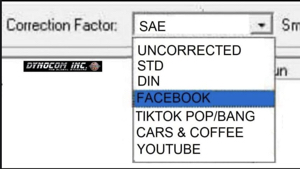
I dont know where people get to the point that they think a 248e hp value is inflated, because all it is doing is taking a known rotating mass and seeing the change in angular velocity vs time. you cant cheat it. it's impossible. you get what you get based on how the car accelerates the weighted drums. compared to a mustang dyno, (for which i have been on several times as well) there is little difference. when i was dynoing my car several times a year (the Holbert 5 liter motor) it started out, after some topical tune and equal length headers, at 335rwhp, the next few tests were in the mid 320s for many years, even after a cam change to '85s. one time , we tried the dual throttle body enlarged plenum test, only to find a 2-3hp gain and it was still in the 320range. we removed the system and it ran an expected 318rwhp. (not far off the 10s of dyno runs before. ) so , i dont know where the "mustang dyno is 15% less than dyno jet" came from, but i certainly never saw it. a few months later another 320rwhp was measured on a dynojet 248e. the mustang dyno incorporates more calculations, based on the force at RPM measured by electro magnetic braking, but the concept is still close to the same. The 248e is the purest measurement of power. it takes the rate of change of Kinetic energy (J) vs time. (rotational KE at RPM A vs RPM B) 300,000 Joules of change over a second, would be 400hp. this is the net power that the car's wheels imparted to the drums. YOU CANT FAKE THIS. now, you can adjust the numbers a little due to the atmospheric conditions, to bring values to a "standard day" (59degrees/29.92"Hg) but you always have a choice to choose the actual values (uncorrected). so, challenge the correction factors, but dont challenge the 248e as being "over inflated" as far as a measure of your engine and car's performance.
Yop cant cheat it, but you can affect what it's seeing.
Tire pressure
Tire design
Tire diameter. <--A big game changer
Wheel location on the drum
Each can change the end reading a few HP, not much at all, but enough to DQ a compliance run, which is why procedures are important on a chassis dyno.
There's not much to this 'debate', mustang works different than Dynojet, and variable from day to day on the same dyno IN the car can change what the dyno is measuring too.
A dyno is a tool, if it's important, always use the same tool.
Last edited by Speedtoys; Aug 25, 2020 at 08:38 PM.
I've tested all cars on both dynojets and the mustang my old race shop used. Typically they were pretty close, the only significant loss was when we tuned the Estate with more fuel to increase its dyno from 197whp to 215whp just prior to the last race we ran at Sears. After the race and oil change It ran the same mustang dyno back at 195whp if I remember correctly.......I think it leaned out too....so the AFM adjustment appears to have worn out over the course of the race.....ideally an adjustable FPR would have been best.
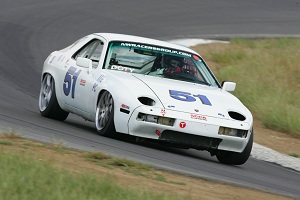
On a dynojet to dynojet comparison Casper made 243whp-260ish torque when I bought her with stock tuning on its aftermarket ECU......when I increased timing from 30' max to 34' max (Porsche recommended for an 4.5L 1981 engine) it dynoed 265whp-285torque......BUT it would miss (knock) around torque peak....so I pulled it back to 32' around torque peak but left it 34' up top.....never dynoed her like that....but sure ran great, until it blew up :>) Like all non Kibort owned race 928's do eventually at high G loads....FLAME SUIT on....MK's wrath is coming
Yop cant cheat it, but you can affect what it's seeing.
Tire pressure
Tire design
Tire diameter. <--A big game changer
Wheel location on the drum
Each can change the end reading a few HP, not much at all, but enough to DQ a compliance run, which is why procedures are important on a chassis dyno.
There's not much to this 'debate', mustang works different than Dynojet, and variable from day to day on the same dyno IN the car can change what the dyno is measuring too.
A dyno is a tool, if it's important, always use the same tool.
Yes.. of course, just like on the track or open road, tire pressure surface,are factors. other factors include strap down tension /force is as well as what gear you are testing in. (3rd, more slip, more efficiency losses compared to 4th )
there is no logical reason that the "tire diameter " would be a measurable factor, due to the acceleration over the average amount of time that a test would be conducted.. at 50lb tire/wheel combo would have generally an effect as if 1.5 times that weight was in the car as far as "hp losses" so, you could see a 1" -2" diameter difference as being a fraction of a HP on the dyno if it was sensitive enough (assuming a 7-8 second dyno acceleration run from wheel speed in range of 80mph to 155mph in 4th gear ( or 3000rpm to 6600rpm divided by a 3.2:1 gear ratio for wheel RPM range). in other words.. determin the mass of the wheel /tire combo and mass distribution change. calculate the change in KE from 935rpm to 2062rpm and then divide that by the "8 seconds" and then 746 for HP. that would give you the HP that would be possible to lose based on those differences..
I've tested all cars on both dynojets and the mustang my old race shop used. Typically they were pretty close, the only significant loss was when we tuned the Estate with more fuel to increase its dyno from 197whp to 215whp just prior to the last race we ran at Sears. After the race and oil change It ran the same mustang dyno back at 195whp if I remember correctly.......I think it leaned out too....so the AFM adjustment appears to have worn out over the course of the race.....ideally an adjustable FPR would have been best.
On a dynojet to dynojet comparison Casper made 243whp-260ish torque when I bought her with stock tuning on its aftermarket ECU......when I increased timing from 30' max to 34' max (Porsche recommended for an 4.5L 1981 engine) it dynoed 265whp-285torque......BUT it would miss (knock) around torque peak....so I pulled it back to 32' around torque peak but left it 34' up top.....never dynoed her like that....but sure ran great, until it blew up :> Like all non Kibort owned race 928's do eventually at high G loads....FLAME SUIT on....MK's wrath is coming
you didnt follow the PROGRAM!!! hahaa... yes, all motors will fail, evenualy, but i like to push that date out as far as possible with a few longevity tricks. as you know. will probably be out again this weekend at Laguna!!!!! still runs strong!!!!!! and yes, we did have a lot of dyno time you and I. same types of results not much change between dynos at all.
"there is no logical reason that the "tire diameter " would be a measurable factor"
Tire diameter is a lever on the drum...it matters if you're on a tire driven dyno, this isn't debatable, a normal truck on OE wheels will dyno WILDLY different than the same truck 30min later on 32" tires.
"there is no logical reason that the "tire diameter " would be a measurable factor"
Tire diameter is a lever on the drum...it matters if you're on a tire driven dyno, this isn't debatable, a normal truck on OE wheels will dyno WILDLY different than the same truck 30min later on 32" tires.
yes, it is....... and the debate is if it effects OUR car, not trucks that can double the weight of a rim and tire combo vs stock very easily, and be 20% greater diameters.. do the basic calculation of a 8 second dyno run and a 25 vs 26" diameter tire . you will find the answer is a fraction of a HP. I already gave the clue...... the wheel weight and tire is about 1.5 (max 2x) times the weight of combo if it was in the car. so, the ENTIRE weight of the combo is 100lbs, thats 150lbs as if it was in the car. so, thats near 15hp for the entire set of 2 tires and wheels because they are spinning. now, you can see we are ONLY dealing with change of size.... this is a 4% change in diameter. double that for a guess and its still around 1HP and thats being VERY generous. in other words.. undetectable on a dyno
give me the weight change and diameters of those TRUCK tires/rims and the length of time for the dyno run over a speed, and we can verify if the dyno is accurate. again... HP is rate of change of KE.. its a simple calculation
of course, as it does on the dyno, those factors change at different speed ranges (i.e. lower gears losses will be greater) but thats another story and set of trade offs. thats why i responded to the "driven dyno test" which we all can agree is done in 4th gear and takes between 5-8 seconds
Last edited by mark kibort; Aug 25, 2020 at 09:36 PM.
"there is no logical reason that the "tire diameter " would be a measurable factor"
Tire diameter is a lever on the drum...it matters if you're on a tire driven dyno, this isn't debatable, a normal truck on OE wheels will dyno WILDLY different than the same truck 30min later on 32" tires.
I respect your opinion because of many reasons, including that you are involved in dynoing a lot of cars. Why do you think the tire size matters on an inertia dyno, is it the friction losses due to better angle on the roller?
Different acceleration ramp. Your final gear ratio is at the axle. You tire diameter is a lever that slows down the drum acceleration but allows more too end speed.
A load Dyno won't see it as much. But when all you're doing is counting the time between drum revolutions, a larger tire will accelerate it slower. Which over more time reads less energy applied to the drum.
The trade off is a lot more drum speed.
Last edited by Speedtoys; Aug 26, 2020 at 12:35 AM.
I respect your opinion because of many reasons, including that you are involved in dynoing a lot of cars. Why do you think the tire size matters on an inertia dyno, is it the friction losses due to better angle on the roller?
I wish I knew 1/10th of what you do about "how power works"...not at all an even trade.
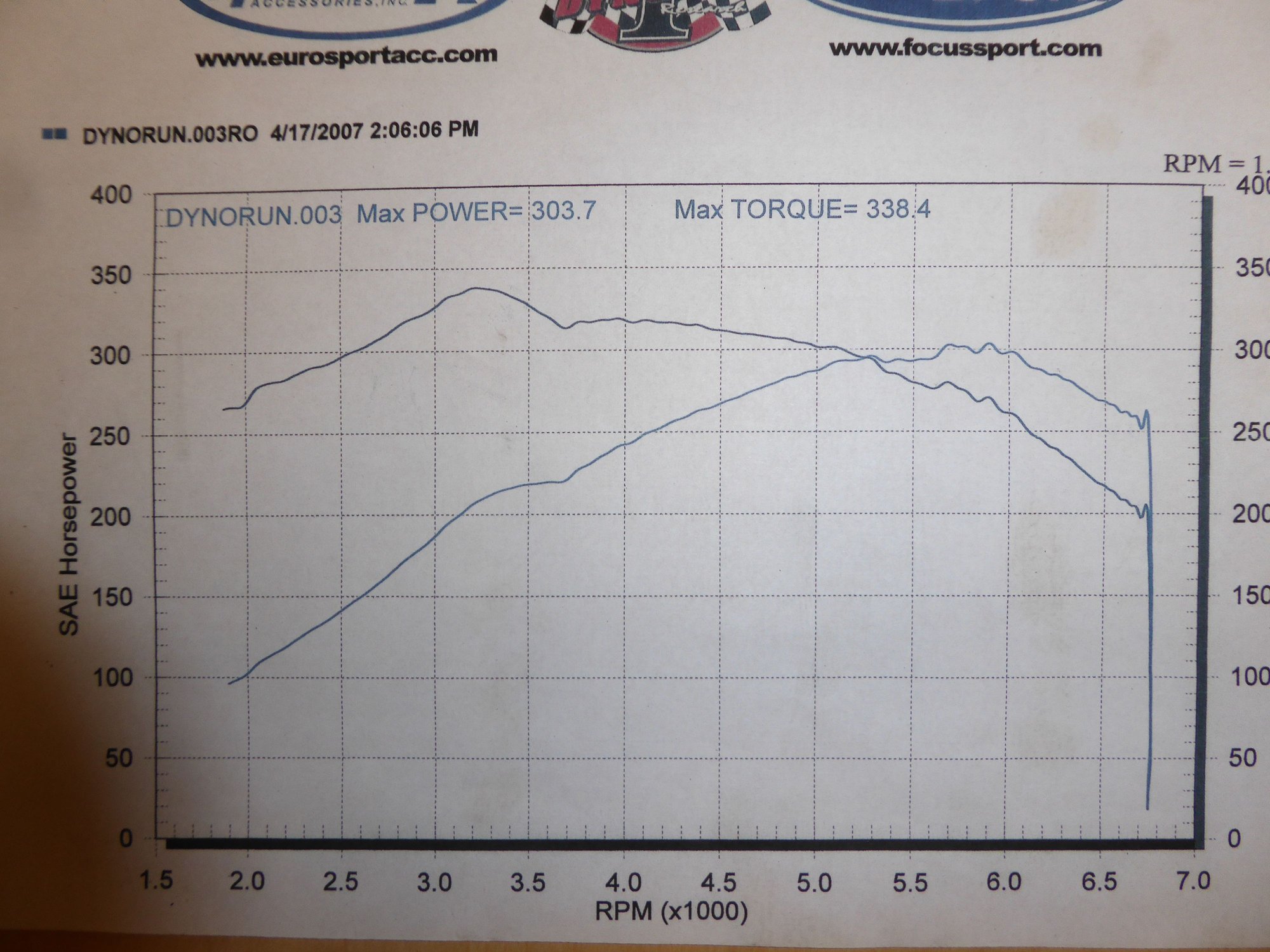
Here's two dyno charts...unmodified straight off of the same exact Dynojet....about a year apart: Completely stock 1994 GTS 5 speed in good tune.
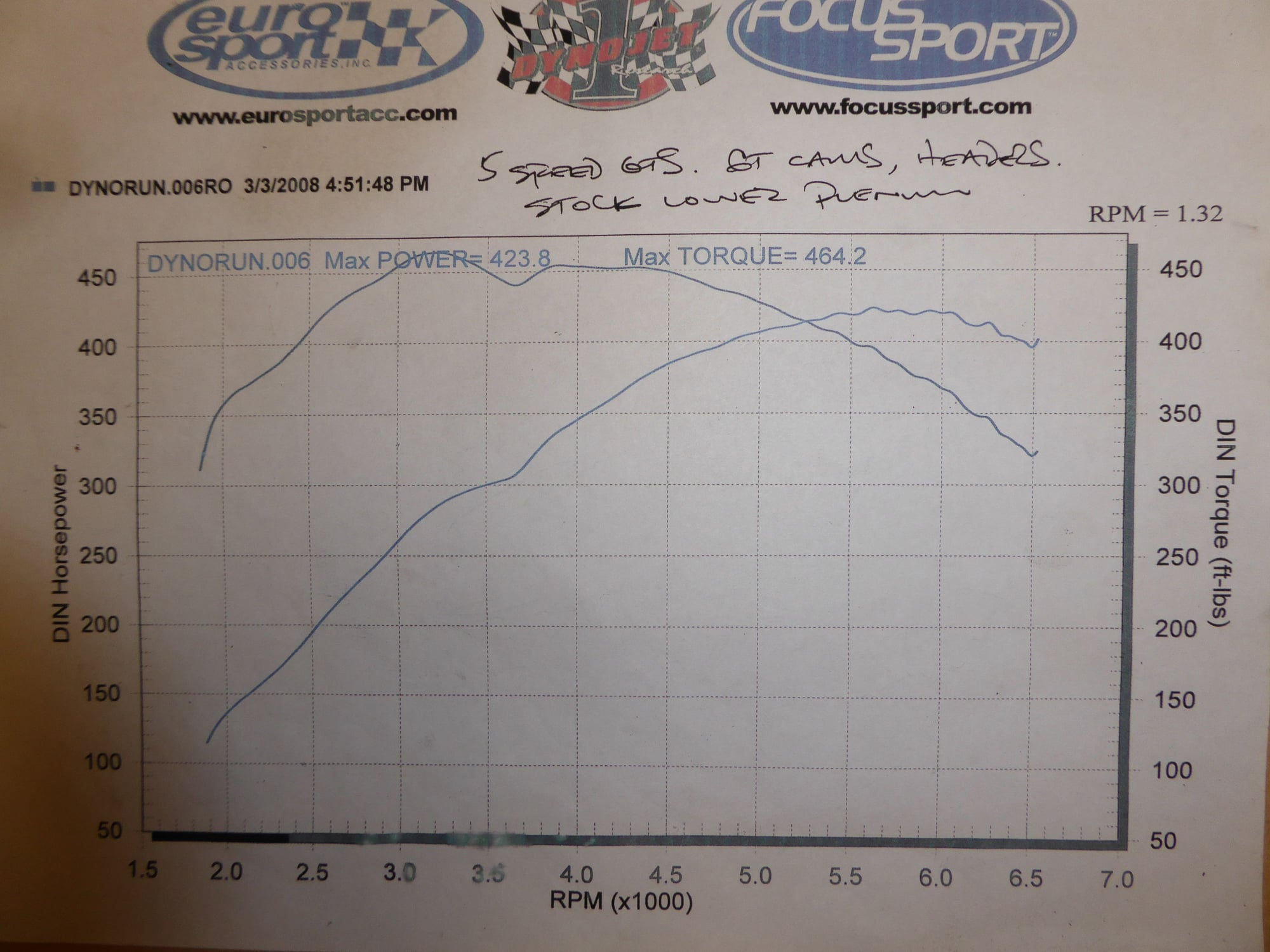
1994 GTS 5 speed with Headers, Exhaust and GT Cams.
So the first dyno chart seems pretty reasonable...perhaps a bit on the high side...but it's a Dynojet. And we all know, from reading most of the opinions on this Forum, that Dynojet results are always true.
Anyone want to believe the second Dyno graph? That's a minimum of a 100hp flywheel gain, from some pretty simple changes. (From another point of view, it's a GT with 400 more cc's and headers.)
But, but, but...it's from a Dynojet. It has to be correct!
Bullsh!t.
I have more of these absurd dyno results:
However, I rest my case.
Boom.
Here's two dyno charts...unmodified straight off of the same exact Dynojet....about a year apart: Completely stock 1994 GTS 5 speed in good tune.
1994 GTS 5 speed with Headers, Exhaust and GT Cams.
So the first dyno chart seems pretty reasonable...perhaps a bit on the high side...but it's a Dynojet. And we all know, from reading most of the opinions on this Forum, that Dynojet results are always true.
Anyone want to believe the second Dyno graph? That's a minimum of a 100hp flywheel gain, from some pretty simple changes. (From another point of view, it's a GT with 400 more cc's and headers.)
But, but, but...it's from a Dynojet. It has to be correct!
Bullsh!t.
I have more of these absurd dyno results:
However, I rest my case.
Boom.
It's as correct as the physics existed to perform the math.
The drum didnt change, other than RPM as part of the math, the drum is the only other thing being measured. When a racer tells me it's wrong, I ask for what was measured wrong.
So..what was measured wrong? As earlier noted, there are a lot of setup variables..its not a perfect tool, but it's a commonly available one.
9 Vehicles Porsche Helped Engineer that Aren't Porsches
Slideshow: Long before engineering consulting became trendy, Porsche was quietly helping other automakers build everything from supercars to economy hatchbacks.
9 Features and Characteristics That Only Porsche People Understand
Slideshow: Some brands build cars. Porsche builds traditions, obsessions, and a few habits that stopped making sense decades ago but somehow became part of the charm.
This Builder Is Turning Heads With Its Slantnose 911 Creation
Slideshow: A small Polish tuner has reimagined the Porsche 911 Slantnose for the modern era, blending 1980s nostalgia with widebody tuning culture and serious performance upgrades.
Porsche 911 GT3 Artisan Edition Pays Homage to Japanese Culture
Slideshow: Porsche has created a Japan-only 911 GT3 Artisan Edition that blends track-ready hardware with design cues inspired by traditional Japanese craftsmanship.
Porsche Reveals Coupe Variant of the Electric Cayenne With a Fresh Look
Slideshow: Porsche's latest electric Cayenne Coupe blends dramatic styling with supercar acceleration, turning the brand's midsize SUV into a 1,139-horsepower flagship.





 Dynos - Let's talk about them

 Like all non Kibort owned race 928's do eventually at high G loads....FLAME SUIT on....MK's wrath is coming