

Longevity
Thread Starter
Burning Brakes

Joined: Feb 2009
Posts: 815
Likes: 3
From: SC
 Longevity
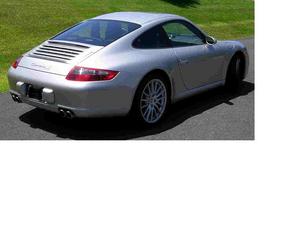
with the recent thread, 'is your car a keeper?', I began to wonder about the longevity of the newer Porsche's. In the last week, I've seen a 993 turbo, a Riveria blue 914, a gorgeous red Carrera and an 89 Tagra that are still on the road and enjoying life. I know some of their owners and they are perfectly content with the maintenance and upkeep involved with their cars. My car has PDK, will that be serviceable later on without a huge pricetag? Will we see the current generation on the road 20 years from now? I do love my current car, but probably once the warranty expires, I'll get another. Just my thoughts. I am interested to see what others' opinions are!

Instructor
Joined: Jun 2009
Posts: 236
Likes: 0
From: Boston, MA
I don't think longevity is the issue. Quality is quality, and while some small corners are cut these days to save a few dollars, I think the basic underlying integrity is still present. The biggest problem I see with modern day cars is technology.
Cars these days, compared to those of yore, are built almost entirely around computerized systems. The throttle, ABS, traction control, GPS, braking, everything is controlled in part or entirely by a computer. Classics on the other hand are built in an era where computers weren't a common occurrence in everyday life, and therefor are built around a mechanical principal. Computers go out of date quickly; gears, engines, and machines don't. It's easy to look into a modern day car and date it simply on if it has the newest GPS, a touchscreen radio, XM / HD, a tv tuner, a 30CD changer, etc. It's a lot harder to look into a classic car, built when they didn't have any of these things, and date it the same way. There is no "technology" in a classic car to go out of date, and therefor, they don't.
It's like watches: build a watch using simply gears and springs, and as long as they're still being made, they'll never go out of date. You would be just as happy with a 1960's Rolex as you would be with a brand new off the shelf one. Add in a quartz crystal and a 1 lap timer, and suddenly, the second they come out with a 2 lap timer, your 1 lap timer is out of date. Your 20 year old Timex isn't exactly as nice and pretty as your brand new HR / GPS / infinite lap timer.
Cars these days, compared to those of yore, are built almost entirely around computerized systems. The throttle, ABS, traction control, GPS, braking, everything is controlled in part or entirely by a computer. Classics on the other hand are built in an era where computers weren't a common occurrence in everyday life, and therefor are built around a mechanical principal. Computers go out of date quickly; gears, engines, and machines don't. It's easy to look into a modern day car and date it simply on if it has the newest GPS, a touchscreen radio, XM / HD, a tv tuner, a 30CD changer, etc. It's a lot harder to look into a classic car, built when they didn't have any of these things, and date it the same way. There is no "technology" in a classic car to go out of date, and therefor, they don't.
It's like watches: build a watch using simply gears and springs, and as long as they're still being made, they'll never go out of date. You would be just as happy with a 1960's Rolex as you would be with a brand new off the shelf one. Add in a quartz crystal and a 1 lap timer, and suddenly, the second they come out with a 2 lap timer, your 1 lap timer is out of date. Your 20 year old Timex isn't exactly as nice and pretty as your brand new HR / GPS / infinite lap timer.

Banned
Joined: Apr 2009
Posts: 977
Likes: 2
I agree with camhabib. Technology will date itself. You think that NAV screen looks cool now...but wait 20 years it will be like..ewww or we will laugh at it. Perfect example...watch a movie thats only 10-15 years old..notice the cell phones and the computers on their desks and you say...wow those things are relics and thats only a few years ago. Plus I think it will be very very hard to "restore" all these new cars as it will be almost impossible getting everything right with all the old computer technology. Think you can find parts for a comadore 64? Its why I prefer the older cars...more classic and the quality is far better I think with the better materials.
Thread Starter
Burning Brakes
Joined: Feb 2009
Posts: 815
Likes: 3
From: SC
you're right. Maybe technology and the 997 should be the title. I did mean it in that way. I do remember cassette deck and a cd players were expensive, 'must have' options, now the nav is a very expensive option compared to a Garmin. The point is, what is going to happen to all the technology we have in these cars in the future. Are the computer systems upgradeable and replaceable as they age? or are we going to recycle the cars as their technology becomes obsolite?
Three Wheelin'
Joined: Jun 2005
Posts: 1,960
Likes: 352
From: Florida
There is no question that as new technology becomes less servicable it has become more disposable. But let's consider the human element of this equation. Owners today don't want maintenance costs and typically move out of their ride as soon as the waranty ends. While there are original owners of the old cars who kept them, the vast majority of "classics" on the street on on their second, third, or fourth owner. Rarely are true maintenance costs discussed for these classics on public forums. My DD is an 83 380SL (bought new by my father) and it has cost me $5-10K/yr in the last 5 years to keep the car on the road. I just replaced the orginal HVAC blower motor which was a $964 part. Control arms, alternator, double row timing chain, rotors, master cylinder, fuel pump, power steering pump, motor mounts, radiator core, etc. have all been replaced. On a 25 year old car things wear out. An old Porsche is no cheaper to maintain than an old Mercedes. The cars may be more servicable than the new cars, but the service isn't free.

Advanced
Joined: Feb 2008
Posts: 60
Likes: 0
If you park in a garage that's heated and dry that's good. If you drive it like you stole it infrequently. If you change the fluids more than recommended, MAYBE the car will have longevity.
Maybe wonder what is on the minds of engineers these days. Do they still WANT the car to last beyond the warranty period? Have their objectives changed? Maybe they use a less robust composition of rubber hose, or a steel instead of stainless steel spring somewhere. The electronics freak me out. The car is a computer and it gets rained on, gets high temps, vibrates, gets damp! How conscientious is the electronics' manufacture? Same as fighter jets or more like dishwashers?
IMO, Just have funds available for the CHANCE you'd get a sickening $25K (?) engine replacement someday. If not: get rid of the car while you can.
Maybe wonder what is on the minds of engineers these days. Do they still WANT the car to last beyond the warranty period? Have their objectives changed? Maybe they use a less robust composition of rubber hose, or a steel instead of stainless steel spring somewhere. The electronics freak me out. The car is a computer and it gets rained on, gets high temps, vibrates, gets damp! How conscientious is the electronics' manufacture? Same as fighter jets or more like dishwashers?
IMO, Just have funds available for the CHANCE you'd get a sickening $25K (?) engine replacement someday. If not: get rid of the car while you can.
Three Wheelin'
Joined: Jul 2007
Posts: 1,649
Likes: 96
From: NJ
I believe that one thing that changed car design is leasing. More and more, the decision maker for the new purchase doesn't care how long the car lasts since it is being leased. Leasing is all abut a ~3-4 year driving experience not about woning a car for a long time. This leaves room for any auto maker to save on some materials or designs. On the other hand, there are many examples of cheaper and better in modern designs.
Trending Topics

Advanced
Joined: Dec 2008
Posts: 67
Likes: 0
From: Bay Area, CA
I guess I see it a bit differently. Two things:
These cars are loaded with electronic components. Yes, they will go out of 'style' (just as engine performance: air cooling, carburetors, EFI, DFI) will become dated. But microprocessor-based electronics are incredibly durable and modular, enabling very straightforward replacement and consistent behavior.
Re the cost of keeping an older car on the road, it's all relative. The depreciation of these car is very high. Keeping $25K on the side for an engine replacement sounds high, but few speak of the $25K lost when it's driven out of the dealership.
More specifically, it seems like if you are the kind of person who likes to own the latest and newest, it is a costly but predictable lifestyle. You know the numbers in most cases, there are few risks or surprises in the equation, and you do get to drive the latest and greatest. But if you're tolerant of higher risk and variance in annual costs and needn't be in the latest drive, the total cost of ownership is surely much lower.
Neither is better or worse. It's simply a matter of personal choice.
These cars are loaded with electronic components. Yes, they will go out of 'style' (just as engine performance: air cooling, carburetors, EFI, DFI) will become dated. But microprocessor-based electronics are incredibly durable and modular, enabling very straightforward replacement and consistent behavior.
Re the cost of keeping an older car on the road, it's all relative. The depreciation of these car is very high. Keeping $25K on the side for an engine replacement sounds high, but few speak of the $25K lost when it's driven out of the dealership.
More specifically, it seems like if you are the kind of person who likes to own the latest and newest, it is a costly but predictable lifestyle. You know the numbers in most cases, there are few risks or surprises in the equation, and you do get to drive the latest and greatest. But if you're tolerant of higher risk and variance in annual costs and needn't be in the latest drive, the total cost of ownership is surely much lower.
Neither is better or worse. It's simply a matter of personal choice.
Rennlist Stories
The Best Porsche Posts for Porsche Enthusiasts
Porsche 911 GT3 Artisan Edition Pays Homage to Japanese Culture
Verdad Gallardo
Porsche Reveals Coupe Variant of the Electric Cayenne With a Fresh Look
Verdad Gallardo
10 Porsche Colors That Have More Personality Than Most People
Verdad Gallardo
Guntherwerks' Final Speedster Creation Is the Ultimate Porsche Restomod
Verdad Gallardo
10 Reasons I Hate Going to the Porsche Dealership (& the 1 Reason I Stay)
Joe Kucinski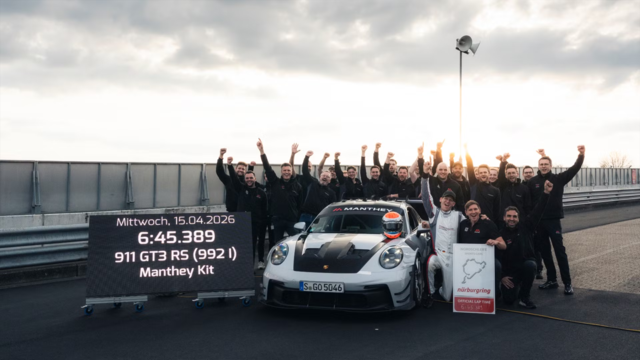
Porsche Shakes Up The Nürburgring Lap Record Table Once Again
Verdad Gallardo
6 Ways the Porsche 911 GT3 S/C Redefines Performance
Joe Kucinski
10 Wildest Homologation Specials Porsche Ever Sold
Verdad Gallardo
Super Rare RUF BTR III Comes Out of Hibernation, Looking For a New Home
Verdad Gallardo
Instructor
Joined: Jun 2009
Posts: 236
Likes: 0
From: Boston, MA
These cars are loaded with electronic components. Yes, they will go out of 'style' (just as engine performance: air cooling, carburetors, EFI, DFI) will become dated. But microprocessor-based electronics are incredibly durable and modular, enabling very straightforward replacement and consistent behavior.
Yes, they no longer put carburetors in cars and they now use water instead of air as a cooling mechanism, but thats over a span of decades. They went from no GPS, to every car coming standard within in a matter of a few years. If I said I had an air cooled 911, you would have no clue how old the car is. If I said I had a touch screen GPS in my car, you would know down to probably 2-3 years.
As mentioned above, you can run out to any store and pick up a part for a carburetor or suspension on a 40 year old car, but try picking up a new PCM unit in 10 years, or a new sub for your BOSE system. I love my car dearly, and wouldn't change a thing on it, but I don't think you'll see as many of them on the road in A+ condition as you do with the ones of yore.

Nordschleife Master

Joined: Mar 2004
Posts: 8,386
Likes: 442
From: Southwest
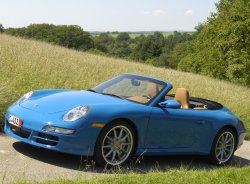
The 997 is a well built car that will still look great (if maintained) 20 years from now. The engines should last 200k miles. The electronics are fine and if they fail they can be replaced with OEM parts or even better replacement parts.
Poseur
Rennlist Member
Rennlist Member


Joined: Nov 2005
Posts: 17,740
Likes: 292
From: Santa Barbara, CA
We are embarking upon an age where the modular design of the car will permit replacement of individual pieces, on an as-required basis. While many maintain that the older cars were 'better built' I will tell you that they were not. Porsche never built a better car than the ones coming out of there today. Material choices continue to become smaller and smaller as regulations and economies of scale dictate lighter materials and less expensive to produce materials. Ask any 993 owner if they have to replace the check straps (door hinge areas) on their 993s what they think about Porsche engineering. it's a radically expensive fix that requires literally cutting the door apart and rewelding pieces and then painting it all again. Nuts.
Materials seem cheaper in general but the engineering and design is far superior. Perhaps the best Porsche ever would be the one that had the benefit of modern day engineering and design, yet could be made out of heavier gauge materials with better life, and not driven by over regulation.
I think a good example are brakes. The standard brakes on a 911 used to easily last well over 100,000 miles. I never replaced a rotor on a 911 in my life. But with regulations dictating the removal of asbestos from brake pads came much harsher pads, which are destructive to the mild iron rotors of today. It's becoming nearly commonplace for owners to replace pads and rotors TOGETHER with less than 50,000 miles on their car. in addition, the daily frustration of dealing with dirty wheels and such led to Porsche pursuing a solution to the brake issue. With the development of the PCCB, they have been able to regain nearly lifetime rotors and pad life. But all this technology comes at a price.
There will always be frustration downstream as minor electrical components need replacement due to metal fatigue or Tin Whiskers. It will be the cost of keeping these cars on the road long enough for it to qualify for antique vehicle plates.
Materials seem cheaper in general but the engineering and design is far superior. Perhaps the best Porsche ever would be the one that had the benefit of modern day engineering and design, yet could be made out of heavier gauge materials with better life, and not driven by over regulation.
I think a good example are brakes. The standard brakes on a 911 used to easily last well over 100,000 miles. I never replaced a rotor on a 911 in my life. But with regulations dictating the removal of asbestos from brake pads came much harsher pads, which are destructive to the mild iron rotors of today. It's becoming nearly commonplace for owners to replace pads and rotors TOGETHER with less than 50,000 miles on their car. in addition, the daily frustration of dealing with dirty wheels and such led to Porsche pursuing a solution to the brake issue. With the development of the PCCB, they have been able to regain nearly lifetime rotors and pad life. But all this technology comes at a price.
There will always be frustration downstream as minor electrical components need replacement due to metal fatigue or Tin Whiskers. It will be the cost of keeping these cars on the road long enough for it to qualify for antique vehicle plates.
Burning Brakes
Joined: Aug 2009
Posts: 1,123
Likes: 27
This is my belief as well. The 997 appears quite durable and reliable. So far, the updated IMS on the late 2005+ on cars seems to have rectified that one potential ***** in the armor. The 997.2 engines should be even more reliable. I read that the 997 is Porsche's most successful 911 in terms of sales numbers. So there should be good support of OEM or aftermarket parts to keep these cars on the road for many years.