When you click on links to various merchants on this site and make a purchase, this can result in this site earning a commission. Affiliate programs and affiliations include, but are not limited to, the eBay Partner Network.
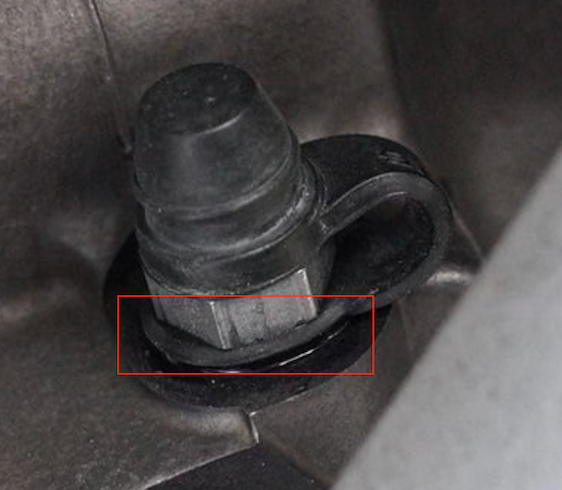
It's a long shot, but verify that the rubber retention loop for the bleeder cap is loose under the bleeder hex and is not clamped in place.
If the bleeder's hex bottoms out on that rubber before the metal taper bottoms out then I could see that preventing the bleeder from seating properly. It's unlikely unless there's some tolerance issue with the bleeder or taper but easy enough to check: just make sure it's loose and not clamped in place.
It's a long shot, but verify that the rubber retention loop for the bleeder cap is loose under the bleeder hex and is not clamped in place.
If the bleeder's hex bottoms out on that rubber before the metal taper bottoms out then I could see that preventing the bleeder from seating properly. It's unlikely unless there's some tolerance issue with the bleeder or taper but easy enough to check: just make sure it's loose and not clamped in place.
The rubber boots are installed after the bleeder screw is tightened down. I wish it was that simple.
Still leak free so far.
Last edited by Graufuchs; Jan 29, 2024 at 08:36 AM.
Having an issue with brake bleeder screws sealing. I have already replaced them and (2) still are not sealing. I get a slight weep out of the threads around the new bleeder valves. It looks like it may have been an issue on one side before, as I had a little whitish fluid when bleeding one side of the front caliper.
Two replaced bleeder screws had corrosion on the base of bleeder screw (water). Anyone encounter this before? Does anyone have the part number for speed bleeder screws? (they come with thread sealant installed) (Base brakes 2008 3.6L)
I have the speed bleeder sealant on order to apply on threads, but looking for any suggestions or experience with a similar issue. Not going to use teflon tape, not going to be a neanderthal and torque them down to far.
i replaced all 8 bleeder screws in my last brake bleed (about 2 years ago). They weeped (like yours) for about 2 weeks, then stopped. At first i wiped them clean and after a week i gave up. Another week went by, the wet area did not seem to expand, i cleaned them up and it had stopped. To date, the areas are still dry. I supposed the brake fluid dried up that helped seal the weeping. Regardless, i am happy that the brakes stopped crying.
i replaced all 8 bleeder screws in my last brake bleed (about 2 years ago). They weeped (like yours) for about 2 weeks, then stopped. At first i wiped them clean and after a week i gave up. Another week went by, the wet area did not seem to expand, i cleaned them up and it had stopped. To date, the areas are still dry. I supposed the brake fluid dried up that helped seal the weeping. Regardless, i am happy that the brakes stopped crying.
I’d suggest that what you and the OP are experiencing isn’t leaking bleed nipples, rather it’s residual brake fluid left in the internal bore of the bleed nipple between (ie above) the level of the taper seat and below the level of the top of the nipple where you’d attach the bleed pipe.
Once you’ve finished bleeding the caliper and applied the rubber bleed nipple cover, the fluid seeps out as the calipers get hot and the pressure builds up inside the rubber cap.
Once done bleeding, I always blast the bleed nipple inside and out with brake cleaner to ensure no brake fluid is present outside of the tapered sealing surface of the caliper/bleed nipple.
Allow the brake cleaner to evaporate fully before fitting the rubber bleed screw cover (or dry with paper towel)
Result ? No seepage or “leaks”.
Perhaps. I always wiped the area clean and dry when I finish the job as I check on any leaks or weeping the following week(s) after I done the job. Good idea but not likely the cause. This doesn’t happen on my E39 (though it is steel/steel combination).
I’d suggest that what you and the OP are experiencing isn’t leaking bleed nipples, rather it’s residual brake fluid left in the internal bore of the bleed nipple between (ie above) the level of the taper seat and below the level of the top of the nipple where you’d attach the bleed pipe.
Once you’ve finished bleeding the caliper and applied the rubber bleed nipple cover, the fluid seeps out as the calipers get hot and the pressure builds up inside the rubber cap.
Once done bleeding, I always blast the bleed nipple inside and out with brake cleaner to ensure no brake fluid is present outside of the tapered sealing surface of the caliper/bleed nipple.
Allow the brake cleaner to evaporate fully before fitting the rubber bleed screw cover (or dry with paper towel)
Result ? No seepage or “leaks”.
I cleaned the area quite well (including inside the port of bleed screw) and left the caps off, and I would still get a weep (from threads). Unfortunately that wasn't the issue. I had thought of that.
At this point 3 days later, I still do not have any leaks so I think its sorted.
Last edited by Graufuchs; Jan 30, 2024 at 08:39 AM.
i replaced all 8 bleeder screws in my last brake bleed (about 2 years ago). They weeped (like yours) for about 2 weeks, then stopped. At first i wiped them clean and after a week i gave up. Another week went by, the wet area did not seem to expand, i cleaned them up and it had stopped. To date, the areas are still dry. I supposed the brake fluid dried up that helped seal the weeping. Regardless, i am happy that the brakes stopped crying.
I don't think brake fluid "dries up" - if it did, we'd all have major issues.
DOT4 brake fluid wet boiling point is 155 degreeC, so the exposed brake fluid would vaporize when the brakes are hot enough. I should have called it vaporized rather than “dried up”. Regardless, the brake hydronic system is a closed system. If just the exposed fluid “dried up”, it does not create any issue unless the system continues to leak.
Hey all, resurrecting this from the dead. I did my fluid yesterday and I've noticed some liquid around the threads of a couple of bleeder valves. before I even touched them I noticed that the paint isn't the best around the bleeder value so I'm not sure if this may have been an existing issue. I hope I didn't overtight, I only used my small 11mm wrench and I don't think I put that much torque on it. I washed them all off really well in case it was just residual, but it seems to have reappeared on a couple of them. I have a few questions, hopefully not too dumb.
Why does it only come out from the threads? If it's not seating right, why is the fluid squeezing by the tightened threads easier for the fluid than simply going through the holes and out the top of the bleeder valve? Why wouldn't it come out the top of the valve? I've thought about trying the speedbleeder thread sealant, but again if the threads are sealed wouldn't it just leak out the top of the valve (given the bottom of the bleed hole is below the threads?
Everyone warns not to overtighten, but what actually happens inside if they are overtightened? Is it mainly a fear of stripping the threads or is it somehow ruining the calipers mating surface? I would think since the bleeder valve and the caliper have the same shape, it wouldn't be a huge deal outside of potentially stripping the threads.
(I'm assuming this wouldn't work, but I'm just asking) If the caliper mating surface is ruined, has anyone ever tried using something between the bleeder valve and the caliper, like a silicon o-ring between the caliper and the bleeder valve? A silicon O-ring has a melting point of about 600 degrees, so would this work? Would the pressure of the system be too much for it and fluid would leak past?
Most of the time its is residual fluid from your brake bleeding that went into the threads and is now seeping out. I have run into a small piece of debris that found its way in the seat when I was rebuilding. Over-tightening is something you want to avoid as it damages the threads on the caliper itself. Headache.
Most of the time its is residual fluid from your brake bleeding that went into the threads and is now seeping out. I have run into a small piece of debris that found its way in the seat when I was rebuilding. Over-tightening is something you want to avoid as it damages the threads on the caliper itself. Headache.
Mike
how long would you expect that residual fluid to seep out? I did it yesterday, noticed some fluid around a couple, cleaned them very well and used a heat gun to dry them. A few hours later I noticed a tiny bit more fluid. Worth noting I kept the system pressurized a 1 bar with a power bleeder.
Brake pedal feel good? if you have any true "seepage" you will know fast (through the brake pedal and lack of brakes) If pedal feels good so go for a drive or two, wipe as needed; Expect to go away after a couple of drives. I tend to bleed twice- once initially and then about a week later.
Brake pedal feel good? if you have any true "seepage" you will know fast (through the brake pedal and lack of brakes) If pedal feels good so go for a drive or two, wipe as needed; Expect to go away after a couple of drives. I tend to bleed twice- once initially and then about a week later.
Mike
Haven't driven it yet, bled them last night and immediately after went to bed. When I woke up went out to check if there was any leaking and saw some liquid around some of the threads. When you say I will know fast, would I know just starting it and feeling the brake pedal, or would I need to go for a drive? I have center-locks so dealing with the wheels is annoying.
Starting it and pressing firmly on pedal will produce hundreds of pounds of pressure on them so you will know if it slowly goes to the floor if there is a leak!