When you click on links to various merchants on this site and make a purchase, this can result in this site earning a commission. Affiliate programs and affiliations include, but are not limited to, the eBay Partner Network.
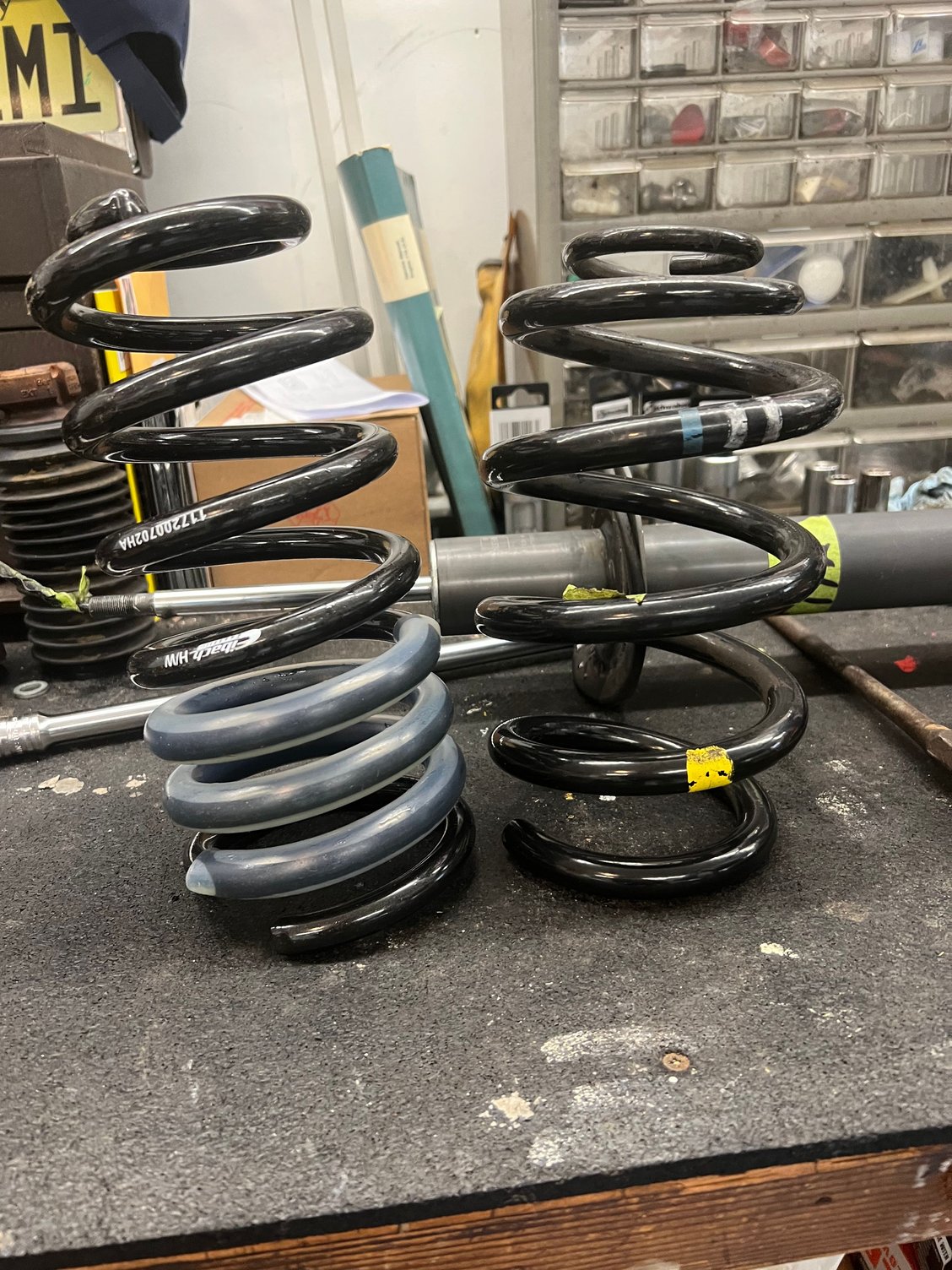
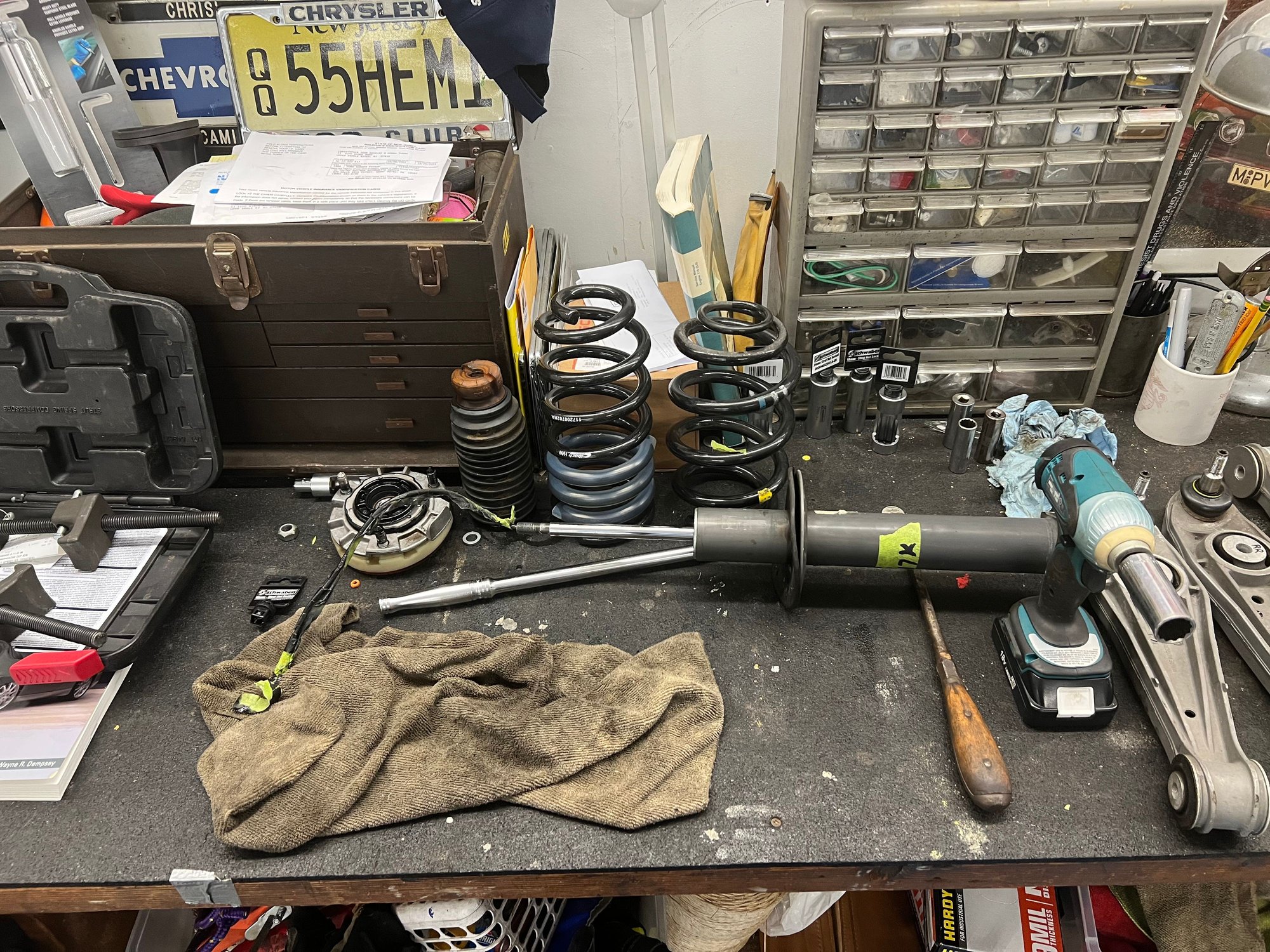
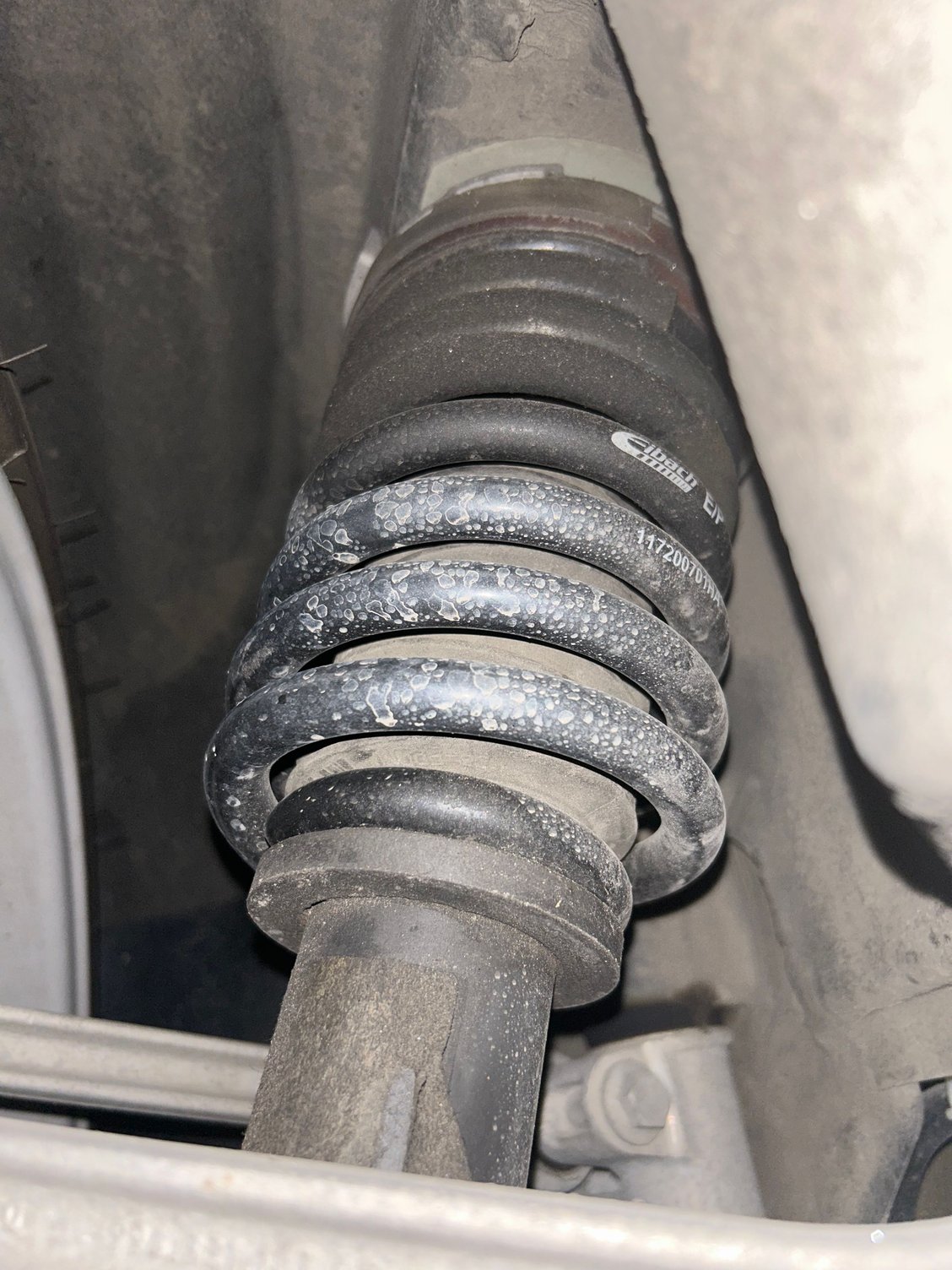
The top section closes up when on the car - so it acts like a ‘helper’ spring on coilovers, most of what you get is the bottom section which is higher rate than the OEM springs. This is what they look like with the car on the ground.
Isn't the bottom line that Eibach and Techart drops 1" and H&R's drop 1.25"? All three numbers drop from stock. Lots of threads on this and these are the numbers I've come away with reading through untold numbers of them.
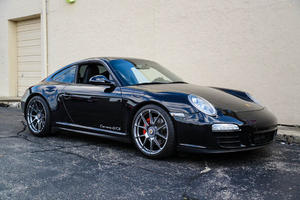
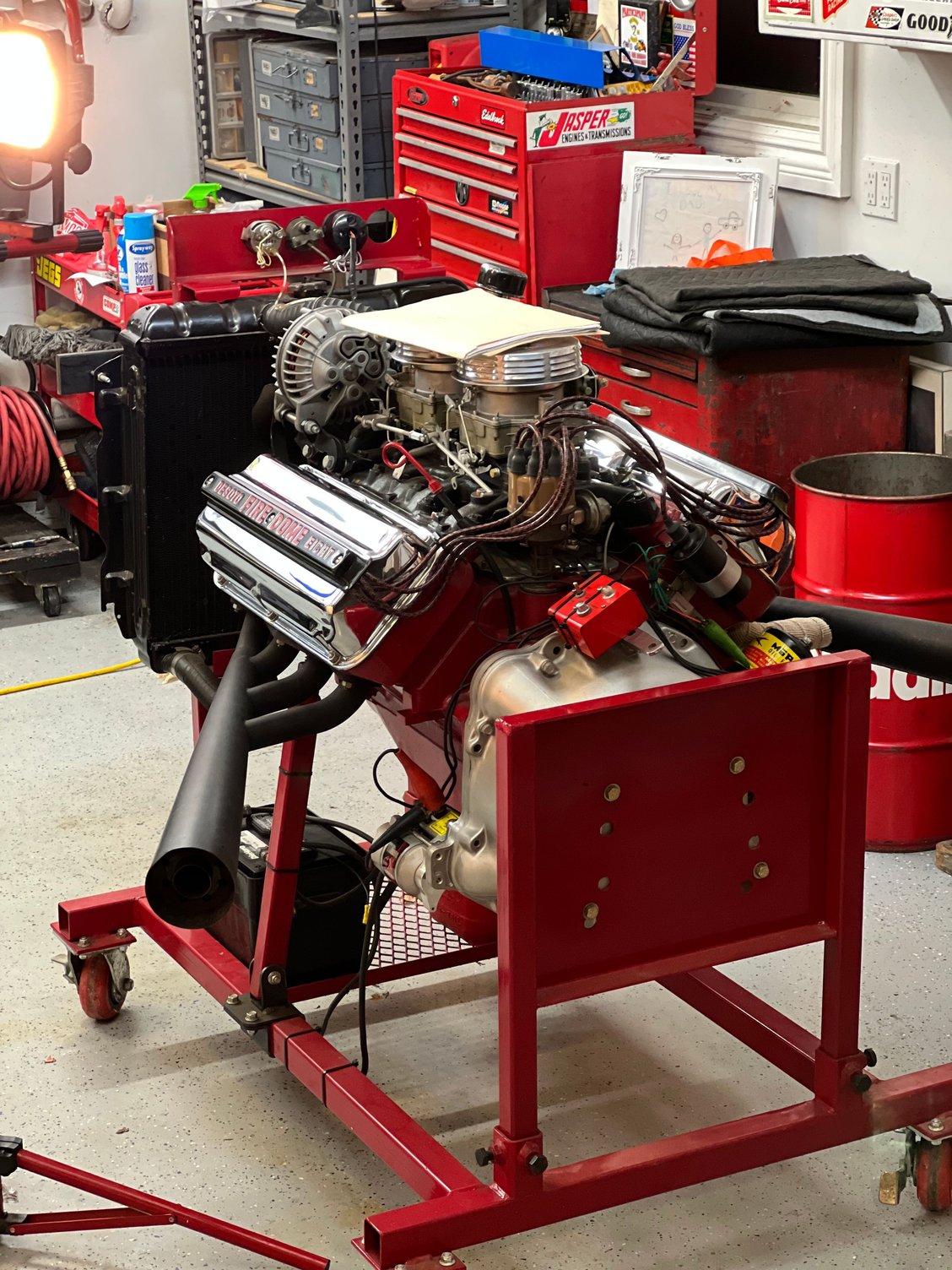
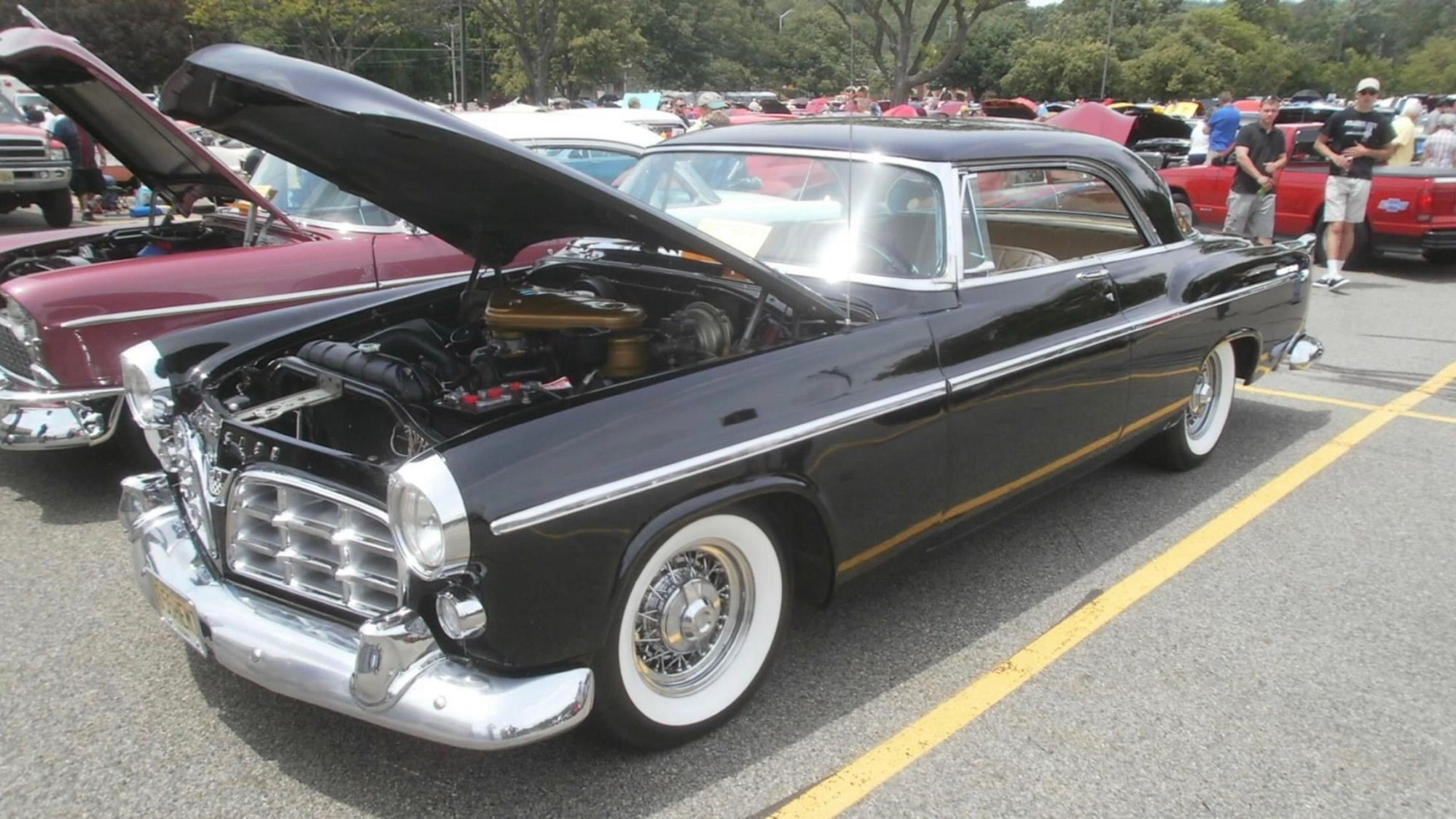
All those beauties are long gone. The El Camino was my first car. 64 with an LT1 that I grenaded then sold. The 55 was a very nice original car that I sold a few years ago and the Desoto Hemi was an engine I built for a 32 that never happened. Sold that last month.
Looking at the Eibach vs. OE spring, the Eibach has more coils, a smaller mean diameter, and a variable wire diameter. The Eibach is also progressive - the three lower coils are intended to bind (touch) at a specific load, reducing the number active coils and increasing the rate when they do.
Spring rate is determined by the material modulus, wire diameter, number of active coils, and mean coil diameter. The formula for coil spring stiffness is:
Without taking measurements (either of the spring itself or using a rate tester), it's hard to know what characteristics are affecting the rate of one vs. the other.
Isn't the bottom line that Eibach and Techart drops 1" and H&R's drop 1.25"? All three numbers drop from stock. Lots of threads on this and these are the numbers I've come away with reading through untold numbers of them.
Yes, H&R are anecdotally stiffer than eibach according to opinions on the web….
Yes, H&R are anecdotally stiffer than eibach according to opinions on the web….
Subjective as so many issues with these cars. I've had stock springs, Eibachs and H&R's and I can tell the difference in stance between the three but I honestly can't tell the difference in comfort ride quality between the three. The 997 will never be a "plush" ride no matter what springs it sits on. Some sense a difference in comfort between stock springs and after market springs. I don't but then I never looked for a plush ride buying a 997 so maybe I just don't care if there's a difference no matter how slight.
It's off topic, but the difference in comfort is significant. When driving fast and with somewhat heavier bumps, you no longer need a chriropractor with the H&R 1,25". the difference is simply brutal compaired to stock. Speaking of MK1 C2.
Went to put the fronts together and something looks askew. The top of the shock is a mess. Can anyone shed some light on this??
The eibach is clearly a different width up top
I have a set of Eibach springs that will replace the H&R's currently on my car. My plan is to replace the struts and shocks as well. I'm curious to know what made the install difficult?





 Eibach lowering spring question.