When you click on links to various merchants on this site and make a purchase, this can result in this site earning a commission. Affiliate programs and affiliations include, but are not limited to, the eBay Partner Network.
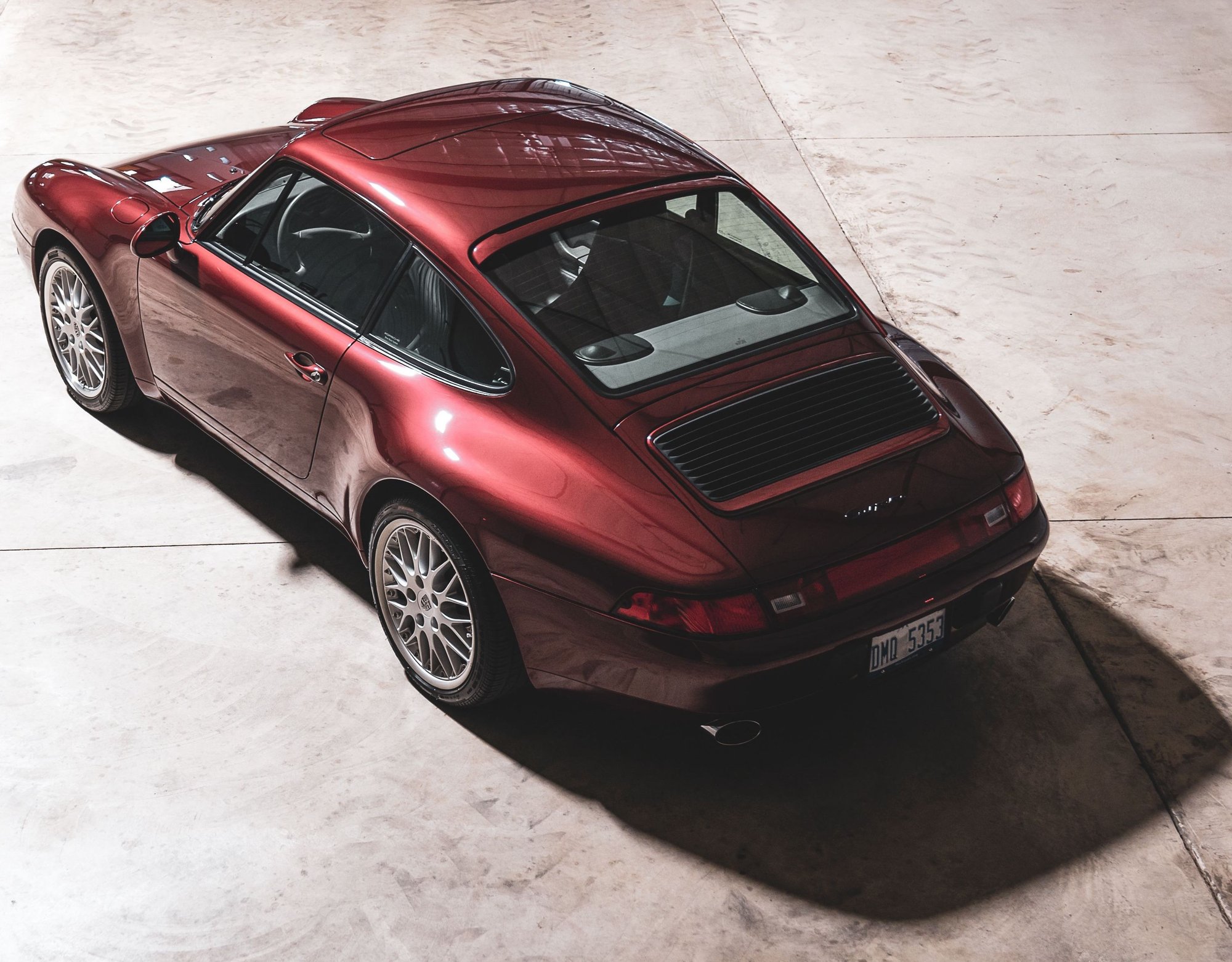
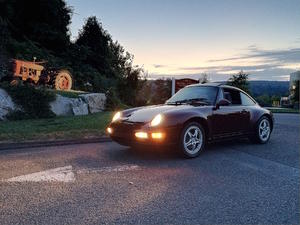
I have an extremely low mile 993 VarioRam that I put about 100 miles on annually. I know, I know….I should drive it more! Never the less, I have been changing the oil ever spring but feel I’m kind of throwing money away. The old synthetic oil looks brand new as do both filters.
Do I really need to change the oil every year or can I go like every 300 miles? I know these newer synthetics are sometimes rated as high as 15k between changes. Just wondering….
Any thoughts or input?
I have an extremely low mile 993 VarioRam that I put about 100 miles on annually. I know, I know….I should drive it more! Never the less, I have been changing the oil ever spring but feel I’m kind of throwing money away. The old synthetic oil looks brand new as do both filters.
Do I really need to change the oil every year or can I go like every 300 miles? I know these newer synthetics are sometimes rated as high as 15k between changes. Just wondering….
Any thoughts or input?
I am in a similar position. I am interested in the response from other members. My oil in every car, all low mileage cars, is changed annually.
The filters certainly do NOT deed to be changed until you reach the mileage that the oil is rated for.
I am sure many will say not but the filters are rated for a certain amount of liquid flow, which in your
case is not happening.
So wear and tear kills oil and maybe heat cycles and cooling cycles will also. I do not know of any
SCIENTIFIC studies that talk about oil sitting in a metal container (the oil tank) and degrading over time.
So if the car is not started, there is no condensation that would occur and no moisture being added to
the oil.
I am sure many people here will say its only 300 bucks- I think I would rather spend the money on something else....
I’d stretch to every other year on the oil, minimum. At the rate you drive the car, filters will last a long time, but I’d do every other oil change. This is what I do and I add about 500 mile per year.
I'm on the long end of this, but I feel miles are more important than time, so I would say at the miles you are driving a year, it makes more since to change every year or even two.
I assume the car is in a climate controlled environment so humidity and rodents aren't an issue. I don't see any degrading factors working on the oil other than the various additives/components separating out and the slow, relentless degradation of time. Water is your enemy, of course.
one problem with long periods if inactivity is the top of the engine loses most, if not all, of its oil. You can remove the DME relay and crank as a way to pump oil through the engine; although you have to crank for long time to build pressure so you risk burning out the starter circuit. What is needed is a way of pumping oil through the engine at some minimal flow using an auxiliary electric motor, You could then ensure all metal surfaces are kept protected in the same way a maintenance battery charger keeps your battery in top condition.
Any scientific analysis regarding waiting until the oil reaches its stated mileage? Even if that is 5 years?
I know this is not "conventional wisdom" but I would like to know what the risk is....
I have an extremely low mile 993 VarioRam that I put about 100 miles on annually. I know, I know….I should drive it more! Never the less, I have been changing the oil ever spring but feel I’m kind of throwing money away. The old synthetic oil looks brand new as do both filters.
Do I really need to change the oil every year or can I go like every 300 miles? I know these newer synthetics are sometimes rated as high as 15k between changes. Just wondering….
Any thoughts or input?
nice car.
IMO you are wasting time / $ / oil recycling logistics by doing this yearly.
If your pattern continues, stretch it to twice a decade................
Any scientific analysis regarding waiting until the oil reaches its stated mileage? Even if that is 5 years?
I know this is not "conventional wisdom" but I would like to know what the risk is....
Probably due to too much "expert" & anecdotal information, I guess I'm a little mixed on this. I don't fully understand metallurgy or the chemical properties of oil, so I have no real scientific info to back this up, except for years of doing my own thing - with no issues.
I feel 100, or even 300 miles is extreme for change intervals, as long as the car isn't sitting for years without being driven.
But, also, I feel like a car driven 100 miles a year should have the oil changed every couple years or so, instead of every 50 years (5000 miles). I put approximately 2 - 3 thousand mile a year on mine & change mine at 5000 miles. Having grown up before synthetic oils & when oil changes were every 3000 miles, it's hard to realize waiting 10 - 15k miles between changes.
So, I guess its a mix of expert, or manufacture information, & personal knowledge & experience. As, I'm sure a lot of people here base their decisions.
I would take a small sample of oil and send to Blackstone or other lab for analysis. From there you'll get the facts. The key is when you drive it get it up to operating temperature. That should help address fuel dilution issues. But Blackstone will tell you the rest of the story as the great "Paul Harvey" would say. "Good day"!
I would take a small sample of oil and send to Blackstone or other lab for analysis. From there you'll get the facts. The key is when you drive it get it up to operating temperature. That should help address fuel dilution issues. But Blackstone will tell you the rest of the story as the great "Paul Harvey" would say. "Good day"!
One sample isn’t really going to tell you anything unless it’s wildly out of spec. Getting sample analyses done is only good after a handful of times so you can find any trends and get a good story of your engine
It will tell you what his fuel dilution percentage is and that's critical especially under these circumstances. You're right you won't get much from all the additive data but you will get that one critical component. If you want opt for the TBN test to compare to new. See what Lake Speed,Jr. say's about all on the PCA oil seminar on such.
Porsche Reveals Coupe Variant of the Electric Cayenne With a Fresh Look
Slideshow: Porsche's latest electric Cayenne Coupe blends dramatic styling with supercar acceleration, turning the brand's midsize SUV into a 1,139-horsepower flagship.
One-Off Porsche 911 S/T Takes Inspiration From Famous '70s Race Car
Slideshow: A one-off Porsche 911 S/T created through the Sonderwunsch program pays tribute to a little-known 1970s race car from the Camel GT Challenge.



 Oil Change Really Needed?