When you click on links to various merchants on this site and make a purchase, this can result in this site earning a commission. Affiliate programs and affiliations include, but are not limited to, the eBay Partner Network.
Hello all,
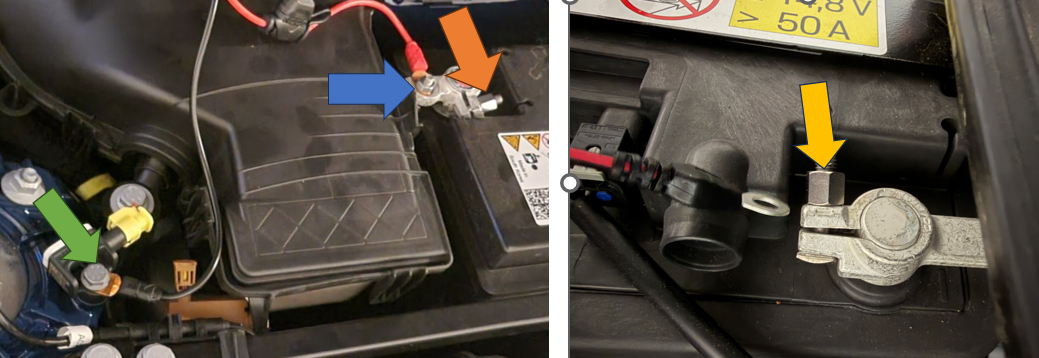
I just received my CTEK battery maintainer for a lithium battery and plan to install the pigtail. I’ve gone through several forum posts as well as a few YouTube videos. There seems to be no disagreement on where the positive lead should be connected. - just using the M6 nut on the positive terminal. For the negative lead, the CTEK manual states that the clamp should be connected directly to the negative battery terminal. However, I’ve seen posts on this forum where people instead use the ground shown in the picture below.My questions are:
1. For the positive eyelet, why is it connected to the screw marked with the blue arrow rather than the one marked with the orange arrow?
2. For the negative lead, why do some people choose this ground point instead of connecting directly to the negative battery terminal?
3. The ground point marked with the green arrow appears to be connected to a sensor. What is this sensor?
4. If I choose to use this ground point, should I cut off the eyelet and slightly loosen the screw to slide it in, or should I leave the eyelet intact and completely remove the screw before reinstalling it?
5. If I choose to connect the eyelet directly to the negative battery terminal, should I simply loosen the screw marked with the yellow arrow and attach it there?
Thanks in advance!
I didn't have luck connecting the negative to the doohickey you show (poor continuity). Here's what I did. It works. And I haven't gotten electrocuted yet.
This setup is fine - if you don't mind popping the hood every time you want to access the plug. IMHO, that's an unnecessary extra step.
Instead, use the battery hold-down clamp nut as your ground which will give you enough length to run the plug under the cover to the base of the windshield. It will still be hidden from view but easily accessible from the drivers side so you can simply plug it in as you exit the car.
I threaded another nut on the grounding stud over here. If you go this route, I recommend loosening and tightening nut various times to remove some of the paint on the thread to aid conductivity.
I prefer the clean look and not dragging the cord across the fender. I know it may be fatiguing for some to hit the button on the remote to open the frunk when they're going to leave the car for a long period of time, but I've been doing thumb exercises to prepare myself.
This setup is fine - if you don't mind popping the hood every time you want to access the plug. IMHO, that's an unnecessary extra step.
Instead, use the battery hold-down clamp nut as your ground which will give you enough length to run the plug under the cover to the base of the windshield. It will still be hidden from view but easily accessible from the drivers side so you can simply plug it in as you exit the car.
DaveGee
Having a hard time envisioning where that plug would come out - can you post a picture of it when time permits?
Hello all,
I just received my CTEK battery maintainer for a lithium battery and plan to install the pigtail. I’ve gone through several forum posts as well as a few YouTube videos. There seems to be no disagreement on where the positive lead should be connected. - just using the M6 nut on the positive terminal. For the negative lead, the CTEK manual states that the clamp should be connected directly to the negative battery terminal. However, I’ve seen posts on this forum where people instead use the ground shown in the picture below.My questions are:
1. For the positive eyelet, why is it connected to the screw marked with the blue arrow rather than the one marked with the orange arrow?
2. For the negative lead, why do some people choose this ground point instead of connecting directly to the negative battery terminal?
3. The ground point marked with the green arrow appears to be connected to a sensor. What is this sensor?
4. If I choose to use this ground point, should I cut off the eyelet and slightly loosen the screw to slide it in, or should I leave the eyelet intact and completely remove the screw before reinstalling it?
5. If I choose to connect the eyelet directly to the negative battery terminal, should I simply loosen the screw marked with the yellow arrow and attach it there?
Thanks in advance!
1. It may depend on the configuration of your battery connectors, but in my situation IIRC the nut was captive and nut marked orange in your photo didn't want to come all the way off. The one marked with the blue arrow was easier to access and required no modification of the eyelet.
2. Can't answer that one. I followed the CTEK recommendation and connected directly to the battery terminals.
3. No idea on the sensor.
4. If the nut can be removed and the eyelet will fit on the bolt I would do that. Either way will work fine.
5. See #1 above. The nut on the negative clamp was also captive and wouldn't receive the intact eyelet so I loosened the clamp, clipped the eyelet, and slid it underneath.
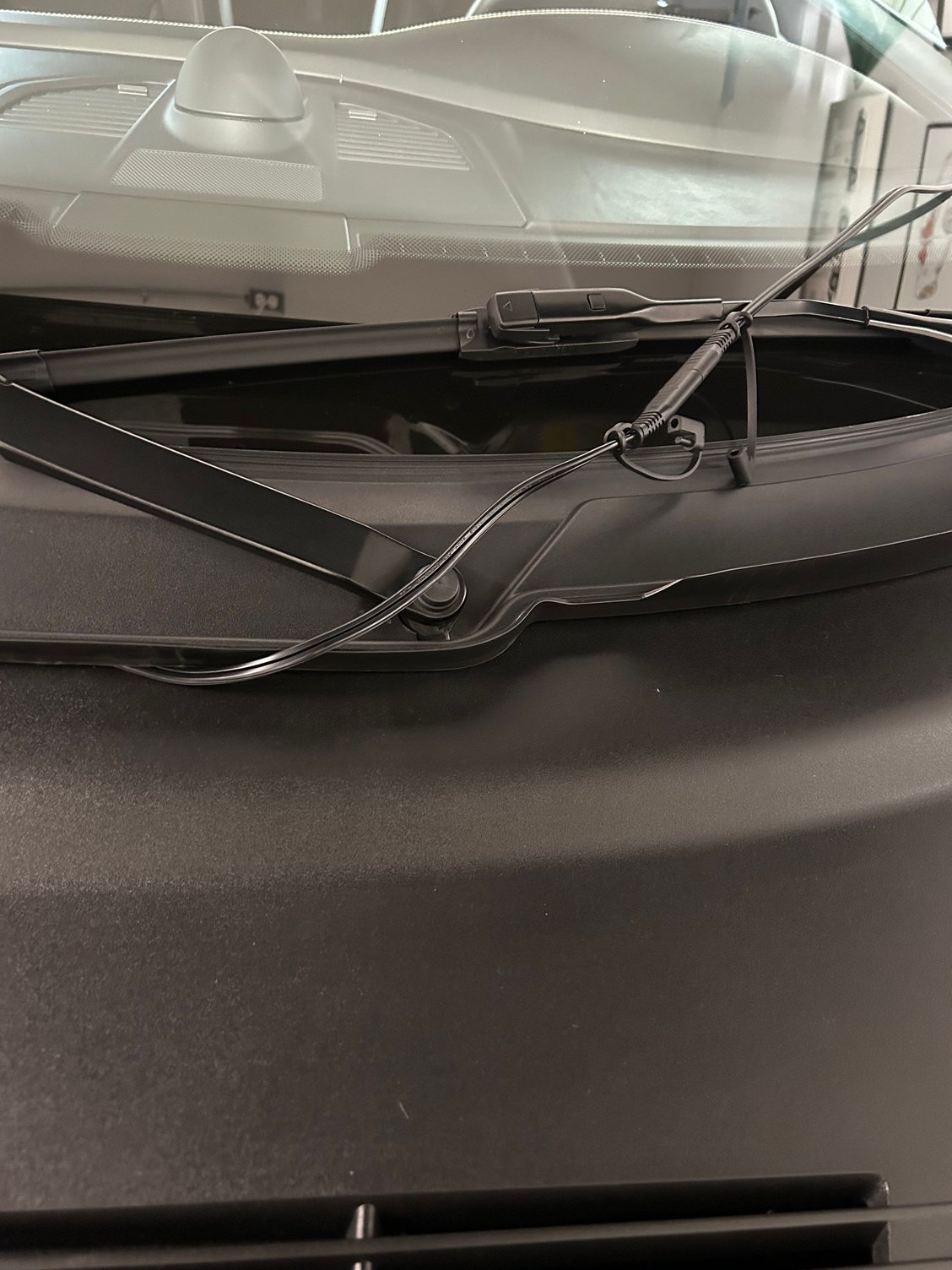
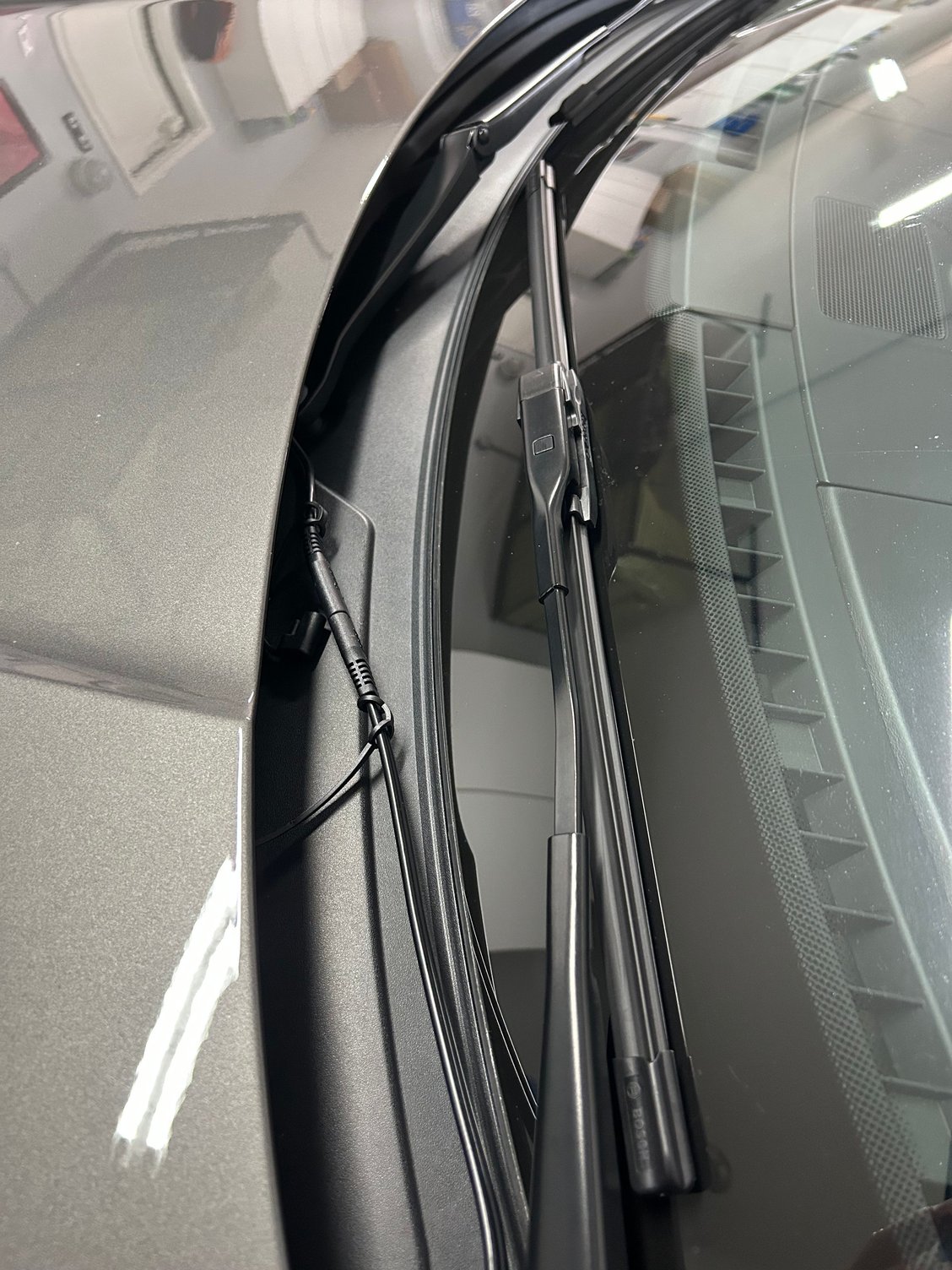
I just installed my NOCO pigtail over the weekend and went with the labeled negative terminal on the driver side (I believe it's part of the windshield wiper assembly). Not directly answering your questions but giving you more reference. For the positive terminal, a pro is that if/when you do switch out the battery, the positive lead isn't going anywhere. Not a huge deal, but something? I mean if the engineers went through the trouble of providing an extra bolt there, I assume they'd prefer us using it? Along with going through the trouble of labeling where to attach a negative alligator clamp.
^^I tried shallow nylock nuts on both battery terminals. It worked, but it didn't look right to me. Ultimately I settled on the outside second nut on the positive terminal and the battery hold-down clamp nut for the negative ground. It works fine, it's easy, and it just seems like the best option to me. There are no sparks when connecting or disconnecting the cable to the charger, so it's not necessary to use the ground far away from the battery at the windshield wiper bolt.
I just installed my NOCO pigtail over the weekend and went with the labeled negative terminal on the driver side (I believe it's part of the windshield wiper assembly). Not directly answering your questions but giving you more reference. For the positive terminal, a pro is that if/when you do switch out the battery, the positive lead isn't going anywhere. Not a huge deal, but something? I mean if the engineers went through the trouble of providing an extra bolt there, I assume they'd prefer us using it? Along with going through the trouble of labeling where to attach a negative alligator clamp.
You may want to double check that install. I think you zip tied the wires to the wiper arm linkage. I don’t have access to my car to verify, but maybe somebody will chime in. I don’t see any other linkage there so it looks like the one I circled attached to your passenger side wiper blade is the arm that moves that operates the wiper.
Edit: Added parts photo
Last edited by Porsche 505; Jan 7, 2026 at 08:52 AM.
Reason: Added parts photo
Call me old-fashioned, but i'm wiring my charger to the battery terminals. My preference being that if i needed to push 15V/5A to wake up the (lithium) cell should it go into undervolt protection mode, i'd rather have that apply directly across the cell rather than via the ground strap and so the rest of the car and modules.
I just installed my NOCO pigtail over the weekend and went with the labeled negative terminal on the driver side (I believe it's part of the windshield wiper assembly). Not directly answering your questions but giving you more reference. For the positive terminal, a pro is that if/when you do switch out the battery, the positive lead isn't going anywhere. Not a huge deal, but something? I mean if the engineers went through the trouble of providing an extra bolt there, I assume they'd prefer us using it? Along with going through the trouble of labeling where to attach a negative alligator clamp.
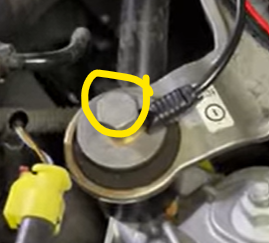
Thanks! This is what I plan to do for now. Regarding the negative terminal on the driver’s side: is that a screw (see screenshot above) that can be loosened and completely removed? I observed it for a while but couldn’t tell whether the hex portion and the round piece underneath are a single part or two separate pieces.
^^I tried shallow nylock nuts on both battery terminals. It worked, but it didn't look right to me. Ultimately I settled on the outside second nut on the positive terminal and the battery hold-down clamp nut for the negative ground. It works fine, it's easy, and it just seems like the best option to me. There are no sparks when connecting or disconnecting the cable to the charger, so it's not necessary to use the ground far away from the battery at the windshield wiper bolt.
This spark call out is on point for this thread.
For temporary high power boosts from another vehicle or 12v battery, the ground post is located far from the battery for safety reasons. (another benefit is that when power goes in the direction to the starter, bypassing the negative battery cable removes one source of resistance - this matters at high currents, especially for repeated attempts or long crank events).
For a trickle charger pigtail the most pure "German engineering" way where the tiniest detail matters is to put the leads permanently on the battery terminals (always with an inline fuse very close to the positive terminal). This generates the least amount of resistance, least amount of heat in the charger, the least energy waste and the least voltage drop which gives the charger the best battery read. It's definitely at the miniscule level at the lowest currents and the chargers have long small gauge leads already, but access isn't a problem so we can choose the optimal setup very easily. But really almost any connection works as long as the positive is fused off near the battery.
Porsche 911 GT3 Artisan Edition Pays Homage to Japanese Culture
Slideshow: Porsche has created a Japan-only 911 GT3 Artisan Edition that blends track-ready hardware with design cues inspired by traditional Japanese craftsmanship.
Porsche Reveals Coupe Variant of the Electric Cayenne With a Fresh Look
Slideshow: Porsche's latest electric Cayenne Coupe blends dramatic styling with supercar acceleration, turning the brand's midsize SUV into a 1,139-horsepower flagship.













 CTEK pigtail installation questions