





Paint thickness measuring

Racer
Joined: Nov 2020
Posts: 272
Likes: 176

you have to remove the PPF

Thread Starter
Rennlist Member

Joined: Feb 2002
Posts: 831
Likes: 454
From: NC
So you can’t just add 8 or 10 mils( depending on which ppf) to all the readings to compare panels?
In other words will standard meters consistently read through ppf AND paint on a metal panel or will the ppf throw off the reads and give variable measurements when you measure the same spot repeatedly?
In other words will standard meters consistently read through ppf AND paint on a metal panel or will the ppf throw off the reads and give variable measurements when you measure the same spot repeatedly?
Rennlist Member

Joined: Mar 2013
Posts: 9,783
Likes: 3,927
So you can’t just add 8 or 10 mils( depending on which ppf) to all the readings to compare panels?
In other words will standard meters consistently read through ppf AND paint on a metal panel or will the ppf throw off the reads and give variable measurements when you measure the same spot repeatedly?
In other words will standard meters consistently read through ppf AND paint on a metal panel or will the ppf throw off the reads and give variable measurements when you measure the same spot repeatedly?
I have this one, paid around $150, but unfortunately out of stock. https://us.amazon.com/HighLine-2nd-G.../dp/B016KYBIXC.
I've also used the Defelsko's. Haven't used the Elcometer which is great.
For just basic measuring if a car has been painted or not, this should be fine:
For polishing, you'll want the Deflelsko or Elcometer.
Racer
Joined: Nov 2020
Posts: 272
Likes: 176
You can totally paint meter PPF. Very easy and you do exactly what you mentioned, add about 8 mills (or whatever the manufacturer states the thickness is) to your readings. I've done it many times on many cars without issue. What gets harder is measuring plastic panel thickness (bumper/carbon hood). Defelsko 200 is what you would need to do that and it is very expensive unless you find a good deal on a used one on eBay.
I have this one, paid around $150, but unfortunately out of stock. https://us.amazon.com/HighLine-2nd-G.../dp/B016KYBIXC.
I've also used the Defelsko's. Haven't used the Elcometer which is great.
For just basic measuring if a car has been painted or not, this should be fine: https://www.amazon.com/Coating-Thick...zcF9hdGY&psc=1
For polishing, you'll want the Deflelsko or Elcometer.
I have this one, paid around $150, but unfortunately out of stock. https://us.amazon.com/HighLine-2nd-G.../dp/B016KYBIXC.
I've also used the Defelsko's. Haven't used the Elcometer which is great.
For just basic measuring if a car has been painted or not, this should be fine: https://www.amazon.com/Coating-Thick...zcF9hdGY&psc=1
For polishing, you'll want the Deflelsko or Elcometer.
if its for fun, then sure. But if you are going to spend lots of money on a new car and your searching for paint/bodywork, best to remove the PPF.
Rennlist Member
Joined: Mar 2013
Posts: 9,783
Likes: 3,927
yeah just depends on how scientific you want to get and what your goal is. PPF is not a consistent thickness in whole numbers of mm - therefore you may be missing variations of smaller measurement.
if its for fun, then sure. But if you are going to spend lots of money on a new car and you're searching for paint/bodywork, best to remove the PPF.
if its for fun, then sure. But if you are going to spend lots of money on a new car and you're searching for paint/bodywork, best to remove the PPF.
Paint meters for me have always been a good check that the car didn't have any major repair work. If I see that one door has a reading of 150 microns and the other door has a reading of 300 microns, and the remainder of the car is around 130-170 microns, then I'm guessing the door has been repainted. But if everything is between 130-170 microns, just as an example (40 micron swing), I'm not super concerned.
I will also note that paint meters aren't always a perfect way to check as a very good shop could sand down to the metal and apply paint that is very close to factory thickness. Need to check for paint edges, texture etc. There's also the chance a car was repaired at port and whether that matters to someone since it was technically done by Porsche is up to the individual person.
Trending Topics
Thread Starter
Rennlist Member
Joined: Feb 2002
Posts: 831
Likes: 454
From: NC
Even the standard paint, within the same panel, will have swings. For instance, higher on a door vs lower on a door can have different readings. When going from an aluminum panel to a steel panel, I've seen swings, likely because the meter is having to do slight compensation between the two types of metal. Then over time, the car will likely have spots that have been polished by someone. When the person polishing is having to do slightly more polishing on a section of the panel, that will cause different readings. Then there's a chance that someone did a spot repair on a panel. Over time, paint meter readings should matter less. For instance, you expect a 20-30 year old Porsche to have a repainted panel of some kind. On a new car, obviously you can expect more consistency and less chance of paint work. I think Porsche owners are some of the few that actually care about paint work. Talked about way less in Ferrari and Lamborghini land.
Paint meters for me have always been a good check that the car didn't have any major repair work. If I see that one door has a reading of 150 microns and the other door has a reading of 300 microns, and the remainder of the car is around 130-170 microns, then I'm guessing the door has been repainted. But if everything is between 130-170 microns, just as an example (40 micron swing), I'm not super concerned.
I will also note that paint meters aren't always a perfect way to check as a very good shop could sand down to the metal and apply paint that is very close to factory thickness. Need to check for paint edges, texture etc. There's also the chance a car was repaired at port and whether that matters to someone since it was technically done by Porsche is up to the individual person.
Paint meters for me have always been a good check that the car didn't have any major repair work. If I see that one door has a reading of 150 microns and the other door has a reading of 300 microns, and the remainder of the car is around 130-170 microns, then I'm guessing the door has been repainted. But if everything is between 130-170 microns, just as an example (40 micron swing), I'm not super concerned.
I will also note that paint meters aren't always a perfect way to check as a very good shop could sand down to the metal and apply paint that is very close to factory thickness. Need to check for paint edges, texture etc. There's also the chance a car was repaired at port and whether that matters to someone since it was technically done by Porsche is up to the individual person.
Rennlist Stories
The Best Porsche Posts for Porsche Enthusiasts

Every Era of 911 Owner Explained in One Sentence
Verdad Gallardo
Thinking of Buying a Porsche? Do These 10 Things First
Joe Kucinski
Pixar Pals Turned Into 1-of-1 Porsches!
Michael S. Palmer
Theon Goes Full Carbon Fiber With Stunning New Build
Verdad Gallardo
Genius Porsche-Themed Gifts That'll Make Any Dad or Grad Smile
Joe Kucinski
10 Used Porsches Are Selling for Way Too Cheap
Joe Kucinski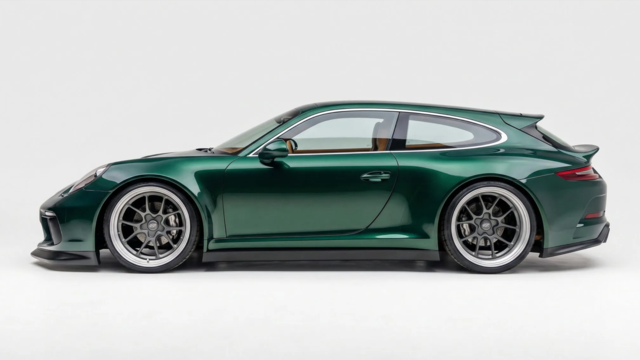
Tuner Is Converting Porsche 911s Into Shooting Brakes
Verdad Gallardo
This Coachbuilt Creation Is A Modern Take on the Legendary Porsche 917
Verdad Gallardo
Is This Convertible Cayenne A Steal, Or A Returnless Investment?
Verdad Gallardo
Premium Sponsor
Rennlist
Site Sponsor
Rennlist
Site Sponsor
Joined: May 2006
Posts: 2,913
Likes: 1,108
From: Southern California
All the great points have already been made
the one that stood out and makes a lot of sense is that ppf starts at 8-11 mils depending on film used
however, depending on the panel and how much installer “pulls” it will definitely change the thickness and may affect the readings
so, you’ll have to take many factors into play to accurately assess the actual paint, but it sounds like you’re on the right track OP 👌
the one that stood out and makes a lot of sense is that ppf starts at 8-11 mils depending on film used
however, depending on the panel and how much installer “pulls” it will definitely change the thickness and may affect the readings
so, you’ll have to take many factors into play to accurately assess the actual paint, but it sounds like you’re on the right track OP 👌
__________________
Specializing in Porsche/Ferrari since 1995
Why choose GP...WATCH OUR DOCUMENTARY
Follow Moe HERE
GP Fastrak - Ceramic/PPF/Tint in one simple bundle - Click Here for more info

Specializing in Porsche/Ferrari since 1995
Why choose GP...WATCH OUR DOCUMENTARY
Follow Moe HERE
GP Fastrak - Ceramic/PPF/Tint in one simple bundle - Click Here for more info
Racer
Joined: Nov 2020
Posts: 272
Likes: 176
All the great points have already been made
the one that stood out and makes a lot of sense is that ppf starts at 8-11 mils depending on film used
however, depending on the panel and how much installer “pulls” it will definitely change the thickness and may affect the readings
so, you’ll have to take many factors into play to accurately assess the actual paint, but it sounds like you’re on the right track OP 👌
the one that stood out and makes a lot of sense is that ppf starts at 8-11 mils depending on film used
however, depending on the panel and how much installer “pulls” it will definitely change the thickness and may affect the readings
so, you’ll have to take many factors into play to accurately assess the actual paint, but it sounds like you’re on the right track OP 👌
you made my point much more eloquently
Rennlist Member
Joined: Mar 2013
Posts: 9,783
Likes: 3,927
All the great points have already been made
the one that stood out and makes a lot of sense is that ppf starts at 8-11 mils depending on film used
however, depending on the panel and how much installer “pulls” it will definitely change the thickness and may affect the readings
so, you’ll have to take many factors into play to accurately assess the actual paint, but it sounds like you’re on the right track OP 👌
the one that stood out and makes a lot of sense is that ppf starts at 8-11 mils depending on film used
however, depending on the panel and how much installer “pulls” it will definitely change the thickness and may affect the readings
so, you’ll have to take many factors into play to accurately assess the actual paint, but it sounds like you’re on the right track OP 👌