When you click on links to various merchants on this site and make a purchase, this can result in this site earning a commission. Affiliate programs and affiliations include, but are not limited to, the eBay Partner Network.
I was in Dana Point today and the brakes started to squeak really bad, forward and reverse. I took the path home about 30 miles with the least braking and then it almost sounded like they were grinding when I got home and took a right on to my street. Of course, I panicked,
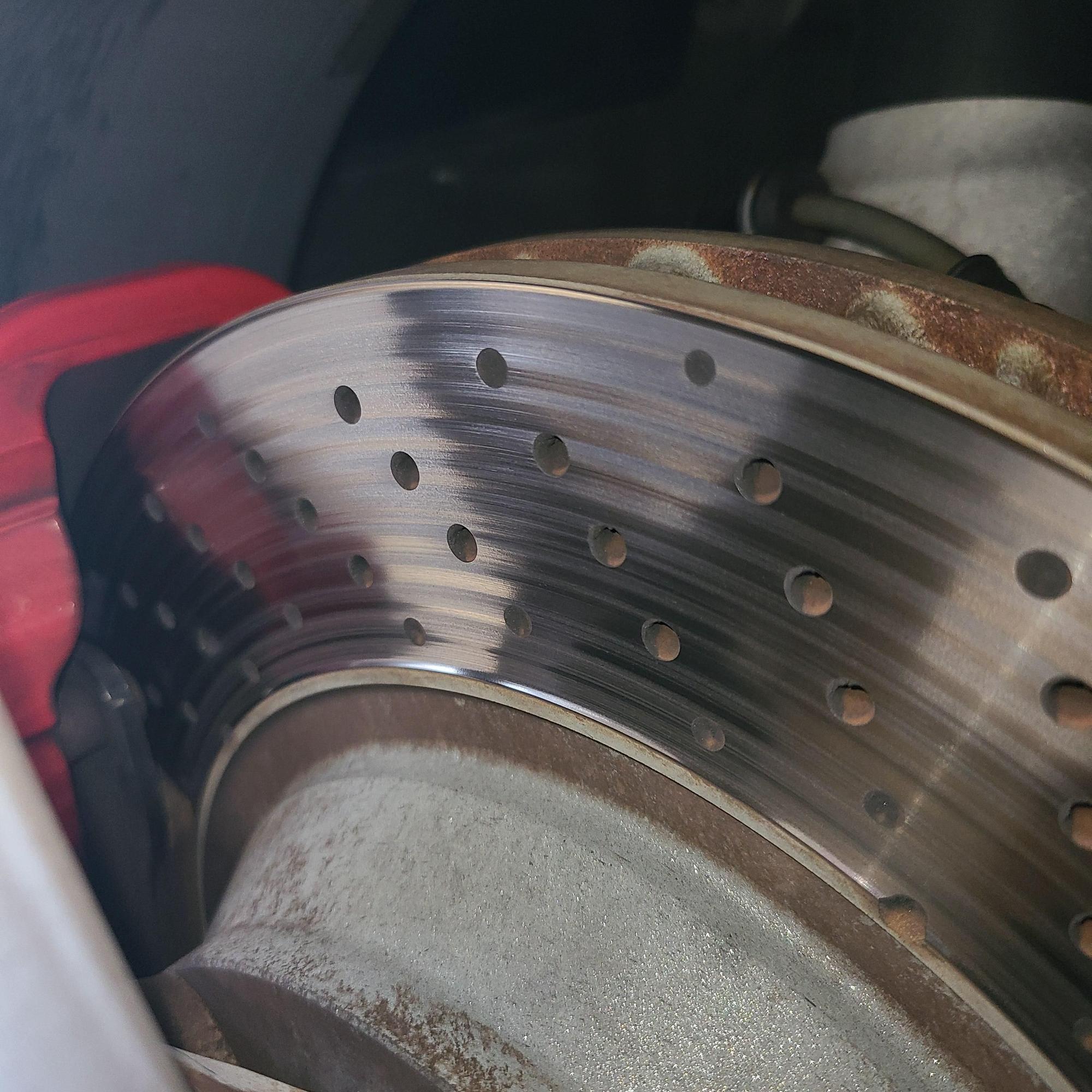
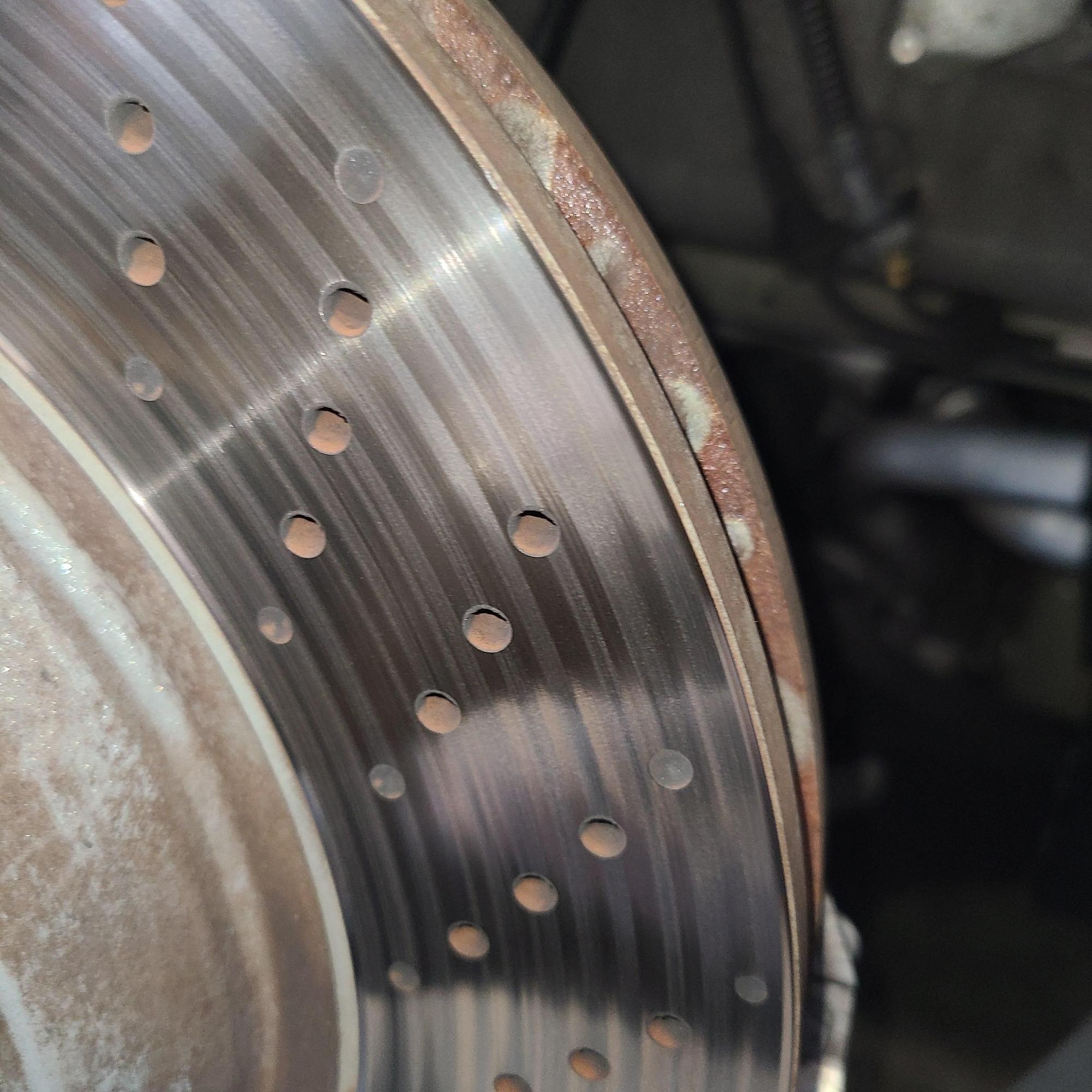
This is my first 911. However, I had this issue in other cars and I have babied this since I have had it. Never once hard on the brakes. So, I went to a quiet road near the house and hammered the brakes. I figured if they were already shot so what, it looks like a fairly normal few hours for a rotor and pad swap (not sure which ones to buy if I have to) not to different than other cars . About 10 runs to 60 or 70 and hard stop. Problem gone. Or is it? I checked the calipers, and it seems they have the sensors, but I am new to this. If the pads were bad, do I get an alert on the dash? The fronts appear to be wavy but not the rears. See pics of the fronts. It can be felt. I just ordered the pucks for jacking the car and will do a visual with the wheels off. I also have the all the measuring tools a man can have, I imagine the min specs are on the rotor like other cars? I will youtube for some insight as well but value the group on this forum most on what to look for. The car has 79k on it and I cannot be sure the rotors have been replaced before. An Indy did alot of work after 57k and they are closed today. The dealership via Carfax does not indicate rotors changed at any point up to 57k miles which was when the dealership did all the service.
Last edited by user 9116474738; Sep 3, 2023 at 07:42 PM.
If it was simple break squeal due to some minor build up, your hammering on the brakes might have bled them sufficiently to resolve the squeal/squeaking sound.
Your rotors are still within spec. You can see your ware dimples are still visible. Ware dimples are the ones on the inner and outer edge that do not go all the way through. When those are gone you know it’s time for new rotors. What ever pulsing you are “feeling” is not from the lateral wave you are seeing in your rotor. Your rear rotors will ware faster than the front due to abs/traction control kicking in. The rears looks to have been replaced or resurfaced in the past. Your brake pad sensors will only alert you when the pads are past due for replacement and will not produce or alert any other errors on your dash. It is optimal to replace your pads before they destroy and alert the ware sensors. Pad ware sensors that have been triggered will need to be replace also. So catch and replace worn pads before they hit the sensors and it will save about 150.00 on your brake job. With grandpa driving 80k miles is about brake rotor life expectancy. You should be able to get a few pad changes per 1 rotor. Track or even spirited driving will shorten life expectancy considerably. Not to offend grandpas as I have seen some quite fast grand parents for sure. I would bet your rotors are original and have been surfaced at least once. I can see in the top picture that pad looks to have about 20-30% life left.
Last edited by SilverSFR; Sep 3, 2023 at 08:58 PM.
Like Silver was saying you can see in the pics the inner and outer ring are depth gauges. Like these old rotors, you have groves. Even though you have some rotor depth you should replace pads & rotors. Bed them in with no stopping short, when you replace them.
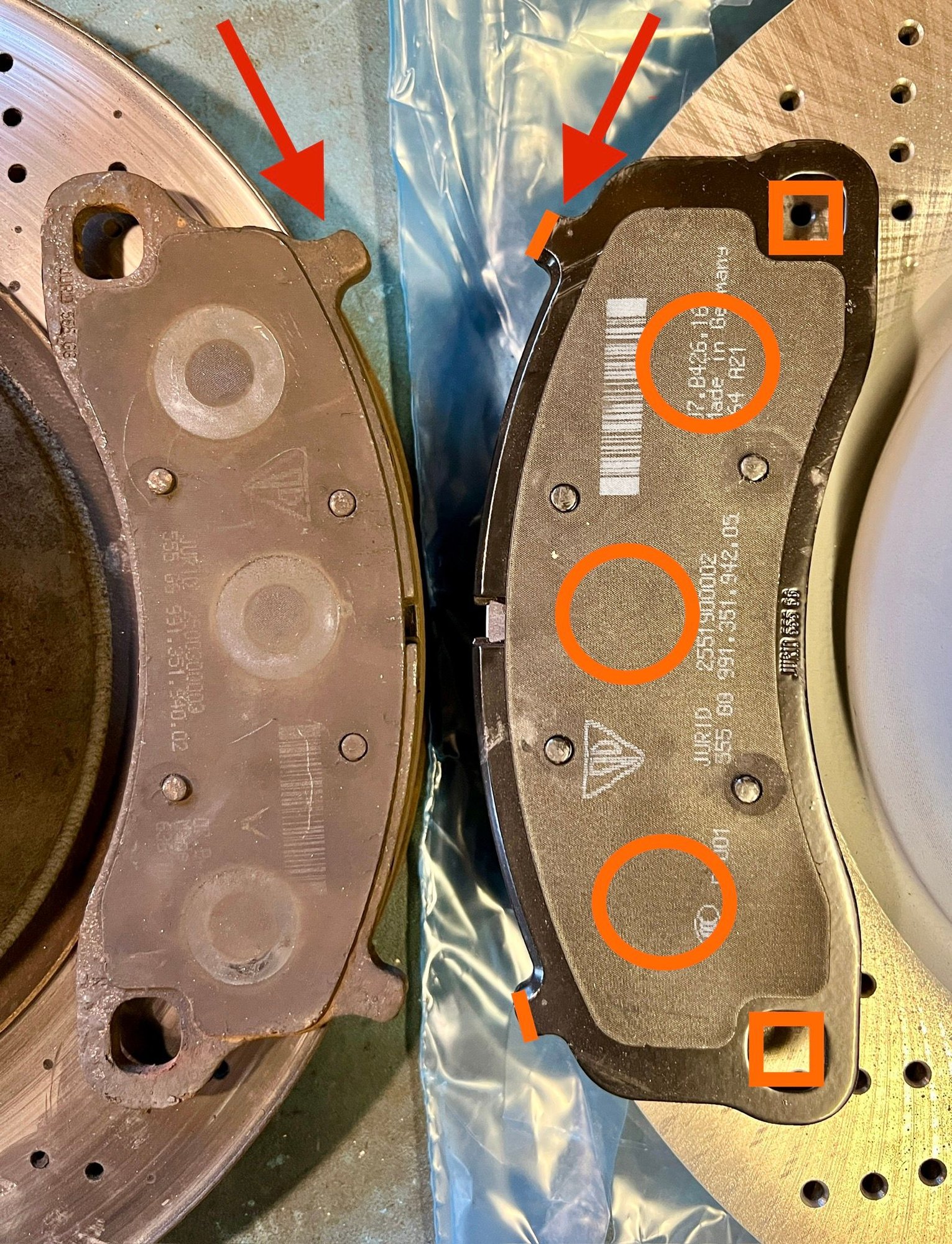
If you have an S than you can install 997.2 Turbo rotors and 991.1 Turbo pads for a cheap brake upgrade.
Last edited by 991Targa4S; Sep 3, 2023 at 10:05 PM.
Your rotors are still within spec. You can see your ware dimples are still visible. Ware dimples are the ones on the inner and outer edge that do not go all the way through. When those are gone you know it’s time for new rotors. What ever pulsing you are “feeling” is not from the lateral wave you are seeing in your rotor. Your rear rotors will ware faster than the front due to abs/traction control kicking in. The rears looks to have been replaced or resurfaced in the past. Your brake pad sensors will only alert you when the pads are past due for replacement and will not produce or alert any other errors on your dash. It is optimal to replace your pads before they destroy and alert the ware sensors. Pad ware sensors that have been triggered will need to be replace also. So catch and replace worn pads before they hit the sensors and it will save about 150.00 on your brake job. With grandpa driving 80k miles is about brake rotor life expectancy. You should be able to get a few pad changes per 1 rotor. Track or even spirited driving will shorten life expectancy considerably. Not to offend grandpas as I have seen some quite fast grand parents for sure. I would bet your rotors are original and have been surfaced at least once. I can see in the top picture that pad looks to have about 20-30% life left.
The pictures are of the fronts only. Can’t tell much from looking at the rears.
Thanks all, it seemed to work, panic over nothing. I went to Big Bear, decent mountain road in SoCal yesterday and no noise, brakes were fine. But I know what to look for now.
This is why your brakes were squeaking. When you heat brake pads up to a certain temp, they deposit a layer of material on the disc (pad transfer layer). Then the pads run on that layer of pad material. Since the two materials are the same, they operate fairly noise-free. Over time the pad transfer layer wears off if you're not doing any hard braking. When the brake pads rub against the differing material (the iron of the brake discs), they tend to squeal and make noise. Please check out the videos below. They explain how to swap pads, bedding in, etc. If you understand everything in these videos, you'll be equipped to eliminate most brake squeal at any point in the future.




 Another Brake question 991.1