When you click on links to various merchants on this site and make a purchase, this can result in this site earning a commission. Affiliate programs and affiliations include, but are not limited to, the eBay Partner Network.
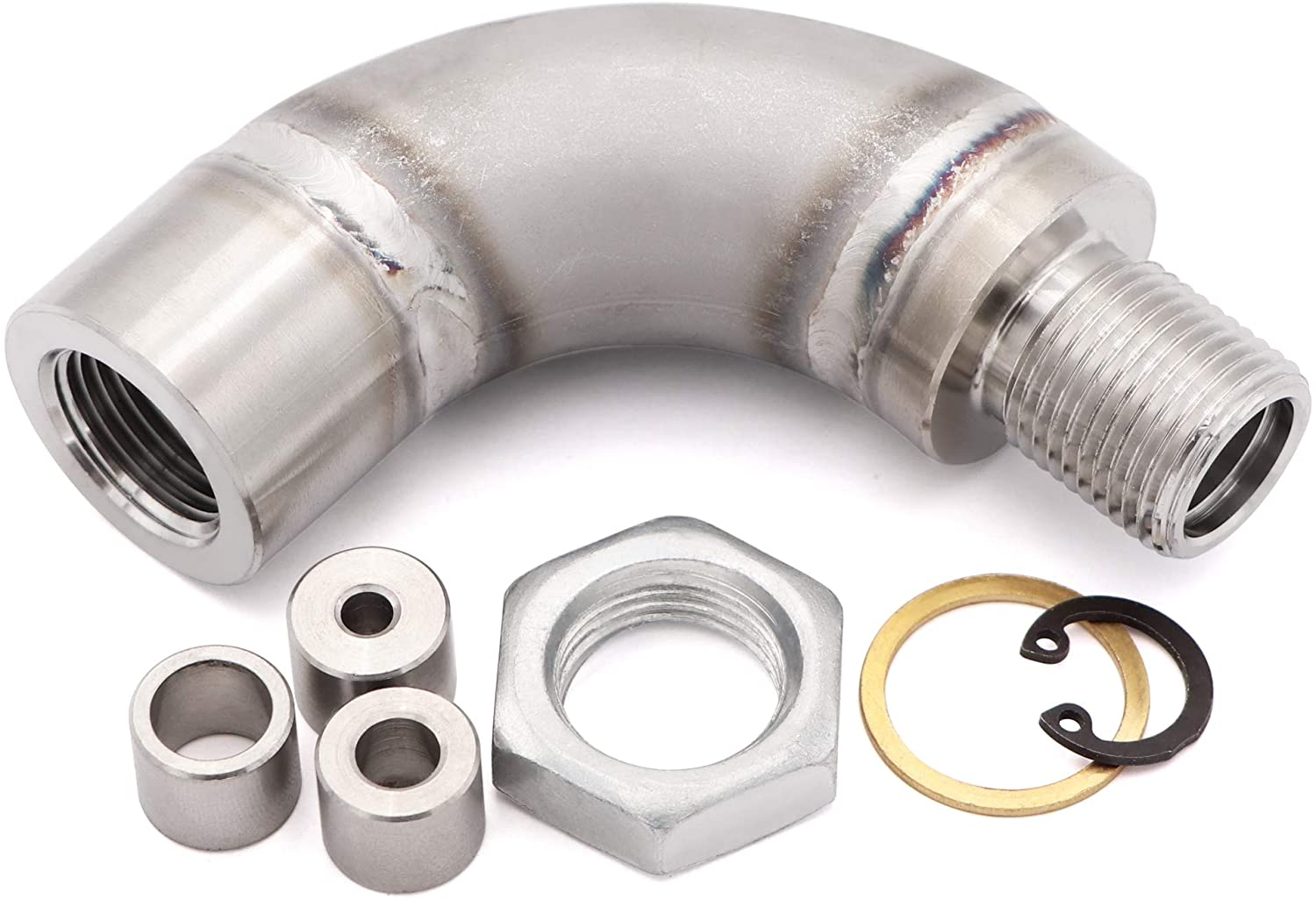
I did use the fittings shown on the Amazon link, fitted directly to the exhaust. But between the O2 sensor and the fitting was also installed a mini-cat. Engine threw codes saying exhaust was too lean.
Is that where we went off track, installing the mini-cats? Those were supposed to be the ticket according to the mechanics shop that did the exhaust install.
Don't waste your time on that first one or the one recommended from Bigdaddys because they do not work. I actually contacted Fabspeed on theirs and they told me that the ones they sold with the little cats built inside will work for a while until they heat up. I thought with the cobb you had the functionality to turn off the secondary 02 sensors so they would not read? I went with the Kline Race 76mm and 70mm dp but soon found out that my APR Tune would not allow the dp so I had to reinstall my 200 cell HJC cats and have had no issues since.
I have cat eliminators on my 991.1 TTS and use simple 90 degree extenders, NO mini-cats. Inexpensive and they do the job perfectly. Not one code in about a year since I installed them.
The 'mini cats' on other extenders are imho a joke. Just install the 90 degree Vibrant-style extenders with either no orifice or the largest size insert and you will be good. Moving the sensor out of the main airflow is enough, which is why you don't need the small orifices or 'mini cats'.
There is an industry push for retaining emissions functionality. Or maybe better put is to reduce the liability involved with eliminating emissions. However you look at it, the work arounds are evolving because of this, and finding easy functional solutions is going, and will become, harder to find.
Changing the functionality of the O2 is going to be last on that list for me. O2 feedback is important on a FI application, and any reduction in feedback is a reliability step backwards. This was pretty common practice in the 90s, but as ECU technology, feedback, and fueling precision, has evolved, it's far less common than it used to be.
Another thing that has evolved is cat technology. A properly sized and spec'd cat is going to leave very little power on the table. You have single cats that are good for +1,000hp now. That was unheard of 20 something years ago.
So can you find some one willing to delete emissions codes via an older AP or other tuning platform? Likely. Worth taking the risk with someone that doesn't have much to loose with doing that? Not for me.
These things all come in cycles. We've all got used to (relatively) cheap-easy power for a long time now (in the automotive world), but that is changing. Not that the goals can't still be accomplished, it's just going to take more intelligent thought and dollars to get there.
There is an industry push for retaining emissions functionality. Or maybe better put is to reduce the liability involved with eliminating emissions. However you look at it, the work arounds are evolving because of this, and finding easy functional solutions is going, and will become, harder to find.
Changing the functionality of the O2 is going to be last on that list for me. O2 feedback is important on a FI application, and any reduction in feedback is a reliability step backwards. This was pretty common practice in the 90s, but as ECU technology, feedback, and fueling precision, has evolved, it's far less common than it used to be.
Another thing that has evolved is cat technology. A properly sized and spec'd cat is going to leave very little power on the table. You have single cats that are good for +1,000hp now. That was unheard of 20 something years ago.
So can you find some one willing to delete emissions codes via an older AP or other tuning platform? Likely. Worth taking the risk with someone that doesn't have much to loose with doing that? Not for me.
These things all come in cycles. We've all got used to (relatively) cheap-easy power for a long time now (in the automotive world), but that is changing. Not that the goals can't still be accomplished, it's just going to take more intelligent thought and dollars to get there.
Agreed.
I'd always prefer to run some type of cat if possible just to clean up the exhaust output a bit and as you say, there are very high flow cats available that really don't hinder performance.
It's not inexpensive but IMO running cats makes sense.
I have cat eliminators on my 991.1 TTS and use simple 90 degree extenders, NO mini-cats. Inexpensive and they do the job perfectly. Not one code in about a year since I installed them.
The 'mini cats' on other extenders are imho a joke. Just install the 90 degree Vibrant-style extenders with either no orifice or the largest size insert and you will be good. Moving the sensor out of the main airflow is enough, which is why you don't need the small orifices or 'mini cats'.
PFBZ..........I bought the same Fabspeed cat delete pipes and O2 spacer set up you have but havent installed yet. Reading other posts on the this topic, I thought the smallest opening adapter was needed on the o2 spacers. Id like to get this right the 1st time around, so just want to confirm which one i should use. Thanks.
Changing the functionality of the O2 is going to be last on that list for me. O2 feedback is important on a FI application, and any reduction in feedback is a reliability step backwards. This was pretty common practice in the 90s, but as ECU technology, feedback, and fueling precision, has evolved, it's far less common than it used to be.
Lets not confuse the rear (secondary) O2 sensor with the primary O2 sensor.... Very different purposes.
The primary O2 sensor is critical in providing feedback to the ECU on fueling mixture. It is measuring the amount of unburned O2 post combustion to determine richness or leanness of the mixture, which helps the ECU adjust fueling when it is in a closed loop feedback mode.
But the secondary O2 sensor on our cars (like most if not all cars) does nothing of the sort. It has exactly one purpose in life. To monitor the catalytic converter and set a flag when it fails. That is it. It has zero effect on mixture, zero effect on tune, zero effect on performance. It simple terms, it is a 'my catalytic converter is going bad' sensor.
Again,
.
Front O2 Sensor: Critical. It helps the ECU adjust the mixture.
Rear O2 Sensor: No impact on fueling or mixture. It simply monitors the cat converter and sets a warning light if it stops performing as it should.




 Avoiding engine codes when eliminating cats?