


Limited slip Diff
Addict
Rennlist Member
Rennlist Member
Joined: May 2001
Posts: 3,495
Likes: 2
From: Hsv AL

"it's just plain better."
many criticize Porsche for the growth in weight of new models, but when they find a way around using LSD (achieving equivalent handling perf w/o hardware lbs), some are distraught. I don't quite get it - is it LSD snobbery?.
many criticize Porsche for the growth in weight of new models, but when they find a way around using LSD (achieving equivalent handling perf w/o hardware lbs), some are distraught. I don't quite get it - is it LSD snobbery?.

Addict
Lifetime Rennlist
Member
Lifetime Rennlist
Member

Joined: Oct 2004
Posts: 5,225
Likes: 2
Originally Posted by ked
"it's just plain better."
many criticize Porsche for the growth in weight of new models, but when they find a way around using LSD (achieving equivalent handling perf w/o hardware lbs), some are distraught. I don't quite get it - is it LSD snobbery?.
many criticize Porsche for the growth in weight of new models, but when they find a way around using LSD (achieving equivalent handling perf w/o hardware lbs), some are distraught. I don't quite get it - is it LSD snobbery?.

Drifting
Joined: Dec 2001
Posts: 2,051
Likes: 4
From: Alabama
Originally Posted by Ray G
I think you mean "If you have PSM (not PASM), you don't need it."
I attended the launch of the Cayman last week at Barber Motorsports Park.
The following are exerpts from Porsche's press releases that discuss PSM, PASM, and the Sport Chrono option.
PCNA invokes PASM when discussing Cayman and track applications.
BTW, I did a "hot lap" with former LeMans winner and PDE instructor Chip Robinson. If we can drive like that guy, we won't need to worry about LSD.

Porsche Stability Management included
The 2006 Porsche Cayman S features the latest generation of Porsche Stability Management (PSM). This unique vehicle control technology encompasses anti-lock braking, anti-slip (traction) control, engine drag control and automatic brake differential functions, to intervene when necessary in driving situations that approach the limits of adhesion. In such instances, PSM can apply the brakes to individual wheels to help maintain the car’s stability.
However, unlike intrusive vehicle control systems available from other automakers, PSM is designed not to interfere with sporty performance but to enhance the involvement for the enthusiast driver.
Porsche Active Suspension Management available
For drivers who want to explore extended vehicle dynamics, the 2006 Porsche Cayman S can be equipped with Porsche Active Suspension Management (PASM). PASM, in effect, provides two suspension setups in a single vehicle — one for comfortable cruising and everyday driving, and the other for track-day or autocross exercises.
If so equipped, PASM provides for a 10mm lower static ride height, and offers two damper settings: “Normal” and “Sport”.
Compared to the standard Cayman S suspension setup, PASM Normal offers a more comfortable suspension that provides even smoother ride qualities, especially over rough roads. However, the system automatically stiffens when the driver makes more aggressive inputs.
PASM Sport activates a much firmer damper control map for agile and dynamic handling, such as that sought in track situations.
PASM includes two accelerometers that determine vertical movement of the body. Further, it monitors steering angle inputs, road speed, brake pressure and engine torque to optimize damper control for each individual wheel.
Sports Chrono Package provides the ultimate in dynamic agility
As a further option, Porsche offers its Sports Chrono Package that modifies mapping for the powertrain and braking systems to provide the ultimate in performance driving. With the optional Sports Chrono Package activated, the 2006 Porsche Cayman S responds even more directly to throttle inputs and offers the driver even greater freedom when driving at the limit. So equipped, it provides a more sporting set-up of engine management, more aggressive shifting algorithms of the optional Tiptronic S transmission, as well as expanded parameters of the PASM system.
The Sports Chrono Package includes a dash-mounted stopwatch gauge that records lap times on track days or in autocross events. On cars equipped with the optional Porsche Communications Management system, this data can be displayed for review on the navigation monitor screen.
In Porsche’s testing at the Nürburgring, a Cayman S equipped with the Sports Chrono Package was some three seconds faster per lap around the test track than cars without the package.
Addict
Rennlist Member
Rennlist Member
Joined: Feb 2002
Posts: 2,131
Likes: 23
From: Churchville, MD
Originally Posted by cgomez
Miatas, S2000, RX8, 350Z, BMW M Cars.... all can be had with LSDs!!! (and now the Elise too)
Addict
Lifetime Rennlist
Member
Lifetime Rennlist
Member
Joined: Oct 2004
Posts: 5,225
Likes: 2
I can tell you that the 993 LSD is a piece of garbage, its quality is befitting of a Yugo not a Porsche. One of those creeping cost savings measures they started to use with the 993 models, thankfully limited to only a few areas of production at that point. But an ominous forerunner of what was to come... I would hope the GT3 unit is much better.
Pro
Joined: Nov 2001
Posts: 517
Likes: 2
From: Seattle Area
Originally Posted by Sean
Nope, the PCNA rep was specifically referencing PASM (not PSM).
I attended the launch of the Cayman last week at Barber Motorsports Park.
The following are exerpts from Porsche's press releases that discuss PSM, PASM, and the Sport Chrono option.
PCNA invokes PASM when discussing Cayman and track applications.
BTW, I did a "hot lap" with former LeMans winner and PDE instructor Chip Robinson. If we can drive like that guy, we won't need to worry about LSD.
I attended the launch of the Cayman last week at Barber Motorsports Park.
The following are exerpts from Porsche's press releases that discuss PSM, PASM, and the Sport Chrono option.
PCNA invokes PASM when discussing Cayman and track applications.
BTW, I did a "hot lap" with former LeMans winner and PDE instructor Chip Robinson. If we can drive like that guy, we won't need to worry about LSD.
Addict
Rennlist Member
Rennlist Member
Joined: May 2001
Posts: 3,495
Likes: 2
From: Hsv AL
pcar, I am familiar w/ both, & how they work. perhaps I didn't communicate my point well.
I am referring to the application of sophisticated electronic systems such that a car can achieve a performance level (as say, measured by a highly integrated metric: a lap time or slalom time) that is the same (or better) as that same car, not-so-electronically-enhanced, but w/ LSD.
We will see more of these solutions in specialized applications as manufacturers apply new technologies that lower costs while improving performance. The trend is towards electronics-rich rather than primarily mechanical systems. Now we are seeing the transition from traditional mechanical systems augmented by electronic sensors & controls, to approaches that did not start with a legacy mechanical device as a given - electro-mechanical integration "from scratch" designs. This trend is informed by avionics developments, as well as the requirements for safety & efficiency in our cars. I happen to like them for the weight benefits that accrue, as well as for the sheer creativity that is revealed. Fresh new ways to address old problems is the path to higher performance.
I am referring to the application of sophisticated electronic systems such that a car can achieve a performance level (as say, measured by a highly integrated metric: a lap time or slalom time) that is the same (or better) as that same car, not-so-electronically-enhanced, but w/ LSD.
We will see more of these solutions in specialized applications as manufacturers apply new technologies that lower costs while improving performance. The trend is towards electronics-rich rather than primarily mechanical systems. Now we are seeing the transition from traditional mechanical systems augmented by electronic sensors & controls, to approaches that did not start with a legacy mechanical device as a given - electro-mechanical integration "from scratch" designs. This trend is informed by avionics developments, as well as the requirements for safety & efficiency in our cars. I happen to like them for the weight benefits that accrue, as well as for the sheer creativity that is revealed. Fresh new ways to address old problems is the path to higher performance.
Rennlist Member
Joined: Nov 2003
Posts: 1,244
Likes: 23
From: NYC Area
Originally Posted by ked
pcar, I am familiar w/ both, & how they work. perhaps I didn't communicate my point well.
I am referring to the application of sophisticated electronic systems such that a car can achieve a performance level (as say, measured by a highly integrated metric: a lap time or slalom time) that is the same (or better) as that same car, not-so-electronically-enhanced, but w/ LSD.
I am referring to the application of sophisticated electronic systems such that a car can achieve a performance level (as say, measured by a highly integrated metric: a lap time or slalom time) that is the same (or better) as that same car, not-so-electronically-enhanced, but w/ LSD.
The PASM shock adjustments just "attempt" to provide more grip (weight) to the potentially spinning rear tire by "retarding" weight shift from that tire (higher rebound on rear shocks).... but eventually weight will shift and that rear tire will spin.
It is equivalent (autoXers will know this) to adding or stiffening the front sway bar to improve rear traction or prevent wheel spin in tight corners in a open diff car. So you compromise the suspension balance to improve forward traction. A LSD is always better b/c it translates power as much as posible into true forward motion with little or no handling compromise (Some LSDs might induce weird side effects under braking... but that's another story).
So, PASM nor ABD equal LSD.
Best OEM LSD I've driven is the E46 M3's. Full range of 0-100% lockup. Powerslide has never been so easy...
Rennlist Stories
The Best Porsche Posts for Porsche Enthusiasts

Stunning Porsche 356A Super GT Speedster Auction Fails to Meet Reserve
Verdad Gallardo
Every Era of 911 Owner Explained in One Sentence
Verdad Gallardo
Thinking of Buying a Porsche? Do These 10 Things First
Joe Kucinski
Pixar Pals Turned Into 1-of-1 Porsches!
Michael S. Palmer
Theon Goes Full Carbon Fiber With Stunning New Build
Verdad Gallardo
Genius Porsche-Themed Gifts That'll Make Any Dad or Grad Smile
Joe Kucinski
10 Used Porsches Are Selling for Way Too Cheap
Joe Kucinski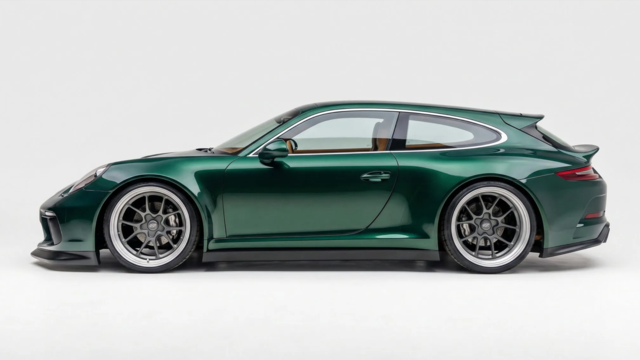
Tuner Is Converting Porsche 911s Into Shooting Brakes
Verdad Gallardo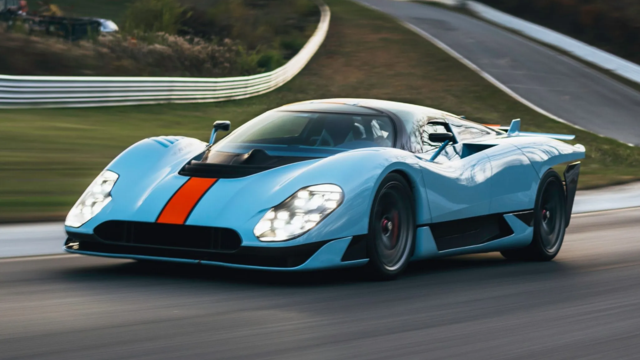
This Coachbuilt Creation Is A Modern Take on the Legendary Porsche 917
Verdad Gallardo
Addict
Lifetime Rennlist
Member
Lifetime Rennlist
Member
Joined: Oct 2004
Posts: 5,225
Likes: 2
Originally Posted by ked
pcar, I am familiar w/ both, & how they work. perhaps I didn't communicate my point well.
I am referring to the application of sophisticated electronic systems such that a car can achieve a performance level (as say, measured by a highly integrated metric: a lap time or slalom time) that is the same (or better) as that same car, not-so-electronically-enhanced, but w/ LSD.
We will see more of these solutions in specialized applications as manufacturers apply new technologies that lower costs while improving performance. The trend is towards electronics-rich rather than primarily mechanical systems. Now we are seeing the transition from traditional mechanical systems augmented by electronic sensors & controls, to approaches that did not start with a legacy mechanical device as a given - electro-mechanical integration "from scratch" designs. This trend is informed by avionics developments, as well as the requirements for safety & efficiency in our cars. I happen to like them for the weight benefits that accrue, as well as for the sheer creativity that is revealed. Fresh new ways to address old problems is the path to higher performance.
I am referring to the application of sophisticated electronic systems such that a car can achieve a performance level (as say, measured by a highly integrated metric: a lap time or slalom time) that is the same (or better) as that same car, not-so-electronically-enhanced, but w/ LSD.
We will see more of these solutions in specialized applications as manufacturers apply new technologies that lower costs while improving performance. The trend is towards electronics-rich rather than primarily mechanical systems. Now we are seeing the transition from traditional mechanical systems augmented by electronic sensors & controls, to approaches that did not start with a legacy mechanical device as a given - electro-mechanical integration "from scratch" designs. This trend is informed by avionics developments, as well as the requirements for safety & efficiency in our cars. I happen to like them for the weight benefits that accrue, as well as for the sheer creativity that is revealed. Fresh new ways to address old problems is the path to higher performance.
Please educate yourself on the issue before you try "correcting" someone. The LSD vs non-LSD issue is not a matter of "opinion," there is a very clear difference.
Rennlist Member
Joined: Jul 2004
Posts: 773
Likes: 397
From: Nashville
People wonder why the new Z06 is such a great buy. Its because they didnt hold back. I dont care what porsches flagship is, they had a chance to make an AMAZING car. A true sports car, small, light, lots of power, great for track racing. They didnt. Its toned down, no LSD, no Dry sump, WTF WHY!!!!!!!!!!! Porsche got its name because its old cars didnt hold back, they were the best of their time. Now these days its an overpriced, status symbol, that is created for a wanted postion not for all out potential. What a joke. Porsche is on a downward roll. Yes they might be selling more cars and making more profit right now, but its going to catch up to them.

Drifting
Joined: Aug 2004
Posts: 3,468
Likes: 1,986
From: new york
I don't think its going to catch up with them - they have a brand name, a niche, just reading these boards tell you they have owners who flip their cars every 2 years for a new one, and Porsche has a strategy to continuously update products with more "goodies" for their owner base to upgrade into. that is a very good marketing strategy and symbiotic relationship to the owners - and for their wives, they give them the Cayenne to buy for "honey". its brilliant if you ask me.
this Cayman is a good start. in 2 years, you'll see a 320 HP Cayman with the DSG (the Tip is quite dated technology in this market segment) gearbox - that's the car they should be selling right out of the box, but they've got an easy 2 years of sales in this incarnation.
this Cayman is a good start. in 2 years, you'll see a 320 HP Cayman with the DSG (the Tip is quite dated technology in this market segment) gearbox - that's the car they should be selling right out of the box, but they've got an easy 2 years of sales in this incarnation.
Addict
Rennlist Member
Rennlist Member
Joined: May 2001
Posts: 3,495
Likes: 2
From: Hsv AL
pcar, I am not arguing against LSD or its utility. I am suggesting that as a system, a car w/o LSD, but with OTHER appropriate technologies, may in fact outperform one w/ LSD, but w/o the other approariate technologies. the frame of reference I suggest is not "how is power distributed between the driven wheels?", but "how well does the car, as a total system, perform on a track?" I believe we are seeing just the beginning of a systems approach to applying advanced electronic controls that will change how (some) people evaluate & select performance systems. Indeed, this trend (in electronics-centric solutions) may lead to "Smart LSD" as well as "Non-LSD Traction Distribution".

Spell Checker
Rennlist Member
Rennlist Member
Joined: Jun 2004
Posts: 21,360
Likes: 401
From: Alexandria, VA
Originally Posted by ztnedman1
What a joke. Porsche is on a downward roll. Yes they might be selling more cars and making more profit right now, but its going to catch up to them.

Addict
Lifetime Rennlist
Member
Lifetime Rennlist
Member
Joined: Oct 2004
Posts: 5,225
Likes: 2
Originally Posted by ztnedman1
People wonder why the new Z06 is such a great buy. Its because they didnt hold back. I dont care what porsches flagship is, they had a chance to make an AMAZING car. A true sports car, small, light, lots of power, great for track racing. They didnt. Its toned down, no LSD, no Dry sump, WTF WHY!!!!!!!!!!! Porsche got its name because its old cars didnt hold back, they were the best of their time. Now these days its an overpriced, status symbol, that is created for a wanted postion not for all out potential. What a joke. Porsche is on a downward roll. Yes they might be selling more cars and making more profit right now, but its going to catch up to them.
Active suspension? Porsche stability management? sport chrono plus? variable ratio steering? electronic sensor instead of a throttle cable? The word SPORTSCAR has at its root the word SPORT. Can someone tell me where's the sport in driving a car with electronic aides doing all this crap for you?
Addict
Rennlist Member
Rennlist Member
Joined: May 2001
Posts: 3,495
Likes: 2
From: Hsv AL
"Can someone tell me where's the sport in driving a car with electronic aides doing all this crap for you?"
A sport is an enjoyable physical activity, often whereby a competition determines a winner. While I too am enamoured of "old school" automotive technology (or why would I own 2 356s?), I fail to see how the mere existence of electronic aids eliminates the physical, mental & competitive dimensions of wheel-to-wheel racing. The experience of motorsports exists in one's personal drive, driving skill (command over the car, regardless of how it is put together) and interaction among adversaries. Focus upon specific hardware may be a means of classification, or for historical interest, or to encourage technical creativity, or even to recognize taste (markets), but it is not the element that defines sport. cheers!
A sport is an enjoyable physical activity, often whereby a competition determines a winner. While I too am enamoured of "old school" automotive technology (or why would I own 2 356s?), I fail to see how the mere existence of electronic aids eliminates the physical, mental & competitive dimensions of wheel-to-wheel racing. The experience of motorsports exists in one's personal drive, driving skill (command over the car, regardless of how it is put together) and interaction among adversaries. Focus upon specific hardware may be a means of classification, or for historical interest, or to encourage technical creativity, or even to recognize taste (markets), but it is not the element that defines sport. cheers!