




968 air box mod
Thread Starter
Drifting

Joined: Jan 2010
Posts: 3,334
Likes: 8
From: Nebraska
 968 air box mod
I have read most of what has been written on the air box in the search forum but was not able to download the instructions. It seems pretty straight forward. It sounds like four 2in. holes drilled with a hole saw in the front of the box. I assume that two holes go on one side of the snorkel and 2 holes on the other side. Is that right? Any pics would be great. Also at what level should they need to be drilled, towards the bottom of airbox or is just anything below the filter OK. I have the cover to hide them so I probably will not be finishing them with the speaker trim. I know there is some discussion as to how much this mod helps, but even the critics agree that it does do something and I do like more of a hotrod sound. I just don't want to start a new debate on the merits of doing it. Any help would be appreciated.
Drifting
Joined: Jul 2009
Posts: 2,728
Likes: 4
From: Caraquet-- New-Brunswick-- Canada
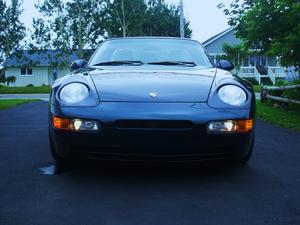
This is how PorscheDude1 did his on the Polar Silver maybe he could give you the holes size & more infos .the holes seem lot bigger then 2" to me.
Last edited by ernie9468; Feb 4, 2013 at 07:04 PM.
Racer
Joined: Dec 2007
Posts: 373
Likes: 0
From: Austin, TX 78704
I've been very happy with the mod I did:
https://rennlist.com/forums/968-foru...rt-deux-2.html
Still haven't made the 2nd cutout or the pretty ductwork described later in that thread, but I like what I did to the airbox better than the 4x2" holes in the other setup.
https://rennlist.com/forums/968-foru...rt-deux-2.html
Still haven't made the 2nd cutout or the pretty ductwork described later in that thread, but I like what I did to the airbox better than the 4x2" holes in the other setup.
Thread Starter
Drifting
Joined: Jan 2010
Posts: 3,334
Likes: 8
From: Nebraska
Thank you guys. It sounds like the most important thing is to just get some extra air in there above what the snorkel can provide. My hood is candidate for a respay in the next few years. I wonder about the possibilities of adding some Turbo look a like air vents to supply some cool air. I know that it probably gets plenty of cool air from the front but I do love the looks of those hood vents.
Rennlist Member
Joined: Nov 2001
Posts: 743
Likes: 1
From: Cape Elizabeth ME USA
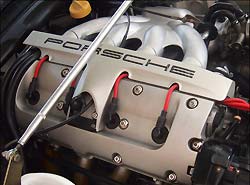
This is the documentation for the original mod. The accompanying article said they'd found no further gains with larger openings than these. With the 'ports' attached, noise is controlled as best it can be.
Last edited by John Etnier; Feb 15, 2010 at 11:57 AM.
Trending Topics
Rennlist Stories
The Best Porsche Posts for Porsche Enthusiasts

Genius Porsche-Themed Gifts That'll Make Any Dad or Grad Smile
Joe Kucinski
10 Used Porsches Are Selling for Way Too Cheap
Joe Kucinski
Tuner Is Converting Porsche 911s Into Shooting Brakes
Verdad Gallardo
This Coachbuilt Creation Is A Modern Take on the Legendary Porsche 917
Verdad Gallardo
Is This Convertible Cayenne A Steal, Or A Returnless Investment?
Verdad Gallardo
10 Best Non-Flat Six Porsches You Can Buy For Under $100K
Joe Kucinski
Porsche's Top 5 Most Questionable Naming Decisions
Verdad Gallardo
Pogea Racing's 964 Porsche 911 Reimagination Stands Out in a Crowded Field
Verdad Gallardo
6 Convertible Top MYTHS Most People Don't Understand!
Michael S. Palmer
Rennlist Member
Joined: Nov 2001
Posts: 743
Likes: 1
From: Cape Elizabeth ME USA
The magazine article from the time the mod was documented claimed more than that:
The results were amazing. The Airbox mod and K&N air cleaner together gave us 10.8 peak horsepower and 7.3 lb/ft of peak torque for about $40!!!
Drifting
Joined: Jun 2001
Posts: 2,084
Likes: 6
From: new york

Race Director
Joined: Jul 2001
Posts: 10,194
Likes: 10
We certainly didn't realize anything like that on my 968 racecar. 3-4 h.p. gain on the dyno "before & after". Still, for a couple of holes (4 to be exact) and rubber finishing rings, I was happy to see ANY gain. As the standard disclaimer goes, I suppose "your results at home may vary".