


Engine cold and warm reaction

Thread Starter
Advanced
Joined: Nov 2011
Posts: 50
Likes: 1
From: France

Previous replies should have helped you with the ISV location. Once at hot idle just pull the electrical plug at the top of this pic:
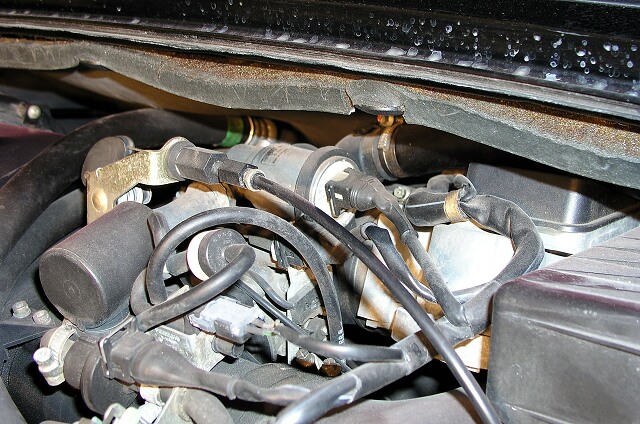
Idle should stay roughly correct then try opening the throttle like in the other videos. Any different?
I will try to get a 964 cold/hot video for you over the weekend.
Idle should stay roughly correct then try opening the throttle like in the other videos. Any different?
I will try to get a 964 cold/hot video for you over the weekend.

Procedure very clear! It is perfect! The french name for ISV is Actuateur de ralenti. I have already cleaned this part 2 years ago because of instable idle at cold.
Thanks a lot for vids!


Burning Brakes

Joined: Jan 2012
Posts: 782
Likes: 16
From: Cheshire UK
Does it smell like the engine is running rich i.e too much fuel?
I would check the small vacuum lines going to the fuel pressure regulator, the vacuum valve and also the accumulator chamber on the back of the air filter box.
An easy way to check if vacuum is ok. Run the engine and then turn off. Get someone to switch the ignition switch to the 'on' position while you look in the engine bay to see if the resonance valve cycles. If it does then vacuum piping is ok and the fault lies elsewhere.
I would check the small vacuum lines going to the fuel pressure regulator, the vacuum valve and also the accumulator chamber on the back of the air filter box.
An easy way to check if vacuum is ok. Run the engine and then turn off. Get someone to switch the ignition switch to the 'on' position while you look in the engine bay to see if the resonance valve cycles. If it does then vacuum piping is ok and the fault lies elsewhere.
Thread Starter
Advanced
Joined: Nov 2011
Posts: 50
Likes: 1
From: France
Does it smell like the engine is running rich i.e too much fuel?
I would check the small vacuum lines going to the fuel pressure regulator, the vacuum valve and also the accumulator chamber on the back of the air filter box.
An easy way to check if vacuum is ok. Run the engine and then turn off. Get someone to switch the ignition switch to the 'on' position while you look in the engine bay to see if the resonance valve cycles. If it does then vacuum piping is ok and the fault lies elsewhere.
I would check the small vacuum lines going to the fuel pressure regulator, the vacuum valve and also the accumulator chamber on the back of the air filter box.
An easy way to check if vacuum is ok. Run the engine and then turn off. Get someone to switch the ignition switch to the 'on' position while you look in the engine bay to see if the resonance valve cycles. If it does then vacuum piping is ok and the fault lies elsewhere.
What do you mean by " resonance valve cycles" : I will hear a noise or see something?
The procedure is : I am at the engine bay, someone on the driver seat cut ignition and then turn back the key to "on" position. Then I check resonance valve cycles...true?
I can do this with a cold engine (no nead to be at service temp)?
Burning Brakes
Joined: Jan 2012
Posts: 782
Likes: 16
From: Cheshire UK
Yes jadh, just start the engine to make sure a vacuum is there then the valve should move the next time the ignition is switched on. The resonance valve is a small black actuator operated by a solenoid / vacuum. It is located on the lower inlet crossover crossover but is not visible. You can hear it 'clack' and see the spindle move when stood looking at the engine.
This is the view of the valve, small black bottom left next to/underneath the throttle butterfly depending on year built.
http://forums.pelicanparts.com/porsc...-question.html
This is the view of the valve, small black bottom left next to/underneath the throttle butterfly depending on year built.
http://forums.pelicanparts.com/porsc...-question.html
Thread Starter
Advanced
Joined: Nov 2011
Posts: 50
Likes: 1
From: France
Yes jadh, just start the engine to make sure a vacuum is there then the valve should move the next time the ignition is switched on. The resonance valve is a small black actuator operated by a solenoid / vacuum. It is located on the lower inlet crossover crossover but is not visible. You can hear it 'clack' and see the spindle move when stood looking at the engine.
This is the view of the valve, small black bottom left next to/underneath the throttle butterfly depending on year built.
http://forums.pelicanparts.com/porsc...-question.html
This is the view of the valve, small black bottom left next to/underneath the throttle butterfly depending on year built.
http://forums.pelicanparts.com/porsc...-question.html
¨
Please have a look to the first video, before I start the engine, when I turn the key to "on" position you can hear a "clac" before the "beeeep" of my alarm. Is it that noise I must hear?
Burning Brakes
Joined: Jan 2012
Posts: 782
Likes: 16
From: Cheshire UK
It could be. It could also be the electric solenoid switching and not the vacuum valve so you need to located the spindle/shaft and watch it rotate.
The only thing you need to establish at this point is that the vacuum system is ok.
The only thing you need to establish at this point is that the vacuum system is ok.
Thread Starter
Advanced
Joined: Nov 2011
Posts: 50
Likes: 1
From: France
Hi!
Here are some tests and results:
Test 1)
- is the vacuum system ok? How to do : just start the engine to make sure a vacuum is there then the resonance valve should move the next time the ignition is switched on. The resonance valve is a small black actuator operated by a solenoid / vacuum. It is located on the lower inlet crossover but is not visible. You can hear it 'clack' and see the spindle move when stood looking at the engine.
Results:
I made this test using a stethoscope to hear the "clac" noise in the inlet air manifold. I put the stethoscope end on the second (smaller) vertical manifold the one that has the resonance flap in it. I heard clearly the "clac" noise when putting key on the "ON" position. And when moving the key to the off position I heard again the same "clac" and a short "Pfff" like a pressure that is balancing.
-----> IS IT OK for this test N°1)?
Test 2)
- Check Idle Stabilisation Valve. How to do : Once at hot idle just pull the electrical plug Idle should stay roughly correct then try opening the throttle like in the other videos. Any different?
Results:
After pulling the electrical plug of the ISV, idle stayed roughly the same (a little bit lower). I have NOT observed any modification of engine reaction. (I made a video if needed)
-----> IS IT OK for this test N°2)
Did my car succeed in these 2 tests?
Any additional tests to perform?
Thank you
Here are some tests and results:
Test 1)
- is the vacuum system ok? How to do : just start the engine to make sure a vacuum is there then the resonance valve should move the next time the ignition is switched on. The resonance valve is a small black actuator operated by a solenoid / vacuum. It is located on the lower inlet crossover but is not visible. You can hear it 'clack' and see the spindle move when stood looking at the engine.
Results:
I made this test using a stethoscope to hear the "clac" noise in the inlet air manifold. I put the stethoscope end on the second (smaller) vertical manifold the one that has the resonance flap in it. I heard clearly the "clac" noise when putting key on the "ON" position. And when moving the key to the off position I heard again the same "clac" and a short "Pfff" like a pressure that is balancing.
-----> IS IT OK for this test N°1)?
Test 2)
- Check Idle Stabilisation Valve. How to do : Once at hot idle just pull the electrical plug Idle should stay roughly correct then try opening the throttle like in the other videos. Any different?
Results:
After pulling the electrical plug of the ISV, idle stayed roughly the same (a little bit lower). I have NOT observed any modification of engine reaction. (I made a video if needed)
-----> IS IT OK for this test N°2)
Did my car succeed in these 2 tests?
Any additional tests to perform?
Thank you
Rennlist Stories
The Best Porsche Posts for Porsche Enthusiasts

10 Porsche Colors That Have More Personality Than Most People
Verdad Gallardo
Guntherwerks' Final Speedster Creation Is the Ultimate Porsche Restomod
Verdad Gallardo
10 Reasons I Hate Going to the Porsche Dealership (& the 1 Reason I Stay)
Joe Kucinski
Porsche Shakes Up The Nürburgring Lap Record Table Once Again
Verdad Gallardo
6 Ways the Porsche 911 GT3 S/C Redefines Performance
Joe Kucinski
10 Wildest Homologation Specials Porsche Ever Sold
Verdad Gallardo
Super Rare RUF BTR III Comes Out of Hibernation, Looking For a New Home
Verdad Gallardo
10 Porsche Opinions That Can Start a Fight
Joe Kucinski
One-Off Porsche 911 S/T Takes Inspiration From Famous '70s Race Car
Verdad Gallardo
Thread Starter
Advanced
Joined: Nov 2011
Posts: 50
Likes: 1
From: France
@ras62:
Yes I will go to a specialist for hammer testing as soon as I can.
What kind of results the hammer tool is delivering? I mean, not only the default list... The diagnostic tool is also performing some tests no? But what is tested?
Yes I will go to a specialist for hammer testing as soon as I can.
What kind of results the hammer tool is delivering? I mean, not only the default list... The diagnostic tool is also performing some tests no? But what is tested?
Burning Brakes
Joined: Jan 2012
Posts: 782
Likes: 16
From: Cheshire UK
It stores fault codes for various parameters http://www.troublecodes.net/Porsche/
Also possible to test heater servos fans etc
Also possible to test heater servos fans etc

Drifting

Joined: Aug 2002
Posts: 2,211
Likes: 71
From: Stockholm, Sweden
You can also use the Hammer for doing an "adaption" meaning reseting all the DME vaules to a basic setup including calibrating the idle. Could be worth a try.
Tou can also run a testloop of the different flaps, valves and injectors.
Thomas
Tou can also run a testloop of the different flaps, valves and injectors.
Thomas
Thread Starter
Advanced
Joined: Nov 2011
Posts: 50
Likes: 1
From: France
Thanks for all your informations. I appreciate!
Before I go to my Porsche specialist, I would like to be more educated about the "normal" engine reaction at service temp.
Could a "Friendly 964 stock engine owner" be so nice as to post videos of his engine reactions from the engine bay and from driver seat? I am realy sorry to insist on this crutial point for me, but before doing anything on my car I want to be sure that my car got a problem (or not). That's why, for my comprehension, I need those videos.
So please I need you!
Thank you very much
Before I go to my Porsche specialist, I would like to be more educated about the "normal" engine reaction at service temp.
Could a "Friendly 964 stock engine owner" be so nice as to post videos of his engine reactions from the engine bay and from driver seat? I am realy sorry to insist on this crutial point for me, but before doing anything on my car I want to be sure that my car got a problem (or not). That's why, for my comprehension, I need those videos.
So please I need you!
Thank you very much