


"BANG!" What the...?

Thread Starter
AutoX
Joined: Dec 2002
Posts: 14
Likes: 0
From: Memphis, TN
 "BANG!" What the...?
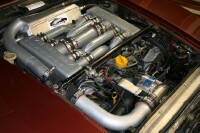
I have an '85 928S which I drive a couple times a week. Well, the other night I got a surprise. I went to start it and *BANG*! It was cranking normally and just about to start when it sounded like something exploded. I waited a moment thinking maybe it was just a back fire (which it has NEVER done before). It started right up, but sounded loud and rough, so I shut it off and didn't push my luck. I opened the hood to discover that both of the air intake distributors (tubes) were blown off of the manifold. I probably have the terminology wrong, but I hope you guys know what I'm talking about. I have not yet reattached them or tried to restart the car. I wanted to ask for your opinions as to what actually happened and why. Currently the car has around 132k miles. I've had no problems with it in the past.
Your help is greatly appreciated!

Your help is greatly appreciated!

Administrator

Joined: Aug 2001
Posts: 27,401
Likes: 3,041
From: Up Nort

Are you saying the two plastic tubes that go from the front of the engine compartment to the air filter? Or parts of the spider blew off?
You arn't running 110 octane boost, are you? Or any other fuel additive?
You arn't running 110 octane boost, are you? Or any other fuel additive?

Addict
Rennlist Member
Rennlist
Site Sponsor
Rennlist Member
Rennlist
Site Sponsor
Joined: Jul 2001
Posts: 11,542
Likes: 4
From: Anaheim California
it was a "backfire" which blew off the big side plenums which on the 85-86 are only hose clamped in place . The question of WHY did it "back fire" is a different issue and would have nothing to do with any fuel additives .
Addict
Rennlist Member
Rennlist Member
Joined: Dec 2002
Posts: 157
Likes: 0
From: Bakersfield CA
Last year there was someone who had this happen and it actually dented his hood. I seem to remember that he had a leaky injector and figured that fuel had built up in the intake. The guess was that an intake valve may have been sticking and caused the explosion on startup. It happened while his wife was using the car!

Cottage Industry Sponsor
Lifetime Rennlist
Member
Lifetime Rennlist
Member
Joined: Oct 2001
Posts: 25,818
Likes: 167
From: SF Bay Area, CA
I would have the injectors cleaned, and the compression/leakdown tested.
Injector cleaning is not that expensive - if you can take them out. Check http://www.cruzinperformance.com.
If the compression is a problem in one cylinder or if the engine makes any weird noises, I'd worry about damage that might have happened to that cylinder during the bang. If the compression of the cylinders is all over the place, I'd run some heavy doses of valve cleaner, then have a Rislone treatment with an oil change done (you must change your oil after running multiple doses of valve cleaner).
Injector cleaning is not that expensive - if you can take them out. Check http://www.cruzinperformance.com.
If the compression is a problem in one cylinder or if the engine makes any weird noises, I'd worry about damage that might have happened to that cylinder during the bang. If the compression of the cylinders is all over the place, I'd run some heavy doses of valve cleaner, then have a Rislone treatment with an oil change done (you must change your oil after running multiple doses of valve cleaner).
Trending Topics
Rennlist Stories
The Best Porsche Posts for Porsche Enthusiasts

10 Porsche Colors That Have More Personality Than Most People
Verdad Gallardo
Guntherwerks' Final Speedster Creation Is the Ultimate Porsche Restomod
Verdad Gallardo
10 Reasons I Hate Going to the Porsche Dealership (& the 1 Reason I Stay)
Joe Kucinski
Porsche Shakes Up The Nürburgring Lap Record Table Once Again
Verdad Gallardo
6 Ways the Porsche 911 GT3 S/C Redefines Performance
Joe Kucinski
10 Wildest Homologation Specials Porsche Ever Sold
Verdad Gallardo
Super Rare RUF BTR III Comes Out of Hibernation, Looking For a New Home
Verdad Gallardo
10 Porsche Opinions That Can Start a Fight
Joe Kucinski
One-Off Porsche 911 S/T Takes Inspiration From Famous '70s Race Car
Verdad Gallardo
5th Gear
Joined: Jul 2003
Posts: 5
Likes: 0
From: Germany, Lake Constance
Hi to all, I am new here.
You may also examine the covered area of the timing belt for oil leakage.
There have been explosions reported due to oil vapours within the timing belt (plastic) cover.
The intake tubes have a port to the timing belt covers each. The reason is to provide ventilation for that area and to prevent ignition of oil vapours.
There should be no further damage on your engine. But make sure that there is no oil leakage.
It is unlikely that it exploded as result of a fuel leakage.
Regards,
Bernd
You may also examine the covered area of the timing belt for oil leakage.
There have been explosions reported due to oil vapours within the timing belt (plastic) cover.
The intake tubes have a port to the timing belt covers each. The reason is to provide ventilation for that area and to prevent ignition of oil vapours.
There should be no further damage on your engine. But make sure that there is no oil leakage.
It is unlikely that it exploded as result of a fuel leakage.
Regards,
Bernd

Addict
Rennlist Member
Rennlist Member
Joined: Jul 2002
Posts: 383
Likes: 1
From: St. John's, NF, Canada
I agree with Jim....the car backfired up through the air intake system. Now as to the reason why...well it could be several things. I'm thinking it is an ignition timing related issue...and that could be caused by several things. Since you indicated that the car has been running fine before this, it is likely to be an event driven problem...not a degenerative one.
Assuming you have check the basics of fuses and relays for the ignitiona nd fuel systems, here are some ideas to t-shoot the problem. If there is no obvious sign of fuel in the engine bay, and all electrical connections are in place and making contact, move on...
Check the timing belt tension, condition and static timing of the engine to ensure everything is OK there...big problem if it is not, even if you get the beast to start again. If all is OK, I'd re-check the timing with the engine running, if that is possible.
If the t-belt system seems in order, pop out the spark plugs and have a look them for signs of pre-detonation...see if you can narrow down which cylinder(s) are involved. Problem might be coil related...you should be able to tell from the cylinders involved (sorry I am not very familiar with the 82 engine). Or you could just test the coils anyway.
If the problem is isolated to one or two cylinders, you could have a leaky injector(s)...remove and have it/them tested...might be worth the effort to pop all of these these while your at it. I think you need new seals to reinstall these...no experience here, but I am sure this can be confirmed easily enough.
Not sure if your car could be effected by the distributor "green wire" failure. Check the archives or others may know more about this than me, but I thought I would mention it as it was ignition related and I think you have an ignition timing issue.
Hope this helps....
Regards,
SteveCo in St. John's
Assuming you have check the basics of fuses and relays for the ignitiona nd fuel systems, here are some ideas to t-shoot the problem. If there is no obvious sign of fuel in the engine bay, and all electrical connections are in place and making contact, move on...
Check the timing belt tension, condition and static timing of the engine to ensure everything is OK there...big problem if it is not, even if you get the beast to start again. If all is OK, I'd re-check the timing with the engine running, if that is possible.
If the t-belt system seems in order, pop out the spark plugs and have a look them for signs of pre-detonation...see if you can narrow down which cylinder(s) are involved. Problem might be coil related...you should be able to tell from the cylinders involved (sorry I am not very familiar with the 82 engine). Or you could just test the coils anyway.
If the problem is isolated to one or two cylinders, you could have a leaky injector(s)...remove and have it/them tested...might be worth the effort to pop all of these these while your at it. I think you need new seals to reinstall these...no experience here, but I am sure this can be confirmed easily enough.
Not sure if your car could be effected by the distributor "green wire" failure. Check the archives or others may know more about this than me, but I thought I would mention it as it was ignition related and I think you have an ignition timing issue.
Hope this helps....
Regards,
SteveCo in St. John's
Thread Starter
AutoX
Joined: Dec 2002
Posts: 14
Likes: 0
From: Memphis, TN
Wow, I didn't expect so many replies! Thanks to everyone for all the info. I'm going to get under the hood this weekend and trouble shoot what I can with my limited resources. I don't have a garage, so I have to depend on the graciousness of friends who do. By the way, the "plenums" did strike the underside of the hood, but thankfully what is left of the deteriorating insulation there helped absord the impact. Also, the plastic airbox took a good beating, so that will need to be replaced.
Addict
Rennlist Member
Rennlist
Site Sponsor
Rennlist Member
Rennlist
Site Sponsor
Joined: Jul 2001
Posts: 11,542
Likes: 4
From: Anaheim California
the plastic airbox is unique to the 85-86 32 valve engine . Porsche stopped making them as well as the smaller diameter air intake tubes a few years ago . They are not available new and hard to find as good used ones .