When you click on links to various merchants on this site and make a purchase, this can result in this site earning a commission. Affiliate programs and affiliations include, but are not limited to, the eBay Partner Network.
So, I recently started having a few issues with my car starting up again after I drive it. It's been like 6 times that I start it up and won't start up without me stepping on gas for a few seconds and then seeing the revs drop to their normal setting after I let it idle on its own. But recently I've had the issue that it's like 200-400 RPM's and struggling to stay at higher revs. Once I do manage to get into drive it works fine again but after it sputtering for the first few minutes.
I did do my research about this issue on our forums but not 100% sure what I've read so was wondering if you guys can assist to reassure me on what I'm gathering.
So after reading up I came to conclusion that it made more sense that it's the Temp II sensor because to me the logic was that after its warmed up that's where I'm having the issue. When the car is cold or cool(after 30 minutes) car has no issues. It's only when I've stopped and try to use again a few minutes later. It got bad last night but was fine a few days ago. It happened again like 2 weeks ago but that's it.
I am totally aware that it can be other things such as the MAF and EZK or LH. But I want to see if it is the Temp II sensor and so I wanted to see what you guys thought?
Also, what is the exact function of the Temp II sensor? Is there a bypass to test it?
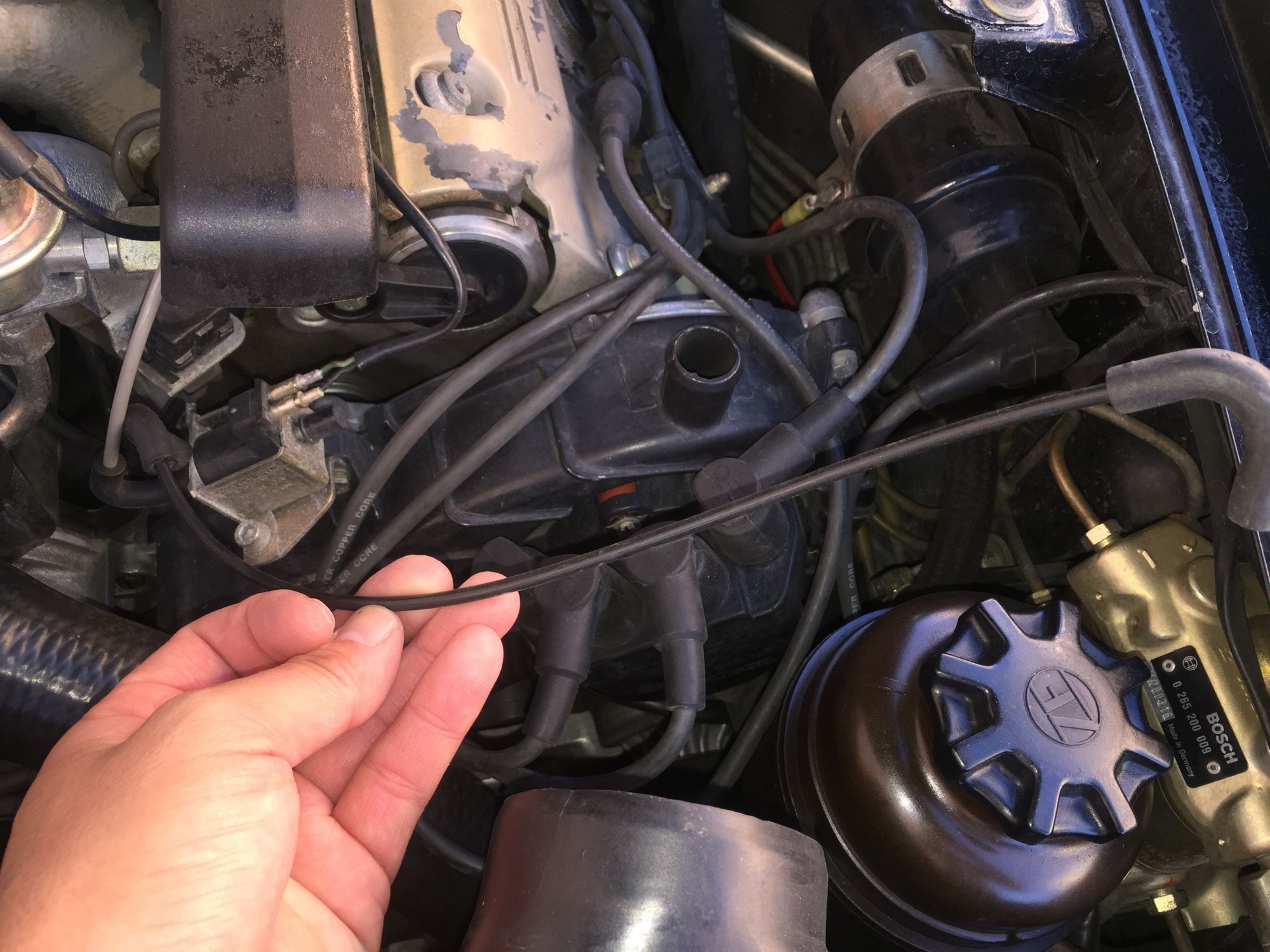
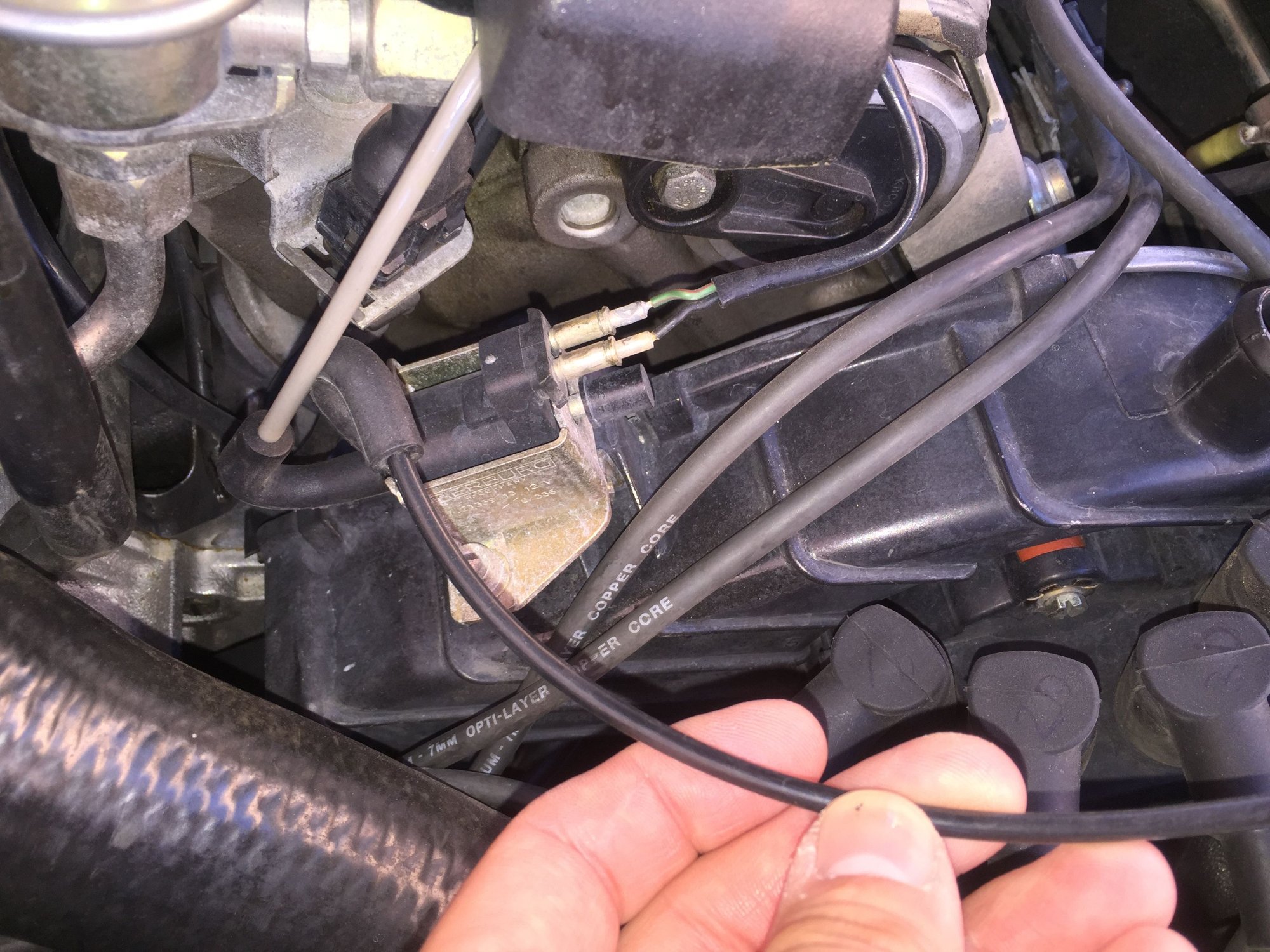
One thing I noticed I had disconnected was a vacuum hose and I'm posting pics of that too. And I was wondering if anyone can fill me in with the function of that item please?
I recorded a video of it this morning when I got to work. Here's the link.
That vacuum hose is supposed to connect to the resonance flap (aka "flappy valve") vacuum actuator on the underside of the intake manifold. Reconnecting it will require removal of the intake. While it does cause an intake vacuum leak (which should drive the idle speed up) it shouldn't have a huge effect on starting. The Temp II could be a contributor but cars with a failed Temp II tend to struggle to run when cold. Pull each of the vacuum connections off of the two fuel pressure dampers and the fuel pressure regulator. Smell each connection for fuel vapors. A leaking or blown diaphragm will let un-metered fuel be drawn into the intake and result in flooding and hard starts.
The vacuum line looks as thou it may still be connected to the flappy assuming it is the grey line that dips back under in what to me seems a strange routing. The vac line disconnected is the inlet to the solenoid valve whose connector has dropped to pieces with only the nipples left [should still work as long as the signal does not ground].
The disconnected line doesn't appear long enough to connect anywhere unless there is a splice in the line to the front damper that is hidden under the fuel rail cover.
The disconnected line doesn't appear long enough to connect anywhere unless there is a splice in the line to the front damper that is hidden under the fuel rail cover.
Mike
The fact that the inlet port on the solenoid is blanked off tell sits own story. The connection on the other side by inference appears to go back under the manifold. Heavens only knows what happened to the line from the 4 way splitter to the solenoid valve but for sure that motor has no working flappy valve.
That black plastic cap is the vent to atmosphere, not the connection for source vacuum. Without a vent there wouldn't be any way for the vacuum to be released when the valve de-energizes. The source and activation connections are both on the same side of the valve beside each other. The gray line appears to be the vacuum source line routed from the 5/7-way splitter at the rear of the intake vee, up along the fuel rail and then under the rail cover forward to the resonance flap solenoid.
That black plastic cap is the vent to atmosphere, not the connection for source vacuum. Without a vent there wouldn't be any way for the vacuum to be released when the valve de-energizes. The source and activation connections are both on the same side of the valve beside each other. The gray line appears to be the vacuum source line routed from the 5/7-way splitter at the rear of the intake vee, up along the fuel rail and then under the rail cover forward to the resonance flap solenoid.
Mike
Mike,
Quite right-must have been half asleep -my apologies.
The line coming off the solenoid seems to be the wrong length. Hopefully the other port is still connected to the flappy but...?
Ok guys, thanks for all your input and this is where I'm at right now. Several months ago I do recall having idling issues and having black smoke coming out from day to next and so I looked that up on the forum and so I came across several posts that mentioned that sometimes that happens when the idle valve is stuck. Read that if I removed the tubing on drivers side that goes under manifold and it ran better than my valve was stuck. To make it come back to "life" that I needed to put WD-40 into tubing and see if it comes undone. Did so several times, stuck tubing back on and nothing and was still stuck and so idle was bad and black smoke came out of pipe. So I left it alone with tubing disconnected.
So last night I thought maybe I should put tubing back on and see. Well guess what? Now car starts and idles perfect after a long drive. And it even has more power when I accelerate!!!! It feels as if I have turbos!!!! Like wow! Amazing. So I do have some homework to do to sort things out perfectly which includes trying to find where that black vacuum tubing goes to. I'm very happy to have you guys put your sense into me. But out of curiosity, have all you guys dealt with this issue in the past? Or where do you get informed on all this wise smartness?
Problems with the flappy not operating are common place as are problems with idling but the two issues should not be connected to each other. The flappy needs to be operating to bring the top end to life.
Knowledge comes with experience and a determination to learn. Thus DIY'ers like myself have invariably learnt from experiencing the common failure modes and of course reading/participating in fine organs like this one. Much as we have good knowledge and like to share it with those less experienced, at the end of the day most of us are amateurs trying to keep these fine machines running at oir close ot where Porsche intended them to be - no small task.
In part this is because knowledge about these machines in workshops is getting rarer all the time and of course having others work on them is generally an expensive proposition. Beyond we have a handful of chaps who know quite a lot about most things to do with these cars and we are also blessed with some top notch professionals who kindly share of their time and experience/knowledge base. So, just as 16 years ago I knew nothing about these cars, quite a number of folks helped me directly with remote instructions, most found through this list, without whom I would not still be driving around in this thing. Some [sadly] are no longer with us but they are not forgotten.
Now it is my turn to help others and when folks at my level are stumped, this leaves less burden for those more knowledgeable to contribute when needed and corrects my occasional goof.
Follow this thread to remove the intake.
Of course while doing this, there is many other things that you can do at the same time but that is another story...
Bertrand, I understood what you said I just meant to say that I need to figure out when I can do it. Thank you.
I'll see how soon I can do that gig on the car.
Appreciate all the comments guy and I'll keep you posted on it.





 Rough Idle Issues