


928 winter drivers?

Thread Starter
Burning Brakes

Joined: Apr 2015
Posts: 881
Likes: 142
From: I move alot.
 928 winter drivers?
Thoughts in my mind this morning; and I know, it sounds blasphemous; but is anyone here driving a "Winter 928" ?
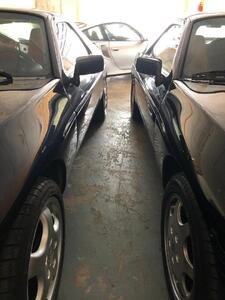
I was looking at my two cars this morning (only one of them is road worthy).... and thought, (looking up at the blue sky) I would really love to be driving right now......... But also know that while it is supposed to be sunny in the 40's today; the roads are really dirty from all of the rain and pre-treating of de-ice/salt...
I almost wish my S4 wasn't so pristine and good miles; then I wouldn't have this "should I/ I shouldn't" feeling.
Flame if you must. I was just thinking it might be fun to have a "beater" 928 that I could run during the winter months. Just a crappy car that I could drive like I stole it in a snowy/slushy mall parking lot. Bad paint, ripped seats, high miles with good bones..... am I crazy?
Is anyone driving their cars through the winter? (a common question here I am sure.)
I was looking at my two cars this morning (only one of them is road worthy).... and thought, (looking up at the blue sky) I would really love to be driving right now......... But also know that while it is supposed to be sunny in the 40's today; the roads are really dirty from all of the rain and pre-treating of de-ice/salt...
I almost wish my S4 wasn't so pristine and good miles; then I wouldn't have this "should I/ I shouldn't" feeling.
Flame if you must. I was just thinking it might be fun to have a "beater" 928 that I could run during the winter months. Just a crappy car that I could drive like I stole it in a snowy/slushy mall parking lot. Bad paint, ripped seats, high miles with good bones..... am I crazy?
Is anyone driving their cars through the winter? (a common question here I am sure.)
Three Wheelin'

Joined: Jan 2003
Posts: 1,385
Likes: 10
From: Saginaw, MI
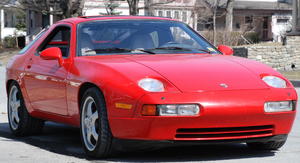
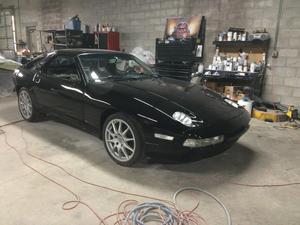
I used to. Spent three Michigan winters in my 928. I put Blizzack winter tires on all four wheels and went just about anywhere. Had to take the front spoiler off though or I was plowing the streets better than the county was. If you have a beater, why not. If you have a nice 928.....don't do it. I ultimately paid the price when it came time remove bolts and parts for my doors, fenders, glass and trim-off respray, it was a PITA!


Race Car

Joined: Jul 2005
Posts: 4,793
Likes: 92
From: Mechanochondriacism
I have in the past. Nothing wrong with driving in cold weather provided that the tires aren't so soft as to make it hazardous. As Maine alludes to- the main culprits in degrading the car are the road treatments- more sand and debris in the air on the highway as trucks and such go by, and the salt/no-salt freeze solutions really do a number on the annodized bits. If you have or get a car that's already been driven in weather, and it can safely do so, there is no sacrilege in my book. Its your decision about the extent to which it will affect resale because of the faster deterioration of finishes.
Nordschleife Master
Joined: Jul 2003
Posts: 7,742
Likes: 78
From: Minneapolis
I'd advise against driving it in real winter conditions with salty spray and slush. Driving in the cold is fine.
Old cars tend to rust much quicker that new cars. Not because of better materials but because the old cars are full of chips and cracks for the water and salt to get into.
Old cars tend to rust much quicker that new cars. Not because of better materials but because the old cars are full of chips and cracks for the water and salt to get into.
Thread Starter
Burning Brakes
Joined: Apr 2015
Posts: 881
Likes: 142
From: I move alot.
It looks like they don't use salt here in Des Moines, they are putting some sort of chemical on the roads. It looks like strips of chemical or something. Not sure exactly what it is. It isn't sprinkled on the road like salt usually is. I wonder what it is? And I wonder if it is bad for our cars. (probably is)
Trending Topics

Administrator
Joined: Aug 2001
Posts: 27,393
Likes: 3,036
From: Up Nort
If salt or something so corrosive wasn't used I would keep my cars out year round. The difficult part of driving year round regardless of the salt is tire choice. "Snow" tires is an incorrect name for what they are, should really be called "winter" tires since they simply perform better when it's really cold.
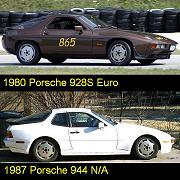
I'm still driving my 80 due to the unseasonably warm El Nino winter we are having up here. Yesterday my stock 220hp 5-speed was a bit of a handful at 3/4 - full throttle in 1st gear. Z-rated Michelin's are not designed to be run when the ambient temp is 20F. It wasn't dangerous (like Pirelli's can be below 40) but I had to drive more cautiously.
If salt wasn't an issue I would probably keep one 928 out all year and have a set of spare wheels with a set of winter tires mounted.
On top of that, working on even modern cars driving year round in the slush is a nightmare. I've seen 4-5 year old cars come into the local shop that needed the tire rod ends forced off with a torch the corrosion as so bad (which usually ruins them).
Every nut / bolt on the chassis and suspension is going to be effected. It's difficult for those outside of the salt belt to appreciate how bad it is and why we park our cars.
I'm still driving my 80 due to the unseasonably warm El Nino winter we are having up here. Yesterday my stock 220hp 5-speed was a bit of a handful at 3/4 - full throttle in 1st gear. Z-rated Michelin's are not designed to be run when the ambient temp is 20F. It wasn't dangerous (like Pirelli's can be below 40) but I had to drive more cautiously.
If salt wasn't an issue I would probably keep one 928 out all year and have a set of spare wheels with a set of winter tires mounted.
Every nut / bolt on the chassis and suspension is going to be effected. It's difficult for those outside of the salt belt to appreciate how bad it is and why we park our cars.
Rennlist Member
Joined: May 2014
Posts: 1,339
Likes: 218
From: Albany "the middle of nowhere" Missouri
Rennlist Member
Joined: Jun 2005
Posts: 10,571
Likes: 1,027
From: Oman
My 928 drives perfectly in winter- summer is more or a challenge though!
Trouble is I have to do my maintenance in winter as I have been doing recently as it is too hot in summer to work on the car - but my next home is going to have a/c in the garage to solve that one!
Regards
Fred
Trouble is I have to do my maintenance in winter as I have been doing recently as it is too hot in summer to work on the car - but my next home is going to have a/c in the garage to solve that one!
Regards
Fred

Three Wheelin'
Joined: Nov 2014
Posts: 1,253
Likes: 133
From: South of The Mason Dixon Line
It looks like they don't use salt here in Des Moines, they are putting some sort of chemical on the roads. It looks like strips of chemical or something. Not sure exactly what it is. It isn't sprinkled on the road like salt usually is. I wonder what it is? And I wonder if it is bad for our cars. (probably is)

Anyways -
That's a pre-treat for the pavement to not freeze. And it's not "safer" for vehicles than "salt". Here's a story which will make you cringe
https://www.washingtonpost.com/local...dd2_story.html
By Ashley Halsey III February 22
Your car — an investment second only to your home (unless you’ve paid college tuition) — is rotting out from under you.
You know why, and if you’re prudent you will line up at the carwash with everyone else after this weekend’s meteorological mayhem. But there’s something more insidious than the white salt caking your car from the window level on down.
Brine wants to eat through your car like a school of hungry piranhas, and more than 2 million gallons of the stuff has been sprayed on roads this winter in Northern Virginia, Maryland and the District.
Are you just too sick of winter to read another story about it? Before you go, there are some things you’ve got to know about brine:
●The reasons you should love brine are the reasons your car hates it.
●You can invest in the carwash this week or a new muffler sometime down the road.
●Until you hit the carwash, don’t use an underground parking garage or the one attached to your house.
●Never drive behind a plow truck spreading salt and brine.
●Avoid dusty dirt roads in the summertime.
●Think about moving to Arizona. (After this winter, you probably already are.)
Stick with the story, and you’ll learn why.
Brine, which is used to pre-treat roads in the hope that snow will melt on contact, gets into cracks and crevices in which a chunk of rock salt can’t lodge. It’s both cheaper and more effective. The Michigan Department of Transportation (Want to see corrosion? Go to Michigan.) determined a while back that 40 percent of rock salt spread on the roads bounced off to the shoulder and did no good.
Brine is sprayed on as a liquid. It doesn’t bounce, lands where it’s directed and is 100 percent effective. Safer for you as a driver, and better for you as a taxpayer.
For your car, however, it’s not better than rock salt. That has to do with something you don’t much think about in the wintertime: humidity.
In most states, brine is a mix of rock salt (sodium chloride) and magnesium chloride, dissolved in water so they can be sprayed on the road. “That’s a very important point, because magnesium chloride is much more corrosive than sodium chloride, the rock salt,” said Bob Baboian, an auto industry consultant and a fellow at the National Association of Corrosion Engineers.
Car rust and corrosion are caused by acid created when a salt is dissolved by the moisture in the air. Rock salt remains a crystal until the humidity reaches 70 percent, which doesn’t happen much during the winter. But magnesium chloride dissolves when there is only about 20 to 30 percent humidity. “Which means that your vehicle, if magnesium chloride is sprayed on it, is wet constantly,” Baboian said. The acid stays on your car and slowly eats away at the paint and metal.
(more at the link...)
Your car — an investment second only to your home (unless you’ve paid college tuition) — is rotting out from under you.
You know why, and if you’re prudent you will line up at the carwash with everyone else after this weekend’s meteorological mayhem. But there’s something more insidious than the white salt caking your car from the window level on down.
Brine wants to eat through your car like a school of hungry piranhas, and more than 2 million gallons of the stuff has been sprayed on roads this winter in Northern Virginia, Maryland and the District.
Are you just too sick of winter to read another story about it? Before you go, there are some things you’ve got to know about brine:
●The reasons you should love brine are the reasons your car hates it.
●You can invest in the carwash this week or a new muffler sometime down the road.
●Until you hit the carwash, don’t use an underground parking garage or the one attached to your house.
●Never drive behind a plow truck spreading salt and brine.
●Avoid dusty dirt roads in the summertime.
●Think about moving to Arizona. (After this winter, you probably already are.)
Stick with the story, and you’ll learn why.
Brine, which is used to pre-treat roads in the hope that snow will melt on contact, gets into cracks and crevices in which a chunk of rock salt can’t lodge. It’s both cheaper and more effective. The Michigan Department of Transportation (Want to see corrosion? Go to Michigan.) determined a while back that 40 percent of rock salt spread on the roads bounced off to the shoulder and did no good.
Brine is sprayed on as a liquid. It doesn’t bounce, lands where it’s directed and is 100 percent effective. Safer for you as a driver, and better for you as a taxpayer.
For your car, however, it’s not better than rock salt. That has to do with something you don’t much think about in the wintertime: humidity.
In most states, brine is a mix of rock salt (sodium chloride) and magnesium chloride, dissolved in water so they can be sprayed on the road. “That’s a very important point, because magnesium chloride is much more corrosive than sodium chloride, the rock salt,” said Bob Baboian, an auto industry consultant and a fellow at the National Association of Corrosion Engineers.
Car rust and corrosion are caused by acid created when a salt is dissolved by the moisture in the air. Rock salt remains a crystal until the humidity reaches 70 percent, which doesn’t happen much during the winter. But magnesium chloride dissolves when there is only about 20 to 30 percent humidity. “Which means that your vehicle, if magnesium chloride is sprayed on it, is wet constantly,” Baboian said. The acid stays on your car and slowly eats away at the paint and metal.
(more at the link...)
Rennlist Member
Joined: Jun 2005
Posts: 10,571
Likes: 1,027
From: Oman
Regards
Fred


Three Wheelin'
Joined: Jan 2005
Posts: 1,903
Likes: 59
From: Shefford,Quebec