When you click on links to various merchants on this site and make a purchase, this can result in this site earning a commission. Affiliate programs and affiliations include, but are not limited to, the eBay Partner Network.
That's typical, i've seen much worse than that. Send the Heads out and have new Valve Seals (rubber) installed, they can check the Valve Guides too, most likely they will still be w/in spec.
Of course the classic cause of oil smoke on track when you lift off the throttle is worn valve guides, but I'm not so sure how one would get worn guides on 2 cylinders and not worn on the other two. Since this was a stock-ish 928 being driven on track, I'd venture that all the oil is just lots of oil ingestion from the long period of WOT on the straights, followed by sucking out the lower plenum and burning it off via high manifold vacuum when the throttle snaps shut.
The flaw in this theory is why 6 and 7 would be worse when they're fed by intake runners that are further from the passenger side plenum inlet, whereas 1 and 4 are right there above the inlet...
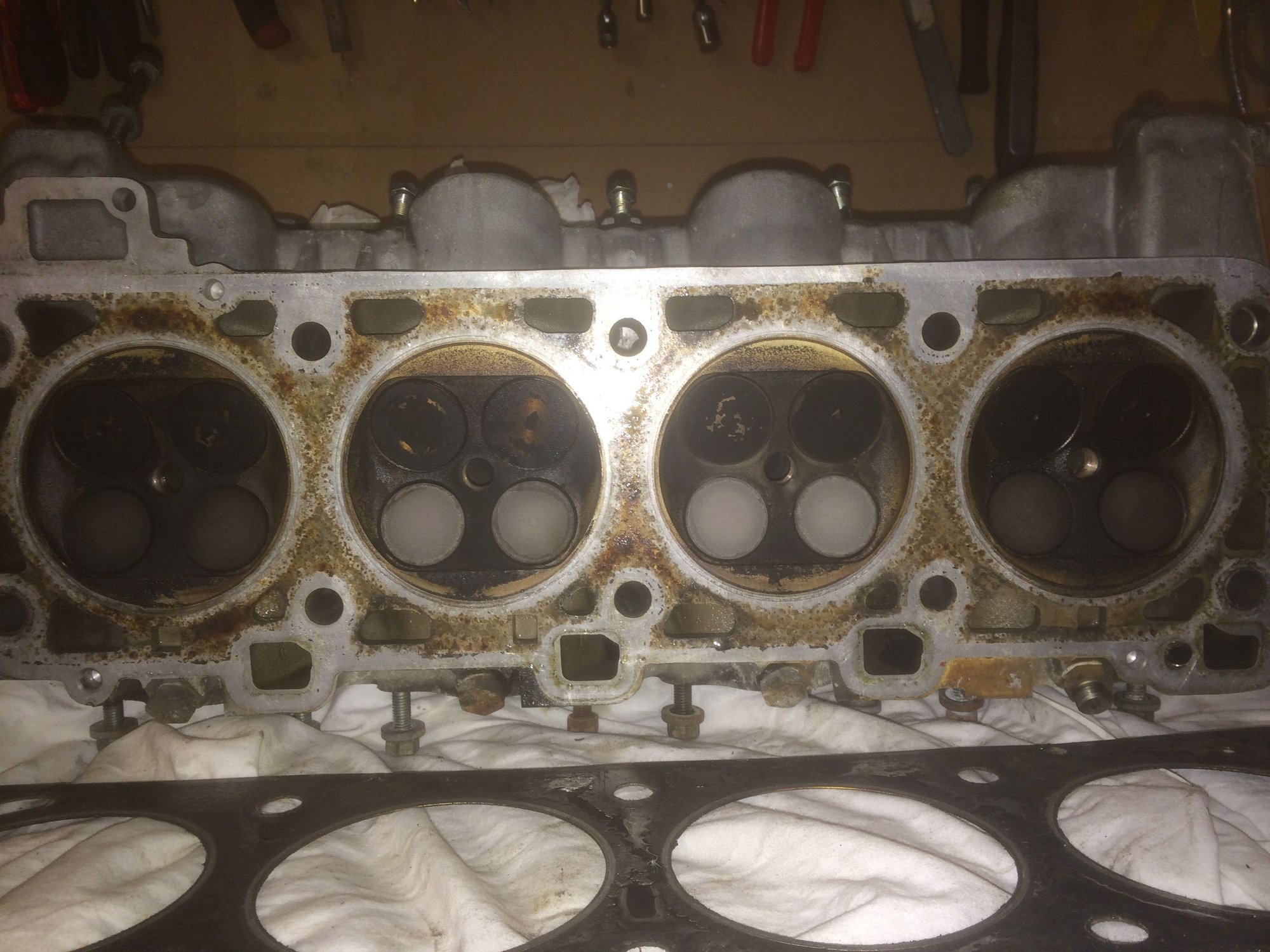
Will be interested to see the oil pooling in cylinders 1-4.
PS- My vote is also that the valve guides will be fine.
With only 100K miles on the engine, everything should be fine. But it isn't.
Thomas, I admire your ambition, and if you are careful then I am sure it will all go back together with no problems.
There are a few things about these engines which are special: The block is a special aluminum/silicon alloy called "Alusil". The pistons are ferrous (iron) coated and run directly in the specially-polished cylinder bores with no liners. They are both very durable but easily damaged, do NOT touch the pistons or cylinder bores with anything before seeking advice here. Also, mark everything with where it came from, so that it can be re-assembled the same way.
The problem is that there is a lot of oil in the "inside" cylinders, 6,7 and I am guessing 2,3 also. This is unusual, and indicates a problem that may not be revealed without digging deeper. My guess would be rings for those cylinders, but that is only a guess.
How was the oil consumption? (Normal highway driving, not track-days).
How do the cylinder bores look? Smooth with only small scratches? Are any of the bores rough to the touch or scored?
Was the engine ever over-heated? The "inside" cylinders run hotter (having "hot" neighbors), and if the pistons overheat then the rings can lose their temper.
Rob, on this head its number 1 & 4 that looks the same as 6 & 7, which makes your picture on the runners interesting.... The most obvious difference is on the intake valves.
Jim, I'll will take it carefull and I am marking everything. Thanks for the encouragement!
The oilconsumption on normal driving was not anything noticable or above specs.
To me the cylinder walls (bore?) is very smooth and with no schratches visable for now. Will take the pistions out as well and take more pictures then.
If I remember I have had a few times where I have been at bit worried over the temp, for example one time when the flaps got stuck in closed position.
They are both very durable but easily damaged, do NOT touch the pistons or cylinder bores with anything before seeking advice here.
How do you advice me to handle the pistons and cylinders correctly? Thankful for all advice!
The stock crank case breather system plugs into the right side of the MAF elbow, so it would be reasonable to assume the ingested oil would stream along the right side of the throttle body toward the intake runners. Just a theory. How do the spark plug look?
So here's my uninformed guess- You're off the throttle at the end of the straight, manifold vacuum increases, hoovering oil out of the lower plenum. Flappy's closed, so the driver's side plenum vacuum is being 'used' by the brake booster since you're hard on the brakes. Passenger side plenum vacuum is sucking oil and pulling it into cylinders 1,6,7, and 4.
If I'm remembering correctly you used this car on track right before you pulled the motor (?)
BTW, the above scenario is likely completely wrong for reasons that I haven't considered. Happy to hear alternative hypotheses.
...There are a few things about these engines which are special: The block is a special aluminum/silicon alloy called "Alusil". The pistons are ferrous (iron) coated and run directly in the specially-polished cylinder bores with no liners. They are both very durable but easily damaged, do NOT touch the pistons or cylinder bores with anything before seeking advice here...
Originally Posted by Thoomas
...To me the cylinder walls (bore?) is very smooth and with no schratches visable for now...
..How do you advise me to handle the pistons and cylinders correctly? Thankful for all advice!
As Jim noted, the block is a special material. It's a combination of aluminum and silicon.
Attempting to hone the cylinder walls (yes, those are the "bores") with the same equipment and techniques used for normal iron blocks (or steel lined cylinders) will destroy the block.
If any engine builder suggests honing the bores, tell them NO!!!!
And then run away from that shop.
If they approach the engine with a standard hone, hit them over the head with the biggest hammer in the shop (I'm only kidding a little bit).
There is a very specific technique for resurfacing the bores. It is not something every shop can do.
So here's my uninformed guess- You're off the throttle at the end of the straight, manifold vacuum increases, hoovering oil out of the lower plenum. Flappy's closed, so the driver's side plenum vacuum is being 'used' by the brake booster since you're hard on the brakes. Passenger side plenum vacuum is sucking oil and pulling it into cylinders 1,6,7, and 4.
If I'm remembering correctly you used this car on track right before you pulled the motor (?)
BTW, the above scenario is likely completely wrong for reasons that I haven't considered. Happy to hear alternative hypotheses.
The scenario in your guess is correct. When the passanger side plenum is suckning oil, pulling it in to the cylinderns, that suggests that the valve seals are bad?
The last time I drove the car was 4 years ago on the track and back home after the track day. Have had it running on the stands two times the check for any external oil leak from the engine without any results.
When the passanger side plenum is suckning oil, pulling it in to the cylinderns, that suggests that the valve seals are bad?
No, bad valve seals would allow oil to be sucked from the cylinder head past the seals through the valve guides. I'm suggesting that on long straightaways you were pushing oil up the filler neck, which travels back to the passenger side of the MAF elbow and gets sucked up the passenger side of the lower plenum and inhaled by cylinders 6 and 7 (worst) and 1 and 4 (to a lesser extent). I don't think your oil ingestion has anything to do with valve seals or guides.
No, bad valve seals would allow oil to be sucked from the cylinder head past the seals through the valve guides. I'm suggesting that on long straightaways you were pushing oil up the filler neck, which travels back to the passenger side of the MAF elbow and gets sucked up the passenger side of the lower plenum and inhaled by cylinders 6 and 7 (worst) and 1 and 4 (to a lesser extent). I don't think your oil ingestion has anything to do with valve seals or guides.
I would not expect that to happen unless you hold the motor above 6K RPM for awhile. I experienced heavy ingestion of oil during open road racing, consuming a quart in 100 miles at sustained between 150 and 165MPH, but during a year of freeway driving over 12K miles, even with short stints of 120MPH or so and some spirited driving otherwise, I would not consume any measurable amount of oil. True, at 100K miles I would expect seals and rings to still be in good shape. I'm finally starting to consume oil over a year now that I'm at 275K+ miles.
I will now go deeper and dismantle the crank/pistons. Is there anything that I should do before I go on with this? Anything that I can measure now rather than after the dismantling?
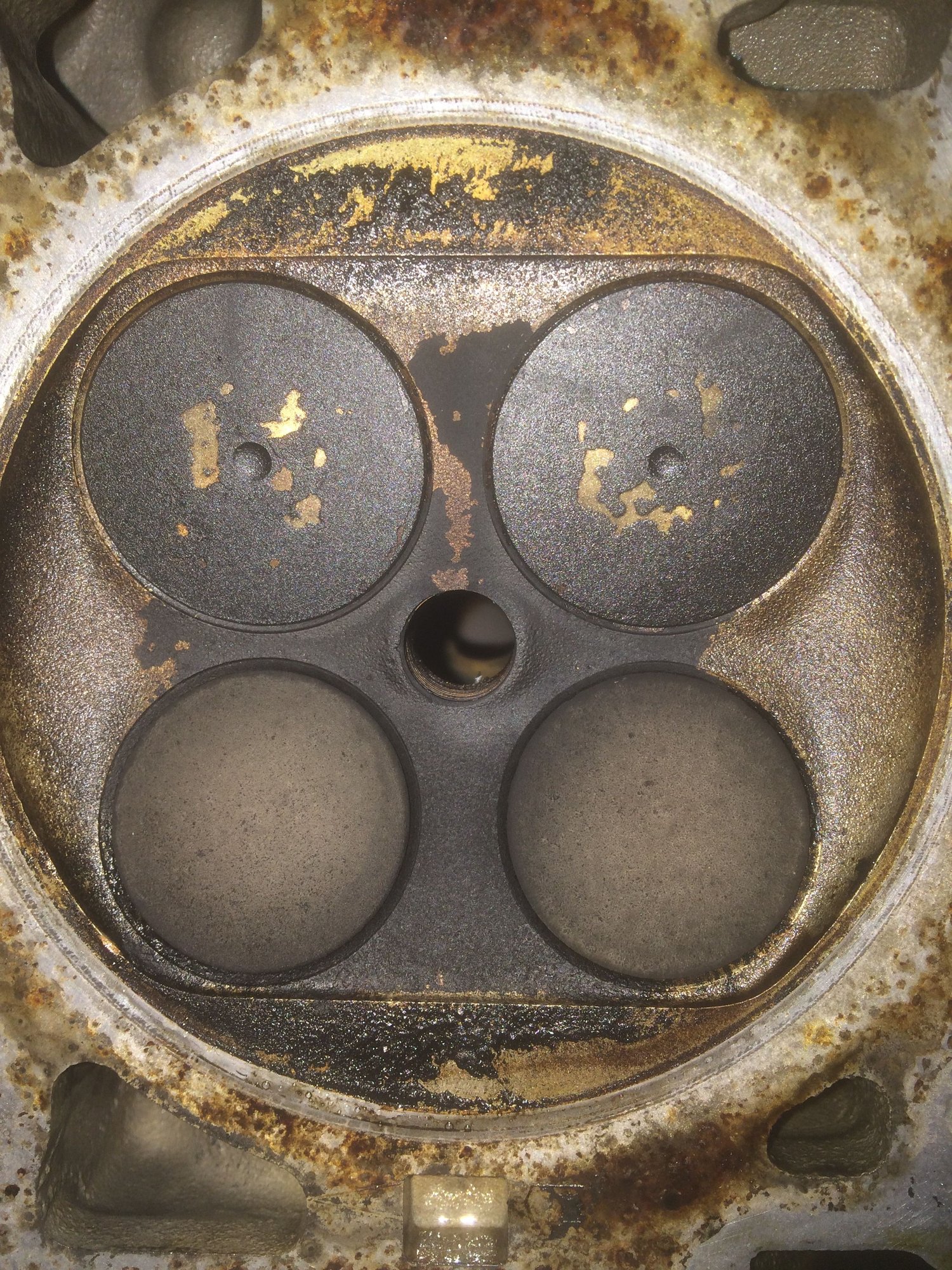
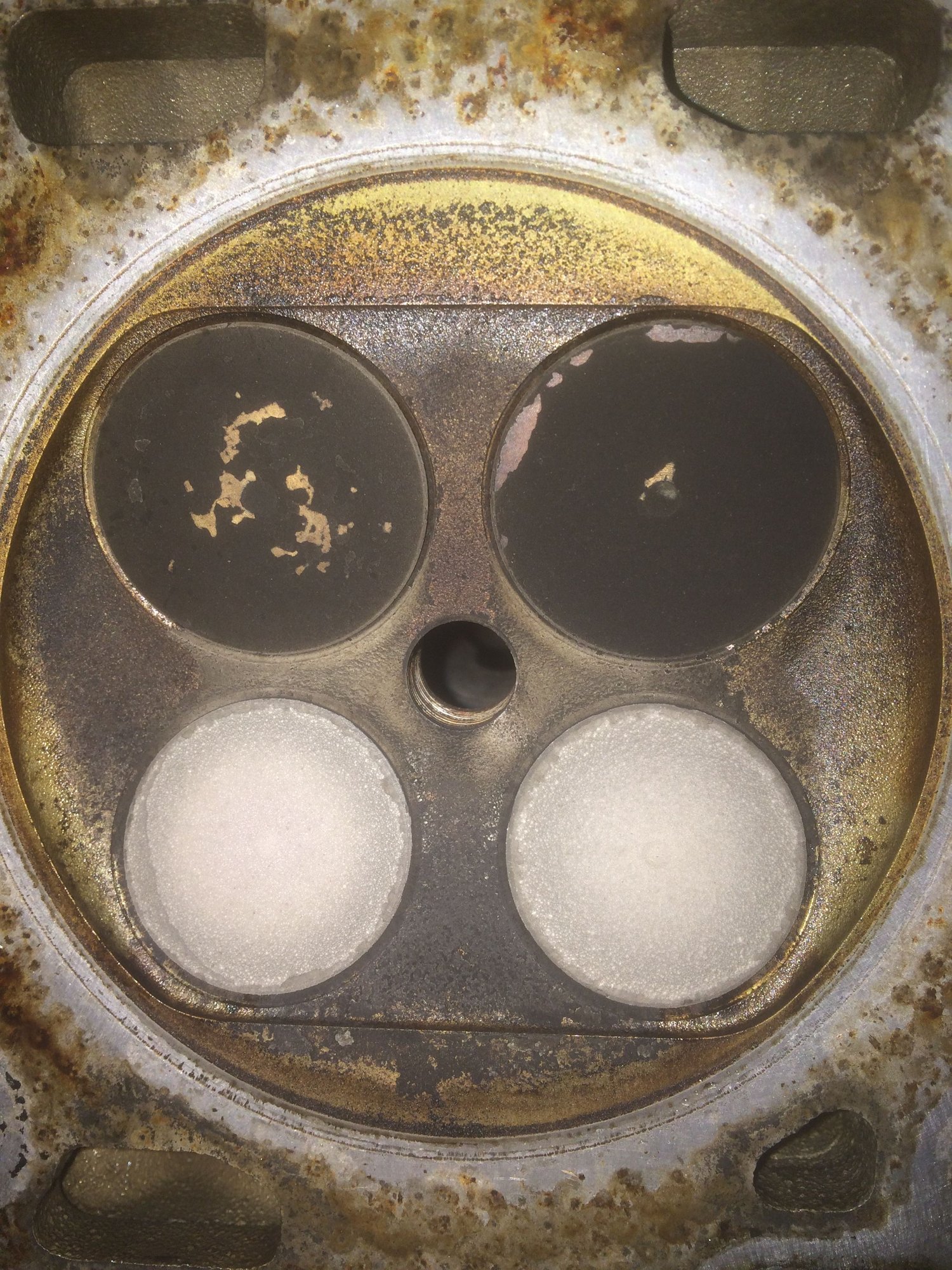
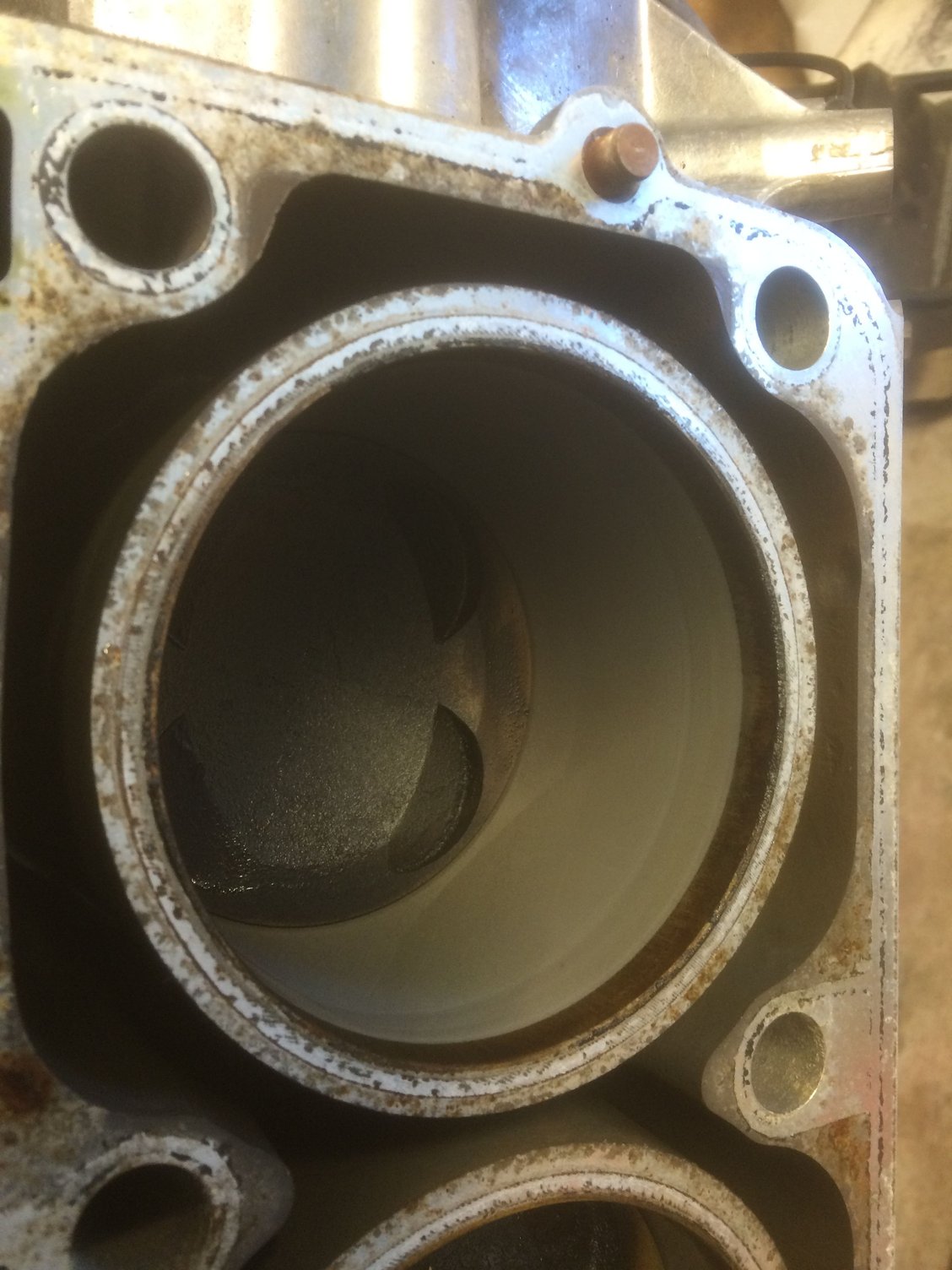
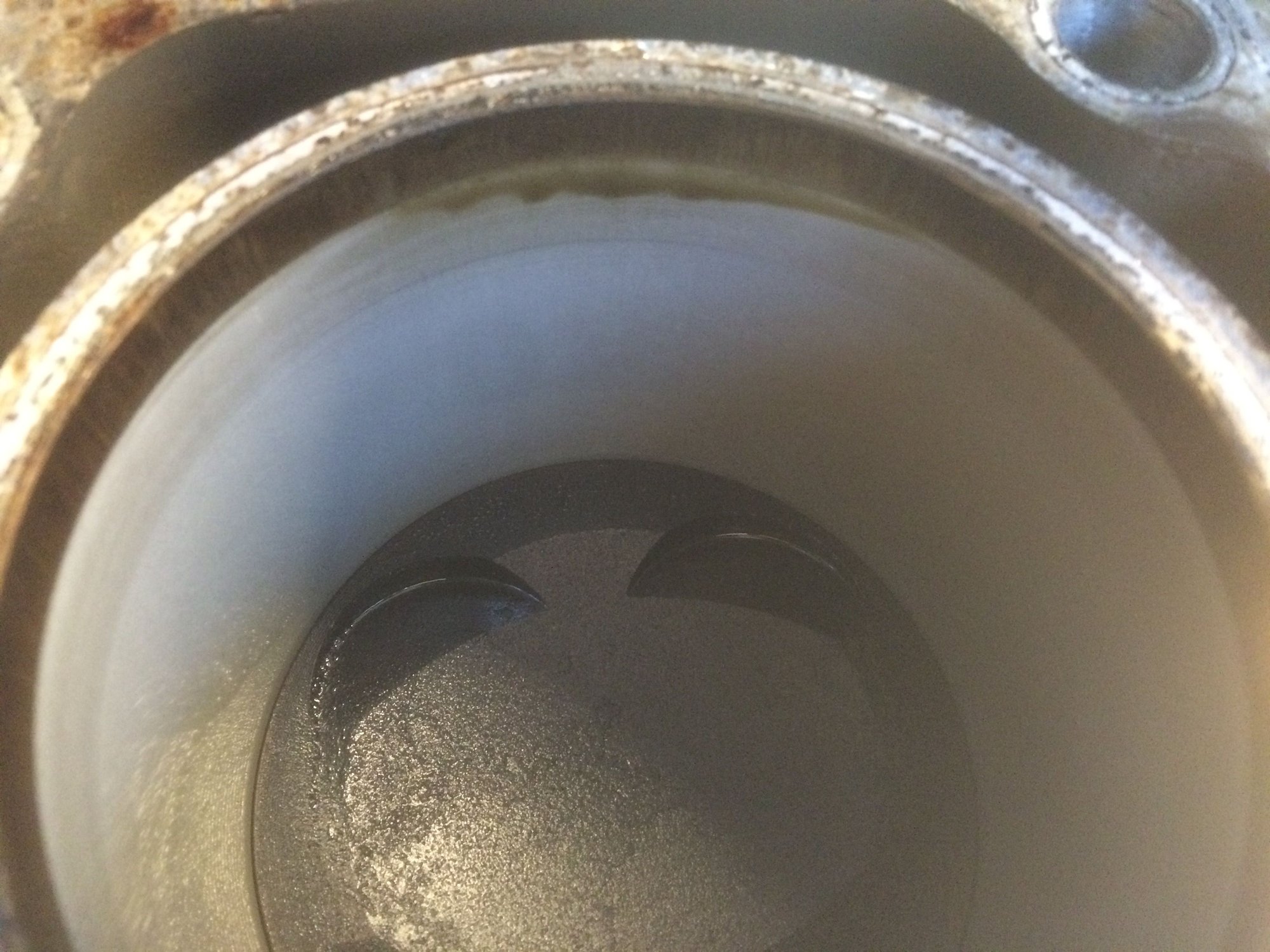
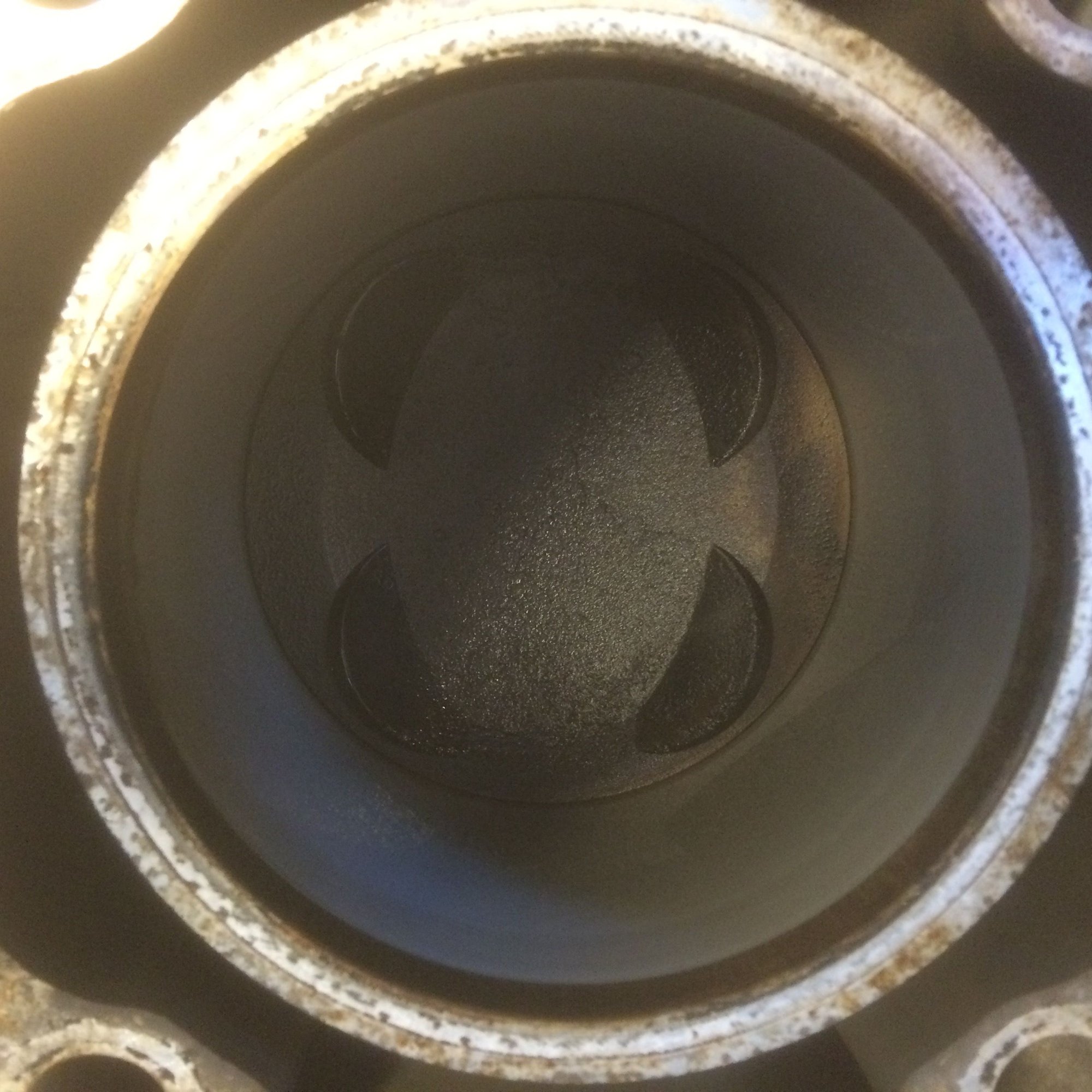
Heres som pics of the bore. They all look the same with that golden circle on top but with a little blur on one side. Whats with the blur?
And the circle a little bit below the golden circle is visable on every cylinder. Guessing its where one of the rings are turning?
The surface feel smooth and I dont feel any disturbance in it.