When you click on links to various merchants on this site and make a purchase, this can result in this site earning a commission. Affiliate programs and affiliations include, but are not limited to, the eBay Partner Network.
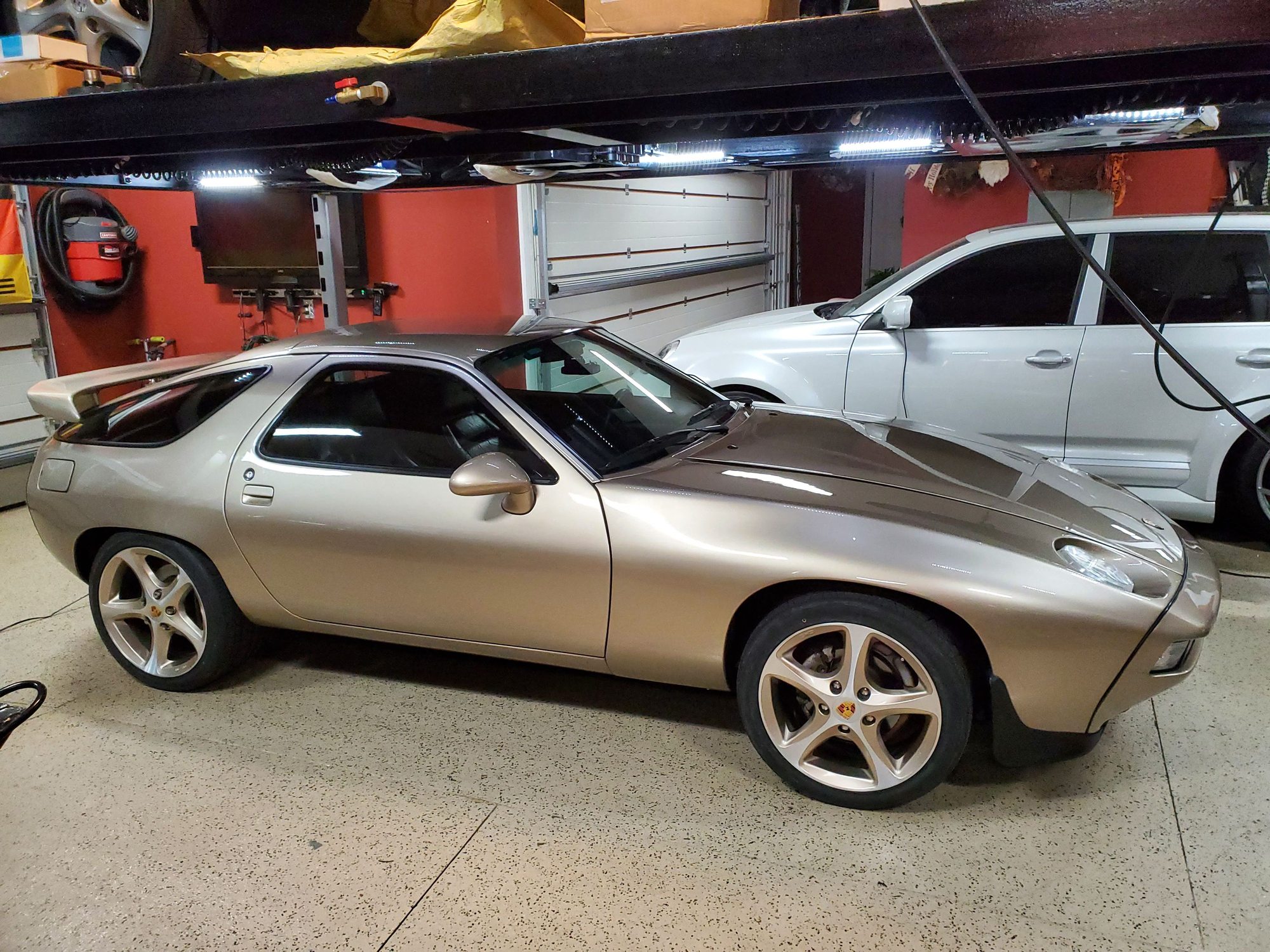
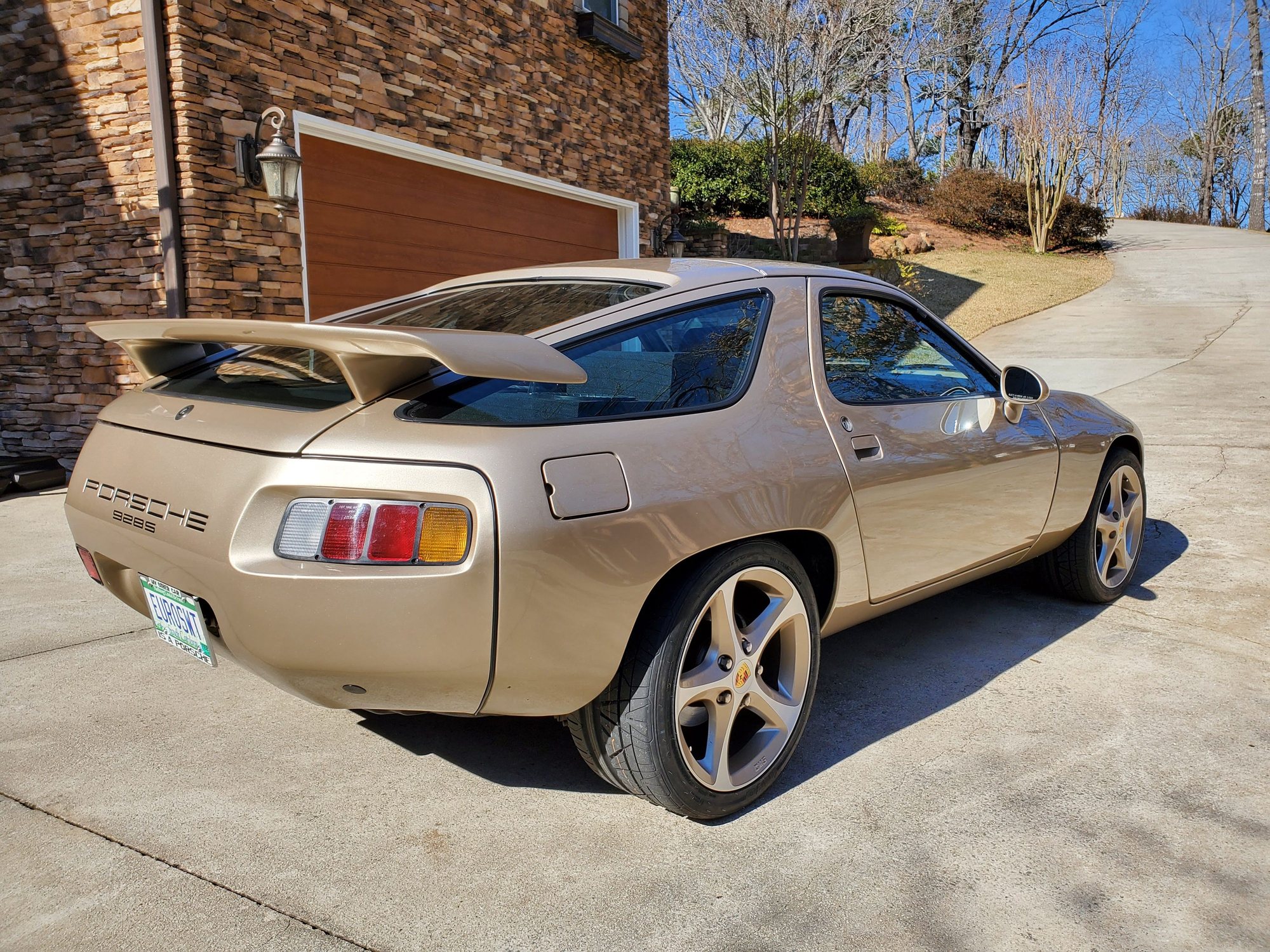
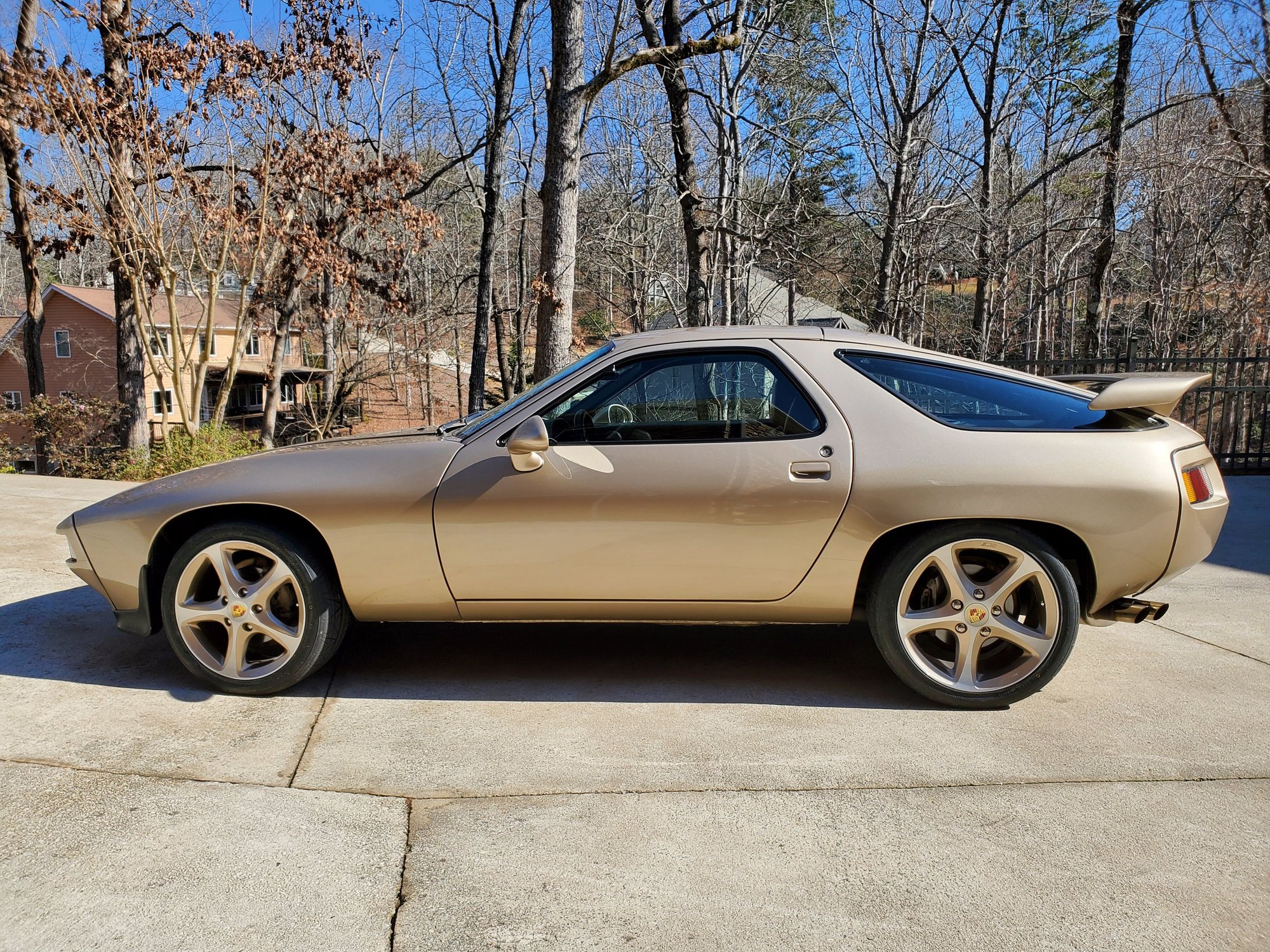
I have a nice set of ATEV 17" wheels on my 83S that I was considering putting on a 90S4 that I may purchase.
However I am reading that there is difference in offset in early vs late models that may be too great to be overcome with spacers.
But I cannot find what year this change in offset took place.
As I am aware all 928 models deploy front wheels with an offset of ET65. The front suspension design changed with the introduction of the S4 but not the front wheel offset. Wheels with the correct offset are "rare" and typically expensive compared to after market rims designed with other Porsche models in mind, the usual question being "will they fit" when the correct question should be "will they work".
I have advised in numerous threads why Porsche deployed ET65 wheels - plenty of owners run without such, most with no clue whatsover why such specification even existed in the first place.
Edit: there are a also a few models [CS, SE & some GT's] that run with ET60 albeit no one to date can explain the Porsche logic.
Edit: there are a also a few models [CS, SE & some GT's] that run with ET60 albeit no one to date can explain the Porsche logic.
I would venture to guess that it was to decrease understeer. A wider front stance will reduce understeer and lean. And it was the years with wider front tires, so maybe they were allowing for the possibility of wider front tires? Maybe a bit of an abandoned "experiment" since they went back to ET65 afterward?
I would venture to guess that it was to decrease understeer. A wider front stance will reduce understeer and lean. And it was the years with wider front tires, so maybe they were allowing for the possibility of wider front tires? Maybe a bit of an abandoned "experiment" since they went back to ET65 afterward?
The front offset is a means to an end in that such is required to get the design NSR [negative scrub radius]. The earlier models had an NSR of 13mm and the S4 later 10mm. My own take is that Porsche viewed NSR as a "necssary evil" as it were. Maybe they were uncertain as to how much NSR they needed to build in to get the degree of self centering steering they felt was needed to achieve the desired effect. From a racer's point of view the NSR is not optimal for cornering and a small positive scrub radius will generate slightly better cornering [as I am aware] consistent with what you infer, but what Porsche wanted was to achieve was [as I understand] when a punter is blasting down the autobahn at warp speed and hits standing water on the near side that he does not even know is present, the car will simply carry on in a straight line without yawing or any reactive steering input. This is precisely what happens if such contingency happens [ask me how I know!]. On a race car it is irrelevant as they do not race in standing water conditions.
If they wanted to improve front end grip all they had to do was plonk a 245 section up front on the 8 inch rims but I reckon they did not do this because they did not want to disturb the "designed in" understeer characteristic for safety reasons.
Maybe the ET60 was nothing more than a modest "compromise" for these sportier models?
I've had no issues running an 8" wide front et 57 with handling, performance, or stability. I did not like wheels with a front offset closer to 50 and how the car drove with them. I run a 235 width tire on those front wheels and 275 rear tire on the rear wheels which are a 10" wide et 65 with a 10mm spacer, so effectively et55.
What size wheels are you looking at and we can let you know if they'll work. These are actually 18s.
The front offset is a means to an end in that such is required to get the design NSR [negative scrub radius]. The earlier models had an NSR of 13mm and the S4 later 10mm. My own take is that Porsche viewed NSR as a "necssary evil" as it were. Maybe they were uncertain as to how much NSR they needed to build in to get the degree of self centering steering they felt was needed to achieve the desired effect. From a racer's point of view the NSR is not optimal for cornering and a small positive scrub radius will generate slightly better cornering [as I am aware] consistent with what you infer, but what Porsche wanted was to achieve was [as I understand] when a punter is blasting down the autobahn at warp speed and hits standing water on the near side that he does not even know is present, the car will simply carry on in a straight line without yawing or any reactive steering input. This is precisely what happens if such contingency happens [ask me how I know!]. On a race car it is irrelevant as they do not race in standing water conditions.
If they wanted to improve front end grip all they had to do was plonk a 245 section up front on the 8 inch rims but I reckon they did not do this because they did not want to disturb the "designed in" understeer characteristic for safety reasons.
Maybe the ET60 was nothing more than a modest "compromise" for these sportier models?
I think that we agree that Porsche was doing a little experimenting. Their motivations are opaque. The more we talk about it, the more outlandish we'll get
Thank all for replies.
This is a bit of a minefield I was not aware of.
Seems not as easy as I had thought to swap out a set of wheels for something nicer.
Changing specifications made by those clever engineers at Porsche is something not to be taken lightly. Changing such without understanding why they were made in the first place is just plain dumb and changing them blindly in complete and utter ignorance is what it is - DF stoopid. One of the beauties of the 928 is its very forgiving handling- I often wonder how many punters might have had a wipe out simply because they did something like this to the car without realising the potential consequences of their actions however unlikely such may seem.
On the other hand folks often tend to think that because they have an offset in the mid to high 50's that somehow approximates to be being "good enough" oblivious to the fact that what matters in this regard is the differential offset over and above 55mm. Thus comparing ET57 to ET65 would be a bit like comparing 6 psig tyre pressure to 30 psig tyre pressure and that would be ludicrous. To be perfectly clear, running with ET57 will make little to no practical difference unless and until one runs into that contingency where such really is needed. My point of view is that I do not want to run into such a contingency doing whatever silly speed I happen to be doing only to find out that Porsche actually knew what they were doing and I no longer have that protection becuase I am sh*t out of luck..
Having pointed such detail out to other fellow owners, what they choose to do and what risks they decide to take is very much their personal business. I have run with stock 16 inch and 17 inch 928 wheels and they work fine. I have run with other model Porsche wheels with ET52 up front and did not like "the feel"- sold them to fund my current ET68x 9.5 and ET60 x 10 inch three piece wheels and they work great.
Bottom line it is not a minefield rather it is a simple decision either to stick with what Porsche specified or throw the dice as it were but do so in an informed manner rather than being oblivious to the fact..
I think that we agree that Porsche was doing a little experimenting. Their motivations are opaque. The more we talk about it, the more outlandish we'll get
Porsche knew exactly what they were doing. They were building a GT car for profit. That was the trend at the time. They are still doing this in many respects. GT cars focus on sweeping curves and straight line stability and depending on the brand, a particular and higher level of comfort and smoothness. This explains the suspension setup, wheel offset and most other facets. The NSR for steering stability, Rubber rack bushings for refinement. Upper control arms allowed for a softer springs and lots of suspension travel while maintaining proper camber. Porsche Already had the best sports car on and off the track and they WERE NOT building it's replacement, I dont care what the internet says.
It was the md 70's and sport car were on wane and GT car were on the ascent across the board, Gone was the E-type, replace with the XJS (a pure GT). At BMW Gone was the 2002 and In with the bloated BMW 635i. Over at Mercedes the 380 SLC. Ferrari blazed the path for Porsche with the correctly named 400 GT that featured an Automatic transmission.
@icsamerica , We're discussing Porsche's reasons for changing the ET for the front wheels for just a short while before going back to the original spec.
Porsche knew exactly what they were doing. They were building a GT car for profit. That was the trend at the time. They are still doing this in many respects. GT cars focus on sweeping curves and straight line stability and depending on the brand, a particular and higher level of comfort and smoothness. This explains the suspension setup, wheel offset and most other facets. The NSR for steering stability, Rubber rack bushings for refinement. Upper control arms allowed for a softer springs and lots of suspension travel while maintaining proper camber. Porsche Already had the best sports car on and off the track and they WERE NOT building it's replacement, I dont care what the internet says.
It was the md 70's and sport car were on wane and GT car were on the ascent across the board, Gone was the E-type, replace with the XJS (a pure GT). At BMW Gone was the 2002 and In with the bloated BMW 635i. Over at Mercedes the 380 SLC. Ferrari blazed the path for Porsche with the correctly named 400 GT that featured an Automatic transmission.
You took my comment VERY VERY out of context. Please don't associate me with opposing your diatribe. Or supporting it. I wasn't discussing or addressing that topic at all. Not even a little.
@icsamerica , We're discussing Porsche's reasons for changing the ET for the front wheels for just a short while before going back to the original spec.
How is this Opaque? ET65 for the road going cars where stability is paramount, ET60 for SE/CS/GT cars when track dynamics were paramount. The answer and reasoning presents itself at face value.
Thank all for replies.
This is a bit of a minefield I was not aware of.
Seems not as easy as I had thought to swap out a set of wheels for something nicer.
From my experience, the minefield is mostly due to opinions of Rennlist members, not practical reality. I went through all this when replacing my 16" manholes so I would urge you not to overthink it.
While 65 is (probably) ideal, as in all designs there is a range that works and some hard parameters. For example: Don't go >65 (or so) or you'll foul the suspension. And: Don't go <50 (or so) or you'll foul the fender. And: Tire/rim sizes matter a lot for clearance. From posts I've read, <55 seems to be the number where performance changes are noticeable. I run 59s and i can assure you the car handles and drives exceptionally well. Many members run 911 wheels at 55. And for those who say "Don't second guess the Porsche engineers," I say: We also have many examples of "What were they thinking?"
9 Vehicles Porsche Helped Engineer that Aren't Porsches
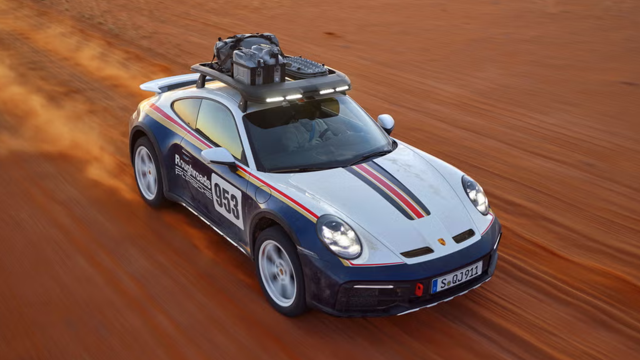
Slideshow: Long before engineering consulting became trendy, Porsche was quietly helping other automakers build everything from supercars to economy hatchbacks.
9 Features and Characteristics That Only Porsche People Understand
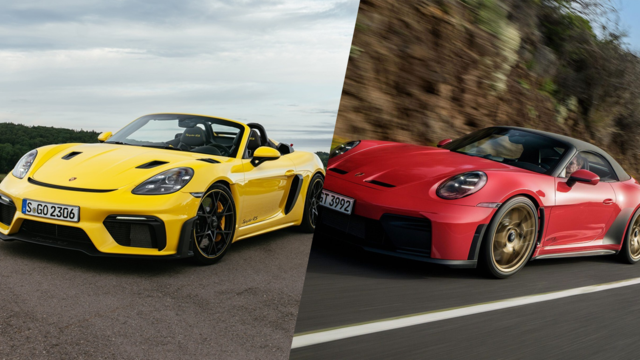
Slideshow: Some brands build cars. Porsche builds traditions, obsessions, and a few habits that stopped making sense decades ago but somehow became part of the charm.
This Builder Is Turning Heads With Its Slantnose 911 Creation
Slideshow: A small Polish tuner has reimagined the Porsche 911 Slantnose for the modern era, blending 1980s nostalgia with widebody tuning culture and serious performance upgrades.
Porsche 911 GT3 Artisan Edition Pays Homage to Japanese Culture
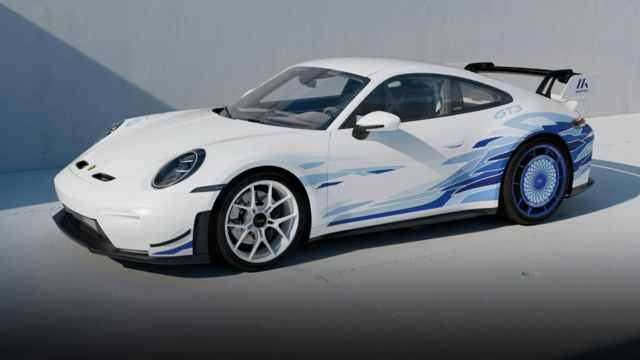
Slideshow: Porsche has created a Japan-only 911 GT3 Artisan Edition that blends track-ready hardware with design cues inspired by traditional Japanese craftsmanship.
Porsche Reveals Coupe Variant of the Electric Cayenne With a Fresh Look
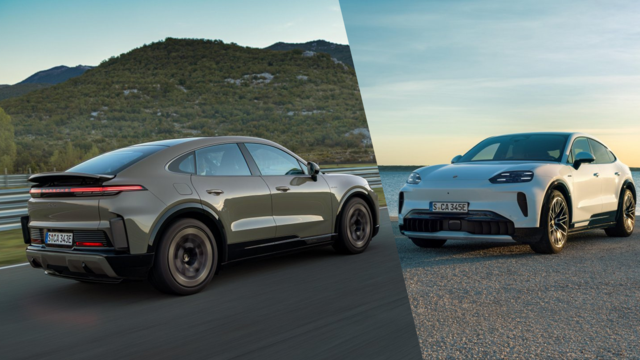
Slideshow: Porsche's latest electric Cayenne Coupe blends dramatic styling with supercar acceleration, turning the brand's midsize SUV into a 1,139-horsepower flagship.




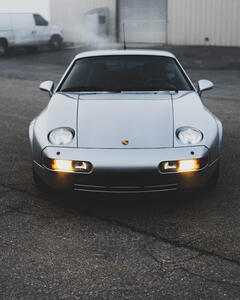


 Wheel offset on S vs S4