When you click on links to various merchants on this site and make a purchase, this can result in this site earning a commission. Affiliate programs and affiliations include, but are not limited to, the eBay Partner Network.
In the process of repairing bent valves I have ended up pulled both heads to replace the head gaskets as well as skim the heads.
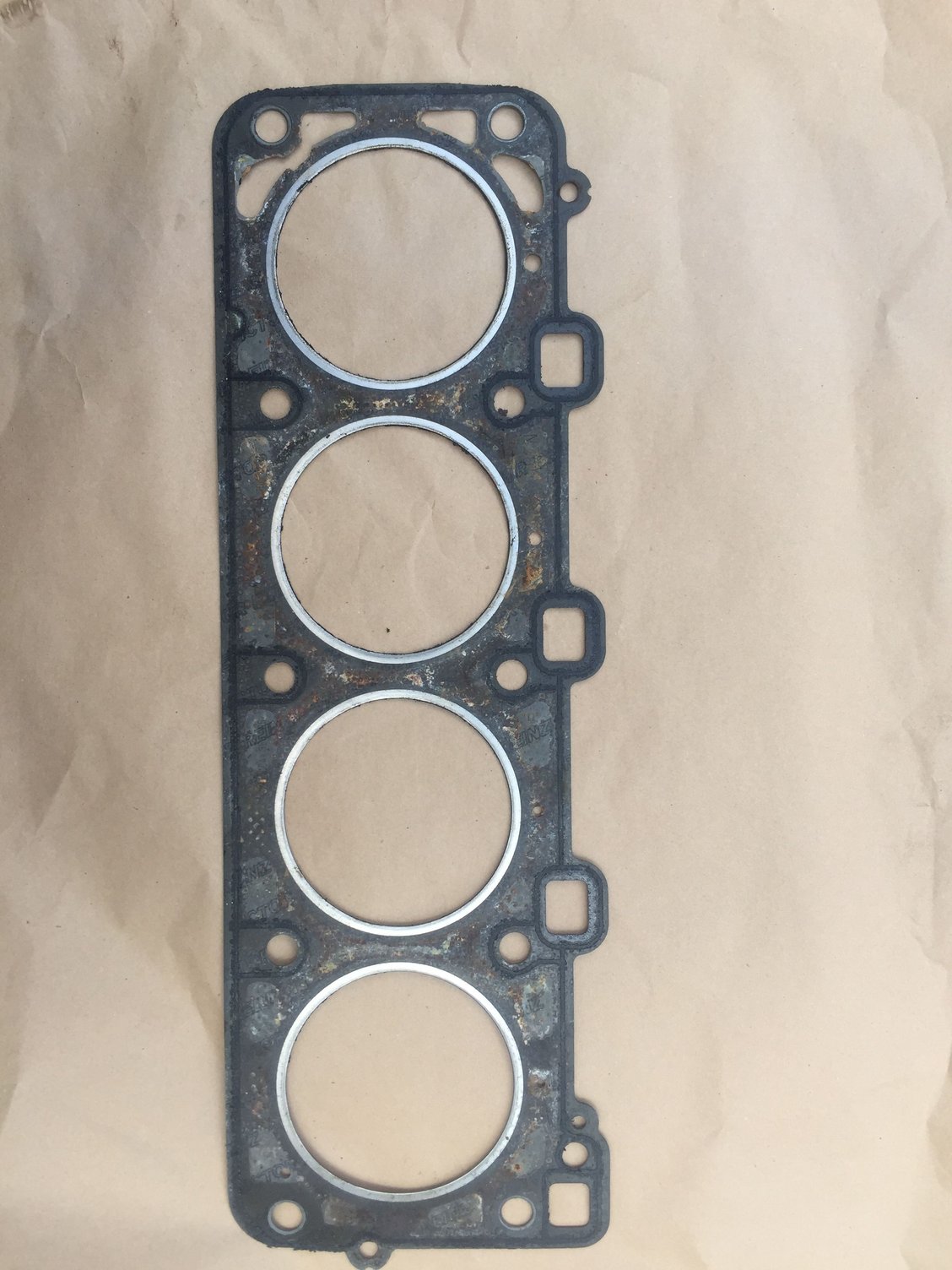
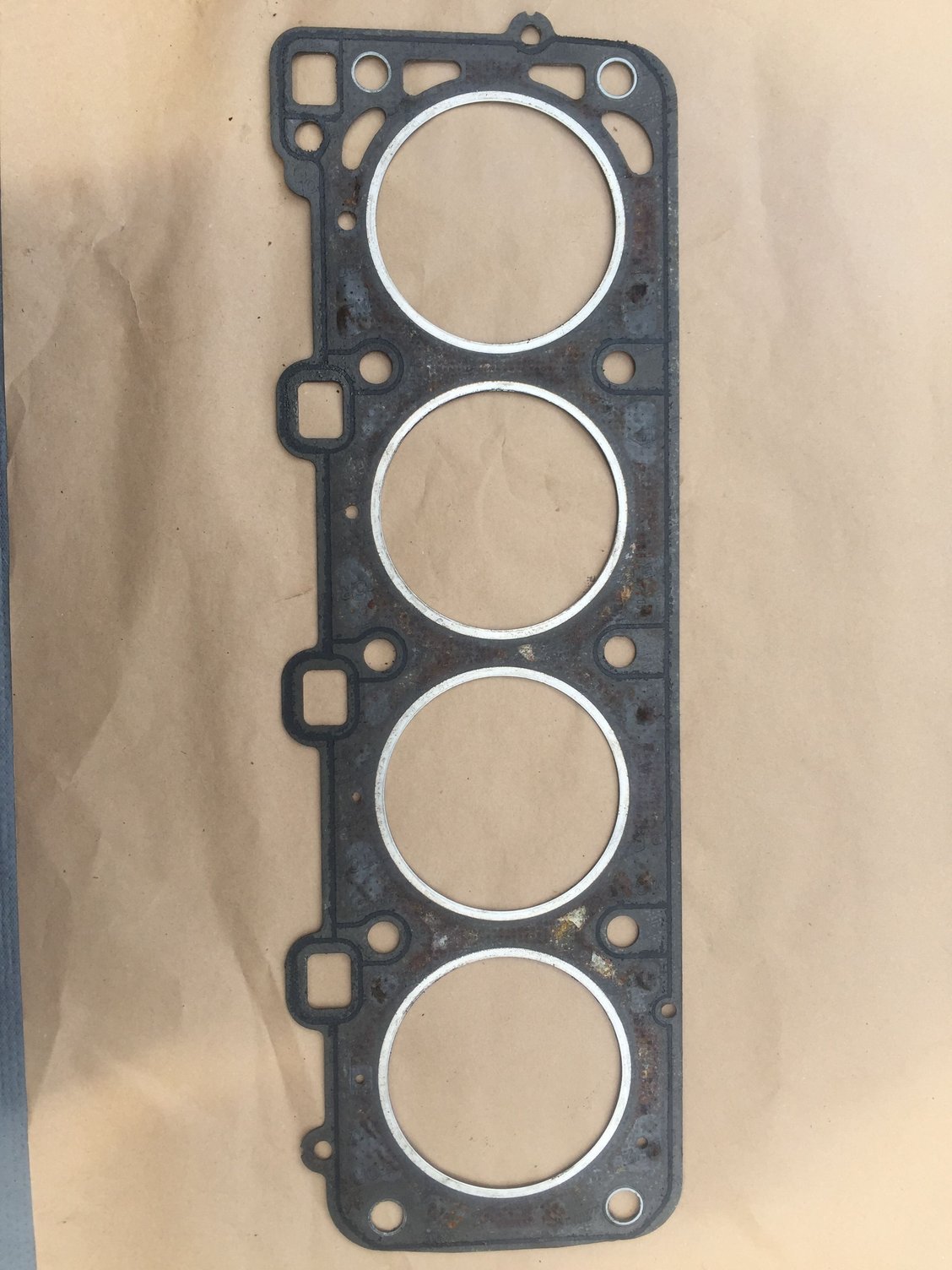
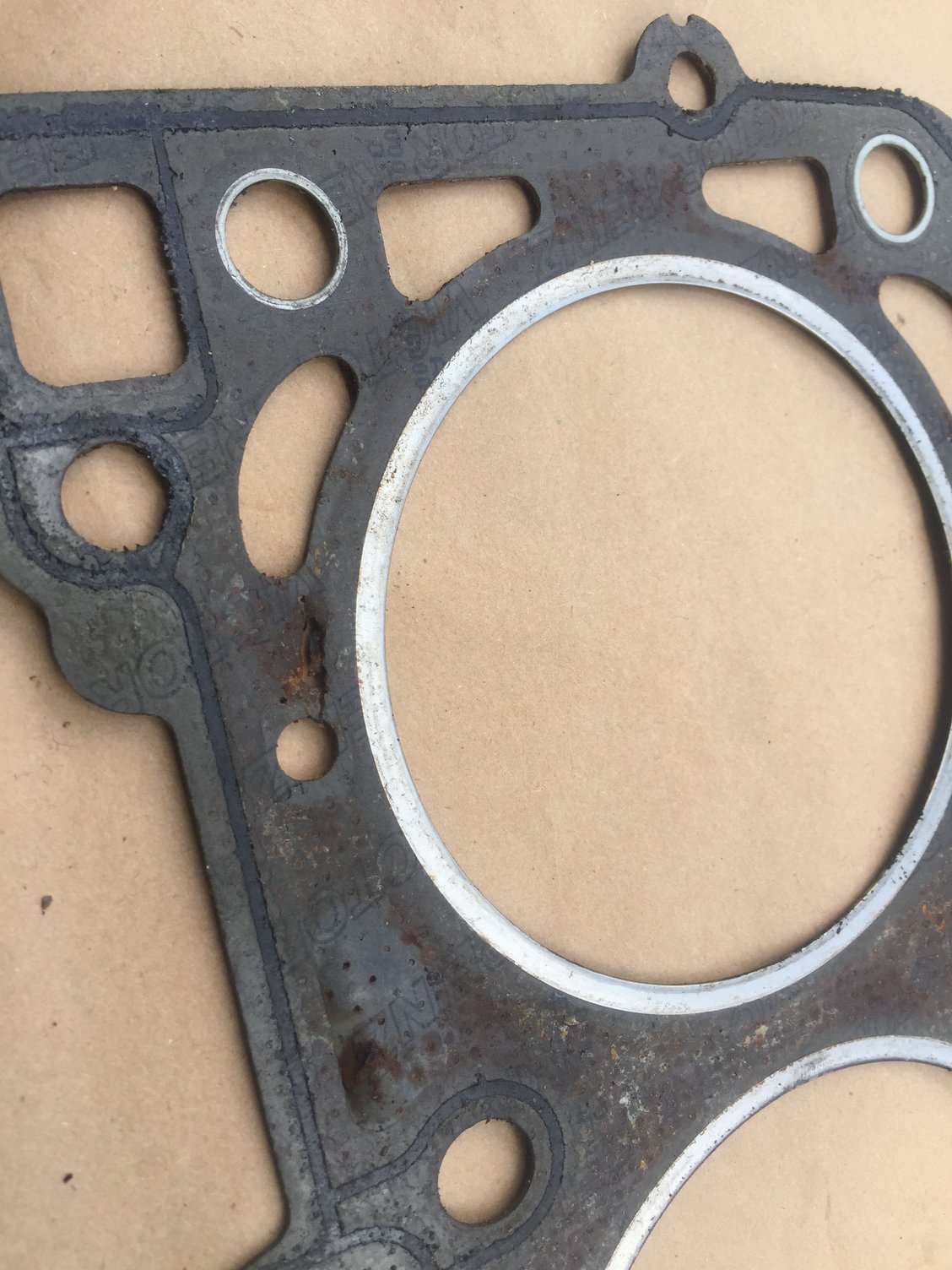
I thought it worthwhile getting some feedback from the experts on the condition of the head gaskets. Please see attached pictures. Engine (MY88) has been rebuilt at some point as valves are TRW valves which I am presuming are not stock.
I don't know if the experts can take a guess at the age or feedback how long replacement gaskets take to get to this level of degradation ?
Marti,
Those gaskets do not look very old to me and suspect they will be in the 5 to 10 years old region. There is a clue to aging in that if you look at the surfaces that are continuously wetted the printed ink bleaches with age so the degree of this degradation gives some clue as to aging. If you look at the part of the gasket that blanks off the coolant transfer passages that are not used the degree of bleaching is minimal. Jim Corenham's damaged gaskets in his G-05 thread showed something similar at 3+ years of age and 30k miles. The gaskets and heads were at a similar level of degradation.
The damage demonstrated on your gaskets can best be described as "typical" based on what I have seen. I have described "what" happens in my gasket thread and have no desire to regurgitate such- it is a fact of corrosion engineering. The trick bit is knowing "why" it happened and it is not because of coolant that passed its sell by date. I have some thoughts in this regard that I will discuss in my own thread shortly.
Without knowing the timeline it is difficult to pass judgement but if those gaskets had been present for 32 years one would feel they owe you nothing. If they had only been present for a few years one would feel short changed. For sure those gaskets were on the slippery slope but it is nigh on impossible to say how much longer they would have lasted before much more serious damage would have been inflicted on the heads.
Regarding the attrition taken, the primary sealing surfaces have all been successful. As appears typical, the coolant has permeated between the gasket and the head on the surfaces that are not counter supported on the block side. If you look at the cylinder head pic you can clearly see the matrix of dots where the galvanised steel in the gasket sandwich has formed ferrous oxide that has leached onto the surface of the cylinder head. The gasket is basically two sheets of an aramid fibre sheet pressed onto a galvanised steel matrix with tangs and these tangs sit very close to the surface and are the first point of contact that is corroded by the evil brew that forms between the head and the gasket thus the dotted stains on the head surface. The nominal thickness of the gasket is 1.3mm- as the corrosion process propagates the formation of ferrous oxide will cause the gasket to swell and if you measure the thickness of the gasket I expect you will find that the thickness exceeds the stock 1.3mm on the surfaces that have no counter support on the block side. The evil brew that is attacking the gasket also attacks the cylinder head. I suspect you will find that where the gasket shows more signs of damage the cylinder head in that location will also show more signs of surface damage- it appears to be quite a localised phenomena in and around the acreage between the cylinders and the outer sealing surfaces- exactly where the attacks take place appears to be a random thing be it close to the transfer ports or as seems to be more common, between the cylinders.
In summary, the damage demonstrated is "typical" of what is commonly seen but any perception that such attrition should be expected is not something I align with. What appears to be a bit inconsistent is the perception as to what percentage of examples demonstrate this type of attrition. Had the original design been able to keep coolant out of this crevice this problem would not happen. Gaskets should not be eaten away like they are on many 928 motors. I have examined 4 motors over here some 15 years ago when they were 10 or so years old, three of them had full Porsche service history and showed attrition of the type yours was heading in but worse. The other motor was that from my late 90 S4 that today powers my current 928. Of the four motors mine was the only one that was not corroded on the cylinder heads and the gaskets from the S4 motor were perfect. The thing I noted was that the other three 928's had useage profiles with low miles and frequently spent time sat in the owners garage weeks on end without being used. My late S4 was always used regularly. Ironically it was the only one of the four that did not use Porsche supplied coolant- for most of its life it has been run using Prestone green IAT coolant- IAT being the coolant type our motors were originally designed to run on until the German manufacturers changed to using a HOAT formulation sometime early 1990's as I can best ascertain.
If you can, please post some pics of the block side of the gaskets and the locations on the heads that have surface damage from corrosion indicating what cylinder the attrition was on as appropriate..
hi Marti
sorry to hear about your bent valves, if you look at post #69 on my thread A POS SE, you will see what original 88 head gaskets can easily look like.
cheers
Phil
hi Marti
sorry to hear about your bent valves, if you look at post #69 on my thread A POS SE, you will see what original 88 head gaskets can easily look like.
cheers
Phil
Thanks Phil, it has at least given me an excuse to change both head gaskets and go through a typical head/water pump/ tensioner overhaul. And the best bit will be when I put it back together it's getting the new induction manifold so lots to look forward to.
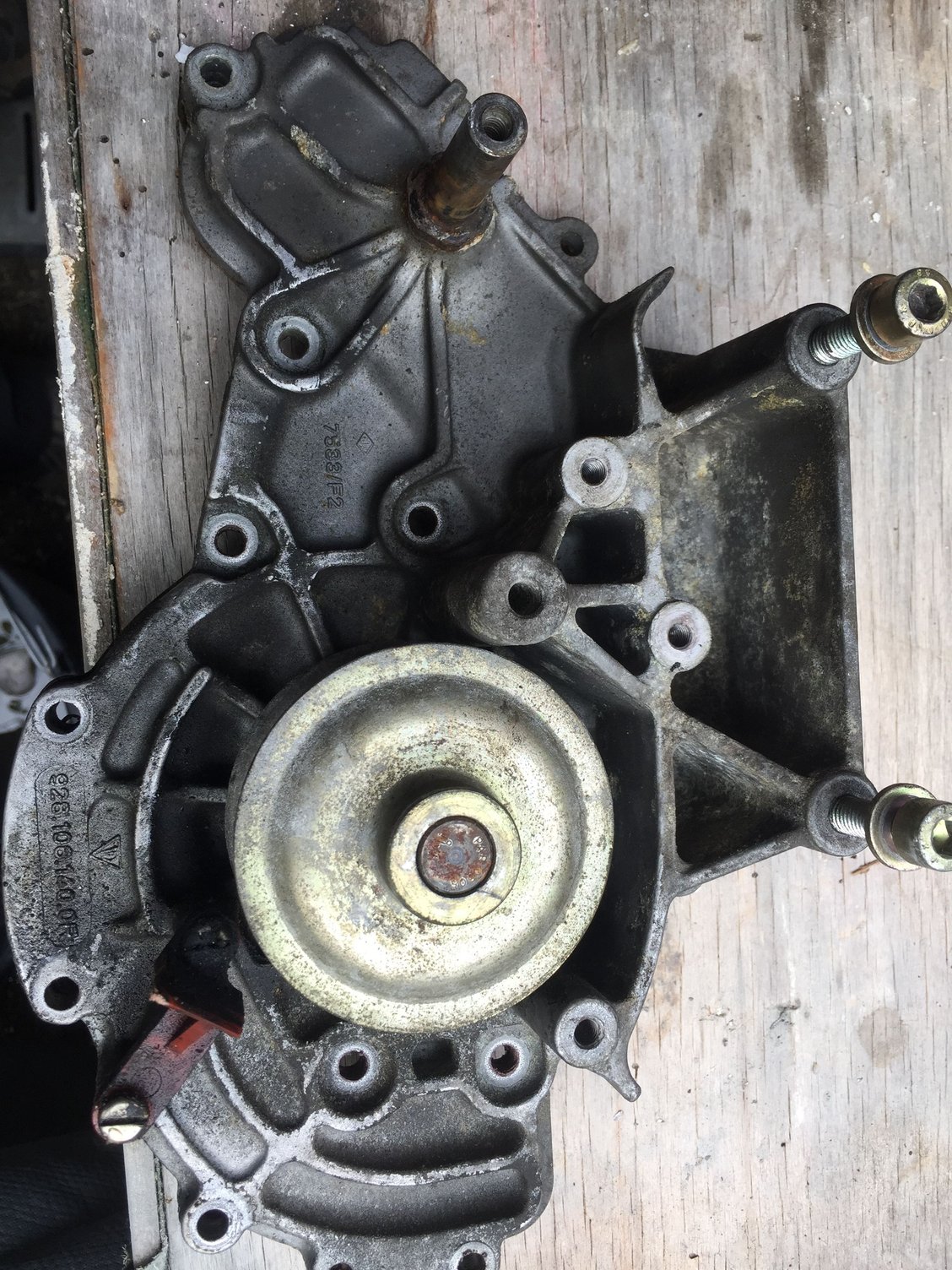
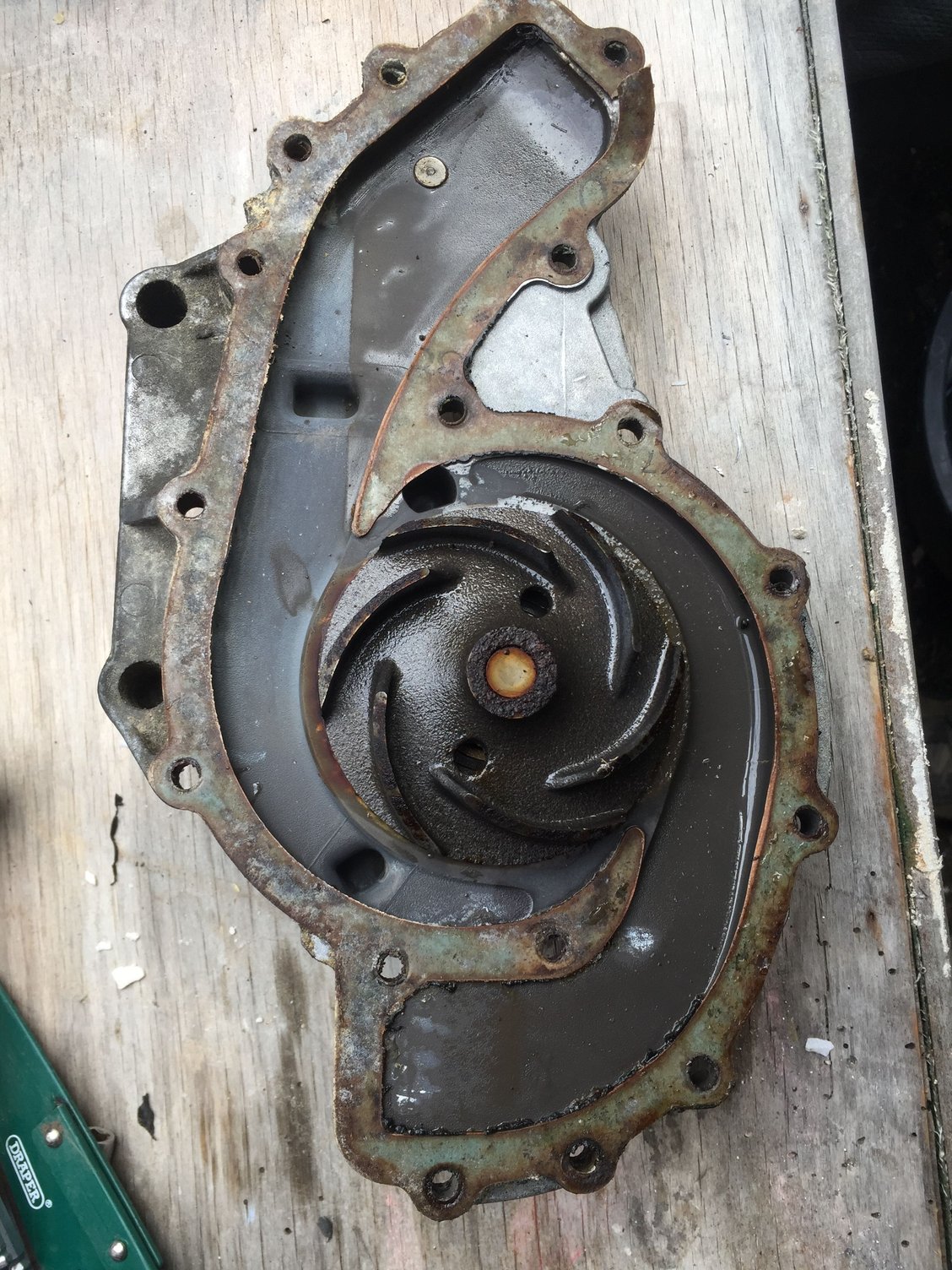
Along with doing the head gaskets I also pulled the water pump to check the condition. I was a bit shocked to find that it appears to be an original 89 Porsche water pump with a metal impeller
I am shocked because I had been told that the water pump had been replaced as part of a belt and pump service.
The impeller turns freely enough but is not exactly what I would call silent.






 Head gasket analysis fun