


Kill Switch / Cuttoff Switch

Thread Starter
Track Day
Joined: Apr 2002
Posts: 23
Likes: 0
From: Boulder CO
 Kill Switch / Cuttoff Switch
I need to install a kill switch on my 67 911 racecar. I am looking for recommendations on what to use, where to find it and considerations when installing it.
Thanks,
Jonathan

Thanks,
Jonathan
Race Car
Joined: Jun 2001
Posts: 3,929
Likes: 70
From: Los Angeles
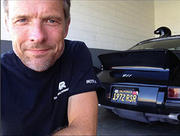
Can't help with the kill switch, but that's a nice photo! I assume the headlight bucket is out for cooling? I've got the same setup for track days on <a href="http://members.rennlist.com/jackolsen/coolingface.jpg" target="_blank">both sides.</a>
Technical Specialist
Rennlist
Lifetime Member
Rennlist
Lifetime Member

Joined: May 2001
Posts: 5,864
Likes: 25
From: TX
Do a search on the Racing forum. Sometime in the past year, I posted a wiring diagram on how to hook one up. If you can't find it, let me know and I can rescan repost it. It can also be found in Up-Fixin', I believe Volume 9 or 10.
Thread Starter
Track Day
Joined: Apr 2002
Posts: 23
Likes: 0
From: Boulder CO
Bill,
I searched the race discussion forum for 'kill switch' before I posted this question. Unfortunately I did not search for 'cutoff switch'. Once I did that I found the thread you referred to. Unfortunately the picture of the wiring diagram you posted is no longer available. If you could get that again for me I would appreciate it.
Do you have any recommendations on what brand of cutoff switch to buy?
Thanks for the help,
Jonathan
I searched the race discussion forum for 'kill switch' before I posted this question. Unfortunately I did not search for 'cutoff switch'. Once I did that I found the thread you referred to. Unfortunately the picture of the wiring diagram you posted is no longer available. If you could get that again for me I would appreciate it.
Do you have any recommendations on what brand of cutoff switch to buy?
Thanks for the help,
Jonathan
Thread Starter
Track Day
Joined: Apr 2002
Posts: 23
Likes: 0
From: Boulder CO
Picture was taken at Second Creek raceway in Denver CO. January 2001 -- note the snow in the background. Second Creek is a 1.6 mile road course. Presently we are running high 1:18s to low 1:19s.
Click the URL to see video from that day. (Watch out as it is a 16MB file)
<a href="http://www.lunatic-phringe.com/vehicles/videos%26pics/Videos/Track/tim%201-%20Low%20Quality.mpg" target="_blank">Second Creek in car footage</a>
Click the URL to see video from that day. (Watch out as it is a 16MB file)
<a href="http://www.lunatic-phringe.com/vehicles/videos%26pics/Videos/Track/tim%201-%20Low%20Quality.mpg" target="_blank">Second Creek in car footage</a>
Trending Topics

Advanced
Joined: Dec 2001
Posts: 62
Likes: 0
From: NYC
Jonathan,
I'd get the kill switch kit from DAS-sport systems- it comes with an aluminum plate that mounts in the trunk on the port side, to two of the bolts that hold the fender on. Then a SIX-pole Sparco switch mounts in the hole, and you run a cable up to the corner of the trunk lid near the windshield. Some guys run a loop under the edge of the trunk lid, I chose to mount the t-handle for the cable in the hole where the port windshield washer squirter is located (seen a few other cars like that, and I think a few 911 rally cars). Also, I ran another cable to the dash for in-car shutoff. The kit comes with a sticker to identify the shutoff, required by most sanctioning bodies.
Why a SIX pole switch? VERY important if you want to save your alternator. A regular old four pole switch will disconnect the battery and kill the ignition (two big poles, two little poles) and is a normally-closed type. But if you disconnect the battery while the motor is running, all that juice being put out by your alternator that WAS running into the battery will now create a HUGE voltage spike which will likely burn out the alternator. So the SIX pole switch includes a set of normally OPEN contacts that close to the BATTERY termanals. You then connect a 31 ohm, 10 Watt wire-wound resistor to the normally open contacts- so when you throw the switch, the current from the alternator goes into the resistor which takes up the load until the engine stops. Not as elegant as disconnecting the alternator field, but if you have an internally regulated alternator, that's pretty tough to do (easier if you have the old-style external regulator- just interrupt the DF lead) but a hell of a lot easier.
Good luck, nice looking SWB.
John
'71 911E H-Stock (about to do rookie club race)
I'd get the kill switch kit from DAS-sport systems- it comes with an aluminum plate that mounts in the trunk on the port side, to two of the bolts that hold the fender on. Then a SIX-pole Sparco switch mounts in the hole, and you run a cable up to the corner of the trunk lid near the windshield. Some guys run a loop under the edge of the trunk lid, I chose to mount the t-handle for the cable in the hole where the port windshield washer squirter is located (seen a few other cars like that, and I think a few 911 rally cars). Also, I ran another cable to the dash for in-car shutoff. The kit comes with a sticker to identify the shutoff, required by most sanctioning bodies.
Why a SIX pole switch? VERY important if you want to save your alternator. A regular old four pole switch will disconnect the battery and kill the ignition (two big poles, two little poles) and is a normally-closed type. But if you disconnect the battery while the motor is running, all that juice being put out by your alternator that WAS running into the battery will now create a HUGE voltage spike which will likely burn out the alternator. So the SIX pole switch includes a set of normally OPEN contacts that close to the BATTERY termanals. You then connect a 31 ohm, 10 Watt wire-wound resistor to the normally open contacts- so when you throw the switch, the current from the alternator goes into the resistor which takes up the load until the engine stops. Not as elegant as disconnecting the alternator field, but if you have an internally regulated alternator, that's pretty tough to do (easier if you have the old-style external regulator- just interrupt the DF lead) but a hell of a lot easier.
Good luck, nice looking SWB.
John
'71 911E H-Stock (about to do rookie club race)
Rennlist Stories
The Best Porsche Posts for Porsche Enthusiasts
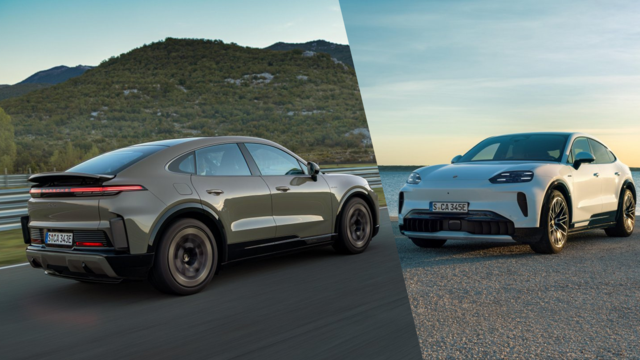
Porsche Reveals Coupe Variant of the Electric Cayenne With a Fresh Look
Verdad Gallardo
10 Porsche Colors That Have More Personality Than Most People
Verdad Gallardo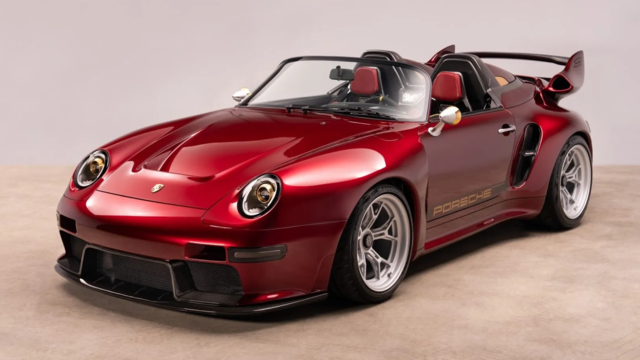
Guntherwerks' Final Speedster Creation Is the Ultimate Porsche Restomod
Verdad Gallardo
10 Reasons I Hate Going to the Porsche Dealership (& the 1 Reason I Stay)
Joe Kucinski
Porsche Shakes Up The Nürburgring Lap Record Table Once Again
Verdad Gallardo
6 Ways the Porsche 911 GT3 S/C Redefines Performance
Joe Kucinski
10 Wildest Homologation Specials Porsche Ever Sold
Verdad Gallardo
Super Rare RUF BTR III Comes Out of Hibernation, Looking For a New Home
Verdad Gallardo
