




Tesla existential threat?

Burning Brakes

Joined: Oct 2002
Posts: 1,056
Likes: 448
From: Northern California

If every gas station had a 100kw fast charger though.....
The problem is range anxiety. I just drove Houston to Dallas in the Model 3. Many people were wondering how I'd do with charging. There are two Superchargers on the route, plus another near my destination in Dallas...which wasn't needed since I charged at the Tesla Destination charger at the Hotel (they also had a J1772 charger not sure how many kW it was running).
There is a hotel I've often stayed at in Los Angeles. However as of the last time I stayed there, they hadn't installed any destination charging. Since my Model 3 order was imminent, I spent some time talking with the manager about it. Pointed out that a number of his competitors already offer destination charging. Eventually they'll get it - if they haven't already.

Nordschleife Master

Joined: Jun 2011
Posts: 6,514
Likes: 4,928
From: Santa Cruz, CA
Hydrogen at commercial scale is made from fossil fuels - and are grossly inefficient from a well to wheel analysis - fuel-cell vehicles are a thinly veiled Fossil Fuel plays…it's been proven to be 3x more efficient to simply use the electricity in a BEV than use the same amount of electricity used to make the H2 - it's just not a good idea, except as maybe a replacement for ICE based vehicles where you need the advantages of ICE fuel density without the emissions (jet aeroplanes for example)...but as personal transportation H2 is actually almost worse than efficient gasoline cars.

Instructor
Joined: Oct 2016
Posts: 243
Likes: 9
Tesla will always have better software (OTA update) and autonomy.
Porsche is a niche elitist brand that charges you on a million options. Some ppl are just not into this brand.
I personally just want 992 GTS to pick up girls. Daily i'll probably buy a Tesla.
Porsche is a niche elitist brand that charges you on a million options. Some ppl are just not into this brand.
I personally just want 992 GTS to pick up girls. Daily i'll probably buy a Tesla.

Burning Brakes
Joined: Oct 2018
Posts: 813
Likes: 137
From: California

HPFP failures on the N54, the N63 and others.
Turbo Failures on the N63 and the N55
Injector failures on the N63 and N54
Coil pack failures on the N55 and N54
Rod Bearing Failures on the S63
Crank Pin failures on the S55
Valvetronic actuator failures on the older cars.
AGM Batteries needing replacement after 12-18 months due to wonky charging from the "on-demand" alternator.
Not to mention the crappy "dies at 100k on the dot" plastic coolant impeller and radiator end tanks.
These are COMMON issues, not one-offs. Ask anyone with an N54 or an N63 out of warranty how their cars are doing. And I haven't even frequented the BMW forums for a few years. Lord knows what's blowing up now.
BMW engines have spectacularly bad reliability.
One thing that is consistent is the oil leaks over 100k miles.
And let me know how you feel when you need to replace the central display in the Tesla for $3k-$5k. How is that different from a turbo replacement?
Reliability survey of owners with cars less than 4 years old. 2018 https://www.whatcar.com/news/2018-wh...-survey/n17798
This survey isn't perfect, but gives some impressions.
Toyota Yaris, not one reported any issues
Least reliable car in the Tesla Model 3 category (which includes BMW 3 series; Model 3 is not on the list since this is in UK) was Mercedes C class, 30% of owners reported issues.
Most were back on the road within a week, though, and only a few owners had to pay for repairs.
Reliability score (factored in how much cars cost to repair and how long they were off the road for):
BMW 3 Series (2012-present) 96.6%
Mercedes-Benz C-Class (2014-present) 83.1%
Mercedes E class: most reliable in its class. Reliability score: 92.4%
BMW 5 series, 31% of owners reported faults. Two-thirds remained on the road and most were fixed for free. Reliability score: 91.6%
BMW X1 (2015-present) Reliability score 92.3%
BMW X5 (2013-present) Reliability score 98.3%
only 10% of diesel examples developed a problem, with these split evenly between the engine, fuel system and wheels/tyres (all 3%). All cars remained driveable and were fixed for free in less than a week.
Range Rover (2013-present) Reliability score 67.3%
Half of the Range Rover owners who completed the survey told us their car had a fault. Non-engine electrics were the most common issue, while a worrying 17% of cars had suspension problems. Nearly a third of cars were undriveable and two-thirds were off the road for more than a week.
The Ford Edge is on a similar level, with 54% presenting a problem.
BMW 2 Series Active Tourer (2014-present) Reliability score 94.5%
Nissan Leaf (2011-2017) Reliability score 99.7%
No mechanical issues were reported by owners – only minor bodywork issues that were resolved the same day and fixed for free under warranty.
The Toyota Yaris Hybrid couldn’t quite replicate the clean slate of its petrol counterpart when it comes to reliability. However, only 14% had a fault and the problem areas were all minor; 7% concerned non-engine electrics, 4% bodywork and another 4% the fuel system. All cars were back on the road the same day and were fixed for free.
A mere 12% of Mitsubishi Outlander PHEVs experienced a fault, and the majority of those (8%) were with the non-engine electrics. More than two-thirds of problems were sorted out the same day and almost all remedial work was covered by the warranty.
BMW i3 (2013-present) 91.0%
Almost a third of BMW i3s were faulty. Bodywork caused the most trouble (12%), ahead of suspension, air-con and sat-nav (all 6%). Most cars were fixed within a week, and all of them for free.
Least reliable: Tesla Model S - 50.9%
41% of the Tesla Model S cars owned by those who responded to the survey had faults. Issues reported by owners included bent seat frames, broken door handles and parking sensor failures. Just over half of the cars were out of action for at least a week and some fixes cost more than £1500.
I have the impression that these Model S cars haven't reach 60k miles yet which is the life span of the drive train. Some cars in other countries are on their 3rd motor at 200k miles. Also no half shaft issues reported here which is quite common in other countries.
I also suggest watching Tesla Bjorn's "Model X P90DL issues after 15 months and 120k km/75k mi"
Soon after he made that video the car needed a new HV battery and continued on with showing new problems. Charge port for example. Not only did it deplete the battery overnight but made annoying beeping until it was fixed, months later.
He has a newer video showing the car around recently: "Tesla Model X issues"
paranoidroid's friend have had 4+ repairs already in his 6 months of Model 3 ownership.
Burning Brakes
Joined: Oct 2018
Posts: 813
Likes: 137
From: California
Fools gold.
Right now the cost of H2 is being hidden by making the cars only available by lease. They then throw in "free" hydrogen, with a maximum number of miles/year, as part of the lease. The reality is that if the cost of the H2 was unbundled, it would be several times what an ICE car cost/mile - and an ICE car can cost 2-4x more than a BEV per mile. You'd be better off burning the natgas in a traditional ICE, like the old Honda Civic CNG car and others.
Charging at home is so convenient that I don't know why anyone would want to return to the 'go to the gas station' model. I mean - what if your cell phone could not be charged at home, and you had to go visit a Verizon/T-Mobile/ATT store once a week? How many $500 installs of 240v receptacles can be done in peoples homes vs >$2m for a single H2 station?
And who really wants a tank of 10,000 psi anything in their home?
I have a friend that is leasing a Mirai, and have ridden in it. Makes some weird rumbling noises when he gets on it. Performance seems ok for a commuter car, but nothing great. I'll take a Model 3 any day of the week.
Right now the cost of H2 is being hidden by making the cars only available by lease. They then throw in "free" hydrogen, with a maximum number of miles/year, as part of the lease. The reality is that if the cost of the H2 was unbundled, it would be several times what an ICE car cost/mile - and an ICE car can cost 2-4x more than a BEV per mile. You'd be better off burning the natgas in a traditional ICE, like the old Honda Civic CNG car and others.
Charging at home is so convenient that I don't know why anyone would want to return to the 'go to the gas station' model. I mean - what if your cell phone could not be charged at home, and you had to go visit a Verizon/T-Mobile/ATT store once a week? How many $500 installs of 240v receptacles can be done in peoples homes vs >$2m for a single H2 station?
And who really wants a tank of 10,000 psi anything in their home?
I have a friend that is leasing a Mirai, and have ridden in it. Makes some weird rumbling noises when he gets on it. Performance seems ok for a commuter car, but nothing great. I'll take a Model 3 any day of the week.
In this country I'm visiting, 99% of cars are covered by Japanese and S Korean brands. over 80% are Toyotas. Maybe there is a market you don't know about.
And again, my hotel was running on the diesel generator for the whole day yesterday.
Burning Brakes
Joined: Oct 2018
Posts: 813
Likes: 137
From: California
Tesla Bjorn's Model X had it replaced. Model 3 owners have reported high pitched noise. One sounded like a broken transmission. Half shafts are still an issue.
Burning Brakes
Joined: Oct 2018
Posts: 813
Likes: 137
From: California
Hydrogen at commercial scale is made from fossil fuels - and are grossly inefficient from a well to wheel analysis - fuel-cell vehicles are a thinly veiled Fossil Fuel plays…it's been proven to be 3x more efficient to simply use the electricity in a BEV than use the same amount of electricity used to make the H2 - it's just not a good idea, except as maybe a replacement for ICE based vehicles where you need the advantages of ICE fuel density without the emissions (jet aeroplanes for example)...but as personal transportation H2 is actually almost worse than efficient gasoline cars.
Rennlist Stories
The Best Porsche Posts for Porsche Enthusiasts
9 Vehicles Porsche Helped Engineer that Aren't Porsches
Verdad Gallardo
9 Features and Characteristics That Only Porsche People Understand
Verdad Gallardo
I've Written 500 Rennlist Articles: Here's How Porsche Has Changed Along the Way
Joe Kucinski
10 Most Unnecessary Porsches Ever Built (And Why We Love Them)
Verdad Gallardo
Porsche 911 GT3 S/C vs 718 Spyder RS: 10 Categories, One Winner
Joe Kucinski
This Builder Is Turning Heads With Its Slantnose 911 Creation
Verdad Gallardo
Porsche 911 GT3 Artisan Edition Pays Homage to Japanese Culture
Verdad Gallardo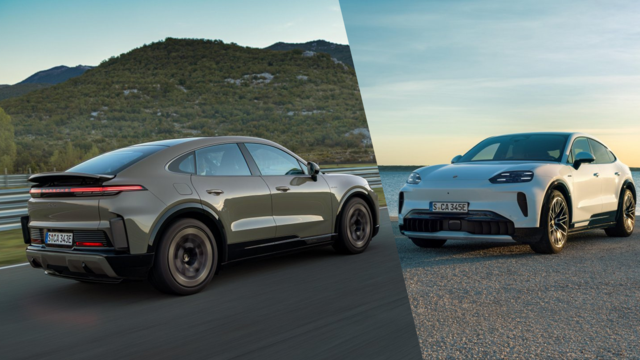
Porsche Reveals Coupe Variant of the Electric Cayenne With a Fresh Look
Verdad Gallardo
10 Porsche Colors That Have More Personality Than Most People
Verdad Gallardo
Burning Brakes
Joined: Oct 2002
Posts: 1,056
Likes: 448
From: Northern California
And again, my hotel was running on the diesel generator for the whole day yesterday.
One of the $2m+ California H2 stations is about two miles from my house. So in theory I wouldn't have much of a problem leasing a Mirai. But... sorry. I have no desire to do so. Besides, the styling of the Mirai is hideous and performance is meh at best.
Burning Brakes
Joined: Oct 2018
Posts: 813
Likes: 137
From: California
Toyota is investing in a technology that produces hydrogen by using air and sunlight. If they reach an efficiency 2x better than current solar cells (~20%), this technology could replace them and also fill cars. Fuel cells are at the efficiency of 60%. So at 40% solar *0.6 means 24% total efficiency. Anything better is a win over current solar panels.
Cool. Hotels guests can still charge their EVs! Meanwhile the gas station down the street can't pump gas (be it petrol or H2) due to the power outage.
One of the $2m+ California H2 stations is about two miles from my house. So in theory I wouldn't have much of a problem leasing a Mirai. But... sorry. I have no desire to do so. Besides, the styling of the Mirai is hideous and performance is meh at best.
One of the $2m+ California H2 stations is about two miles from my house. So in theory I wouldn't have much of a problem leasing a Mirai. But... sorry. I have no desire to do so. Besides, the styling of the Mirai is hideous and performance is meh at best.
I don't like the look of the Mirai either. But I'm very impressed with Toyota as a company and their ability of making cheap and reliable cars in mass scale. So if they believe in hydrogen, I do as well. One good thing is that it can be used in trucks, ships, airplanes and drones without the penalty of the battery weight. Mercedes has a hybrid fuel cell car (GLC F-Cell), which is the best of both world (assuming fuel cell stations are available, so not yet).
Nordschleife Master
Joined: Jun 2011
Posts: 6,514
Likes: 4,928
From: Santa Cruz, CA
i did and it still makes no sense - and the emissions from reforming natural gas are equivalent to burning it - it’s not emission free - and it’s still fundamentally a fossil fuel play - like most of your postings you keep reading things and drawing the wrong conclusions - Toyota’s going to lose the bet
imsee fuel cell cell vehicles as a replacement for transportation where BEV doesn’t work - trucking and cargo - personal transportation is still more efficient and can be zero emission - fool-cell vehicles will never be zero emission!
imsee fuel cell cell vehicles as a replacement for transportation where BEV doesn’t work - trucking and cargo - personal transportation is still more efficient and can be zero emission - fool-cell vehicles will never be zero emission!
Nordschleife Master
Joined: Jun 2011
Posts: 6,514
Likes: 4,928
From: Santa Cruz, CA
“If hydrogen is produced directly from natural gas or even coal, they will not lose 60 or 70% of the energy. It all depends on where you start.” “
https://en.wikipedia.org/wiki/Hydrog...on?wprov=sfti1
it still uses a lot of grid power per unit produced! heating things to 1100(C) is not cheap - and the power used could have equally been used to directly charge a battery with with only 3-5% efficiency loss
the fossil fuel industry loves hydrogen - or should we call them the hydrocarbon industry! they produce hydrogen and emit carbon by products, it’s the carbon byproducts we are trying to get rid of, and hydrogen does not do that.
well to wheel hydrogen still loses on efficiency and does nothing to reduce emissions. The ONLY way H2 is better is if you refine it from water, and the energy requirements to do that are vast and in-efficient - the only way in which H2 is nearly viable is to source from fossil fuels and do do conservation of matter and energy you are left with pretty much the same resulting by-products cause ya know conservation of matter...
There are four main sources for the commercial production of hydrogen: natural gas, oil, coal, and electrolysis; which account for 48%, 30%, 18% and 4% of the world’s hydrogen production respectively.[6]Fossil fuels are the dominant source of industrial hydrogen.[7]Carbon dioxide can be separated from natural gas with a 70-85% efficiency for hydrogen production and from other hydrocarbons to varying degrees of efficiency.[8]Specifically, bulk hydrogen is usually produced by the steam reforming of methane or natural gas.[9]The production of hydrogen from natural gas is the cheapest source of hydrogen currently. This process consists of heating the gas to between 700-1100 °C in the presence of steam and a nickel catalyst. The resulting endothermic reactionbreaks up the methane molecules and forms carbon monoxide CO and hydrogen H2. The carbon monoxide gas can then be passed with steam over iron oxide or other oxides and undergo a water gas shift reaction to obtain further quantities of H2. The downside to this process is that its major byproducts are CO, CO2 and other greenhouse gases.[6]Depending on the quality of the feedstock (natural gas, rich gases, naphtha, etc.), one ton of hydrogen produced will also produce 9 to 12 tons of CO2.[10
or about the same amount of CO2 as burning the fuel to begin with.
the goal is to reduce emissions - H2 simply moves it around the playing board - rearranging deck chairs
water based H2 or BEV is the only solution that can be emission free with zero emission power generation - fossil fuel based H2 is still fossil fuel based transportation...and you simply can’t wash away the by products.
Last edited by daveo4porsche; Apr 11, 2019 at 09:42 AM.
Nordschleife Master
Joined: Jun 2011
Posts: 6,514
Likes: 4,928
From: Santa Cruz, CA
BTW: try this on for size…
I would not be opposed to the following scenario
Build vast quantities of renewable zero emission electricity production - I mean built A LOT - over size and over capacity - we can do it we simply lack the political will - build vast solar arrays producing billions of giga-watts of power....hydro, solar, wind, wave, nuclear - what have you…the problem with renewables is "storage" - what to do with all this capacity at "noon on Tuesday"…too much power and no place to go…
use this ample oversupply of electricity and make H2 from water in vast quantities, converting this ample excess of electricity to a form of stored energy, more importantly transportable and dense stored energy…
now bring in the Fuel-cell based transportation systems and you've go something that could actually work - overall efficiency be dammed because if the power comes from renewable sources the loss is pointless if we simply build the system and then forget about the original cost to build it - once we HAVE vast supplies of energy from zero emissions sources the fact that we're "wasting" it can be swallowed....
in this scenario - emission free power producing emission free H2 and then using that H2 to buzz to the grocery store in an emission free vehicle - bring on the Fuelcell vehicles, the technology is wicked cool and a triumph of science and engineering, it's just sooooo cool - it really really is!
Make electricity ample and cheap, stop caring about the original costs - we could do it for the cost of a few major military institutions and we seem to be able to waste money that way - why not waste some money on making electricity so cheap, plentiful and zero emission that it doesn't matter how we use it?
H2 from water for a fuel cell vehicle - bring it on!
H2 from fossil fuels is simply missing the point and is just more of the same.
I would not be opposed to the following scenario
Build vast quantities of renewable zero emission electricity production - I mean built A LOT - over size and over capacity - we can do it we simply lack the political will - build vast solar arrays producing billions of giga-watts of power....hydro, solar, wind, wave, nuclear - what have you…the problem with renewables is "storage" - what to do with all this capacity at "noon on Tuesday"…too much power and no place to go…
use this ample oversupply of electricity and make H2 from water in vast quantities, converting this ample excess of electricity to a form of stored energy, more importantly transportable and dense stored energy…
now bring in the Fuel-cell based transportation systems and you've go something that could actually work - overall efficiency be dammed because if the power comes from renewable sources the loss is pointless if we simply build the system and then forget about the original cost to build it - once we HAVE vast supplies of energy from zero emissions sources the fact that we're "wasting" it can be swallowed....
in this scenario - emission free power producing emission free H2 and then using that H2 to buzz to the grocery store in an emission free vehicle - bring on the Fuelcell vehicles, the technology is wicked cool and a triumph of science and engineering, it's just sooooo cool - it really really is!
Make electricity ample and cheap, stop caring about the original costs - we could do it for the cost of a few major military institutions and we seem to be able to waste money that way - why not waste some money on making electricity so cheap, plentiful and zero emission that it doesn't matter how we use it?
H2 from water for a fuel cell vehicle - bring it on!
H2 from fossil fuels is simply missing the point and is just more of the same.
Burning Brakes

Joined: Mar 2018
Posts: 1,152
Likes: 242
From: CARB state, USA
BTW: try this on for size…
I would not be opposed to the following scenario
Build vast quantities of renewable zero emission electricity production - I mean built A LOT - over size and over capacity - we can do it we simply lack the political will - build vast solar arrays producing billions of giga-watts of power....hydro, solar, wind, wave, nuclear - what have you…the problem with renewables is "storage" - what to do with all this capacity at "noon on Tuesday"…too much power and no place to go…
use this ample oversupply of electricity and make H2 from water in vast quantities, converting this ample excess of electricity to a form of stored energy, more importantly transportable and dense stored energy…
now bring in the Fuel-cell based transportation systems and you've go something that could actually work - overall efficiency be dammed because if the power comes from renewable sources the loss is pointless if we simply build the system and then forget about the original cost to build it - once we HAVE vast supplies of energy from zero emissions sources the fact that we're "wasting" it can be swallowed....
in this scenario - emission free power producing emission free H2 and then using that H2 to buzz to the grocery store in an emission free vehicle - bring on the Fuelcell vehicles, the technology is wicked cool and a triumph of science and engineering, it's just sooooo cool - it really really is!
Make electricity ample and cheap, stop caring about the original costs - we could do it for the cost of a few major military institutions and we seem to be able to waste money that way - why not waste some money on making electricity so cheap, plentiful and zero emission that it doesn't matter how we use it?
H2 from water for a fuel cell vehicle - bring it on!
H2 from fossil fuels is simply missing the point and is just more of the same.
I would not be opposed to the following scenario
Build vast quantities of renewable zero emission electricity production - I mean built A LOT - over size and over capacity - we can do it we simply lack the political will - build vast solar arrays producing billions of giga-watts of power....hydro, solar, wind, wave, nuclear - what have you…the problem with renewables is "storage" - what to do with all this capacity at "noon on Tuesday"…too much power and no place to go…
use this ample oversupply of electricity and make H2 from water in vast quantities, converting this ample excess of electricity to a form of stored energy, more importantly transportable and dense stored energy…
now bring in the Fuel-cell based transportation systems and you've go something that could actually work - overall efficiency be dammed because if the power comes from renewable sources the loss is pointless if we simply build the system and then forget about the original cost to build it - once we HAVE vast supplies of energy from zero emissions sources the fact that we're "wasting" it can be swallowed....
in this scenario - emission free power producing emission free H2 and then using that H2 to buzz to the grocery store in an emission free vehicle - bring on the Fuelcell vehicles, the technology is wicked cool and a triumph of science and engineering, it's just sooooo cool - it really really is!
Make electricity ample and cheap, stop caring about the original costs - we could do it for the cost of a few major military institutions and we seem to be able to waste money that way - why not waste some money on making electricity so cheap, plentiful and zero emission that it doesn't matter how we use it?
H2 from water for a fuel cell vehicle - bring it on!
H2 from fossil fuels is simply missing the point and is just more of the same.
Hydrogen-fuel vehicles are a much better idea than BEVs, but the development of water-generated H_2 is important -- powered by renewable energy sources.

RL Community Team
Rennlist Member
Rennlist Member
Joined: Jan 2013
Posts: 9,380
Likes: 2,906
From: The Woodlands, TX.
Nowhere did I say Tesla's were perfect. But your cherry-picked statistics on BMW's reliability are far from reality. You can believe what you want to believe, but if that's what you believe, well, so be it.