When you click on links to various merchants on this site and make a purchase, this can result in this site earning a commission. Affiliate programs and affiliations include, but are not limited to, the eBay Partner Network.
The 991S has more power,less drivetrain loss and better traction. One thing I've noticed in the GT4 that I didn't notice in the 991 S is wheel hopping. If you throw the Powerkit in you're talking 45HP more than the GT4. You feel that! The talk we hear during GT cars presentation about " GT horsepower " is just marketing talk. The GT4 makes exactly what it is rated for. Same goes for the GT3. It's been proven on the dyno.
The only complaint I have is the 2nd gear,that's it. If you want to go to the redline and shift it takes a while... But I've learned to live with that. Most drivers don't have that fine tuned sensibility. Perhaps I'm most drivers... And that's ok...
I wouldn't risk losing the warranty for the " gains " I'm reading about here.
One thing that the GT4 is not it's " sluggish ". Pete,this thread combined with your other one and I'm starting to believe your GT4 is defective...
It's all relative, but no, my GT4 seems about on par with others I've driven here in CA. It seems stronger and more like the European press cars—and feels more like the 385 hp claimed—on higher octane gas from Sears Point. Drivability also seems to improve, but I am not done gathering information on that...I need to go back and get some good gas! I view this as a separate issue that has to do with either breathing (exhaust? intake?), tuning (ECU?), or CA gas.
The gearing thing is two fronts: 1) The stock gears fail to make the best of the 3.8, and 2) in-gear speeds in 2nd and 3rd (gears too tall) as well as 6th (gears too short). While "1)" might be affected if my GT4 was defective, "2)" would not be. And I am hardly the only one out there thinking the GT4 would be improved with different gears...
I've driven the GT4 back to back against the Cayman R and 997.1 C2S, all 6-sp manual. On the road, the latter two feel significantly peppier than the GT4, despite having less power and peak torque, whereas the exact opposite should be the case.
I think many modern sportscars have taller gearing than we're used to in the past because they have more power. With taller gearing there is a slower rise in RPM which gives a sensation of being sluggish even though the speed is rising far faster than it ever did in the past. Nobody can argue against the fact the GT4 punches way above its 375 to 385 hp weight class. So it cant be too bad stock. Matts customers want specific gears for specific tracks and corners. A stock gearbox will always be a compromise in this sense. Porsche is in a tough spot. To beat its competitors it needs to maximize the use of available power (Mark's points and graphs). But it must also satisfy the visceral feeling many of us thirst and love of rowing through the gears (Pete's points). Honestly, for the street, I think my 250hp VW R32 is as much fun in town than my 997.2. Because it has less power and lower gears so I get to shift often. Yes its slower but just as much fun. But, while that car has a cult following, the truth is it sucks on track. My 997.2 rocks out on the back roads and on the track. Gearing will always be a compromise.
Pete,
You know how to reach me privately if you want my input. As I said in advance I have zero response to Mark's usual rubbish. He's gone in circles with this stuff in the race forum more times than I have fingers. I'm not getting involved, and doubly so given his "ax to grind" as you mention.
From: On a pygmy pony over by the dental floss bush
Originally Posted by stout
This info may have appeared earlier in the thread, but maybe it can be filled out with the maximum speeds in gear, and perhaps even a better way of comparing the effective gear ratios given the 3.44 vs 3.89 final drives.
There are several of these calculators on the interweb, here's one:
Boring background info:
If you have OEM specs for gearbox ratios and final drive to use for inputs, the only input variable subject to much error is the diameter of the tire, because it's really the rolling radius of the wheel/tire that converts rotation to linear velocity. IOW, the deflection of the sidewall of the tire due to vehicle weight creates the true rolling radius, not the unladen diameter of the fitted tire on the wheel. Rolling radius in feet multiplied by the rotational velocity in radians per second gives you linear velocity in feet/sec. There are 6.2832 radians per 1 revolution.
For cross-check, I know that 3,000 RPM in 6th gear in my GT4 with OEM MSPC2 tires gives 75 MPH as measured by GPS, given that there is some round off error due to MPH being reported in whole units of 1 MPH, error in tachometer indication, and in my eyeball reading the tach. This may not vary much from the calculator on the website above if the OEM mounted and unladen tire diameter is plugged in. IOW, the sidewall of the MPSC2 tires is stiff and doesn't deflect much, so just poking in the mounted unladen tire diameter is probably pretty close to accurate. EDIT: Using a tire diameter of 26.5" in the calculator link above I get 75 MPH at 3,000 RPM with 3.89 final and .81 ratio for 6th.
So yes, you can let air out of your tires to decrease your overall gear ratio, but that would be silly wouldn't it.
I was thinking that what people seem to want is:
A. a more engaging 1-70 mph experience
B. shorter gears in general
I think a smaller 1-2 gap would help with (A), while (B) can be handled with a final drive change. So maybe just do a slightly shorter final and a new taller 1st gear to undo the final drive change just for 1st. (Also, so that 1st is still useful on an autox course.)
Very small gearing changes are very noticeable. With the exception of the 6th gear desire, I think this might be exactly what you want Pete.
I have a problem understanding how anything spins faster with a change of rear end. if your target speed is to be in the sweet spot of the HP RPM, then how does the rear end change matter in some cases, you would be spinning more RPM for example, if you made the rear end taller. why, because in those cases of speed, you would want to be in a lower gear with even higher, much higher input RPM. the entire premise that going shorter or taller RPM changes anything over all , is not logical and a little misleading. (unless I'm missing something and ive i am.. please explain why)
I decided to pop back in for the benefit of the readers because there is a huge gap in Mark's understanding of the discussion and the point of my comment that he misquoted above several times in the conversation. Nobody said anything about making anything spin any faster. My comment was that a shorter gear or final drive will make more rotations. More rotations for the same distance, and that's why they wear out more quickly. The context was in response to Pete's question about longevity of a short ring and pinion option.
Let's set some controls here. We are going to drive 1 mile. For our purposes here we will say that we are running a 24" tire like you might find on an old 1967 911S racer, so conversions are more straight forward. A mile is 5,280 ft. The tire is 2' in diameter, so cirumference is just 6.28. So, to drive a mile it must rotate 840.76 times.
Let's run this car with a Cup Car 4.00 ratio final drive. An 8:32 toothcount. So each time the 32 tooth gear ring gear rotates once, the pinion must spin 4 times. Over the course of a mile, that pinion will spin 3363.04.
Now, let's go over to the 3.89 Final drive the Cayman runs. Happens to be the same as a 997.2 GT3RS, BTW. 9:35 toothcount. Spin that 35 tooth ring gear on this gearbox to go a mile in 5th and you've spun your pinion only 3270.56 times.
Now go drive 25k miles. Which ring and pinion will show more wear? Which one will wear out first? The Cup one.
This was never about maximizing rotations or making it spin faster. What kind of rubbish is that? Above I was asked to make an argument why the 3.44 of the GT3 is better than the 3.89 of the Cayman. Why would I do that? I never said it was better for acceleration. I said that the people comparing top speed in gear between the GT3 and Cayman were missing one key variable, that the two cars don't have the same final drive.
Lastly, the ratios above in red in Mark's chart (post #64) that are being touted as good enough or maybe even optimized for the GT4? Those are the GT3 996 ratios. Pete posted the correct ratios farther down.
Yargk,
1st gear is on the mainshaft, just like 2nd. Can't do one without the other. You can run a taller 1st and make the new 2nd identical to stock, but you still have to actually make the new 2nd.
Pete, don't get yourself into a lather trying to have a rational discussion with Kibort. You can't win. I suggest you do what so many of us who follow the Racing and Drivers Education forum have done. See instructions below:
Can I block posts, emails and messages from specific users?
Ignore lists are used for those people whose messages you wish not to read. By adding someone to your ignore list, those messages posted by these individuals will be hidden when you read a thread. If there are particular members that bother you and you do not want to see their posts or receive Private Messages and Emails from them, then you can add these members to your 'Ignore List'. There are several ways to do this:
Through your User Control Panel: User CP, Settings & Options, Edit Ignore List. Then, type their name into the empty text box and click 'Okay'.
Going to make this a drive-by post because I'm just getting off work and have some stuff going on this evening. I'll see if I can make time to answer Pete point by point later this evening or in the morning. In the short term, I think it warrants repeating why "just" doing a 2nd gear is problematic because it appears we've got some new readers here who don't know what's going on inside this gearbox.
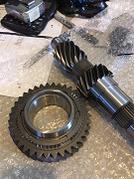
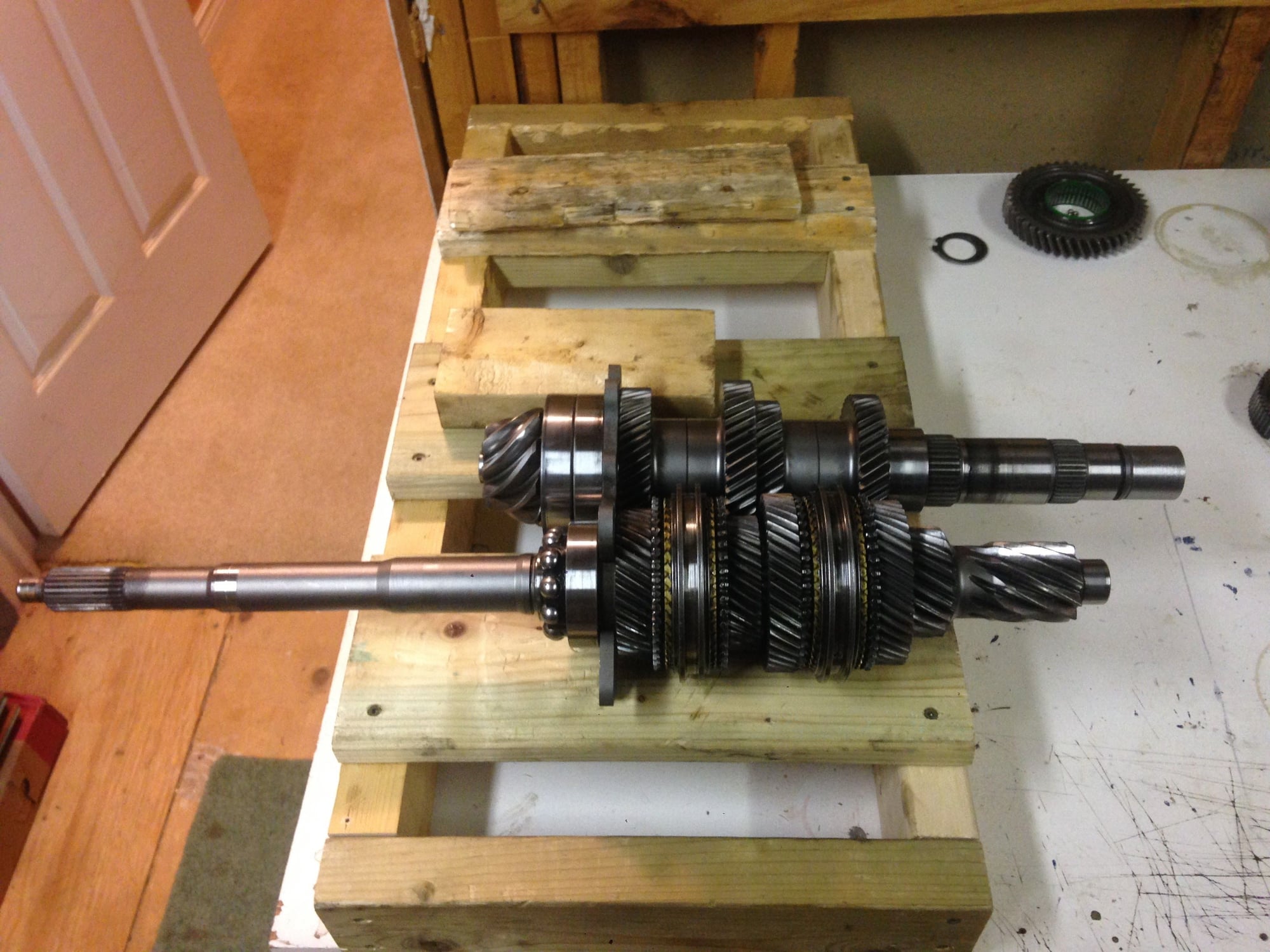
1st & 2nd gear are integral to the mainshaft. What does this mean? You can't make one without the other. It's not as simple as the additive math Pete used above to add in 2nd gear, for example. Here's a picture of what the mainshaft assembly looks like (ignore that it's a different gearbox, same concept):
From left to right is 6-5-4-3-2-1. 1 and 2 have already been pulled off the pinion. On the mainshaft side, 1 and 2 are part of the mainshaft. So, instead of $1095 per gear, if one wants to change 2, one must change 1 AND the mainshaft. $4000 for 1-2 and mainshaft. Twice the price. $4000 even if all you care about is a different 2nd gear ratio. Can't do one without the other.
So what would total parts and labor cost for the " whole 9 yards" excluding R and R of tranny ?
Any idea what a new tranny costs for those that may want one of each ?
Great post. Good to see others that realize it's all about power vs. speed in each gear. If another gear has higher power available at the current vehicle speed, then shift! Though in some cases on track I think there is more than just max power at every instant... sometimes it is thr controllability of a higher gear or the reduced number of shifts in a section that is a factor.
Originally Posted by mark kibort
Gents, you really need to step back a little and understand that the function of the gear box is the HP optimizer. what works for a GT3 will not necessarily be good for the GT4Cayman. why, the HP curves are different shapes.
to think that you ge more torque by changing gear ratios is a misnomer. all you do is shift the optimization of the HP up or down the scale.. this means, all you are doing is changing vehicle speed range and HP utilization. in other words, you change a gear ratio, you shift the optimization point up or down in speed. its a trade off..... example: a change of gear ratio might now make your cars sweet spot from 55mph to 75mph instead of 60mph to 80mph. if you race the car, you want to optimize for every single turn, and track, but that usually is impossible, so you look at the speeds you usually run, and where and select the best gear ratios possible...... if you dont have the luxury of changing the gears, JUST make sure you are in the RIGHT gear. This means you want to be shifting at redline to maximize accelerative force during all gears and resultant gear shifts.
Below Yargk puts it all on the table... its almost all you need to know. whats missing is the HP curve.
what does the comparison say? it says that you really have a 4 speed for the track, and possibly really only a 3 speed for most tracks. 2nd for most speeds over 40mph and a top track speed in 4th gear at 147mph.. (road america mani straights, unless you have boosted the HP like the POC racing caymans pushing 350rwhp) so, with that known.. there is NO issues.
i added some color to the gear ratio RPM changes post shift by adding the %. this means 1st is to get out of the paddock.. redline to 46mph. perfect for auto cross tight turns, and usless on a big track, for good reason.
2nd your lowest gear on the track, from 40 to 80mph .. most GT4 drivers dont use the gear properly.. are in 3rd where they should be in second on critical turns. and some dont use 3rd when they can and stay in 4th.
what this means is that you are NOT using the engines available HP.. in the above example, if you are ever in the 4-5000rpm range on the track, you are giving away near 50hp vs being at 6Krpm. this 50hp, is near 50ft-lbs of torque loss too. and the same percentage loss of torque at the rear wheels. this is the main point here. keeping the engine RPM in the sweetspot. the cayman has perfect ratios for most all applications. even on the hyway, with a redline of near 7800rpm, you cruise around at 80mph at near 3000rpm, it sounds like the engine could lug down a bit more .. but no worry, its designed to be operating at slightly higher RPM... there is no proof that the MPG you would get with a taller 6th gear would give more efficiency. if you want hear lower RPM, get a taller tire in the rear. But generally, dont worry about it.
in summary: the GT4 gear box allows for all shifts, after 1-2nd gear, to remain above 5700rpm which is the goal and sweetspot of HP for the engine. no changes can improve the perfection already achieved by porsche designers. if you think otherwise, i would love to hear any idea of a better spread or ratio for the GT4
just a few thoughts to put your minds at ease... you have an optimized gear box for the engines HP and HP curve of the GT4
this is what i was talking about above. ... the 5% change is not required because of the HP curve. as long as you are optimized for the entire HP curve for each gear, there is NO reason to change. GT3 needs to rev higher as the HP peaks and shape happens in a higher range of the RPM. thats the ONLY reason. you don't change the torque or anything by 5% by changing. sure in each gear you would have a change, but you also have a trade off of the exact same amount.. so, dont be too quick to judge. a common mistake in gearing decisions are made in using that logic. in other words, if you change your gear ratios 5%, you migh gain torque ini 2nd, but lose torque in 3rd in a more dramatic way... especially if you use 3rd more often in the lower RPM ranges of that gear.
so, enjoy the car.. its already optimized for your purposes of track and street. the close ratios are great for keeping the RPM close to the max HP region of your HP curve.
Plus, just for discussion what would the optimal gear ratio be for you? make it real simple.. give me speeds at redline for the Gt4 and we can discuss the trade offs... this entire discussion can be wrapped up by investigating this desired changed, the perceived value and performance gain or loss, by how it compares to the already near perfect GT4 gear set for most all uses , track and street.
I hope this has helped answer any concerns of the past 5 pages.
below... GT3 hp curve vs the GT4 HP curve... the answers to what works and what doesnt are found here
remember, its all about usable HP. why??
acceleration = power/(mass x velocity) newton said so!!!!
9 Vehicles Porsche Helped Engineer that Aren't Porsches
Slideshow: Long before engineering consulting became trendy, Porsche was quietly helping other automakers build everything from supercars to economy hatchbacks.
9 Features and Characteristics That Only Porsche People Understand
Slideshow: Some brands build cars. Porsche builds traditions, obsessions, and a few habits that stopped making sense decades ago but somehow became part of the charm.
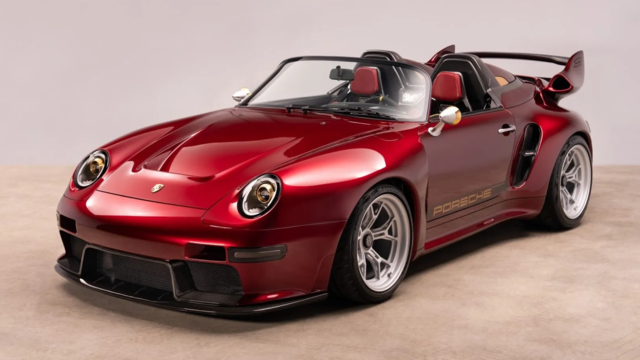
This Builder Is Turning Heads With Its Slantnose 911 Creation
Slideshow: A small Polish tuner has reimagined the Porsche 911 Slantnose for the modern era, blending 1980s nostalgia with widebody tuning culture and serious performance upgrades.
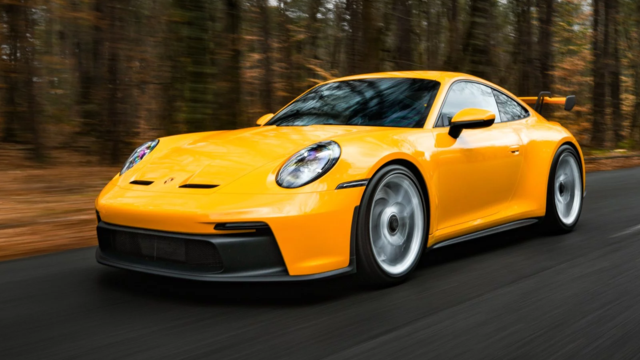
Porsche 911 GT3 Artisan Edition Pays Homage to Japanese Culture
Slideshow: Porsche has created a Japan-only 911 GT3 Artisan Edition that blends track-ready hardware with design cues inspired by traditional Japanese craftsmanship.
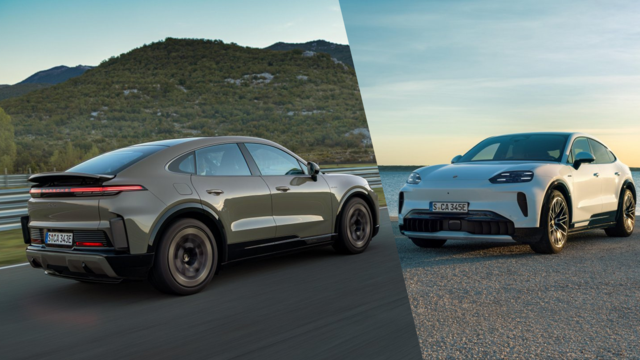
Porsche Reveals Coupe Variant of the Electric Cayenne With a Fresh Look
Slideshow: Porsche's latest electric Cayenne Coupe blends dramatic styling with supercar acceleration, turning the brand's midsize SUV into a 1,139-horsepower flagship.














 But generally, dont worry about it.