When you click on links to various merchants on this site and make a purchase, this can result in this site earning a commission. Affiliate programs and affiliations include, but are not limited to, the eBay Partner Network.
Adjustable rear toe links are not "required" but they do make a noticeable improvement in rear grip by eliminating the OEM rubber bushing which results in more stable rear toe. When adjusted accordingly, these links will also improve tire wear. I've been meaning do a full write up on adjustable rear toe links, just haven't gotten around to it with many projects going on. So now is a good opportunity to share some info.
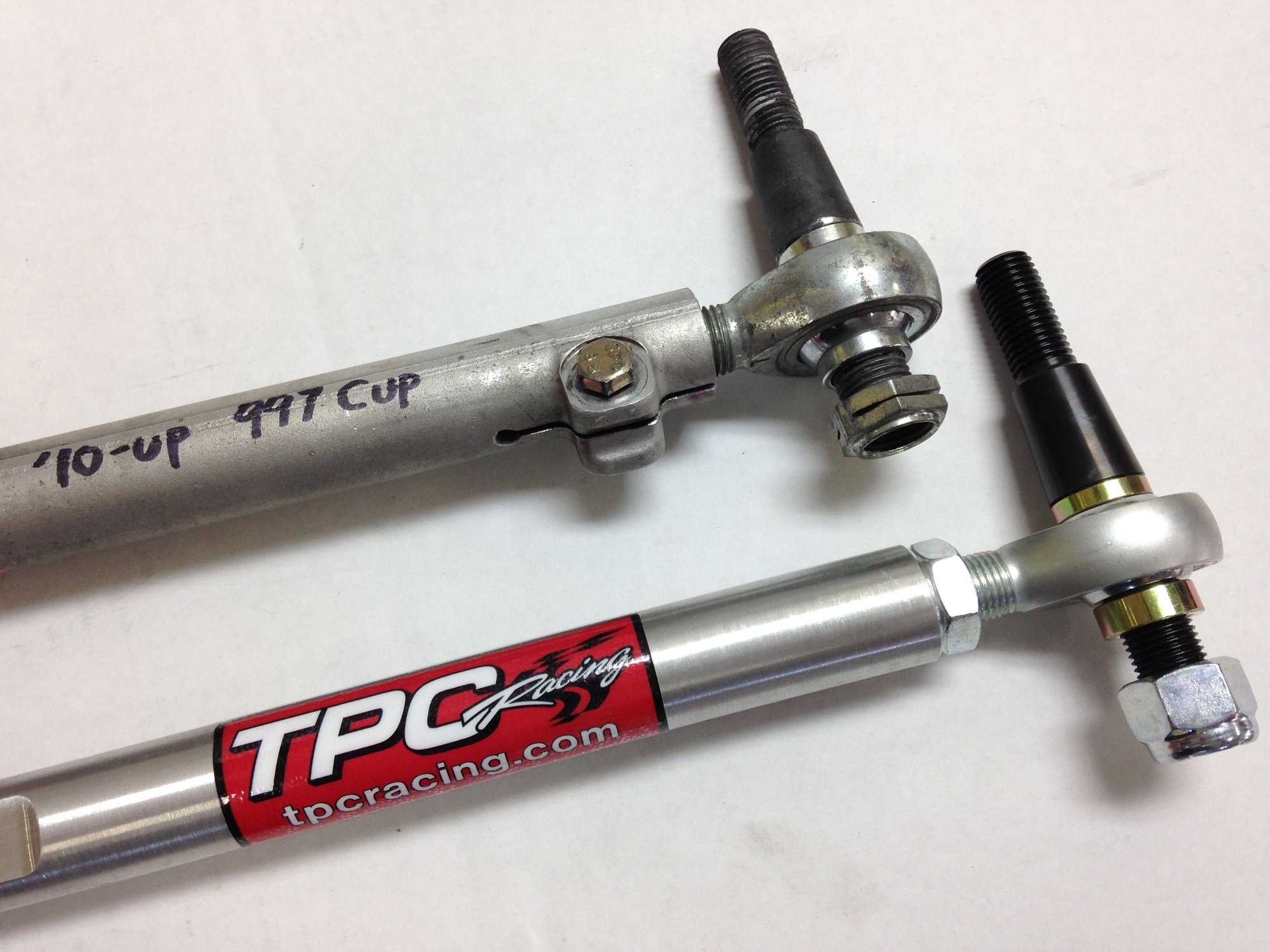
Here's a photo comparing OEM street car rear toe link to 996 Cup car rear toe links give you an idea.
The 996 Cup style adjustable rear toe links(shown in photo above) uses OEM front outter tie rods. They were factory equipped on Cup cars up to MY2005. For a number of years, this design was considered to be "the original" or standard for the water-cooled cars.
The GT3R race cars and 997 Cup car added another geometry adjustment at the outter joint in effort to gain more rear grip. This adjustment is used to fine tune the toe curve which can be advantageous if you bumpsteer test the car or get support from the component manufacturer for setup to match other mods on your car such as lower control arm, thrust bushings, and bog bones.
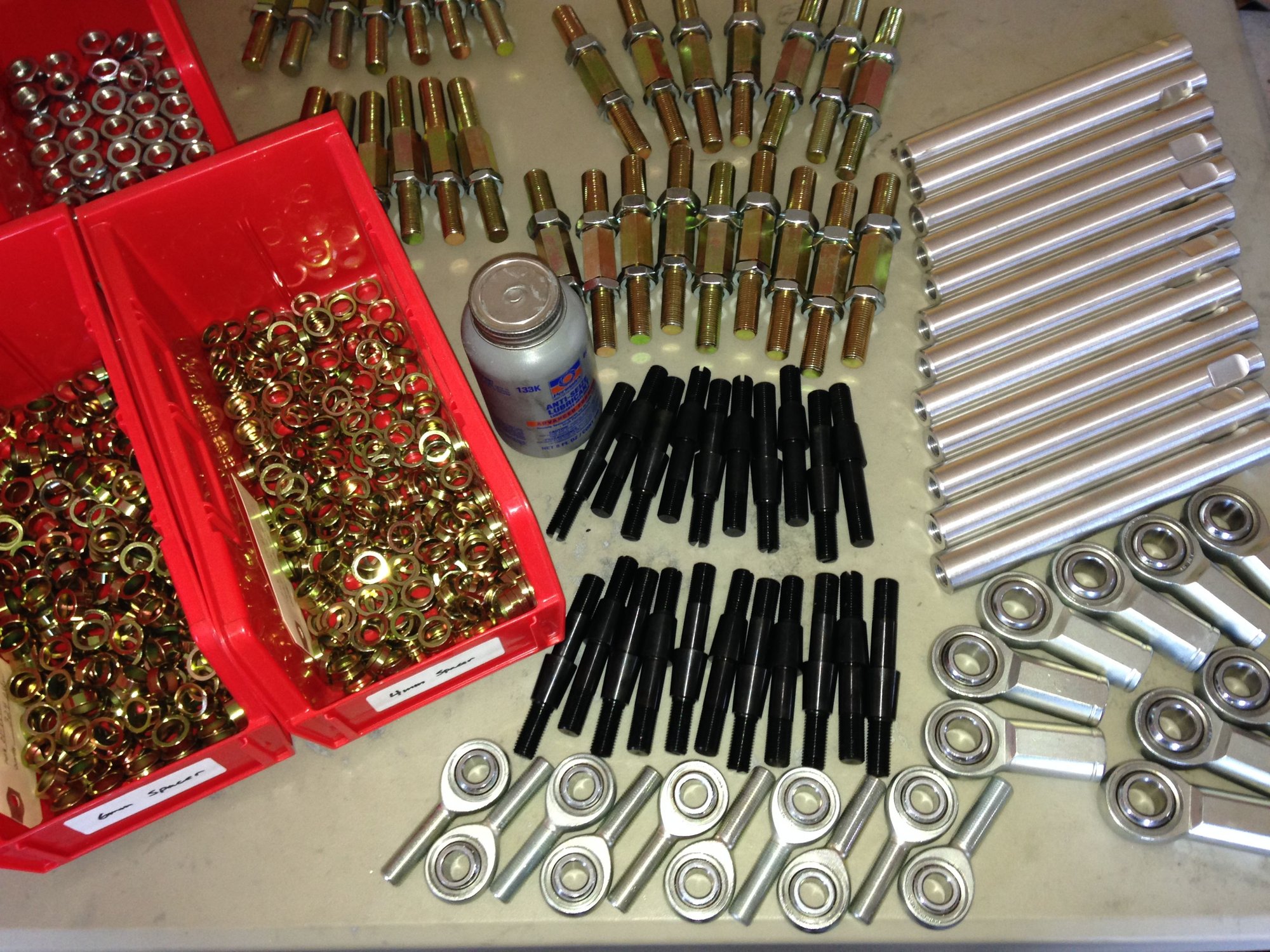
Here's a photo of the adjustable outter joints. TPC Racing adjustable rear toe links features a greater range of adjustment than the latest 997Cup car design to accommodate cars with varying ride heights(from street to race) and other geometry changes. TPC Racing offers full setup support for their suspension components.
I personally assemble each set of links for each car that we sell links for after a consultation. This keeps me extremely busy but it is very rewarding to aid each customer to a successful setup.
Please let me know if I can be of service to you.
__________________
PCA National Instructor
TPC Racing stats:
2023 Porsche Sprint Challenge 992 Cup Am Champion
2023 Porsche Sprint Challenge GT4 Pro-Am Team Champion
2022 Porsche Sprint Challenge 992 Cup & 991 Cup Champion
2020 IMSA GT3 Cup Challenge 2nd Championship
2018 IMSA GT3 Cup Challenge 2nd Championship
2016 IMSA GT3 Cup Challenge Champion
2013 IMSA GT3 Cup Challenge Champion
2006 Rolex-24 @ Daytona GT Champion
2004 Grand-Am SGS Class Champion
Please allow me to rephrase the first sentence - Adjustable rear toe links aren't required but they are a highly recommended mod for track, and even for spirited road use. Since these are horizontally positioned links, replacing the OEM rubber with a high quality spherical bearing(aka monoball) such as the Aurora brand that we use, doesn't produce any wanted noise.
I would also like to add that there are number of brands of adjustable rear toe links. For those who are in the market for a set, we hope that you consider TPC Racing brand as an option.
Heim joints... required? no. Chances are, you will encounter far more brutal obstacles on the street than the curbing on a track. If anything, the deflection the stock bushings have, will hold your alignment better- Heims are basically solid mounted bearings, and if something hits hard enough...
That being said, Heims control the suspension movement a lot better. Do one, might as well do all. The deflection will just move onto the next bushing.
I am partial to the pinch bolt style rather than the jam nut- but on my car, I have jam nut style. Pinch bolt allows easier adjustment (when you're under the car, trying to get the damn thing to line up where you want it, jam nuts are a PAIN, especially when you have about 30 of them). Not many people really care about that though, since most people just let others scrape their knuckles.
Pinch bolt allows easier adjustment (when you're under the car, trying to get the damn thing to line up where you want it, jam nuts are a PAIN, especially when you have about 30 of them)
I am afraid this is not always the case on the rear toe links. I have done trackside alignments with both pinch bolt and jam nut type links. With the pinch bolt type the outter joint sometimes rotates with the main shaft even with the pinch bolt complete loose or removed. In which case I have to remove the alignment apparatus and the wheel to free the outter joint. With the jam nut type the outter joint is typically not adjusted once the initial length is set. The toe adjustment is then set using the male-male turnbuckle in the middle. From a mechanic's perspective, I do prefer the jam nut type.
What am I missing? One heim bolts on one end, the other on the opposite end, and the arm threads both heims. You adjust the length of the arm by spinning it. Once it's bolted on, you don't take it off unless it is out of spec or timed out. It's a one Allen wrench, one handed adjustment instead of a two wrench, two handed adjustment. As a karter, I HATE jam nuts on the steering rods.
What am I missing? One heim bolts on one end, the other on the opposite end, and the arm threads both heims. You adjust the length of the arm by spinning it. Once it's bolted on, you don't take it off unless it is out of spec or timed out. It's a one Allen wrench, one handed adjustment instead of a two wrench, two handed adjustment. As a karter, I HATE jam nuts on the steering rods.
I agree with you that on a kart pinch bolts are the way to go. Unfortunately on our cars some of joints(ake rod end) that require access to in order to do an alignment aren't as easy to get to. It has been my experience that not all the joints rotate independently from the main shaft as they are intended to after the pinch out is loosen - that would be a beautiful thing if they all do. Some times the joints just get bind up. Perhaps that doesn't happen frequently on a karts, but it does on car. I'm not making this up. When the outter joint is bind up, I may be able to fudge with it to free it or try to free it from the outside of the wheel, if not, then I have to take the wheel off and setup the alignment equipment again. From the point of view below, I'd rather have jam nut style adjustable rear toe link with a turnbuckle in the middle. 997.2 Cup. The pinch bolt is inside the wheel barrel.
I agree with you that on a kart pinch bolts are the way to go. Unfortunately on our cars some of joints(ake rod end) that require access to in order to do an alignment aren't as easy to get to. It has been my experience that not all the joints rotate independently from the main shaft as they are intended to after the pinch out is loosen - that would be a beautiful thing if they all do. Some times the joints just get bind up.
Understood. However, if they bind up, chances are they weren't lubricated properly. And the very nature of using jam nuts in this application causes the binding to begin with, by screwing up the threads in the control arm to the Heim. Pinch bolts don't have the issue if assembled correctly with adequate lube.
Perhaps that doesn't happen frequently on a karts, but it does on car. I'm not making this up. When the outter joint is bind up, I may be able to fudge with it to free it or try to free it from the outside of the wheel, if not, then I have to take the wheel off and setup the alignment equipment again. From the point of view below, I'd rather have jam nut style adjustable rear toe link with a turnbuckle in the middle. 997.2 Cup. The pinch bolt is inside the wheel barrel.
If you can't get one wrench in to loosen/tighten the pinch bolt, how on earth do you get two wrenches in to hold down the arm and tighten the jam nut?
Not trying to be a smart ***. I wish we had pinch bolts on steering arms on karts. The karts I race don't have them.
In any case, a good high quality Heim from Aurora is what you want for this sort of application. Look around and compare, there are usually little to no price differential between similar quality, but big differences between good and crap. And the difference is, a good quality one with a rubber dust jacket will last quite a while, whereas a crap one will need swapping out after a few good hits.
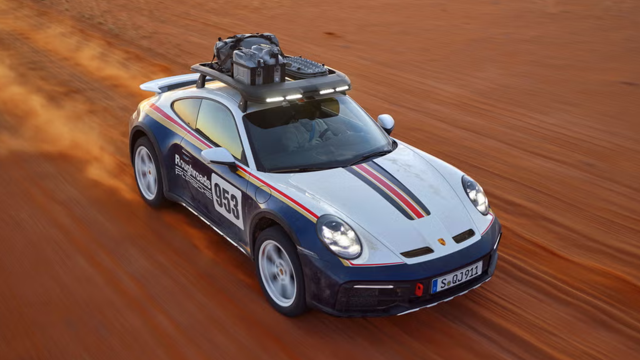
Porsche's Top 5 Most Questionable Naming Decisions
Slideshow: For a company obsessed with engineering precision, Porsche has occasionally named its cars in ways that left even loyal enthusiasts scratching their heads.
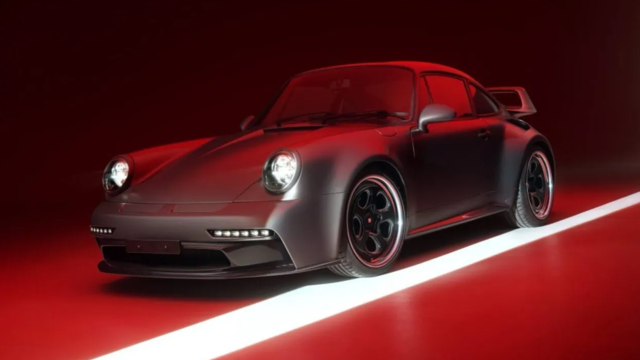
Pogea Racing's 964 Porsche 911 Reimagination Stands Out in a Crowded Field
Slideshow: Pogea Racing's latest Porsche 964 project blends carbon-fiber construction, modern chassis upgrades, and up to 500 horsepower while keeping the air-cooled 911 experience firmly analog.
Talos Takes Your 991 Porsche 911 GT3 to the Next Level for a Cool $1.13 Million
Slideshow: Talos Vehicles has transformed the Porsche 911 GT3 RS into a carbon-bodied, race-inspired machine that costs well over $1 million before the donor car is even included.
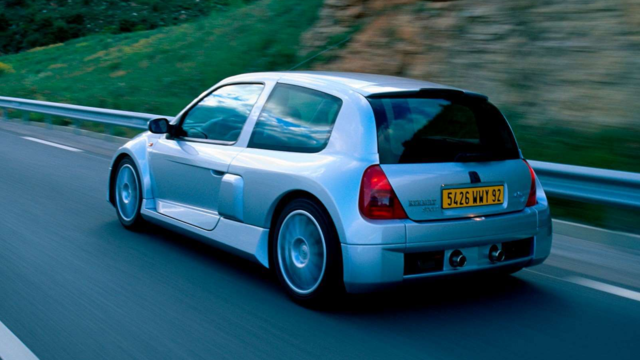
9 Vehicles Porsche Helped Engineer that Aren't Porsches
Slideshow: Long before engineering consulting became trendy, Porsche was quietly helping other automakers build everything from supercars to economy hatchbacks.
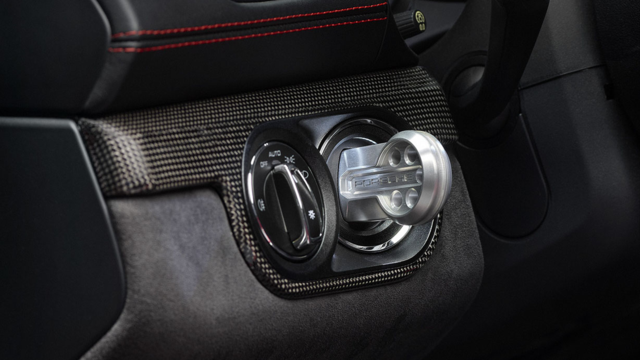
9 Features and Characteristics That Only Porsche People Understand
Slideshow: Some brands build cars. Porsche builds traditions, obsessions, and a few habits that stopped making sense decades ago but somehow became part of the charm.






 toe links required for track?