



PCCB Swap

Rennlist Member

Joined: Jun 2003
Posts: 1,314
Likes: 11
From: NYC / FL

You might need new caliper brackets, but it should be a relatively easy swap. Call Suncoast parts dept for specifics: http://e-partssales.com/Merchant2/me...997CarreraSbra
Poseur
Rennlist Member
Rennlist Member


Joined: Nov 2005
Posts: 17,743
Likes: 294
From: Santa Barbara, CA
Absolutely not. There is considerably more to this than simply rotors and calipers. The bearings are completely different and the ABS is mapped differently. When you assemble the entire parts list it well exceeds what it was just to order it in the first place on your car.
Thread Starter
Drifting

Joined: May 2007
Posts: 2,616
Likes: 35
From: Semiahmoo/Blaine, Wa
Absolutely not. There is considerably more to this than simply rotors and calipers. The bearings are completely different and the ABS is mapped differently. When you assemble the entire parts list it well exceeds what it was just to order it in the first place on your car.
Racer
Joined: Oct 2006
Posts: 371
Likes: 5
From: San Diego, CA
Absolutely not. There is considerably more to this than simply rotors and calipers. The bearings are completely different and the ABS is mapped differently. When you assemble the entire parts list it well exceeds what it was just to order it in the first place on your car.
Poseur
Rennlist Member
Rennlist Member
Joined: Nov 2005
Posts: 17,743
Likes: 294
From: Santa Barbara, CA
Do you know how the different ABS maps affect performance? I would think that the standard maps would still accomodate PCCB at-limit braking, because the issue is the same: monitoring wheel speeds and keep the tires from locking up. I figure the different map has to do with how quickly the PCCB system responds to a change in hydraulic pressure to the caliper, due to different friction surfaces and different calipers. But of course the response is going to vary greatly within the same brake system if the owner switches from one brake pad to another, e.g., someone gets cheap replacement pads or serious track pads for the OEM brakes. I wonder if an OEM PCCB responds "more different" than the OEM iron brakes, than the difference between OEM pads and say Hawk Blacks.

Three Wheelin'
Joined: Jun 2007
Posts: 1,759
Likes: 0
From: The D
"I'm late to the thread but if Stop Tech is still counting interest, add one more. I have PCCB on two of my Porsches with a 3rd on the way. They make a significant difference. Would love to have some for my FGT."
A strong thumbs up from one of the Ford GT owners in regards to PCCB.
A strong thumbs up from one of the Ford GT owners in regards to PCCB.
Trending Topics
Three Wheelin'
Joined: Dec 2005
Posts: 1,853
Likes: 0
From: Norwalk,CT
It's always interesting to hear from owners wanting the PCCB's after the build or CPO purchase of a C2S. Wonder why those interested in changing to PCCB's want the PCCB's when the steels are just as good for street use?
Painting/powder coat your calipers yellow is a whole lot cheaper.
On the other hand, quite a few of us PCCB owners do the exact opposite! We want to switch to steel rotors to save the rotors, or other reasons for track use.
I went with the PCCB's over X51 seeing that spending 17K for 26Hp and 8K on brakes that could possibly last a very long time, have less weight than steel, feel better when abused and somewhat mistique of these is why I went with them. Never had ceramics and always wanted to have a car from the factory with them.
So, I tend to agree there is more to it than a simple swap.
You may want to check RENNTECH site for the very same question as I'm sure it was brought up. Or reach out to the "Club" tech support on this one.
Regards,
Deanski
Painting/powder coat your calipers yellow is a whole lot cheaper.
On the other hand, quite a few of us PCCB owners do the exact opposite! We want to switch to steel rotors to save the rotors, or other reasons for track use.
I went with the PCCB's over X51 seeing that spending 17K for 26Hp and 8K on brakes that could possibly last a very long time, have less weight than steel, feel better when abused and somewhat mistique of these is why I went with them. Never had ceramics and always wanted to have a car from the factory with them.
So, I tend to agree there is more to it than a simple swap.
You may want to check RENNTECH site for the very same question as I'm sure it was brought up. Or reach out to the "Club" tech support on this one.
Regards,
Deanski
Rennlist Stories
The Best Porsche Posts for Porsche Enthusiasts

Talos Takes Your 991 Porsche 911 GT3 to the Next Level for a Cool $1.13 Million
Verdad Gallardo
9 Vehicles Porsche Helped Engineer that Aren't Porsches
Verdad Gallardo
9 Features and Characteristics That Only Porsche People Understand
Verdad Gallardo
I've Written 500 Rennlist Articles: Here's How Porsche Has Changed Along the Way
Joe Kucinski
10 Most Unnecessary Porsches Ever Built (And Why We Love Them)
Verdad Gallardo
Porsche 911 GT3 S/C vs 718 Spyder RS: 10 Categories, One Winner
Joe Kucinski
This Builder Is Turning Heads With Its Slantnose 911 Creation
Verdad Gallardo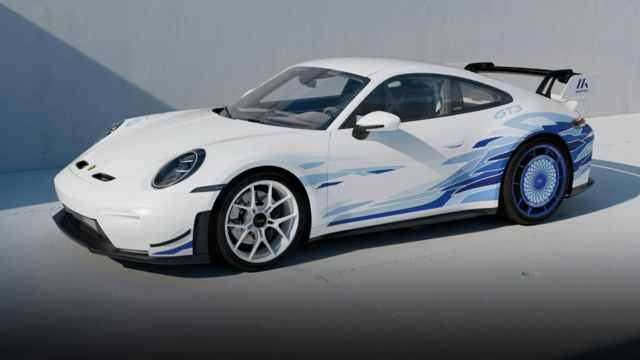
Porsche 911 GT3 Artisan Edition Pays Homage to Japanese Culture
Verdad Gallardo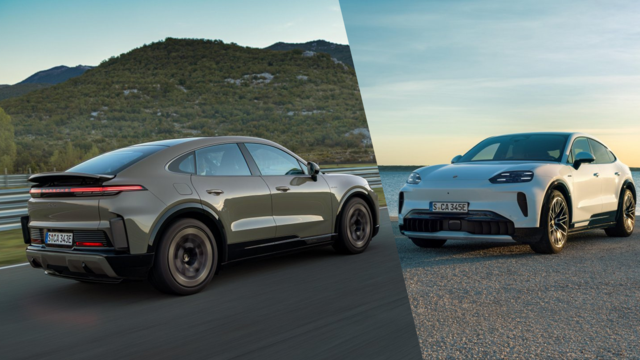
Porsche Reveals Coupe Variant of the Electric Cayenne With a Fresh Look
Verdad Gallardo
Pocket Sand
Rennlist Member
Rennlist Member
Joined: Jul 2004
Posts: 7,648
Likes: 1
From: Ask Rusty Shackleford.
considering the parts cost of PCCB rotors and calipers and whatnot, it might be cheaper to get aftermarket stoptech or brembo big brake kits..or even their Brembo GTR kit which will outbreak the PCCB's.
are PCCB replacement rotors still stupidly expensive?
are PCCB replacement rotors still stupidly expensive?
Thread Starter
Drifting
Joined: May 2007
Posts: 2,616
Likes: 35
From: Semiahmoo/Blaine, Wa
As the one that started this discussion, I was originally intrigued by a set of PCCBs someone advertised for $6200 (4 rotors and calipers). I hadn't thought seriously about needing them, but the idea crossed my mind when I saw them advertised. I decided it was too complicated for something I didn't really need or want that badly. It seems the weight saving is the biggest benefit, which isn't that important to me.
Drifting
Joined: Nov 2001
Posts: 2,014
Likes: 4
From: Round Hill, Virginia
I have swapped steel rotors onto PCCB cars on several occasions with no ill side effects. Don't really see where the problem would be. Seriously. What do you really think is going to happen? The whole idea is to stay out of the ABS anyway.
BTW I am a Porsche tech and have been to Porsche training so yes I am familiar with not only the system but the strategy FWIW.
BTW I am a Porsche tech and have been to Porsche training so yes I am familiar with not only the system but the strategy FWIW.

Three Wheelin'
Joined: Jun 2007
Posts: 1,759
Likes: 0
From: The D
For the same reason I need a Porsche over a Corvette-because they're the best in terms of refinement /engineering. Taking money out of the equation I see no reason I or anybody else wouldn't want PCCB and I didn't buy my Porsche to save money or as an investment.
Addict
Rennlist Member
Rennlist Member
Joined: Jan 2004
Posts: 2,856
Likes: 2
From: Bethesda, Maryland

