



Boost question...
Thread Starter
RL Community Team
Rennlist Member
Rennlist Member

Joined: Mar 2018
Posts: 23,496
Likes: 5,483
From: Vancouver

Not really why folks install higher pressure springs in the wastegates. The N75 frequency valve isn't very complicated, and a failure usually just results in a low boost, easily fixed with a relatively inexpensive part. Defaulting to low boost is IMHO much better than the turbos making too much boost if the ECU is trying to lower it for some reason (pinging?) and can't because the N75 failed and the wastegate spring pressure is much higher than stock.
I suppose theoretically you could run stiff wastegate springs and run the wastegate line to manifold pressure (not vacuum), but that would be leaving TONS of performance on the table and/or eliminating the ecu's ability to tweak boost based on altitude, throttle position, knock sensors, etc..... Sees like really minimal advantage and lots of disadvantage. The tunes out there thee days are great, and the N75 valve is pretty robust and easy to change. If your worried about it failing, maybe just swap in a new one say every time you change spark plugs.
I suppose theoretically you could run stiff wastegate springs and run the wastegate line to manifold pressure (not vacuum), but that would be leaving TONS of performance on the table and/or eliminating the ecu's ability to tweak boost based on altitude, throttle position, knock sensors, etc..... Sees like really minimal advantage and lots of disadvantage. The tunes out there thee days are great, and the N75 valve is pretty robust and easy to change. If your worried about it failing, maybe just swap in a new one say every time you change spark plugs.
Basic Sponsor
Rennlist
Site Sponsor
Rennlist
Site Sponsor

Joined: Nov 2002
Posts: 2,681
Likes: 1,143
From: Los Angeles, California
Sambo here haha. Feel free to reach out I think a good education on the 996TT will clear things up and allow you to understand and enjoy your car to it's fullest.
__________________
Proud TOP Porsche Distributor For:
Kline-Innovation - ams Performance - TiALSPORT/XONA - #1 COBB PRO TUNER - CSF - IPD Plenums - DO88 - dodsonmotorsport
310-600-1850 - sam@bydesignauto.com
Proud TOP Porsche Distributor For:
Kline-Innovation - ams Performance - TiALSPORT/XONA - #1 COBB PRO TUNER - CSF - IPD Plenums - DO88 - dodsonmotorsport
310-600-1850 - sam@bydesignauto.com

Rennlist Member

Joined: Jul 2012
Posts: 7,929
Likes: 3,143
From: US
Sambo, please chime in here! Very possible I'm giving incorrect info, but would love to hear from one of our true experts...
Is the description of the N75 valve operation semi-accurate? Reasons why one would put a heavier waste-gate on otherwise stock X50 or non-X50 turbos?
Is the description of the N75 valve operation semi-accurate? Reasons why one would put a heavier waste-gate on otherwise stock X50 or non-X50 turbos?
Basic Sponsor
Rennlist
Site Sponsor
Rennlist
Site Sponsor
Joined: Nov 2002
Posts: 2,681
Likes: 1,143
From: Los Angeles, California
No worries I didn’t go through the entire thread because I’m juggling the kids here. The N75 is the car is factory boost controller. Tables in the ECU mapping give instructions to maintain certain levels of boost. Sometimes you can request more but the wastegate spring is physically too weak to mechanically comply. The reason is because the vacuum line which connects to the actuator is connected to the intake manifold. The factory springs are .6 bar and they can hold up to about 1.1. Beyond that the manifold pressure which is in the loop Forces the actuators to open no matter what you are asking of them the spring just can’t hold up against the manifold pressure. So it is a bit of a safety in itself if you will. When you put a stronger spring in you can set a higher request and if the manifold pressure goes three or 4 pounds higher it won’t force the spring to open mechanically. With proper calibration you’re still fine and safe. These cars do many many things to protect themselves like pull timing, reduce boost, go full rich and even shut the throttlebody. Sorry for any dictation mistakes but hopefully that gives an idea. With the proper calibration we can beef up the hardware a little bit to hold up to more requests made by the tuner. Doesn’t stop at actuators this can go all the way from fueling to the clutch to turbo chargers, intercoolers and so on. You need to hard work to support what you’re asking the court to do. Done safely these motors are capable of up to 800 hp and live a long life. Sometimes you hear different stories but that is all because of the level of aggression taken to the tuning. Of course every car is a little bit different hence custom calibration and it’s benefits.
Hope that helps feel free to reply and just say my name technology will let me know ha ha and I’ll try to reply right away.
Hope that helps feel free to reply and just say my name technology will let me know ha ha and I’ll try to reply right away.
Thread Starter
RL Community Team
Rennlist Member
Rennlist Member
Joined: Mar 2018
Posts: 23,496
Likes: 5,483
From: Vancouver
No worries I didn’t go through the entire thread because I’m juggling the kids here. The N75 is the car is factory boost controller. Tables in the ECU mapping give instructions to maintain certain levels of boost. Sometimes you can request more but the wastegate spring is physically too weak to mechanically comply. The reason is because the vacuum line which connects to the actuator is connected to the intake manifold. The factory springs are .6 bar and they can hold up to about 1.1. Beyond that the manifold pressure which is in the loop Forces the actuators to open no matter what you are asking of them the spring just can’t hold up against the manifold pressure. So it is a bit of a safety in itself if you will. When you put a stronger spring in you can set a higher request and if the manifold pressure goes three or 4 pounds higher it won’t force the spring to open mechanically. With proper calibration you’re still fine and safe. These cars do many many things to protect themselves like pull timing, reduce boost, go full rich and even shut the throttlebody. Sorry for any dictation mistakes but hopefully that gives an idea. With the proper calibration we can beef up the hardware a little bit to hold up to more requests made by the tuner. Doesn’t stop at actuators this can go all the way from fueling to the clutch to turbo chargers, intercoolers and so on. You need to hard work to support what you’re asking the court to do. Done safely these motors are capable of up to 800 hp and live a long life. Sometimes you hear different stories but that is all because of the level of aggression taken to the tuning. Of course every car is a little bit different hence custom calibration and it’s benefits.
Hope that helps feel free to reply and just say my name technology will let me know ha ha and I’ll try to reply right away.
Hope that helps feel free to reply and just say my name technology will let me know ha ha and I’ll try to reply right away.
Cheers,

Former Vendor
Joined: Dec 2017
Posts: 951
Likes: 196
From: Madison, WI
Rennlist Stories
The Best Porsche Posts for Porsche Enthusiasts
9 Features and Characteristics That Only Porsche People Understand
Verdad Gallardo
I've Written 500 Rennlist Articles: Here's How Porsche Has Changed Along the Way
Joe Kucinski
10 Most Unnecessary Porsches Ever Built (And Why We Love Them)
Verdad Gallardo
Porsche 911 GT3 S/C vs 718 Spyder RS: 10 Categories, One Winner
Joe Kucinski
This Builder Is Turning Heads With Its Slantnose 911 Creation
Verdad Gallardo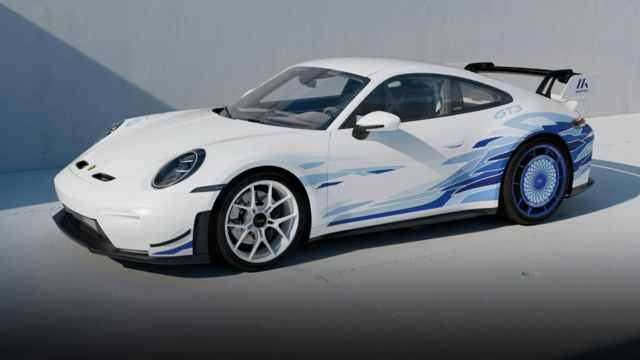
Porsche 911 GT3 Artisan Edition Pays Homage to Japanese Culture
Verdad Gallardo
Porsche Reveals Coupe Variant of the Electric Cayenne With a Fresh Look
Verdad Gallardo
10 Porsche Colors That Have More Personality Than Most People
Verdad Gallardo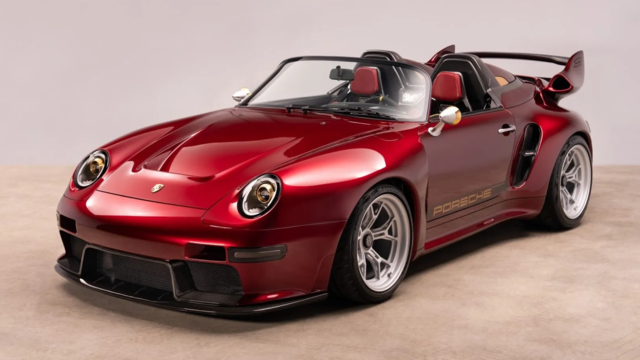
Guntherwerks' Final Speedster Creation Is the Ultimate Porsche Restomod
Verdad Gallardo
Three Wheelin'
Joined: Dec 2009
Posts: 1,272
Likes: 77
From: Bay Area
Sambo is Sam @ By Design...he did my custom Cobb tune well over 2 years ago. My car runs great, every time, all the time. 1 bar MAFless tune works great with an exhaust and no other mods!