When you click on links to various merchants on this site and make a purchase, this can result in this site earning a commission. Affiliate programs and affiliations include, but are not limited to, the eBay Partner Network.
Hmmmm, I wonder if this is something for me to consider for my hard start/stumbles I've been seeing lately. Could be totally unrelated, but I did also replace that bohemoth of a battery just before all this started...wondering when "dropping" it in place vibrated something loose?
I had no code related to the hard starts that I'm aware of, but the crank sensor on my car was just about done & would intermittently work at hot temps with moderate throttle. I don't think the two were related, so between the new y-cable and fuel pressure sensor I eliminated sluggish to no start when the engine compartment is hot. Yesterday was 95F and I took it out several times with no issue restarting while warm.
Installation of new fuel tank pressure sensor on 99 996 C2
Hello, can anyone kindly comment on how the fuel tank pressure sensor (located under the battery tray in a 1999 996 C2 is removed and replaced). It appears that the sensor is sealed and held secure with friction on the rubber gasket base (photo of sensor below), I attempted to remove the existing sensor on my 996. After removing the single philips screw I applied a lot of pressure to pull off and sepearte the sensor from the housing component it sits in that is connected to fuel lines, and the sensor unit can pivot but it resists being pulled apart. Has anyone completed the removal and if so was it necessary/effective to pry or apply a large force? Also, the sensor has a barbed nozzle on it. Should this nozzle have a venting hose attached to it? Thank yoy for any insights that may be provided.
I am incidentally engaging the fuel tank sensor replacement due to an occasional P0453 check engine code "eavporation emissisin system pressure sensor switch high" and evident abundant pressure in fuel tank upon cap removal.
Reviving an old thread here, but I recently began to encounter the same issue as OP, but on a 996TT (random hard starts after sitting in a hot garage for ~4-5 hrs, hard start defined as a strong crank, but delayed/anemic sounding fire-up once the engine finally turns over). Per the suggestion here, I replaced the sensor mentioned above, but just had the same hard start issue today (about 1 week later). I then replaced the fuel pump relay since I had one on hand and will see if that solves it.
I also have (IMO) an unstable idle when warm (idle fluctuates in a ~200 RPM band), which another poster mentioned replacing this sensor coincidentally resolved for him, but that issue did not resolve upon replacing the sensor for me. My next areas to look (assuming the relay does not fix the issue; I am not optimistic on this front) are the fuel pump itself and the fuel pressure regulator. The order of priorities here is mostly driven by how annoying I perceive the repair/replace job to be.
Unless anyone else has other ideas?
Last edited by saxonthebeach; Jul 10, 2023 at 02:50 PM.
so just cause I'm thinking .. wonder what teh chances are you fixed the starting problem by removing and reattaching the battery cables when you swapped the sensor..
Last edited by pdxmotorhead; Jul 10, 2023 at 09:15 PM.
Thanks. My symptoms are slightly different, but maybe could be the same issue. I get a hard (long crank time) start if I let the car sit for between 3 and 7 hours from last shutdown. If it fully goes cold overnight I have no issue, and if I start within a couple hrs of the last shutdown no issue as well.
I got a fuel pressure tester and tested a cold start, followed by letting the car sit for 3 hrs, then starting again and here is what I found:
Startup - 0psi before start, then a build to 50 over about 5 seconds after ignition
Idle - 50psi
At shutdown immediate drop to 45psi
3 min later 48psi
30 min after shutdown 42psi
1hr after shutdown 30psi
2 hrs after shutdown 17psi
3 hrs after shutdown 10psi
3.5 hrs after shutdown - 0
hard start after sitting for 3.5 hrs, after ignition, pressure took a full 2 min to get to previous idle pressure (50psi)
My two questions are:
1. Could this timeline also be the pump check valve failure referenced in the other thread?
2. based on the repair manual my idle pressure looks a little on the low side (supposed to be 55 +/- 3, and I’m at 50. What should I be checking for this, or is this not a concern?
Edit: I’d also throw out there that the car seems to have a more sluggish response in the very low end (ie needs more throttle than it used to when letting clutch out to avoid sputtering, although it has not stalled on me), but this could just be in my head.
Last edited by saxonthebeach; Jul 13, 2023 at 05:37 PM.
Thanks. My symptoms are slightly different, but maybe could be the same issue. I get a hard (long crank time) start if I let the car sit for between 3 and 7 hours from last shutdown. If it fully goes cold overnight I have no issue, and if I start within a couple hrs of the last shutdown no issue as well.
I got a fuel pressure tester and tested a cold start, followed by letting the car sit for 3 hrs, then starting again and here is what I found:
Startup - 0psi before start, then a build to 50 over about 5 seconds after ignition
Idle - 50psi
At shutdown immediate drop to 45psi
3 min later 48psi
30 min after shutdown 42psi
1hr after shutdown 30psi
2 hrs after shutdown 17psi
3 hrs after shutdown 10psi
3.5 hrs after shutdown - 0
hard start after sitting for 3.5 hrs, after ignition, pressure took a full 2 min to get to previous idle pressure (50psi)
My two questions are:
1. Could this timeline also be the pump check valve failure referenced in the other thread?
2. based on the repair manual my idle pressure looks a little on the low side (supposed to be 55 +/- 3, and I’m at 50. What should I be checking for this, or is this not a concern?
Edit: I’d also throw out there that the car seems to have a more sluggish response in the very low end (ie needs more throttle than it used to when letting clutch out to avoid sputtering, although it has not stalled on me), but this could just be in my head.
My Answers
1
Yes. Easy check: bridge the fuel pump relay so it runs independently of a turning crankshaft. Let the pump run 30s before you start the engine.
If it starts shortly after cranking, then you havethe confirmation.
2. 3 psi is not much of a deviation from spec and could be you measuring tool or the spring inside the fpr getting weaker.
Having said that at idle the fuel pressure can easily be reduced by 3 psi of the fpr is vacuum referenced
My Answers
1
Yes. Easy check: bridge the fuel pump relay so it runs independently of a turning crankshaft. Let the pump run 30s before you start the engine.
If it starts shortly after cranking, then you havethe confirmation.
2. 3 psi is not much of a deviation from spec and could be you measuring tool or the spring inside the fpr getting weaker.
Having said that at idle the fuel pressure can easily be reduced by 3 psi of the fpr is vacuum referenced
1. out of curiosity on how the fuel system works- why exactly does the failing check valve create this issue for semi-warm starts but not for true cold starts?
2. makes sense. I will have to replace my SAI pump at some point in the not too distant future so will likely just replace the fpr as a prophylactic then (this is a turbo so fpr is buried under the sai)
The time it takes to let an engine cool down so much as to call it a cold start is long enough that fuel to bleeds back into the fuel tank till pressure in the fuel rail is (almost) equal to ambient pressure
While cranking any fuel that is injected is too little to ignite but also too little to flood the engine.
So you just crank a bit longer till fuel pressure is built up and then it starts whereas with residual pressure the engine stutters to life because mixture is far from ideal .
Since you most probably have a defunct check valve you could give it a go and tell us if you experience what I described. 😀
The time it takes to let an engine cool down so much as to call it a cold start is long enough that fuel to bleeds back into the fuel tank till pressure in the fuel rail is (almost) equal to ambient pressure
While cranking any fuel that is injected is too little to ignite but also too little to flood the engine.
So you just crank a bit longer till fuel pressure is built up and then it starts whereas with residual pressure the engine stutters to life because mixture is far from ideal .
Since you most probably have a defunct check valve you could give it a go and tell us if you experience what I described. 😀
will have a go at it when I get time this weekend thanks!
I was googling for a replacement FPR and by chance ran into a thread on another forum about the FPR vacuum reference coming loose on these cars. Stuck my hand down there to check and sure enough my FPR vacuum line is just waving in the breeze. Sounds like the sluggish throttle response I’m experiencing could be a result of this (and also the leaner mixture I noted on a recent road trip evidenced by the car averaging 22 almost 23mpg); not sure if it could cause my startup issues.
Going to check the check valve anyways next week, not unrealistic to have multiple fuel system issues at once here.
FPR pipe No.15, where does that go to. I changed my fuel injectors and with dropping the engine and removing the fuel rail I now have a delayed start when the engine is hot.
FPR pipe No.15, where does that go to. I changed my fuel injectors and with dropping the engine and removing the fuel rail I now have a delayed start when the engine is hot.
that is the vacuum reference I mentioned. Connects somewhere to the intake manifold in back.
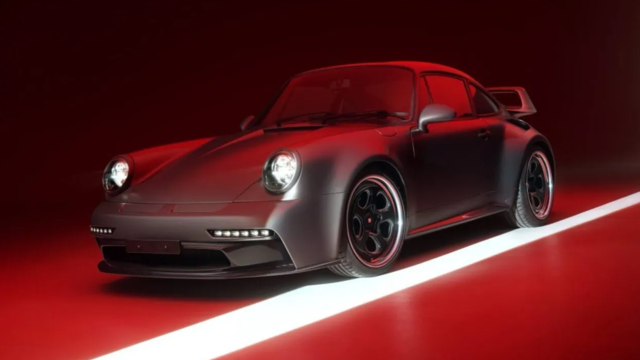
Theon Goes Full Carbon Fiber With Stunning New Build
Slideshow: Built around a carbon-bodied 964 and a naturally aspirated 4.0-liter flat-six, this bespoke commission highlights how far the restomod formula has evolved.
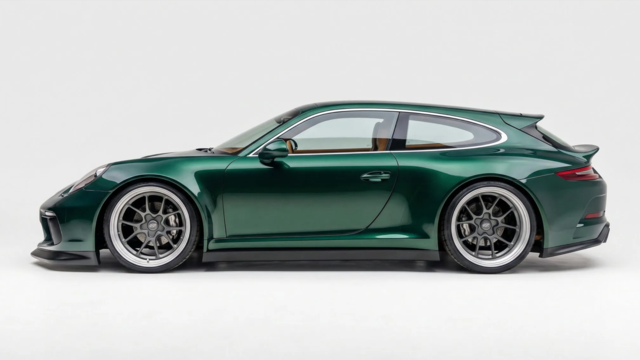
Tuner Is Converting Porsche 911s Into Shooting Brakes
Slideshow: A Polish Porsche specialist is moving ahead with one of the most unusual 911 conversions in recent memory: a shooting brake version of the 991-generation sports car.
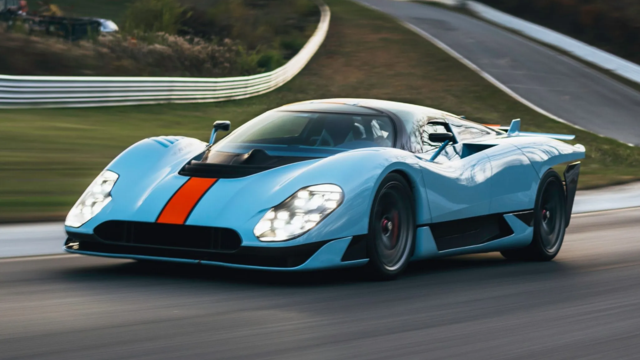
This Coachbuilt Creation Is A Modern Take on the Legendary Porsche 917
Slideshow: A Porsche Carrera GT has been transformed into a one-off coachbuilt machine that blends analog supercar engineering with styling inspired by the legendary 917 race cars.
Is This Convertible Cayenne A Steal, Or A Returnless Investment?
Slideshow: A heavily modified Porsche Cayenne convertible with faux wood trim and a long list of flaws recently sold at auction for surprisingly little money.
Porsche's Top 5 Most Questionable Naming Decisions
Slideshow: For a company obsessed with engineering precision, Porsche has occasionally named its cars in ways that left even loyal enthusiasts scratching their heads.
Pogea Racing's 964 Porsche 911 Reimagination Stands Out in a Crowded Field
Slideshow: Pogea Racing's latest Porsche 964 project blends carbon-fiber construction, modern chassis upgrades, and up to 500 horsepower while keeping the air-cooled 911 experience firmly analog.






 so just cause I'm thinking .. wonder what teh chances are you fixed the starting problem by removing and reattaching the battery cables when you swapped the sensor..