


Trading 993s?
Thread Starter
Track Day
Joined: Dec 2013
Posts: 22
Likes: 0
From: NYC
 Trading 993s?
Hi all,
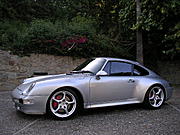
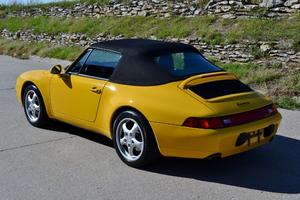
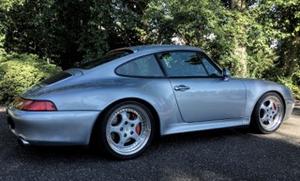
Let's say you find someone who has a 993 of similar value but different colors/options and you both want to trade (thinking mostly because I'm not sure I have my dream color). Has this ever been done before? What's the tax situation like?
Just wondering if this has ever been done before and if anyone has any success/horror stories. Not really looking into it right now, but have been curious.
Thanks!
Let's say you find someone who has a 993 of similar value but different colors/options and you both want to trade (thinking mostly because I'm not sure I have my dream color). Has this ever been done before? What's the tax situation like?
Just wondering if this has ever been done before and if anyone has any success/horror stories. Not really looking into it right now, but have been curious.
Thanks!
Drifting

Joined: May 2007
Posts: 2,616
Likes: 35
From: Semiahmoo/Blaine, Wa
Maybe you could convince your local friendly dealer to sell both cars on consignment for minimum fee. This wouldn't work in states like California which taxes on gross price and makes no adjustment for trade-in value (thieves!). Otherwise, as a "swap" I expect in most if not all states you'd each be subject to sales tax on "purchase price" which would have to be in the range acceptable to that state.
Drifting
Joined: May 2007
Posts: 2,616
Likes: 35
From: Semiahmoo/Blaine, Wa
Drifting
Joined: May 2007
Posts: 2,616
Likes: 35
From: Semiahmoo/Blaine, Wa
Thread Starter
Track Day
Joined: Dec 2013
Posts: 22
Likes: 0
From: NYC
Just looked it up after the first reply and seems that every state allows you to discount the trade value of the car except California, Hawaii, Kentucky, Maryland, Montana and D.C. (if the internet is to be trusted). So unless you live in one of those states it seems the tax bill would be minimal. Not sure exactly the difference in paperwork for private party vs. dealer, but at least it seems possible.
Now this is what I'm curious about. What inspired you to trade? How was the process?
Now this is what I'm curious about. What inspired you to trade? How was the process?
Trending Topics
Rennlist Stories
The Best Porsche Posts for Porsche Enthusiasts
9 Features and Characteristics That Only Porsche People Understand
Verdad Gallardo
I've Written 500 Rennlist Articles: Here's How Porsche Has Changed Along the Way
Joe Kucinski
10 Most Unnecessary Porsches Ever Built (And Why We Love Them)
Verdad Gallardo
Porsche 911 GT3 S/C vs 718 Spyder RS: 10 Categories, One Winner
Joe Kucinski
This Builder Is Turning Heads With Its Slantnose 911 Creation
Verdad Gallardo
Porsche 911 GT3 Artisan Edition Pays Homage to Japanese Culture
Verdad Gallardo
Porsche Reveals Coupe Variant of the Electric Cayenne With a Fresh Look
Verdad Gallardo
10 Porsche Colors That Have More Personality Than Most People
Verdad Gallardo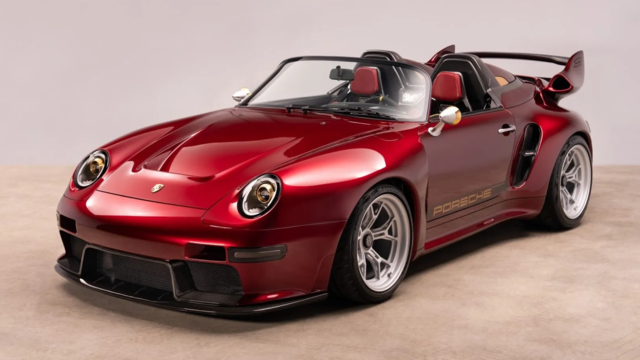
Guntherwerks' Final Speedster Creation Is the Ultimate Porsche Restomod
Verdad Gallardo
Thread Starter
Track Day
Joined: Dec 2013
Posts: 22
Likes: 0
From: NYC

Rennlist Member

Joined: Aug 2014
Posts: 4,861
Likes: 725
From: Massachusetts

Rennlist Member
Joined: Apr 2007
Posts: 1,145
Likes: 155
If you aren't paying or making money on the transaction there are no funds to tax. What would they track as the amt to tax?
MN charges a flat fee on car sale 20 yrs old or older. Price is irrelevant
I registered a $50k 993 for $120 because it's technically a collector car
Not bad for a commie state like MN
And yet another reason to drive an air cooled car

Banned
Joined: Jun 2012
Posts: 1,579
Likes: 51
I think the point is that each state has their own rules regarding valuation for tax purposes. For example, in AZ, if you purchase a car from a private seller, there is no tax due but from a dealer you pay the state sales tax. In NJ, no bill of sale is accepted if a private sale; it's the honor system and you write in the sales amount. In MA if you purchase from a private party the amount you pay is irrelevant; the RMV has stored values for each model/year and apply that amount for the basis of the sales tax owed. I'm sure there are dozens of different scenarios depending on private party vs. dealer and by state. Some states will allow car swaps and only tax on the difference and others will not.
Rennlist Member
Joined: Aug 2010
Posts: 2,579
Likes: 2,970
From: Philly suburbs

Rennlist Member
Joined: Sep 2010
Posts: 2,092
Likes: 163
From: New England
Do you know this for certain?
I've always heard this, but have personal experience that tells me otherwise.
I think it has a lot to do with the person who is handling the registration/title transaction making a judgement call.
Regards,
Al
Rennlist Member
Joined: Aug 2014
Posts: 4,861
Likes: 725
From: Massachusetts
I'm no tax expert, but I think the OP has a valid concern, both with respect to state sales tax and state/federal income tax.
Alaska, DE, NH, Montana and Oregon have no sales tax. In any other state you pay an average of 5.75% sales tax. Massachusetts has a 6.25% sales tax. If you purchase a $75,000 car you must pay the Commonwealth $4,687.50. Massachusetts and most other states with a sales tax, however, do not impose a sales tax on the trade portion of the transaction. So there is a real incentive to trade. It drives a lot of business to car dealers and away from private parties that are less apt to trade. The theory is that you already paid a sales tax on the car you're trading, so they don't tax you twice. But if you sell and buy separately and don't trade, you don't get the advantage of this exemption.
From a capital gains perspective at the Federal level (and CA), there's a possible short term or long term gain, and there's even a special section in the tax code that calls for a 28% gains tax on collector cars. I don't think there's any getting around the gains tax, trade or no trade. And simply because there are no funds per se in a trade, it's the value of what you receive that counts. So if you bought an old mercedes for $15,000 and traded it for a car worth $50,000, there would be a long term capital gain tax on the $35,000 I believe. Again, I am no tax expert, and you should consult with your own accountant who is probably unaware of the collector car 28% gains rate.
Alaska, DE, NH, Montana and Oregon have no sales tax. In any other state you pay an average of 5.75% sales tax. Massachusetts has a 6.25% sales tax. If you purchase a $75,000 car you must pay the Commonwealth $4,687.50. Massachusetts and most other states with a sales tax, however, do not impose a sales tax on the trade portion of the transaction. So there is a real incentive to trade. It drives a lot of business to car dealers and away from private parties that are less apt to trade. The theory is that you already paid a sales tax on the car you're trading, so they don't tax you twice. But if you sell and buy separately and don't trade, you don't get the advantage of this exemption.
From a capital gains perspective at the Federal level (and CA), there's a possible short term or long term gain, and there's even a special section in the tax code that calls for a 28% gains tax on collector cars. I don't think there's any getting around the gains tax, trade or no trade. And simply because there are no funds per se in a trade, it's the value of what you receive that counts. So if you bought an old mercedes for $15,000 and traded it for a car worth $50,000, there would be a long term capital gain tax on the $35,000 I believe. Again, I am no tax expert, and you should consult with your own accountant who is probably unaware of the collector car 28% gains rate.