





View Poll Results: PDCC ?
Yes


45
49.45%
No


46
50.55%
Multiple Choice Poll. Voters: 91. You may not vote on this poll
PDCC Poll
Rennlist Member

Joined: Oct 2002
Posts: 26,152
Likes: 3,919
From: S.F Bay Area

It was nothing more than a humorous remark ... Clearly you had a probelm spotting that

Rennlist Member

Joined: Oct 2013
Posts: 7,230
Likes: 3,046
From: Florida
I have PDCC on my GTS, having driven cars with and without it at Silverstone. On the track I loved it - definitely allowed me to corner more quickly. It's also great for high-intensity driving on the road; you can do things that normal physics would dictate you shouldn't be able to do.
But there is something a little odd to me about that. I'm not a track guy, I'm a road guy who likes a feeling of total connection to whatever I'm driving or riding. When I test drove the 991.2, which didn't have PDCC (and I know it has improved suspension etc etc so not a strictly fair comparison), I felt I could corner much more intuitively and was aware of what the car was doing more exactly than I am in my own car.
But there is something a little odd to me about that. I'm not a track guy, I'm a road guy who likes a feeling of total connection to whatever I'm driving or riding. When I test drove the 991.2, which didn't have PDCC (and I know it has improved suspension etc etc so not a strictly fair comparison), I felt I could corner much more intuitively and was aware of what the car was doing more exactly than I am in my own car.
I chose no.

Race Director
Joined: May 2015
Posts: 13,163
Likes: 3,919
Given all PDCC is essentially doing is eliminating body roll, which is what most race car suspensions strive to do as well, I'm not sure why people call it artificial. I think it's simply because people aren't used to driving a car with that low a level of body roll. Personally, whether the car does it by using passive suspension components that rattle my teeth out or active suspension technology that manages to deliver a decent ride while also cornering dead flat, doesn't make either natural or artificial. Just different technology achieving the same goal.
My X73 Cayman corners pretty flat. My PDCC Carrera just corners a little flatter. Doesn't feel artificial, just more aggressive in the corners and more planted to the road. Unusual? Yes, because few street cars have that low a level of body roll. Artificial? Nah.
The most positive aspect of PDCC is the sense of immense corner grip when you're driving the car spiritedly.
My X73 Cayman corners pretty flat. My PDCC Carrera just corners a little flatter. Doesn't feel artificial, just more aggressive in the corners and more planted to the road. Unusual? Yes, because few street cars have that low a level of body roll. Artificial? Nah.
The most positive aspect of PDCC is the sense of immense corner grip when you're driving the car spiritedly.
Drifting
Joined: Jun 2002
Posts: 2,086
Likes: 47
From: St. Louis
Given all PDCC is essentially doing is eliminating body roll, which is what most race car suspensions strive to do as well, I'm not sure why people call it artificial. I think it's simply because people aren't used to driving a car with that low a level of body roll. Personally, whether the car does it by using passive suspension components that rattle my teeth out or active suspension technology that manages to deliver a decent ride while also cornering dead flat, doesn't make either natural or artificial. Just different technology achieving the same goal.
My X73 Cayman corners pretty flat. My PDCC Carrera just corners a little flatter. Doesn't feel artificial, just more aggressive in the corners and more planted to the road. Unusual? Yes, because few street cars have that low a level of body roll. Artificial? Nah.
The most positive aspect of PDCC is the sense of immense corner grip when you're driving the car spiritedly.
My X73 Cayman corners pretty flat. My PDCC Carrera just corners a little flatter. Doesn't feel artificial, just more aggressive in the corners and more planted to the road. Unusual? Yes, because few street cars have that low a level of body roll. Artificial? Nah.
The most positive aspect of PDCC is the sense of immense corner grip when you're driving the car spiritedly.
Rennlist Member
Joined: Oct 2013
Posts: 7,230
Likes: 3,046
From: Florida
Given all PDCC is essentially doing is eliminating body roll, which is what most race car suspensions strive to do as well, I'm not sure why people call it artificial. I think it's simply because people aren't used to driving a car with that low a level of body roll. Personally, whether the car does it by using passive suspension components that rattle my teeth out or active suspension technology that manages to deliver a decent ride while also cornering dead flat, doesn't make either natural or artificial. Just different technology achieving the same goal.
My X73 Cayman corners pretty flat. My PDCC Carrera just corners a little flatter. Doesn't feel artificial, just more aggressive in the corners and more planted to the road. Unusual? Yes, because few street cars have that low a level of body roll. Artificial? Nah.
The most positive aspect of PDCC is the sense of immense corner grip when you're driving the car spiritedly.
My X73 Cayman corners pretty flat. My PDCC Carrera just corners a little flatter. Doesn't feel artificial, just more aggressive in the corners and more planted to the road. Unusual? Yes, because few street cars have that low a level of body roll. Artificial? Nah.
The most positive aspect of PDCC is the sense of immense corner grip when you're driving the car spiritedly.
My GT3 achieves more grip, and is better planted to the road while still feeling much more natural than a Carrera with PDDC. Yes I've driven both.
Race Director
Joined: May 2015
Posts: 13,163
Likes: 3,919
Rennlist Stories
The Best Porsche Posts for Porsche Enthusiasts

Talos Takes Your 991 Porsche 911 GT3 to the Next Level for a Cool $1.13 Million
Verdad Gallardo
9 Vehicles Porsche Helped Engineer that Aren't Porsches
Verdad Gallardo
9 Features and Characteristics That Only Porsche People Understand
Verdad Gallardo
I've Written 500 Rennlist Articles: Here's How Porsche Has Changed Along the Way
Joe Kucinski
10 Most Unnecessary Porsches Ever Built (And Why We Love Them)
Verdad Gallardo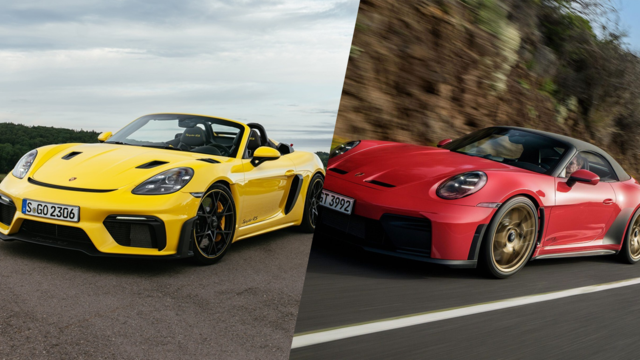
Porsche 911 GT3 S/C vs 718 Spyder RS: 10 Categories, One Winner
Joe Kucinski
This Builder Is Turning Heads With Its Slantnose 911 Creation
Verdad Gallardo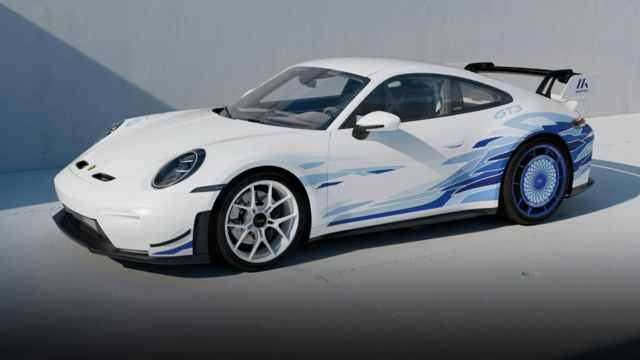
Porsche 911 GT3 Artisan Edition Pays Homage to Japanese Culture
Verdad Gallardo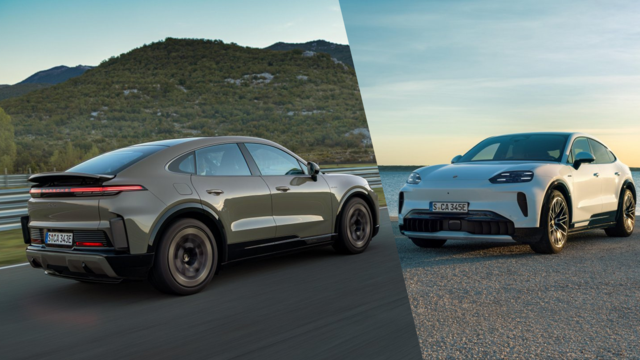
Porsche Reveals Coupe Variant of the Electric Cayenne With a Fresh Look
Verdad Gallardo


Burning Brakes
Joined: Sep 2005
Posts: 1,194
Likes: 34
From: PNW
Off topic slightly:
On Land Cruisers they have the opposite & call it KDSS....(Kinetic Dynamic Suspension System)
"The KDSS System is a Hydro-Mechanical Semi-Active anti-roll bar"
The bars disengage when the going gets tough... more wheel travel allowed.
On Land Cruisers they have the opposite & call it KDSS....(Kinetic Dynamic Suspension System)
"The KDSS System is a Hydro-Mechanical Semi-Active anti-roll bar"
The bars disengage when the going gets tough... more wheel travel allowed.


Racer
Joined: Jul 2015
Posts: 251
Likes: 1
Given all PDCC is essentially doing is eliminating body roll, which is what most race car suspensions strive to do as well, I'm not sure why people call it artificial. I think it's simply because people aren't used to driving a car with that low a level of body roll. Personally, whether the car does it by using passive suspension components that rattle my teeth out or active suspension technology that manages to deliver a decent ride while also cornering dead flat, doesn't make either natural or artificial. Just different technology achieving the same goal.
My X73 Cayman corners pretty flat. My PDCC Carrera just corners a little flatter. Doesn't feel artificial, just more aggressive in the corners and more planted to the road. Unusual? Yes, because few street cars have that low a level of body roll. Artificial? Nah.
The most positive aspect of PDCC is the sense of immense corner grip when you're driving the car spiritedly.
My X73 Cayman corners pretty flat. My PDCC Carrera just corners a little flatter. Doesn't feel artificial, just more aggressive in the corners and more planted to the road. Unusual? Yes, because few street cars have that low a level of body roll. Artificial? Nah.
The most positive aspect of PDCC is the sense of immense corner grip when you're driving the car spiritedly.

Rennlist Member
Joined: Oct 2002
Posts: 26,152
Likes: 3,919
From: S.F Bay Area
that's pretty much what PDCC is ... including the disengagement while driving in a straight line...


Rennlist Member
Joined: May 2012
Posts: 1,739
Likes: 472
The selling point for me is allowing the suspension to work indepedently when not cor. At high speeds over bumpy roads, the ride is more settled. It also reduces the tendency for the wheel and car to drop into the pothole. I have had 2 Panameras, one with pdcc and one without. For heavy vehicles it seems to make a significant difference. I ordered it on a 991 GTS because of my prior experience with the Panny but I haven't tracked it and