When you click on links to various merchants on this site and make a purchase, this can result in this site earning a commission. Affiliate programs and affiliations include, but are not limited to, the eBay Partner Network.
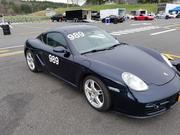
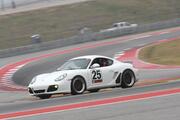
I drive and track a 987.2 Cayman. This has been my first year in the car, and I am have done 3 events this year with another on the calendar. Hoping to do more events next year and in the future and may mix in some autocross. Typically hitting 100 - 125 in the car. Temps can vary on track, but nothing crazy hot.
Car is decently modified as it sits, however, I need new rotors and pads! Currently have performance headers, exhaust, tune, wheels / tires new, bucket seat, numeric cables, and some interior stuff like pedals. Moving to coilovers / upgrading sway bars soon as well. Eventually will go harness and roll bar and then that is kind of it.
So here is where the debate comes in. Do I get the Sebro slotted rotors, or bite the bullet with the girodisks? I get this has been discussed at length but can't seem to find a great answer.
Would it be enough to go Sebro and just have 2 sets of pads (1 track, 1 street)? Is the Girodisk really worth the premium to where I can expect that much better braking and longevity / maintenance costs?
Thanks in advance guys. Sorry for another rotor discussion... just looking for a clear answer!
Cheers
Last edited by ChiCayman; Aug 14, 2022 at 11:27 PM.
pads/tires determine your maximum stopping force. The larger rotor gives you a larger heat sink for longer braking zone.. but at the expense of more unsprung weight.
First thing to work on is cooling cooling. GT3 Fender liners with the air guides and control arm scoops are a must have.
Then need to look at your on track performace.. is there a particular braking zone where you are getting fade and cannot maintain maximum decel to the end?
Last edited by jscott82; Aug 14, 2022 at 11:46 PM.
Maybe @jscott82 or someone else can weigh in on the following: It is my understanding that when you "bed" brakes, you are transferring brake pad material to the rotor face. This is not a bad thing, it is part of establishing the friction surfaces. If one switches back and forth from street pads to track pads, I am not sure how this situation should be handled. Separate rotors for separate pads?
BTW, I track my 07 Cayman S using the slotted Sebros and stock street pads. I have no problem with the braking in a DE event. BTW, one good thing about a DE event is that if your brakes start to feel squishy, you just back off and let things cool down a bit.
Also BTW, most beginner DE drivers use their brakes too much. Ask your instructor about learning "momentum car" driving techniques and one advantage is less brake usage. Of course, brake usage can be track dependant. Road America will be different than Gingerman. But by and large, the Cayman has excellent brakes right out of the box. I advise to save your money and spend it on seat time.
Sebro slotted from FCPEuro with Lifetime warranty. Had 09 Boxster for two seasons and moved to 2013 Boxster S. Have warranted fronts twice. $50+ to mail back. Try Ferodo DS1.11s or more aggressive DS3.12. I don't change back to street pads between events. My DS 1.11s did not squeak on street. Since moved to Pagid RS29s. More heat load for brake fluid from slotted. I use Motul 660.
Do you have camber plates or adjustable LCAs for more front negative camber?
I run 18s with Hankook RS4s. Not the fastest but last forever.
Last edited by Kitc2246; Aug 15, 2022 at 09:17 AM.
Maybe @jscott82 or someone else can weigh in on the following: It is my understanding that when you "bed" brakes, you are transferring brake pad material to the rotor face. This is not a bad thing, it is part of establishing the friction surfaces. If one switches back and forth from street pads to track pads, I am not sure how this situation should be handled. Separate rotors for separate pads?
It's not a problem to switch pads, just re-bed the track pads when you put them back on.
As jscott82 said, it's the pads and tires that determine ultimate braking performance in these cars, because the stock brakes are pretty good to begin with. There are pads that work on both the street and track (I really like the PFC 08's), but every track-worthy pad will be very noisy and dust like crazy on the street.
Technically, yes, for track use you should have matched pads and rotors. A) for the pad transfer as Harvey mentions, and B) for the matched wear patterns.
I honestly don't know anyone that does this though. Since the street pads don't transfer material, they usually end up cleaning up the rotor (removing all of the sticky track pad goodness). So next time you put the track pad back in, you need to bed them in real quick to re-establish the transfer
And yes as you get faster there really isn't a dual purpose pad. For a couple of reasons.
1) Bite - this is personal taste. You find a pad that you like the way it takes in initial bite,, and how it modulates once active (hot). This is not something street pads do...
2l temp range-track pads are built to work when HOTTTT. And again you can select a pad that works in the heat range you need. Street pads work best when cold. Porsche does an amazing job of specing pads that work well cold and can withstand a decent amount of heat, but its a comprimize...
So when you are first starting, good OE pads and fresh fluid (also heat sensative) is all you need. But as you progress up the rungs and get more aggressive. Brakes are the ONLY thing you usually need to get specialist parts for.
I use Sebro rotors and they are more than adequate for brake-heavy tracks. I swap from factory Cayman R pads for the street to Ferodo DS1.11 for the track and leave on the same rotors. Been doing that for a couple years with no issue. I do mark the pads to keep the same pad in the same location. Pony up for some Castrol SRF fluid, install some GT3 brake ducts, and bypass your factory wear sensors. That's really all you need.
Another 987.2 here. Like @Zach L , I use Sebro slotted rotors, Ferodo DS1.11 pads, Castrol SRF and GT3 brake ducts. Plenty of brake performance with this setup. I don't switch to street pads since my Cayman S is not a daily car and I'm willing to put up with some squealing on the few times I drive her on the road.
No reason to pay the premium for SRF if you are changing the fluid once or twice a year. The "dry" boiling points should be compared if the fluid is changed often.
While SRF has a higher "wet" boiling temperature, Motul 660 has a slightly higher dry boiling point and is cheaper. Motul 600 is only a few degrees less.
pads/tires determine your maximum stopping force. The larger rotor gives you a larger heat sink for longer braking zone.. but at the expense of more unsprung weight.
First thing to work on is cooling cooling. GT3 Fender liners with the air guides and control arm scoops are a must have.
Then need to look at your on track performace.. is there a particular braking zone where you are getting fade and cannot maintain maximum decel to the end?
Hi jscott82,
would you happen to have the part numbers for the GT3 fender liners? What other parts are required to install them?
I do have the center radiator installed (stock bumper, outlet going down).
I have installed the GT3 brake ducts.
Stock discs (which tend to develop serious cracks after 6-7 trackdays with Pagid RSL29 pads and SRF fluid).
I'll be switching to Endless pads MA45B front and ME20 (ME22 were not in stock) for the rears.
No reason to pay the premium for SRF if you are changing the fluid once or twice a year. The "dry" boiling points should be compared if the fluid is changed often.
While SRF has a higher "wet" boiling temperature, Motul 660 has a slightly higher dry boiling point and is cheaper. Motul 600 is only a few degrees less.
It's not just the boiling point that differs; SRF absorbs water at a slower rate. With all brake fluids, the absorption of water happens gradually. So even one month into having the fluid, the SRF has deteriorated less than other fluids. SRF is a completely different fluid - it's silicon ester rather than glycol ether.
I've ran Motul RBF600 and RBF660 in multiple vehicles, and after running SRF, it's the only fluid I'll put in my cars that see track time. It has a reputation for being one of the only fluids that can stand up to the heat of PCCB on track. It just performs much better and I believe it can deal with higher temps than either Motul fluid, regardless of how it's rated in a controlled lab environment.
I use Sebro rotors and they are more than adequate for brake-heavy tracks. I swap from factory Cayman R pads for the street to Ferodo DS1.11 for the track and leave on the same rotors. Been doing that for a couple years with no issue. I do mark the pads to keep the same pad in the same location. Pony up for some Castrol SRF fluid, install some GT3 brake ducts, and bypass your factory wear sensors. That's really all you need.
It's not just the boiling point that differs; SRF absorbs water at a slower rate. With all brake fluids, the absorption of water happens gradually. So even one month into having the fluid, the SRF has deteriorated less than other fluids. SRF is a completely different fluid - it's silicon ester rather than glycol ether.
I've ran Motul RBF600 and RBF660 in multiple vehicles, and after running SRF, it's the only fluid I'll put in my cars that see track time. It has a reputation for being one of the only fluids that can stand up to the heat of PCCB on track. It just performs much better and I believe it can deal with higher temps than either Motul fluid, regardless of how it's rated in a controlled lab environment.
Yes, I will agree that SRF is the best brake fluid but at a premium price. I've never had any issues with Motul 660. I tracked a 987.2 with drilled rotors and used ATE 200. I boiled ATE 200 in my 981 with Sebro slotted rotors and switched to Motul 660. The OP has a 987.2 and is just beginning. Adding Sebro slotted, track pads, GT3 brake ducts should be next. The GT3 fender liners are for better air flow through the radiators. Doubt they add much if anything to cool the brakes.
Did you experience failures with Motul 600 and 660?
I get the different chemistry which is why SRF has a higher wet boiling temperature and is rated for 18 months vs 12 for 660.. To my knowledge there is no standard test for moisture absorption rate. SRF advertises that its silicon base absorbs less water than glycol base fluids. I try to make sure I've checked the brake fluid moisture content before each weekend session. I normally change twice a year, so for my-situation which is similar to the OP, IMO SRF is over kill.
What is your basis for saying that SRF performs better and can deal with higher temps? If you are talking 12-18 month old fluid then I agree.
In the grand scheme of tracking expenses, use the brake fluid that makes you comfortable and safe . The cost difference compared to other track expenses is trivial.
Last edited by Kitc2246; Aug 17, 2022 at 05:44 PM.
What is your basis for saying that SRF performs better and can deal with higher temps? If you are talking 12-18 month old fluid then I agree.
Personal basis is experiencing fade while using Motul 660 on a previous non-Porsche car, probably about 4 months old. I've never ran anything but SRF in my PCCB-equipped car and never had any issue - the reason for that is inquiring with many others that had tracked PCCB and consistent feedback is anyone using anything other than SRF has had issues with boiling fluid then switched to SRF and not had issues. I can't speak for how old the Motul was, but PCA requires a fluid flush in the last 6 months.


 Another Rotor Conversation