When you click on links to various merchants on this site and make a purchase, this can result in this site earning a commission. Affiliate programs and affiliations include, but are not limited to, the eBay Partner Network.
Trying to startup this weekend the car wouldn't even stay running at idle for more than a few seconds, so certainly wasn't in a condition for a full drive cycle. To relearn the keys I need a PIWIS / programmable OBD no? Maybe the Foxwell can do that? A quick Google didn't yield anything that looked like I could do with my current equipment. My apologies if I missed something.
I'll be sure to fully explore the Foxwell's capabilities when it comes in, current ETA is Thursday, if it's not delayed I should have some results to post that evening.
From my point of view you need to focus on most important issues first- get the engine running normal. After accomplishing- the rest of the problems by the importance grade
Of course the keys are not related to the poor running condition.
To relearn the keys I need a PIWIS / programmable OBD no?
-Eric
Yea, to effectively program or reprogram keys, the dealership with a PIWIS is the answer in most cases. However, many have been able to "relearn" their keys using this simple process...
Trying to startup this weekend the car wouldn't even stay running at idle for more than a few seconds, so certainly wasn't in a condition for a full drive cycle. -Eric
Eric, I'm just speaking out of personal experience as well as from helping others with this very common issue with Boxsters and Cabriolets. Nothing is absolute here, but when you have a malfunctioning security module (KESSY/PASS unit) it can cause all kinds of weirdnesses which attempting to start the car. As HETPE3B has pointed out, if the security module is dead or compromised, then of course, the car's DME will not allow it to start at all. And, as I've mentioned in my earlier post, the engine's rough running is a totally different problem from the security and rear control (convertible) problem. Therefore, if you feel the car is starting fine, then no harm, no foul for concentrating on the engine issue. Do what you feel is best.
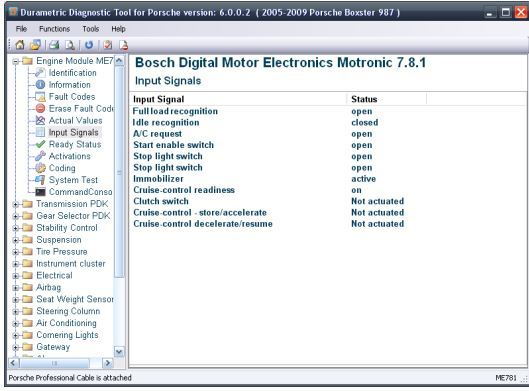
Now, in my case, for my car to smooth out, it needed to be driven in order for the DME to relearn proper air/fuel trim parameters. And since it had been off the battery for a time, that's why I encouraged you to complete a drive cycle and look for any obvious signs of water intrusion - look into the air box, throttle body, and even examine the condition of the MAF. Now, the Foxwell should give you LIVE data and if it's in readiness status. The Durametric is a more robust tool, but I've heard the Foxwell does pretty well.
Got the Foxwell in today, running a diagnostic the following codes showed:
P1023 Fuel high pressure too low during starting
P1531 Intake manf comm ctrl circ (bank2) P1533
P1026 Fuel high pressure implausible
C136 Communication AWS control unit
C203 Fault, steering wheel electronics control unit (drive)
C171 Fault, rear control unit (comfort)
8004/800C - (seat airbags are disconnected, expected)
8055 AWS LIN, no communication
8053 Driver’s belt buckle, short circuit to B+
4444 Steering-angle sensor not initialized
C151 Communication Tiptronic control unit (drive) [I assume this is normal as I have a manual?]
Many of these are minor / expected from seats disconnected, but the high pressure warnings still remain after clearing and restarting. Giving the engine some throttle I was able to get it to stay running and once it warmed up a bit it’s been idling okay - but it is still in limp mode (limited to 4k rpm) and definitely running rough.
I checked some of the live data and saw fuel rail pressure hangs around 525kpa, dropping to ~500 and peaking around 600. Pardon the vertical photo…
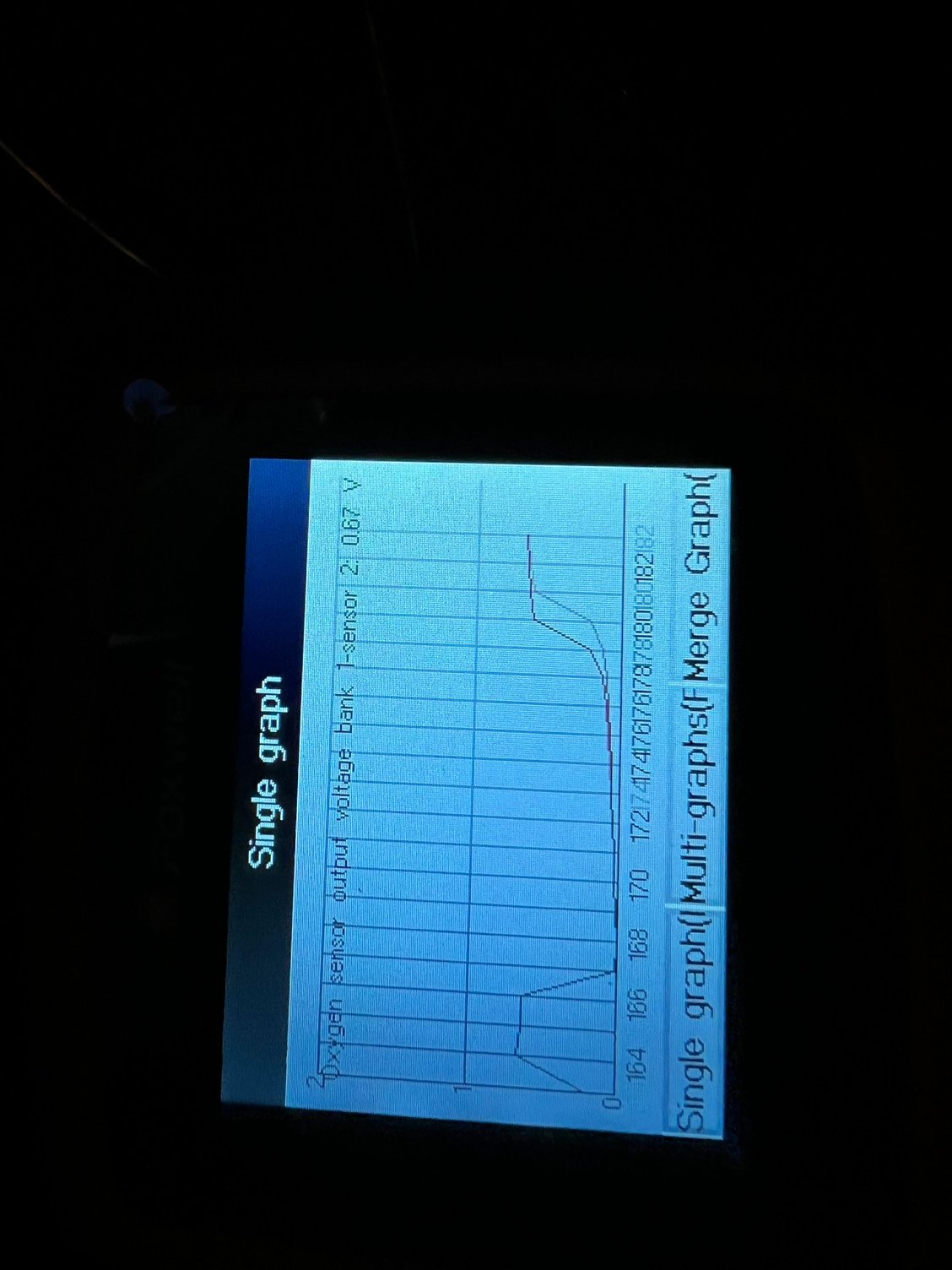
I wasn’t sure what else to check yet. I attached some o2 voltage graphs because they drop a lot after letting off and I’m not sure if that’s expected ? Most of this is new to me. I’m going to try to take a video of the revving, maybe someone can hear something, but any other stats I should look for?
The engine has been running better and better as it warms up, maybe filter should be a next to check? Still very rough but I wouldn’t expect improvement if it was just HPFP right?
Thanks again as always, I appreciate the continued guidance.
Not sure if the sputtering comes through enough from my phone, definitely more noticeable in person / sitting in the car. Seems relatively smooth though, certainly much better now that it’s warmed up.
Edit: seems video won’t upload from my phone - I’ll try in a bit from my computer.
Got the Foxwell in today, running a diagnostic the following codes showed:
P1023 Fuel high pressure too low during starting
P1531 Intake manf comm ctrl circ (bank2) P1533
P1026 Fuel high pressure implausible
C136 Communication AWS control unit
C203 Fault, steering wheel electronics control unit (drive)
C171 Fault, rear control unit (comfort)
8004/800C - (seat airbags are disconnected, expected)
8055 AWS LIN, no communication 8053 Driver’s belt buckle, short circuit to B+
4444 Steering-angle sensor not initialized
C151 Communication Tiptronic control unit (drive) [I assume this is normal as I have a manual?]
Many of these are minor / expected from seats disconnected, but the high pressure warnings still remain after clearing and restarting. Giving the engine some throttle I was able to get it to stay running and once it warmed up a bit it’s been idling okay - but it is still in limp mode (limited to 4k rpm) and definitely running rough.
I checked some of the live data and saw fuel rail pressure hangs around 525kpa, dropping to ~500 and peaking around 600. Pardon the vertical photo…
I wasn’t sure what else to check yet. I attached some o2 voltage graphs because they drop a lot after letting off and I’m not sure if that’s expected ? Most of this is new to me. I’m going to try to take a video of the revving, maybe someone can hear something, but any other stats I should look for?
The engine has been running better and better as it warms up, maybe filter should be a next to check? Still very rough but I wouldn’t expect improvement if it was just HPFP right?
Thanks again as always, I appreciate the continued guidance.
Did you turn on the ignition when the seats were removed? Many of these faults are seat related. Make sure all multipin cables are connected under the seat and then clear the DTC and start the car.
Again, as said earlier, you need to check the reading for a set pressure and compare it to the actual pressure.
Did you carefully watch the video I posted above about my Cayenne HPFP diagnostic process? Same applies to your 987.2 (possibly different fuel pressure readings should apply for car though).
Yup I started with seats disconnected- I avoided that for a while but it got to be too much of a pain and I figured I can just clear them later easily enough.
Drive cycle will have to wait until this weekend, we have some storms the next couple days, but yes now that it seems to run okay after warming up I’ll definitely try a full cycle
Again, as said earlier, you need to check the reading for a set pressure and compare it to the actual pressure.
Did you carefully watch the video I posted above about my Cayenne HPFP diagnostic process? Same applies to your 981 (possibly different fuel pressure readings should apply for car though).
Ah, apologies I forgot about the video, I’ll check that out. Didn’t see any obvious parameters for those metrics but I just got the Foxwell, I’ll do some research as to what it’s called
Some more updates. I went out for a drive around to see how everything does - no significant changes, still chronically in limp mode so hard to say - it runs pretty well once it's warmed up but clearly still struggles when trying to put down any power (even with limp mode limitations). Still getting the rough running, sputtering sounds, and occasional misfires. After the drive cycle I let it sit for an hour or two, then went out again, same thing. While driving I was monitoring the "Fuel Rail Pressure" on the Foxwell, under normal operation it would hover around 550 kPa, never really dropping below 500, and occasionally (when letting off throttle) going up to 2-4000 kPa. I once saw it hit as high as 6000 at idle. According to the service manual, this is supposed to be the high pressure fuel line, and it is supposed to range from 4000-12,000 kPa, so definitely seems low, but I'm not sure how much of that may be from limp mode. Is anyone able to confirm what it should be?
I was still unable to find anything in the Foxwell to indicate "set pressure" - did some research online and found a post with a nice graph from a 997, but they didn't say which parameters they used. I went through everything available in the "Live Data" section and the only other value rated in kPa is the ambient barometric pressure. Is this something that should definitely be there for my car? Maybe I need to download another plugin? (It already has the Porsche plugin afaik, I have the "Porsche" section on the home screen and it reads a lot of data).
Last update for today, I got into the engine bay today - what a pain. First thing I checked was the air filter in case that was somehow completely blocked - I did find it was detached (wasn't screwed in place, had come off its mount so wasn't blocking ambient air from entering the engine directly). I'm slightly concerned about what it could've sucked in, but that shouldn't be causing the current issues. Filter is otherwise clean, so I properly re-mounted and moved on. I also found where the HPFP is, and was delighted to see that step 5 in the service manual for replacing it is "lower the engine" -_-. I'm going to reach out to a buddy of mine with a shop so I can maybe use their lift to at least check the flow rate on the low-pressure pump before investing in the HPFP (I watched the video above, seems the tank isn't as easy to access for me, recommended method seems to be tapping the fuel filter under the car), but if I decided to just bite the bullet on the HPFP, any estimates on what Porsche (or any other acceptable shop) would charge for the replacement? I see the part is around a grand, and I can't imagine dropping the engine is any less than 10-15 hours of labor. Am I looking at a $3-5k repair here if I have them do it?
As always, thanks again to everyone - this has been very helpful.
Some more updates. I went out for a drive around to see how everything does - no significant changes, still chronically in limp mode so hard to say - it runs pretty well once it's warmed up but clearly still struggles when trying to put down any power (even with limp mode limitations). Still getting the rough running, sputtering sounds, and occasional misfires. After the drive cycle I let it sit for an hour or two, then went out again, same thing. While driving I was monitoring the "Fuel Rail Pressure" on the Foxwell, under normal operation it would hover around 550 kPa, never really dropping below 500, and occasionally (when letting off throttle) going up to 2-4000 kPa. I once saw it hit as high as 6000 at idle. According to the service manual, this is supposed to be the high pressure fuel line, and it is supposed to range from 4000-12,000 kPa, so definitely seems low, but I'm not sure how much of that may be from limp mode. Is anyone able to confirm what it should be?
I was still unable to find anything in the Foxwell to indicate "set pressure" - did some research online and found a post with a nice graph from a 997, but they didn't say which parameters they used. I went through everything available in the "Live Data" section and the only other value rated in kPa is the ambient barometric pressure. Is this something that should definitely be there for my car? Maybe I need to download another plugin? (It already has the Porsche plugin afaik, I have the "Porsche" section on the home screen and it reads a lot of data).
Last update for today, I got into the engine bay today - what a pain. First thing I checked was the air filter in case that was somehow completely blocked - I did find it was detached (wasn't screwed in place, had come off its mount so wasn't blocking ambient air from entering the engine directly). I'm slightly concerned about what it could've sucked in, but that shouldn't be causing the current issues. Filter is otherwise clean, so I properly re-mounted and moved on. I also found where the HPFP is, and was delighted to see that step 5 in the service manual for replacing it is "lower the engine" -_-. I'm going to reach out to a buddy of mine with a shop so I can maybe use their lift to at least check the flow rate on the low-pressure pump before investing in the HPFP (I watched the video above, seems the tank isn't as easy to access for me, recommended method seems to be tapping the fuel filter under the car), but if I decided to just bite the bullet on the HPFP, any estimates on what Porsche (or any other acceptable shop) would charge for the replacement? I see the part is around a grand, and I can't imagine dropping the engine is any less than 10-15 hours of labor. Am I looking at a $3-5k repair here if I have them do it?
As always, thanks again to everyone - this has been very helpful.
Been over a month... what's the status of your situation?
Tl;dr; I reached the “let a professional handle it” stage, waiting on an appointment at a local shop.
I updated my OBD with the latest Porsche plugin, but still don’t have the live reading datapoints for HPFP set point vs actual. Part of me is still wondering if there’s an electrical module responsible for controlling the pump as well as reporting those metrics and that’s dead. Would explain why I don’t have those values in my OBD and would make a little more sense with the timing (to be another electrical thing given how this all started).
I took it to a local shop that a friend of mine uses for his M4, they’re more BMW and Audi focused but said they’d take a look anyway (I guess a lot of the electrical are shared VW anyway?). Took a while to get an appointment- they took a look and confirmed they think it’s the HPFP, they were able to measure the low pressure pump and confirm that’s fine. But ultimately they weren’t comfortable enough with the car to do the work to replace the HPFP. Given the complexity, I understood and appreciated the honesty. So some information gained but no real progress.
I asked around again and got a better recommendation on a shop a friend of a friend uses for all his Porsches (which apparently he’s had near 30!) Anyway, gave them a call and they say they’ve done the swap plenty of times, it’ll be $750 plus the part. The part is ~$900 on eBay or $1200 through them (sounds like their third party vendors were out of stock so they’d be buying direct from Porsche). If I go through them they also warranty the part and install for a year, so that’s what I’m opting for. All told, should be around $2k for the replacement, I have an appointment to drop the car off next Thursday.
I’ll bring up the lack of OBD readings with them, hopefully they have an idea and can clear up that confusion. I’ll update once I hear more from them or (hopefully) have everything sorted.
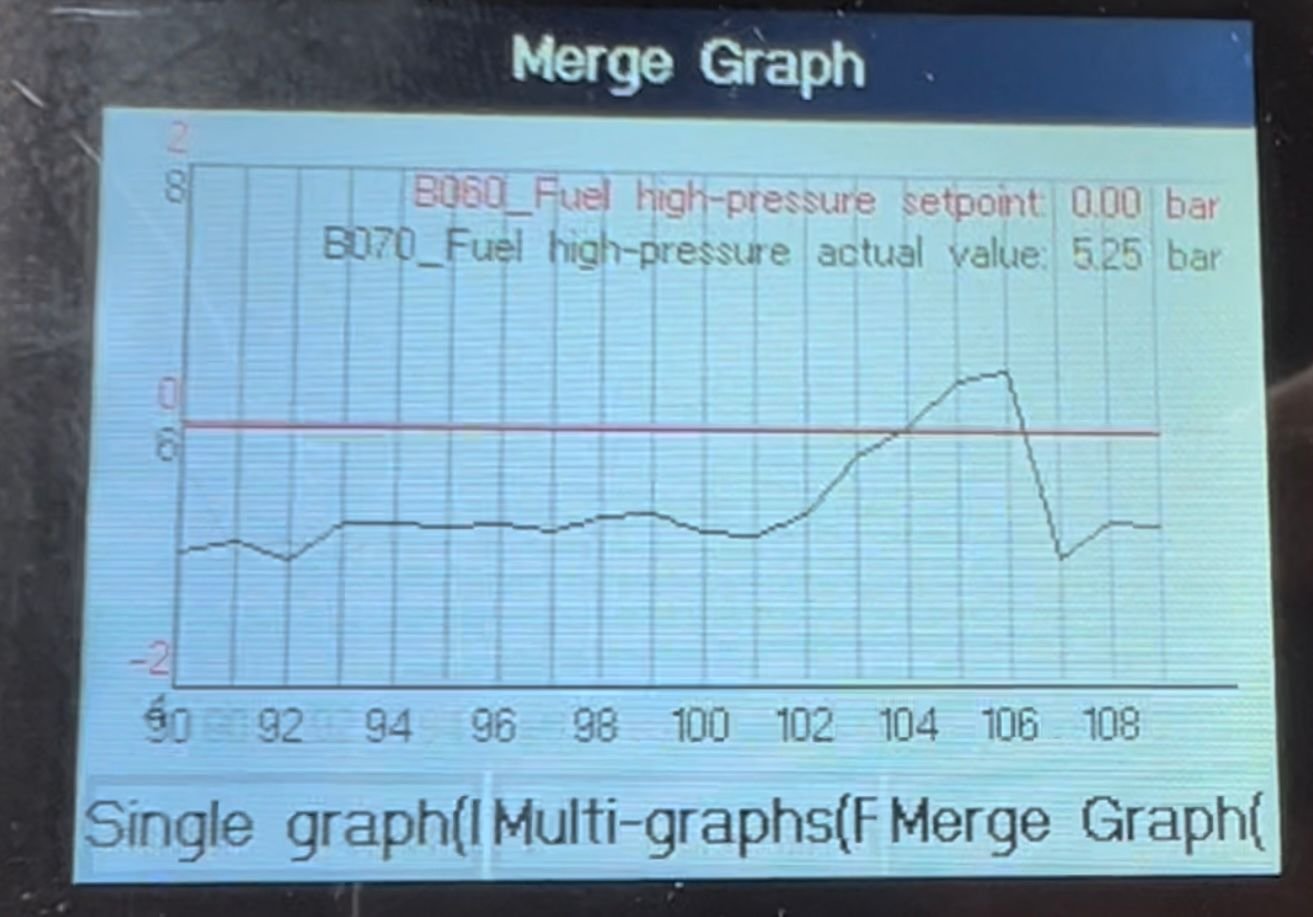
Reading up on the control modules to see if it’s possible another module was flooded, I looked into the DME/DFI module and finally found the HPFP set point vs actual values in the Foxwell NT530. For future readers it’s under:
Porsche > Smart VIN > (confirm your model) > Diagnosis > Control Modules > DME Control Unit > Live Data > B_Fuel high-pressure control
This showed that the set point is always zero so I take it that indicates an electrical issue? I’ll continue to research but figured I’d update right away since this was pretty unexpected.
t
With the actual around 4-6bar it sounds like the HPFP is just acting as a pass through, so the engine is just getting fuel directly from the LPFP.
Also in the same section of the Foxwell was the following:
adaptation range 1 = 1.12
adaptation range 2 = 1.04
adaptation range 3 = 1.04
adaptation range 4 = 1.04
adaptation range 5 = 1.03
setpoint = 0 bar
actual value = ~5.5 bar
Flow control valve P/D factor = 0%
I did try a complete drive cycle with the OBD running and none of these values change other than the actual value, which just fluctuates between ~4-6 bar.
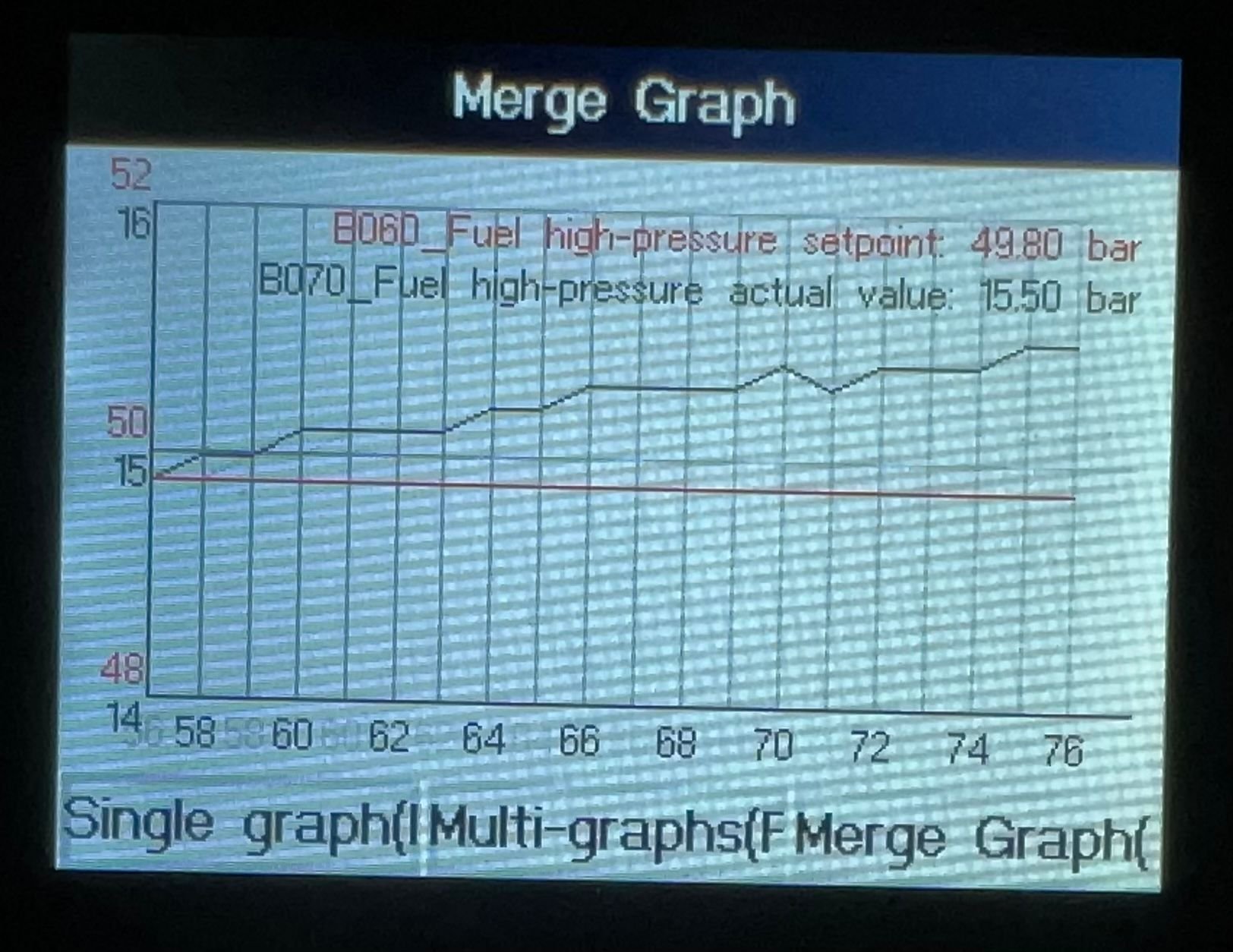
Okay turns out the setpoint of zero was just because the car is putting itself in limp mode.
I tried clearing the DME codes and restarting and the HPFP setpoint went to ~50 bar but the actual was clearly not keeping up, then as soon as I got a beep and the “Engine power reduced” warning on the dash the setpoint dropped to zero. So back to the original theory of failing pump. Guess I’ll be keeping my service appointment
9 Vehicles Porsche Helped Engineer that Aren't Porsches
Slideshow: Long before engineering consulting became trendy, Porsche was quietly helping other automakers build everything from supercars to economy hatchbacks.
9 Features and Characteristics That Only Porsche People Understand
Slideshow: Some brands build cars. Porsche builds traditions, obsessions, and a few habits that stopped making sense decades ago but somehow became part of the charm.
This Builder Is Turning Heads With Its Slantnose 911 Creation
Slideshow: A small Polish tuner has reimagined the Porsche 911 Slantnose for the modern era, blending 1980s nostalgia with widebody tuning culture and serious performance upgrades.
Porsche 911 GT3 Artisan Edition Pays Homage to Japanese Culture
Slideshow: Porsche has created a Japan-only 911 GT3 Artisan Edition that blends track-ready hardware with design cues inspired by traditional Japanese craftsmanship.
Porsche Reveals Coupe Variant of the Electric Cayenne With a Fresh Look
Slideshow: Porsche's latest electric Cayenne Coupe blends dramatic styling with supercar acceleration, turning the brand's midsize SUV into a 1,139-horsepower flagship.