When you click on links to various merchants on this site and make a purchase, this can result in this site earning a commission. Affiliate programs and affiliations include, but are not limited to, the eBay Partner Network.
That's what I'm afraid of. It's oversized in name only as even though its rectangular, it has odd dimensions. An additional foot would make a world of difference.
We're in TN now and moving back to FL later this year as well and I'm REALLY gonna miss my extra shop/garage the previous gear-head built (and was a key factor in my selection of this TN house).
Most of the ideas that I've found to be really useful have been covered already (sink and floor drain, side mount or rollup door style openers, 220v outlets) but a few things I've really liked here....
1- another garage door on the side or back wall. Allows flow through ventilation and/or easier access to trailers, working without the street door being open, if you store other equipment in there, etc.
2- If you get cabinets and workbench installed, put it on a 6"+ riser base (in addition to the normal cabinet base). Mine came like this and it's just so much more comfortable to work on stuff on the counter without bending over.
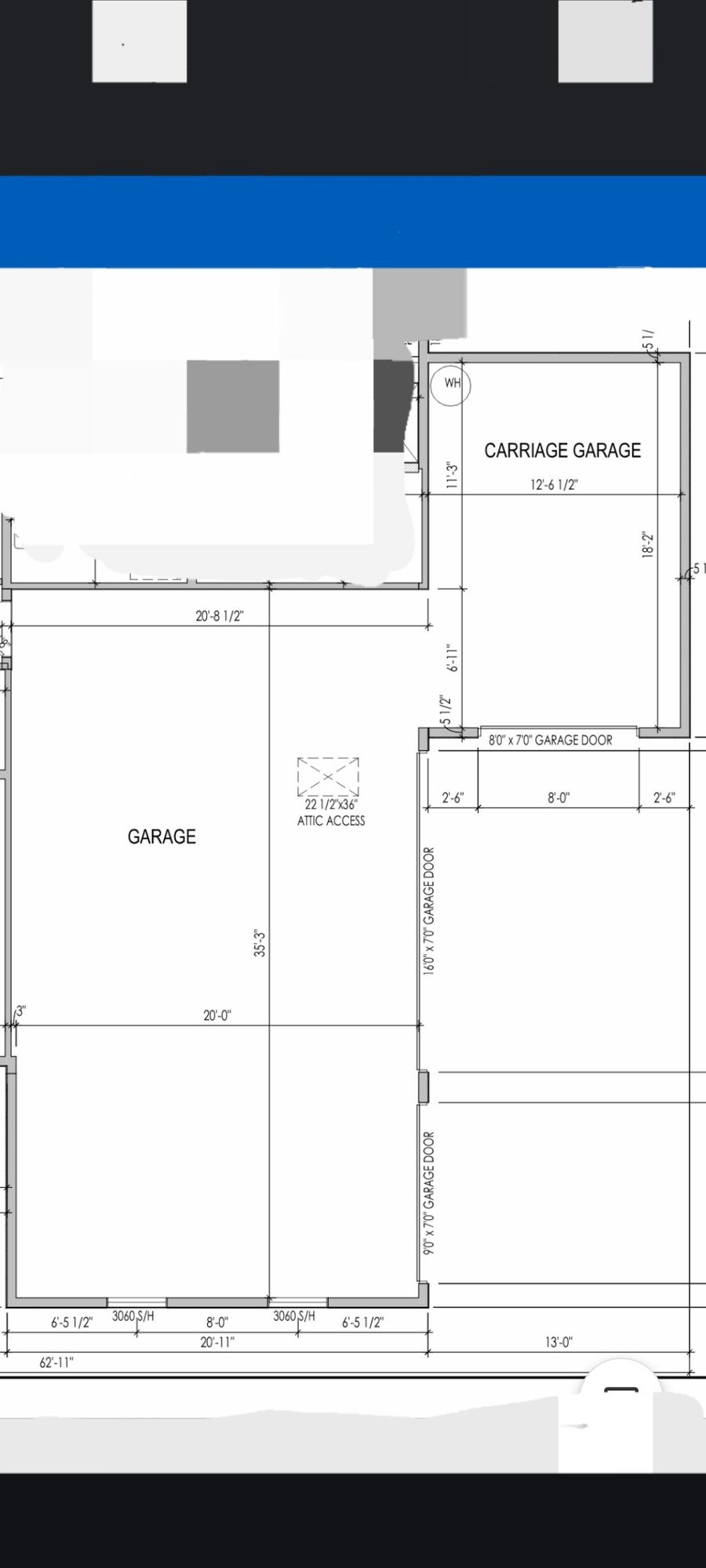
I got the actual plans back. Was not expecting the carriage house and the main garage to be open to each other. But that's got it's own benefits.
Plans say the total square footage is 1211 for the garage but my rough estimate based on the plans has about 960. Going to be questioning the builder on that.
Agree with all the comments on the overall size being tight but I suspect your limited in space available for the Carriage Garage given your existing home and lot conditions.
There would be some cost savings for you if you did not have the Carriage Garage open to the existing garage.
That opening between these two spaces requires a headed / beam for the roof framing and bearing walls are less expensive to build.
Not a ton of savings but "value engineering" is all about adding up small savings to make the project more affordable.
Good luck.
20' deep is not enough. You can barely pull a car in and be able to walk around it. You need at least 24'.
Totally get what you're saying Paul. This isn't a custom build but an option where it went from a front load three car to a side load three car. The carriage house was an optional addition. I gained a single stall garage worth of living space (~150 sqft) and another interior bathroom, which Mrs. UFNavy06 and I agreed was welcome with basically a 90° rotation on the garage. You can see how it shifted. The living room and powder room are where the single stall garage would be. Carriage house was not an option with the front load garage. Yes, the carriage house is small but it can fit all of the cars, albeit snuggly.
Appreciate the helpful suggestions for building your next house, especially considering the hot Arizona climate. Insulating the garage doors and epoxying the floors are definitely smart moves to maintain comfortable temperatures and enhance durability. When it comes to optimizing your home's energy efficiency and structural integrity, seeking advice from professionals like https://starkbuilders.com.au/structu...neer-brisbane/ can be invaluable. Their expertise in Structural Engineering could provide tailored solutions to ensure your new home meets the highest standards.
I am finishing my build near Daytona Beach and I just installed my hot water heater. It's in the garage and it's a hybrid (heat pump on top of it). I don't know if you will have city gas, but if you don't and it requires an electric hot water heater, go with a hybrid. It only costs $104/year to operate. And you know what? It cools the heck out of your garage. Pull in a warm car in the afternoon into your FL garage, then go inside and cook dinner. You'll use hot water prepping and the hot water heater kicks on, takes the heat out of your your garage and puts it in the tank.
When it was doing it's initial warm up of the cold water, I went back to the house every 30-45 minutes and when I opened the main garage door to get in, the ambient in the garage was COLD! Highly recommended.
With the talk of insulating the garage doors, it should be noted that the walls and ceiling can be insulated also. I had this done and it makes a big difference. I'm in SLC and I've never seen my garage go below 42, Even after two weeks of below freezing temps and no heat source.
I am finishing my build near Daytona Beach and I just installed my hot water heater. It's in the garage and it's a hybrid (heat pump on top of it). I don't know if you will have city gas, but if you don't and it requires an electric hot water heater, go with a hybrid. It only costs $104/year to operate. And you know what? It cools the heck out of your garage. Pull in a warm car in the afternoon into your FL garage, then go inside and cook dinner. You'll use hot water prepping and the hot water heater kicks on, takes the heat out of your your garage and puts it in the tank.
When it was doing it's initial warm up of the cold water, I went back to the house every 30-45 minutes and when I opened the main garage door to get in, the ambient in the garage was COLD! Highly recommended.
I love this idea but I don't think we'll have gas as we declined the gas package.
Here's a picture of the install, I also have a hot water recirc system installed. You can see the PVC drain, which is for the condensate, I just drained it to the sink.
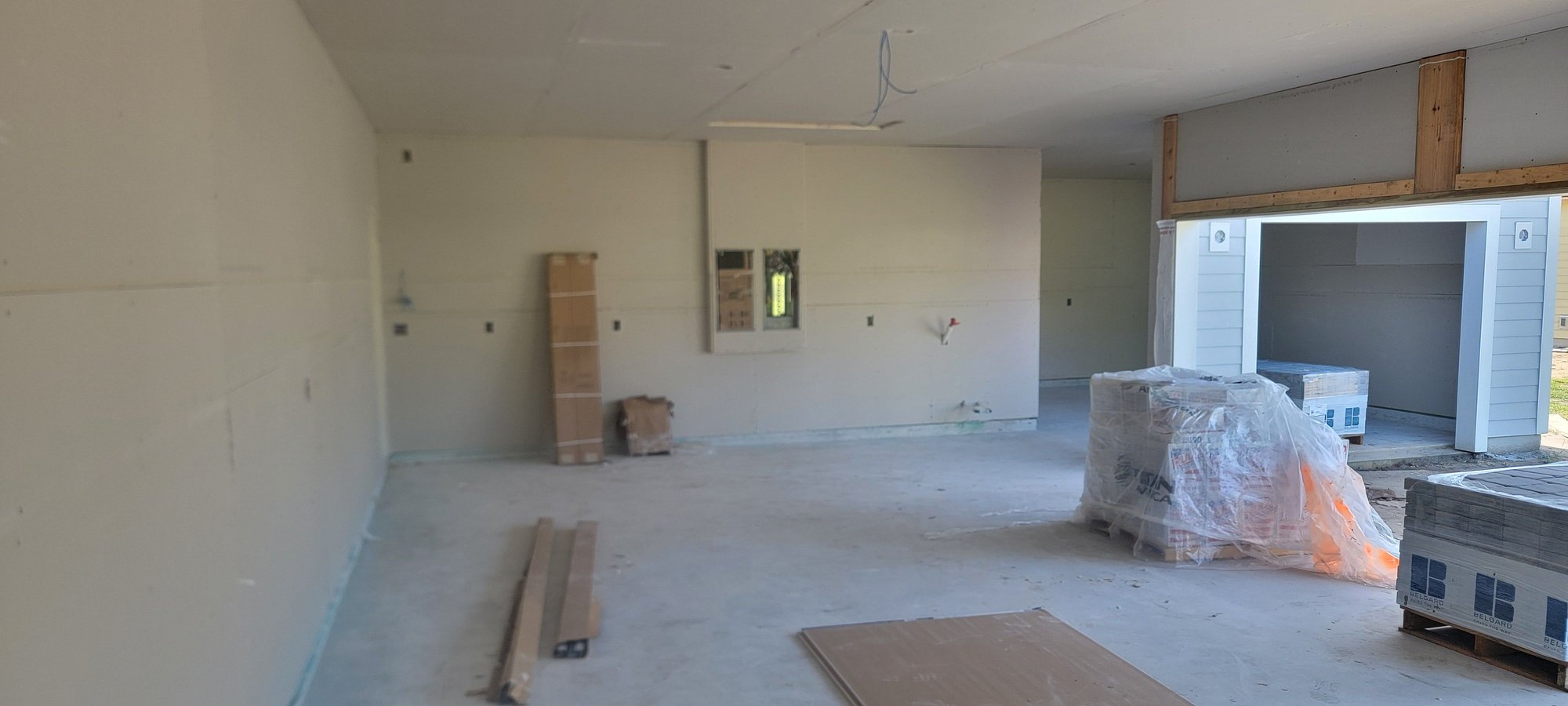
The drywall went up earlier this week. Here are a few pictures from inside the garage.
I have a sink just inside the house so didn't feel the need for one in the garage. Really, really wish I did a floor drain in the carriage house. But maybe in the future.
Sorry for the haziness. I just ran, literally, to the house in 90° temps so my phone had some condensation on the lens. Far corner of the carriage house Against the wall of the single stall More of the three car stalls. Corner of the three car stalls.
Last edited by Ufnavy06; Jul 21, 2024 at 01:40 PM.