



Winter Maintenance

Nordschleife Master
Joined: Feb 2007
Posts: 5,095
Likes: 3
From: Cheshire, UK

Well done on finally getting that filter off Stan. Never seen one be so tough to remove! Get yourself one of these tools for next time:
http://www.machinemart.co.uk/shop/pr...-filter-wrench
It distributes the torque all round the filter which gives you a whole lot more leverage. It also comes in very hand for squeezing back the brake pads when changing them.
http://www.machinemart.co.uk/shop/pr...-filter-wrench
It distributes the torque all round the filter which gives you a whole lot more leverage. It also comes in very hand for squeezing back the brake pads when changing them.

Thread Starter
Burning Brakes
Joined: Feb 2002
Posts: 873
Likes: 0
From: London, England
Thanks Boxsey, it really was a bugger to get off.
Right, I need some advice guys. I've got the oil tank back in today with all the hoses on, everything finished. But, I was about to give the ends of my new hose a squirt of Dinitrol when I noticed the new big oil pipe is kinked:
image-1990749178.jpg
image-746415253.jpg
image-1751652230.jpg
image-1102726057.jpg
image-1644271597.jpg
What's the thoughts on this from anyone who's done this job? That pipe only fits in one way and has to be really squeezed in next to the tank. I can't see how if I remove everything and start again it won't do the same thing? Is it likely to unkink itself once 5 bar of oil pressure is running through it??
Little bit annoyed tonight because it seems I've wasted the whole afternoon and I'm thinking this will all have to come out again
Right, I need some advice guys. I've got the oil tank back in today with all the hoses on, everything finished. But, I was about to give the ends of my new hose a squirt of Dinitrol when I noticed the new big oil pipe is kinked:
image-1990749178.jpg
image-746415253.jpg
image-1751652230.jpg
image-1102726057.jpg
image-1644271597.jpg
What's the thoughts on this from anyone who's done this job? That pipe only fits in one way and has to be really squeezed in next to the tank. I can't see how if I remove everything and start again it won't do the same thing? Is it likely to unkink itself once 5 bar of oil pressure is running through it??
Little bit annoyed tonight because it seems I've wasted the whole afternoon and I'm thinking this will all have to come out again
Thread Starter
Burning Brakes
Joined: Feb 2002
Posts: 873
Likes: 0
From: London, England
Hi Rob, no it was an OEM part from Type911.
I thought I was doing the right thing buying a new hose instead of getting mine remade. I had read on Bablouie's thread about his hose rated to 5000psi or something, but I thought it sounded overkill, didn't know there was issue with OEM hoses. I've still got the old hose and the rubber certainly seems stiffer than the new part but that could be age related...
I've managed to improve the situation much more tonight as I found that when I tightened the connection to the stat, the hard pipe was moving slightly and causing the kink. By holding the pipe while I tightened it to prevent it moving the kink has become more of a slight squash, which looks acceptable to me maybe...? This pipe take a tortuous route and the oil has to squeeze through tighter gaps on its way from the filter to the tank, etc. What do people think?!
image-3379718590.jpg image-271462159.jpg image-176664816.jpg
I thought I was doing the right thing buying a new hose instead of getting mine remade. I had read on Bablouie's thread about his hose rated to 5000psi or something, but I thought it sounded overkill, didn't know there was issue with OEM hoses. I've still got the old hose and the rubber certainly seems stiffer than the new part but that could be age related...
I've managed to improve the situation much more tonight as I found that when I tightened the connection to the stat, the hard pipe was moving slightly and causing the kink. By holding the pipe while I tightened it to prevent it moving the kink has become more of a slight squash, which looks acceptable to me maybe...? This pipe take a tortuous route and the oil has to squeeze through tighter gaps on its way from the filter to the tank, etc. What do people think?!
image-3379718590.jpg image-271462159.jpg image-176664816.jpg
Last edited by StanUK951; Feb 16, 2014 at 01:40 AM.
Thread Starter
Burning Brakes
Joined: Feb 2002
Posts: 873
Likes: 0
From: London, England
So, I'm kinda resigned to the fact that horrible oil hose is going to have to be replaced with a Genuine Porsche part.
Just to round off my day yesterday I also managed to break the wires to the oil level sender. The break is too close to the unit to re-solder them by the looks of it...
image-142841885.jpg
Decided to refit the exhaust today and repair the metal heat shield above the centre section.
I used some foil tape from Screwfix to repair the heat shield which seemed work quite well.
image-4099641088.jpg
image-2370734565.jpg
image-2466480200.jpg
image-1503943359.jpg
I'm planning to do away with the rear heat shields altogether so I used some on the underside of the rear light enclosure. I also fitted some Thermo-Tec exhaust wrap to keep temps down.
image-727147224.jpg
image-3151230020.jpg
Just to round off my day yesterday I also managed to break the wires to the oil level sender. The break is too close to the unit to re-solder them by the looks of it...
image-142841885.jpg
Decided to refit the exhaust today and repair the metal heat shield above the centre section.
I used some foil tape from Screwfix to repair the heat shield which seemed work quite well.
image-4099641088.jpg
image-2370734565.jpg
image-2466480200.jpg
image-1503943359.jpg
I'm planning to do away with the rear heat shields altogether so I used some on the underside of the rear light enclosure. I also fitted some Thermo-Tec exhaust wrap to keep temps down.
image-727147224.jpg
image-3151230020.jpg

Instructor

Joined: Aug 2012
Posts: 213
Likes: 1
From: Seattle, Washington
Ethanol Fuel treatment use
I've been using ethanol gas treatment in my 964, because all of the gasoline in my area has 10% ethanol added to it.
Is anyone else using a fuel treatment?
http://www.goldeagle.com/products/10_oz_ethanol.aspx
Is anyone else using a fuel treatment?
http://www.goldeagle.com/products/10_oz_ethanol.aspx
Thread Starter
Burning Brakes
Joined: Feb 2002
Posts: 873
Likes: 0
From: London, England
Good day today, got the new oil pipe fitted, tank back in, new oil level sender, drained and replaced the oil and got her fired up again.
I will expand more on the other thread I started but the Porsche oil pipe is definitely different to the 'OEM' version. For a start it hasn't kinked. The hose actually feels softer, but at the point where it would have kinked it seems stiffer or has some kind of internal tube.
Only took me about half an hour to get the tank out and the old pipe out again, fitting the new hose was easy but getting the tank back in is a bugger. The knack / method I found that seems to work is as follows:
1: Fit the oil line from filter to stat with the thermostat in place.
2: fit the oil tank with the upper side rubber hose in place and push back to locate the tank on its mounts, this is awkward and will take some persuasion
3: drop the oil stat and fit the rear bottom (short) hose to the bottom of the tank
4: push the stat back into position and onto the lower hose just fitted
5: tighten the oil hard line back up to the stat again
6: fit the longer lower hose (you have to do this last because you can't get the spanners onto the hard line with this in position
7: fit all the upper hoses
8: fit the lower side hose
9: tighten all remaining pipe connections in any sequence you like!

New oil pipe fitted with no kinks

Oil pipe to thermostat

I repainted the hard oil line along the inner wing as well and bought a new P clip from Porsche and treated it with Dinitrol. I also treated the ends of the new oil line with Corroheat and anywhere else I thought needed some rust prevention!

Oil tank fitted with new oil level sender... I sprayed this with Corroheat too as the old one was badly corroded.
Ran the car up to temperature and checked for leaks. I found a small leak at the stat thanks to a hose clip that needed tightening (oops!). Next step is to fit the new long neck J pipe I picked up off eBay, wrap it with Thermo-Tec and refit the rear bumper. Then I am done!
I will expand more on the other thread I started but the Porsche oil pipe is definitely different to the 'OEM' version. For a start it hasn't kinked. The hose actually feels softer, but at the point where it would have kinked it seems stiffer or has some kind of internal tube.
Only took me about half an hour to get the tank out and the old pipe out again, fitting the new hose was easy but getting the tank back in is a bugger. The knack / method I found that seems to work is as follows:
1: Fit the oil line from filter to stat with the thermostat in place.
2: fit the oil tank with the upper side rubber hose in place and push back to locate the tank on its mounts, this is awkward and will take some persuasion
3: drop the oil stat and fit the rear bottom (short) hose to the bottom of the tank
4: push the stat back into position and onto the lower hose just fitted
5: tighten the oil hard line back up to the stat again
6: fit the longer lower hose (you have to do this last because you can't get the spanners onto the hard line with this in position
7: fit all the upper hoses
8: fit the lower side hose
9: tighten all remaining pipe connections in any sequence you like!
New oil pipe fitted with no kinks
Oil pipe to thermostat
I repainted the hard oil line along the inner wing as well and bought a new P clip from Porsche and treated it with Dinitrol. I also treated the ends of the new oil line with Corroheat and anywhere else I thought needed some rust prevention!
Oil tank fitted with new oil level sender... I sprayed this with Corroheat too as the old one was badly corroded.
Ran the car up to temperature and checked for leaks. I found a small leak at the stat thanks to a hose clip that needed tightening (oops!). Next step is to fit the new long neck J pipe I picked up off eBay, wrap it with Thermo-Tec and refit the rear bumper. Then I am done!
Last edited by StanUK951; Feb 24, 2014 at 09:20 AM. Reason: Updated image links

Burning Brakes
Joined: Apr 2012
Posts: 908
Likes: 99
From: London UK
Nice to meet you the other day Stan.
Car is looking good, your definitely on the final stretch and with time to spare before Spa.
Don't forget to check if your space saver fits over your big reds...
Car is looking good, your definitely on the final stretch and with time to spare before Spa.
Don't forget to check if your space saver fits over your big reds...
Rennlist Stories
The Best Porsche Posts for Porsche Enthusiasts

Porsche Reveals Coupe Variant of the Electric Cayenne With a Fresh Look
Verdad Gallardo
10 Porsche Colors That Have More Personality Than Most People
Verdad Gallardo
Guntherwerks' Final Speedster Creation Is the Ultimate Porsche Restomod
Verdad Gallardo
10 Reasons I Hate Going to the Porsche Dealership (& the 1 Reason I Stay)
Joe Kucinski
Porsche Shakes Up The Nürburgring Lap Record Table Once Again
Verdad Gallardo
6 Ways the Porsche 911 GT3 S/C Redefines Performance
Joe Kucinski
10 Wildest Homologation Specials Porsche Ever Sold
Verdad Gallardo
Super Rare RUF BTR III Comes Out of Hibernation, Looking For a New Home
Verdad Gallardo
10 Porsche Opinions That Can Start a Fight
Joe Kucinski



Thread Starter
Burning Brakes
Joined: Feb 2002
Posts: 873
Likes: 0
From: London, England
Ordered my bits from Type 911, mainly because they had everything I wanted so I could do it all in one order. They were pretty fair on the oil hose situation too.
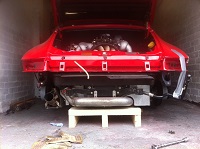
I plan to copy what 'Chief' has done on his 'Red Baron' thread on 911UK forum and apply the heatshield directly to the bumper skin. I thought this combined with the thermal wrap on the exhaust would do the job just as well as the original heatshields... While I was running the car at the weekend, once it was up to temperature I was able to hold my hand comfortably for as long as I wanted on the de-cat exhaust pipe with the thermal wrap applied. I wouldn't fancy doing that anywhere else on the exhaust system. I think the thermal wrap will really help keep temps down generally. Open to suggestions on this though as I would rather not melt my genuine RS rear bumper!!
I have been working out my costs so I will post these here along with a guess of hours spent when I am done...!
Three Wheelin'
Joined: Jan 2013
Posts: 1,609
Likes: 9
From: Bucks
Ah ok, so you're not doing away with heat shields in general 
As a point of interest, in this application I'd keep the use of thermal wrap applied directly to an exhaust to an absolute minimum. The heat this section would've dissipated does not just dissappear. It has the effect of pushing the problem elsewhere and increasing the temperature of the uncovered sections each side of it. In small localised applications its fine. By covering the section from the header flange to the entry in the back box, you will cause the running temp of that box to increase. Given what you're trying to achieve, and its proximity to the bumper, this may need some experimentation. The section you've covered is actually the area that has the greatest clearance to sorrounding parts so least important to wrap. Also, be very wary of using it where it may get oily as they form a perfect wick and have a habbit of catching fire.
As a point of interest, in this application I'd keep the use of thermal wrap applied directly to an exhaust to an absolute minimum. The heat this section would've dissipated does not just dissappear. It has the effect of pushing the problem elsewhere and increasing the temperature of the uncovered sections each side of it. In small localised applications its fine. By covering the section from the header flange to the entry in the back box, you will cause the running temp of that box to increase. Given what you're trying to achieve, and its proximity to the bumper, this may need some experimentation. The section you've covered is actually the area that has the greatest clearance to sorrounding parts so least important to wrap. Also, be very wary of using it where it may get oily as they form a perfect wick and have a habbit of catching fire.
Thread Starter
Burning Brakes
Joined: Feb 2002
Posts: 873
Likes: 0
From: London, England
All good points Rob, thanks for your insight.
I had thought about the fact the larger rear silencer is going to be the item closest to the rear bumper. I will look to double up the thermal tape in this area and keep an eye on this.
There is a spray on product that I have bought which goes with the heat wrap on the exhaust. This is supposed to close the pores in the tape and improve / reduce permeability to chemicals, water, etc.
I had thought about the fact the larger rear silencer is going to be the item closest to the rear bumper. I will look to double up the thermal tape in this area and keep an eye on this.
There is a spray on product that I have bought which goes with the heat wrap on the exhaust. This is supposed to close the pores in the tape and improve / reduce permeability to chemicals, water, etc.