When you click on links to various merchants on this site and make a purchase, this can result in this site earning a commission. Affiliate programs and affiliations include, but are not limited to, the eBay Partner Network.
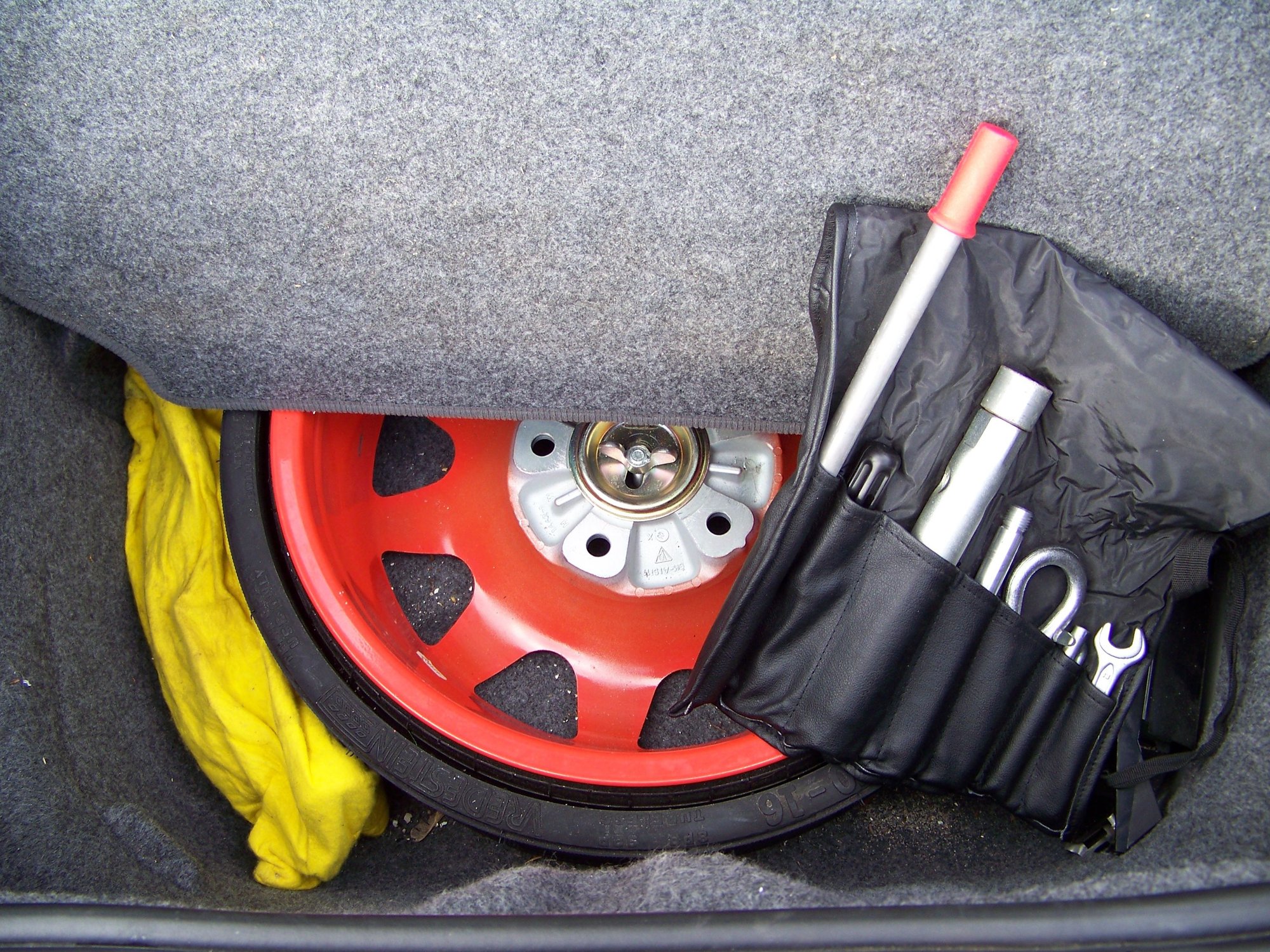
For what it's worth, you can look at the rear of almost any modern car which used to house a spare wheel with the corresponding tub in the trunk. Most have been superseded by now using small compressors and fix-a-flat things versus the original space savers, but the tubs remain. Have most been re-certified, re-tested for crash worthiness? It's an interesting argument, but I've not seen much to side with the spare being structural.
I'm also a certified collision estimator, and have many, many years of experience/education with collision theory/mechanics. I've seen my fair share of wrecked cars.
For what it's worth, you can look at the rear of almost any modern car which used to house a spare wheel with the corresponding tub in the trunk. Most have been superseded by now using small compressors and fix-a-flat things versus the original space savers, but the tubs remain. Have most been re-certified, re-tested for crash worthiness? It's an interesting argument, but I've not seen much to side with the spare being structural.
I'm also a certified collision estimator, and have many, many years of experience/education with collision theory/mechanics. I've seen my fair share of wrecked cars.
I am sure you have, as have I. Although I am not a certified estimator I know these cars quite well. I have several family members who are in the same line of work and we have discussed it in depth. You seem to see it differently than they do. I have several friends who own collision shops I spend countless hours help restoring these in and they would argue for keeping them. I will need to look for it. Possibly Adrian's book or someplace reliable that states it is a structural part of the design. I have seen it in writing and agree based on what I have seen. It might actually be in the owners manual but don't hold me to it.
No doubt the conditions of the accident will pay a huge roll in if it makes a difference or not. Based on what I have witnessed I am not willing to take that chance.
Will the spare help in a front end collision? Absolutely, since it absorbs energy that would otherwise go into the chassis/driver. Is it intended to be structural? I doubt it, but it just is, because it takes a hit and bends resulting in less energy transfer. There was no other location to store the spare, and it happened to have additional benefits. With today's vehicles on the road I would imagine our cars act more like a wedge and will be pinned under larger vehicles.
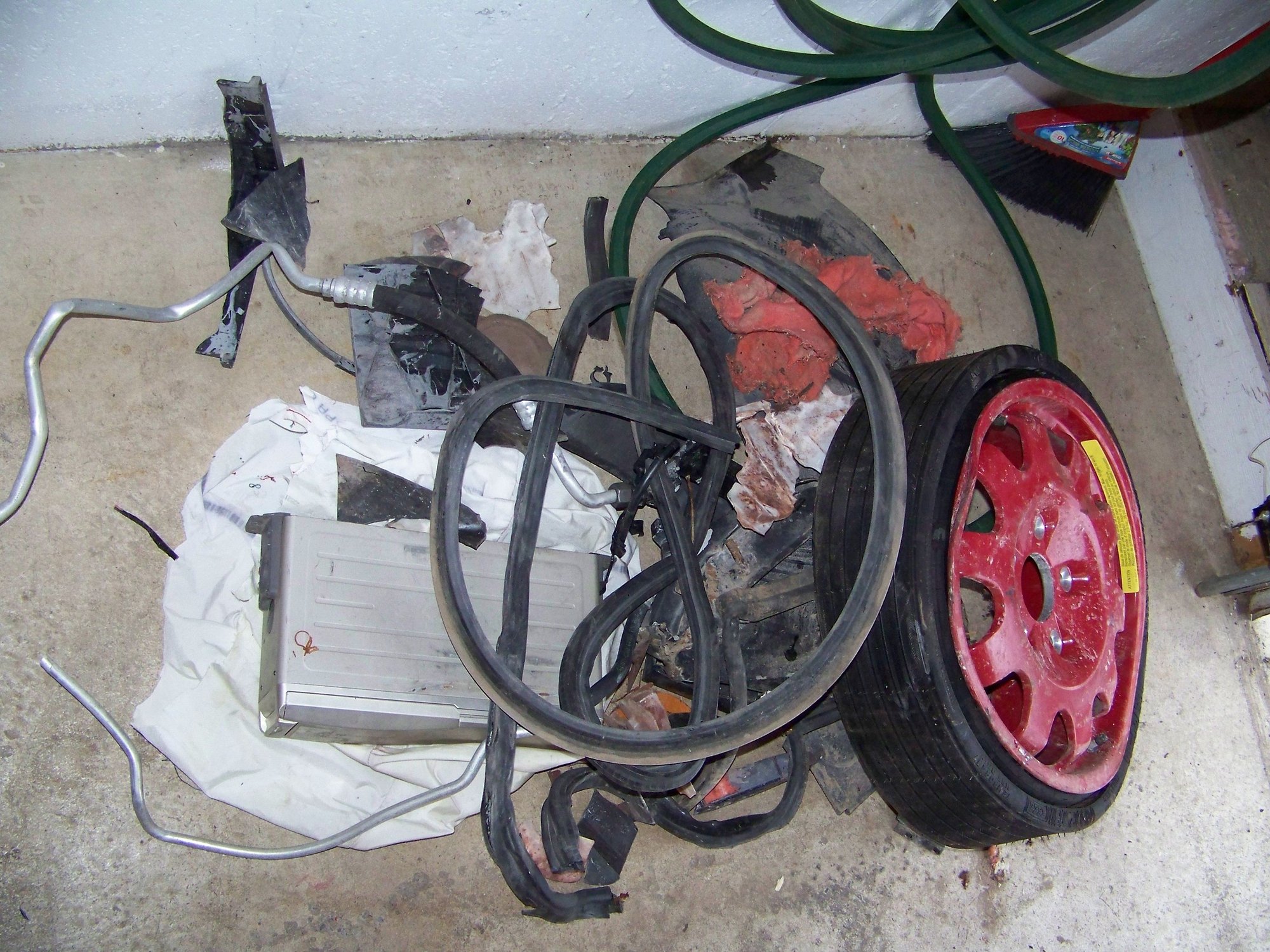
Here is a a smashed 993 I bought years ago. I only have the one picture showing the spare but it was clear that it absorbed a good deal and was warped and twisted. Beyond occupant safety my thoughts are that it kept the front of this car more together than if it was removed. If it can save the car a little in a medium crash and add some weight to the nose down low I don't think it is too offensive. Btw this 993 lives on in Germany.
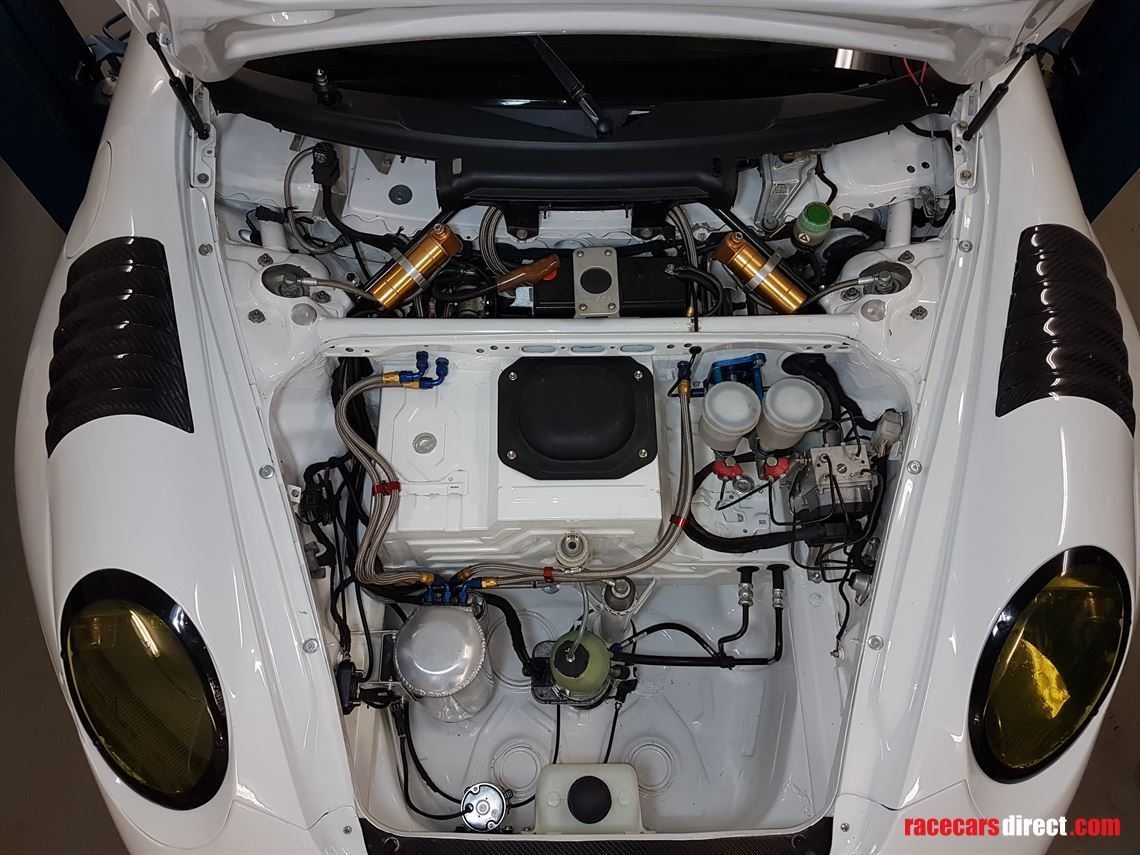
Another thought, the spare layout in 964 and 993 cars is very similar to that of the 996 and 997 Carrera 4 which is the basic chassis used for gt3's. All these gt3 cars have no spares and are smashed in every possible way. The factory must have anticipated crashes with and without spares in these locations for 964s 993s 996s etc.
As you can see the newer cars have added reinforcement to the shock towers to help with frontal collisions. They learned a lot by then about occupancy safety vs the cars survival. Race cars are different animals. Full cages and reinforced tubs make a difference as well. Weight becomes more of a factor and the cages are there to protect the driver.
Well if going to all the work to cut up the front end you could add structure to make up for any removed in the process.
Pete I would agree but at what cost and how do you know if you did everything properly without crash testing it? My 74 3.0 IROC tribute had the front snout cut and revised to allow for the front oil cooler to flow air. I could not fit a spare but that was a G body build and the gas tank was there unlike the 964. Not that the G body cars were very safe to begin with, I don't think it would have faired as well as a stock tub in a street collision.
9 Vehicles Porsche Helped Engineer that Aren't Porsches
Slideshow: Long before engineering consulting became trendy, Porsche was quietly helping other automakers build everything from supercars to economy hatchbacks.
9 Features and Characteristics That Only Porsche People Understand
Slideshow: Some brands build cars. Porsche builds traditions, obsessions, and a few habits that stopped making sense decades ago but somehow became part of the charm.
This Builder Is Turning Heads With Its Slantnose 911 Creation
Slideshow: A small Polish tuner has reimagined the Porsche 911 Slantnose for the modern era, blending 1980s nostalgia with widebody tuning culture and serious performance upgrades.
Porsche 911 GT3 Artisan Edition Pays Homage to Japanese Culture
Slideshow: Porsche has created a Japan-only 911 GT3 Artisan Edition that blends track-ready hardware with design cues inspired by traditional Japanese craftsmanship.
Porsche Reveals Coupe Variant of the Electric Cayenne With a Fresh Look
Slideshow: Porsche's latest electric Cayenne Coupe blends dramatic styling with supercar acceleration, turning the brand's midsize SUV into a 1,139-horsepower flagship.