




Closing my open crankcase ventilation
Nordschleife Master
Joined: Jan 2009
Posts: 5,609
Likes: 84
From: MA

I did battle with the exact setup you are running. I tried a catch can, baffles, vents and several other means to control oil. When that engine gets on boost, the oil return setup is overwhelmed. I vented back into the intake and that became a nightmare of fouled plugs, oil soaked intake and lots of pinging detonation from the oil reducing the octane. After a couple years of trial and error, I finally installed the ProVent seperator inline with the 928MS fittings. The drain T into the front oil drain tube and the vent line running into the exhaust just aft of the Y pipe. It is the best solution I have come up with. Engine runs clean, plugs are good, minimal oil mist and no blue smoke from tailpipe.
Every hot rodded engine has slightly different problems and require slightly different solutions. That's why it's in my opinion very important to understand exactly what is happening with each particular engine configuration when trying to patch the 928 crankcase ventilation.

Thread Starter
Rennlist Member
Joined: Dec 2006
Posts: 2,483
Likes: 4
From: Elmhurst, IL
Rennlist Member

Joined: Jun 2005
Posts: 10,581
Likes: 1,030
From: Oman
I think you can and it will not take too much to achieve if you are mechanically sound. Go for a good primary separation baffle along the lines I indicated, plumb that to a pro vent separator assuming there is space to get the plumbing geometry & ensure you have a vent 1 inch diameter to the pro vent. You can consider routing the gas outlet back to the inlet wiht a similar diameter pipe and I suspect you should find that the resulting emissions will not foul anything but check carefully. On the S4 I was concerned it might foul the MAF hotwire so I route the vent pipe to the under side of the car in the hope that the air below the car might induce some kind of venturi effect to help evacuation a tad but that is probably wishful thinking. Even so I have yet to see any traces of oil coming from that vent. The oil drain connection from the pro vent I run back to a little catch bottle and so far it has caught only a few drops of oil so I reckon John Kuhn's internal baffle design works quite well and he designed that with his twin turbo system in mind. I believe Doc Brown also has an offering in this field.
If I feel I need to take this further I may try something along the lines of what Colin does with the vac pump- I suspect that is an elegant solution but a bit more pricey and more bits to wear out so you need a really good pump kit if you go that route.
Thread Starter
Rennlist Member
Joined: Dec 2006
Posts: 2,483
Likes: 4
From: Elmhurst, IL
Alan,
I love when you comment on my threads. Period.
Fred,
Thank you. I already have a MS baffle installed, as well as a seperator in the filler, so I'm really concentrating on the supplementing what I already have. Means finding the right catch can and a place to put the fumes. I think the Provent idea is a great one.
Hold on,
Did you have the Provent when you had your vent going back to the intake? Or had you moved away from the intake by the time you got your Provent?
Tuomo,
I really like your idea. It sounds like a factory type solution to me. May try that, but I would like to hear if Hold on had tried anything similar.
Also, good advice about understanding the system. Makes a lot of sense.
Although I know very little about this, I believe I'm capable of understanding any system. It may take me a little while, but ultimately I'll get it.
So, I'm just looking for the best idea. Even if it is a bit complex, I'll figure it out.
I love when you comment on my threads. Period.
Fred,
Thank you. I already have a MS baffle installed, as well as a seperator in the filler, so I'm really concentrating on the supplementing what I already have. Means finding the right catch can and a place to put the fumes. I think the Provent idea is a great one.
Hold on,
Did you have the Provent when you had your vent going back to the intake? Or had you moved away from the intake by the time you got your Provent?
Tuomo,
I really like your idea. It sounds like a factory type solution to me. May try that, but I would like to hear if Hold on had tried anything similar.
Also, good advice about understanding the system. Makes a lot of sense.
Although I know very little about this, I believe I'm capable of understanding any system. It may take me a little while, but ultimately I'll get it.
So, I'm just looking for the best idea. Even if it is a bit complex, I'll figure it out.
Rennlist Member
Joined: Jun 2005
Posts: 10,581
Likes: 1,030
From: Oman
Fred,
Thank you. I already have a MS baffle installed, as well as a seperator in the filler, so I'm really concentrating on the supplementing what I already have. Means finding the right catch can and a place to put the fumes. I think the Provent idea is a great one.
Hold on,
Did you have the Provent when you had your vent going back to the intake? Or had you moved away from the intake by the time you got your Provent?
.
I made the mistake of thinking that when I "upgraded" the breather system of my S4 motor to the GTS system it was a positive thing to do- I think we have established that was not a good thing and explains to some extent why my oil consumption incrreased. Having looked a various solutions I wanted to try something to see if I could get things under control and listened to various pieces of advice and tips etc. With hindsight I should have installed the Pro Vent and nothing else to test for impact and then gone to stage two to rty the upgraded baffle- either way I went for broke and installed the lot in one hit. for sure there has been oil consumption improvement although just how much is stlll debatable.
I did not try the Pro Vent looped into the stock system and was a bit wary about increasing the breathing capacity and then recycling back vapours that may contain oil upstream of the air filter.
Ultimately I would like a system that recycles the vapours rather than vents them directly but my programme is to improve oil consumption and then work out how make it "greener" if possible.
I still have a few more tests to do when the cooler weather returns but then I do not have to worry about the smog ***** taking me to the cleaners.
I am interested to learn how my Cayenne Turbo motor deals with this aspect. I have a feeling it may compress/recycle the vapours to permit recycle under full boost but the jury is still out on that one.
Regards
Fred
Burning Brakes

Joined: Jan 2009
Posts: 1,045
Likes: 15
From: El Mirage, Arizona
I did battle with the exact setup you are running. I tried a catch can, baffles, vents and several other means to control oil. When that engine gets on boost, the oil return setup is overwhelmed. I vented back into the intake and that became a nightmare of fouled plugs, oil soaked intake and lots of pinging detonation from the oil reducing the octane. After a couple years of trial and error, I finally installed the ProVent seperator inline with the 928MS fittings. The drain T into the front oil drain tube and the vent line running into the exhaust just aft of the Y pipe. It is the best solution I have come up with. Engine runs clean, plugs are good, minimal oil mist and no blue smoke from tailpipe.
Last edited by Hold On; Jan 14, 2015 at 06:07 PM.
Rennlist Stories
The Best Porsche Posts for Porsche Enthusiasts

Porsche's Top 5 Most Questionable Naming Decisions
Verdad Gallardo
Pogea Racing's 964 Porsche 911 Reimagination Stands Out in a Crowded Field
Verdad Gallardo
6 Convertible Top MYTHS Most People Don't Understand!
Michael S. Palmer
2026 Porsche 911 Club Coupe is Spectacular, And Everything Wrong with the Porsche Market
Joe Kucinski
Talos Takes Your 991 Porsche 911 GT3 to the Next Level for a Cool $1.13 Million
Verdad Gallardo
9 Vehicles Porsche Helped Engineer that Aren't Porsches
Verdad Gallardo
9 Features and Characteristics That Only Porsche People Understand
Verdad Gallardo
I've Written 500 Rennlist Articles: Here's How Porsche Has Changed Along the Way
Joe Kucinski
10 Most Unnecessary Porsches Ever Built (And Why We Love Them)
Verdad Gallardo
Rennlist Member
Joined: Jun 2005
Posts: 10,581
Likes: 1,030
From: Oman
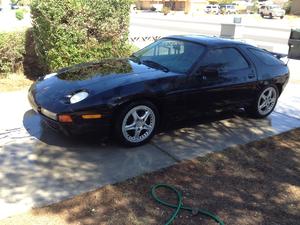
Here is a picture of setup. Drain in bottom of ProVent goes into stock oil drain hose going back into oil pan. Vent runs down driver side of engine ,down to fitting welded to Y pipe then gets sent out the back door. No oil smell in cockpit and no oil film in intake system.
Suggest you ask Randy if he thinks that is a good thing!
Regards
Fred
Vegas, Baby!
Rennlist Member
Rennlist Member


Joined: May 2009
Posts: 11,555
Likes: 395
From: far away
I've run cross country and back with Hold On, more than once. His car doesn't lay a smoke screen, or really use much more fuel than my 87 or 89 did. His car is quicker though. Trust his advice, his set up works!
It's so well engineered that it still performed with a broken internal SC belt.
It's so well engineered that it still performed with a broken internal SC belt.
Thread Starter
Rennlist Member
Joined: Dec 2006
Posts: 2,483
Likes: 4
From: Elmhurst, IL
Carl,
Thanks for jumping in on this. No, my OC12 had no PCV valve, and had the vent line running to SC intake tube.
Looking at that spot on the spider, I've got a line to the brake booster, and one that goes to the U under the throttle body (at least I think that's where it goes).
So, I have the same question as Colin.
Hold on, that is beautiful man.
Thanks for jumping in on this. No, my OC12 had no PCV valve, and had the vent line running to SC intake tube.
Looking at that spot on the spider, I've got a line to the brake booster, and one that goes to the U under the throttle body (at least I think that's where it goes).
So, I have the same question as Colin.
Hold on, that is beautiful man.

Developer
Joined: Dec 2001
Posts: 7,005
Likes: 64
From: Horicon, WI
Thanks for jumping in on this. No, my OC12 had no PCV valve, and had the vent line running to SC intake tube.
Looking at that spot on the spider, I've got a line to the brake booster, and one that goes to the U under the throttle body (at least I think that's where it goes).
Looking at that spot on the spider, I've got a line to the brake booster, and one that goes to the U under the throttle body (at least I think that's where it goes).
Developer
Joined: Dec 2001
Posts: 7,005
Likes: 64
From: Horicon, WI
The Wye in the line has been turned in this picture up-and-down, and the large side connected to the oil separator line to re-breath crankcase gases, and the lower part of the Wye (with the venturi in it) is connected to the brake booster per OEM. This is an L-Jet car.